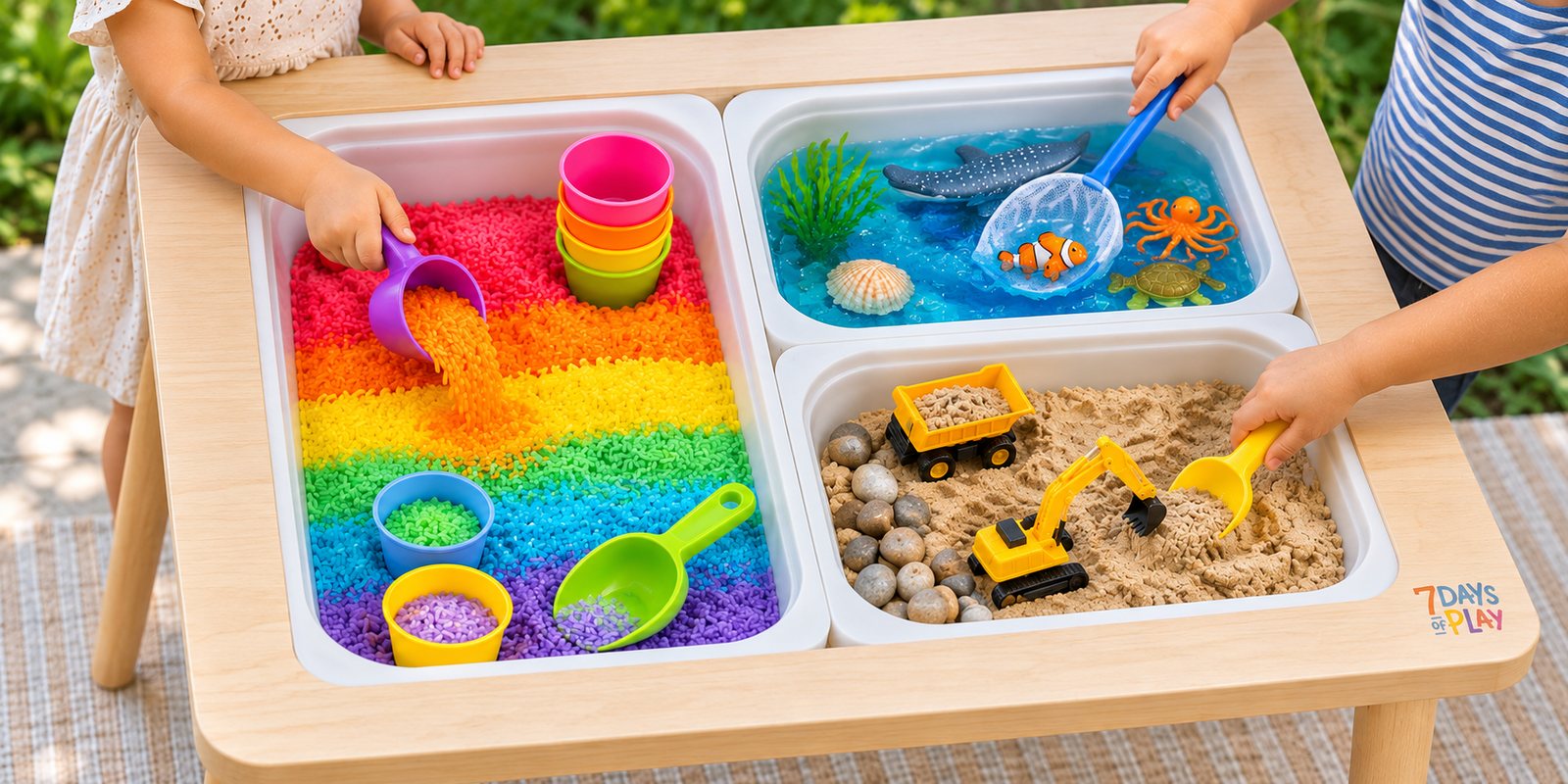
Fourteen sensory bins we have actually set up at home – what goes in each one, what it teaches, and how to put it together without a trip to the craft store.
All activities should be supervised by an adult. As an Amazon Associate I earn from qualifying purchases. This post may contain affiliate links.
Sensory bins are a game-changer for hands-on play! They’re not just fun—they also help kids develop fine motor skills, creativity, and problem-solving abilities. Whether it’s scooping, pouring, sorting, or engaging in imaginative play, sensory bins provide endless opportunities for learning through play. Sensory play also offers a calming and engaging experience, making it perfect for independent play, quiet time, or group activities. Plus, these activities can be easily customized to match your child’s interests, making them even more engaging.
Where to put the sensory bin
Any big plastic tub works. But the thing that decides whether sensory play happens once a month or twice a week is how fast you can set it up and put it away – so here are the three setups we use, from most to least furniture.

Foldable Sensory Table
Folds flat when you are done, so sensory play does not need a permanent corner of the room. Two deep bins, lids that turn it into a regular play table, and a wipe-clean frame.

Round Sensory Table
No corners, so toddlers can reach everything from every side and more than one child can play at once. The lid flips between whiteboard and chalkboard when the bin is away.

Just the Bin
Six removable sections for sorting, and it collapses flat for the cupboard. Sits on the floor or any table you already own – no furniture required.
Fourteen sensory bin ideas
Wash and Cut Kitchen Sensory Bin
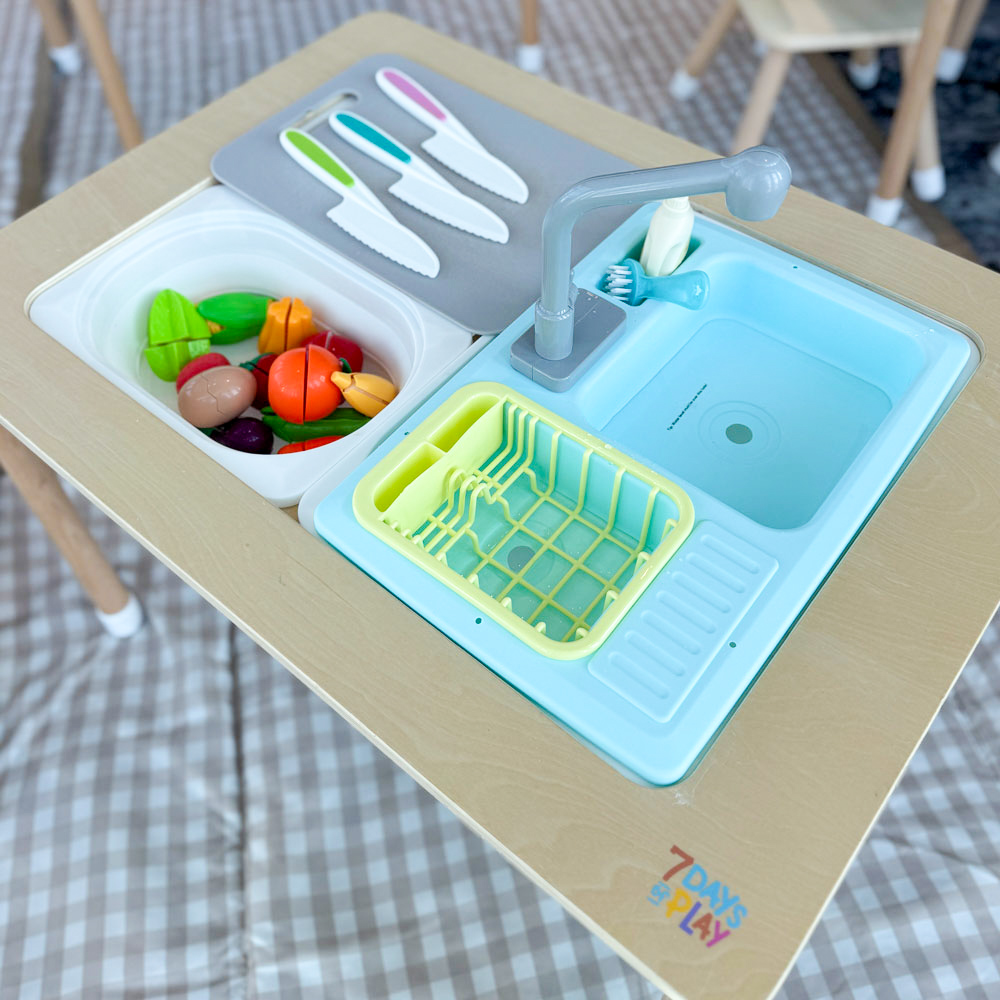
Turn your sensory table into a mini kitchen with this wash and cut sensory bin! Kids can rinse toy fruits in the recirculating sink, sort them in the dish rack, and practice cutting them on a kid-safe cutting board. It’s the perfect setup for imaginative play that also builds fine motor skills and hand-eye coordination.
-
Recirculating toy sink (fits in the 7 Days of Play Sensory Table bin)
-
Cutting board
Construction Sensory Bin
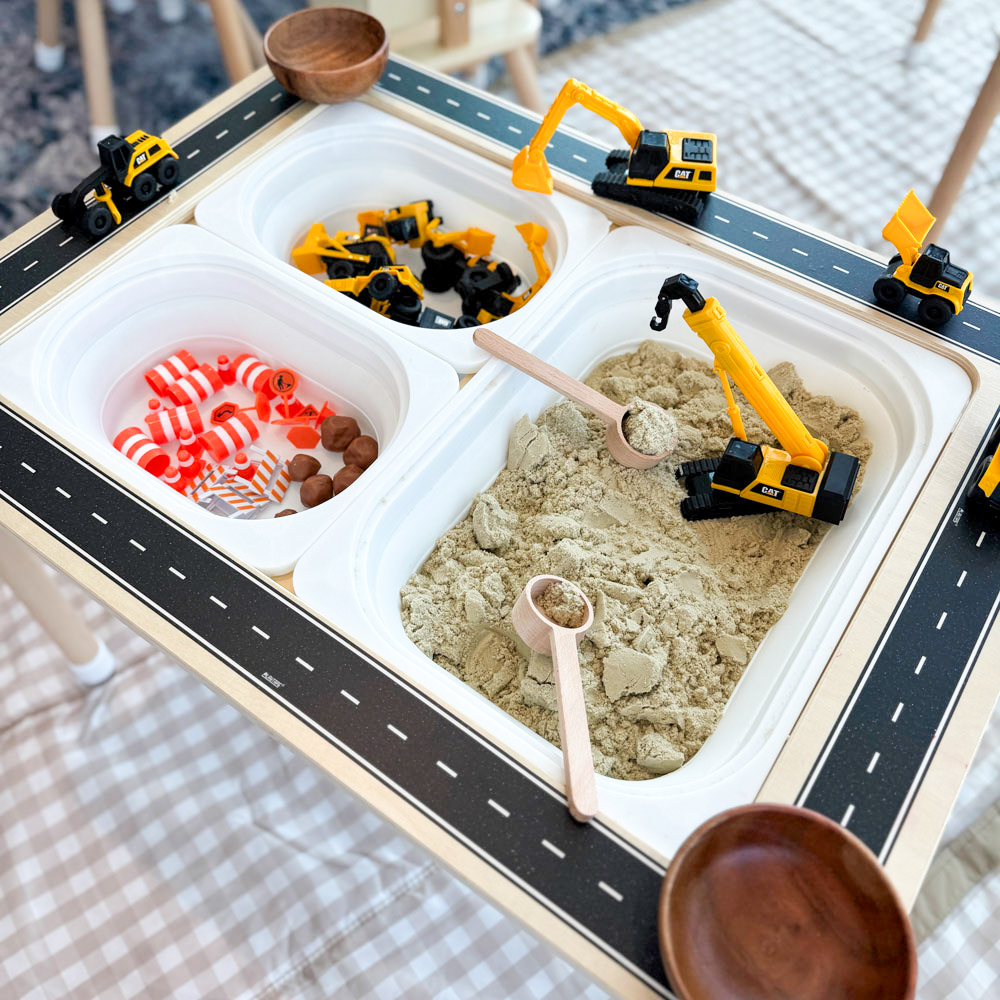
Dig, build, and haul with this construction-themed sensory bin! The combo of sensory sand, mini construction vehicles, and real rocks creates an immersive play experience that kids will love. Bonus: add road tape to the table’s frame for extra creativity!
Full step-by-step directions live on our taste-safe sensory sand recipe page. The two things worth grabbing first are store-bought sensory sand and mini construction vehicles.

Ocean & Marine Life Sensory Bin
Bring the deep sea to your sensory table with this ocean and marine life sensory bin—a fun and refreshing way for kids to explore water, textures, and pretend play with sea creatures. There are a few creative ways to set this one up depending on your child’s age and your mess tolerance!
Setup options:
(1) Use real water in one bin and waterproof sensory sand in the other for a classic beach and ocean experience.
(2) Swap the water entirely for waterproof blue sensory sand for a mess-free setup that still feels immersive.
(3) For a toddler-friendly, taste-safe version, use blue Jello as the ocean and crushed Cheerios as the sand (this is the version shown in our photo!).
Full step-by-step directions for all three versions live on our ocean sensory bin page. The two things worth grabbing first are marine animal figurines and waterproof sensory sand.
Color Matching Sensory Bin
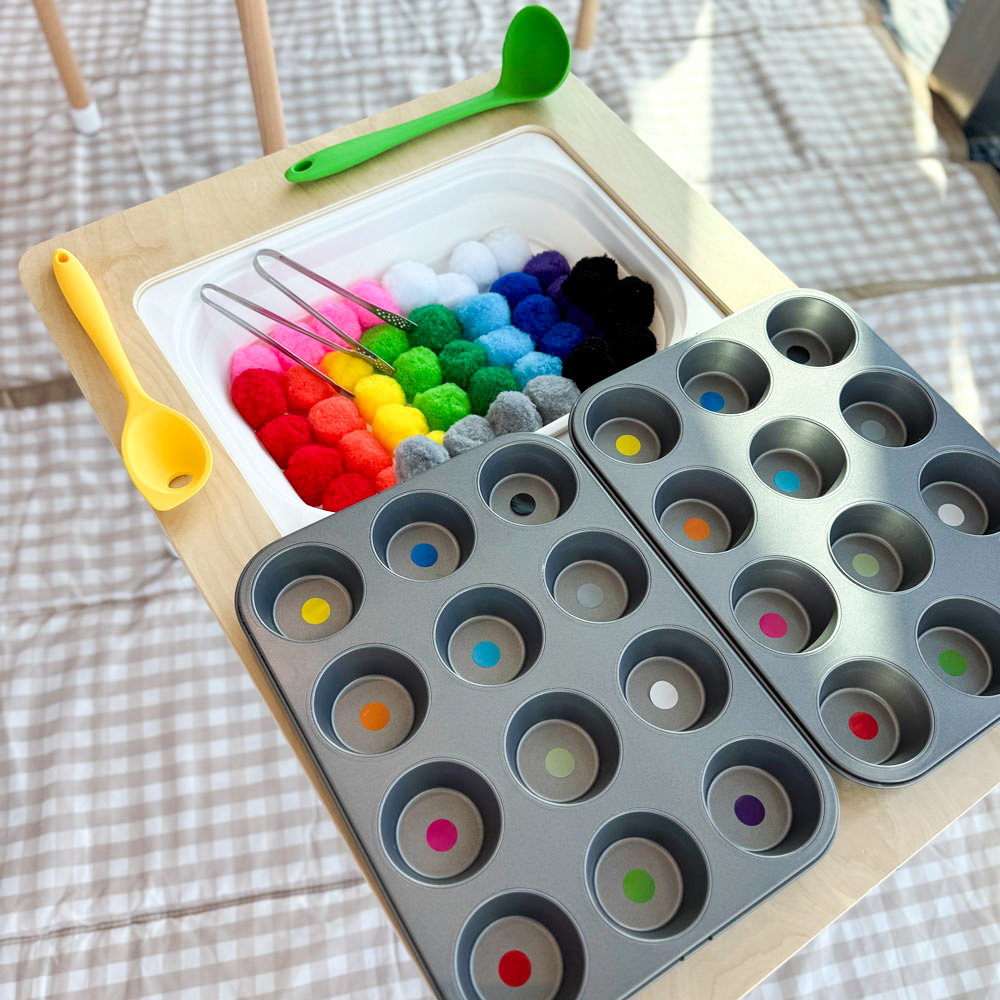
Turn sensory play into a fun color-learning activity! In this bin, kids scoop and transfer pom-poms into a muffin tin with color-matching dot stickers, helping with fine motor skills and color recognition.
- Extra Large Pom-poms
- Muffin tin
- Color dot stickers (to place in muffin tin spaces)
- Tongs and mini tool silicone set
For more ways to play with color, see our color matching activities for preschoolers.
Lemonade Sensory Bin Idea
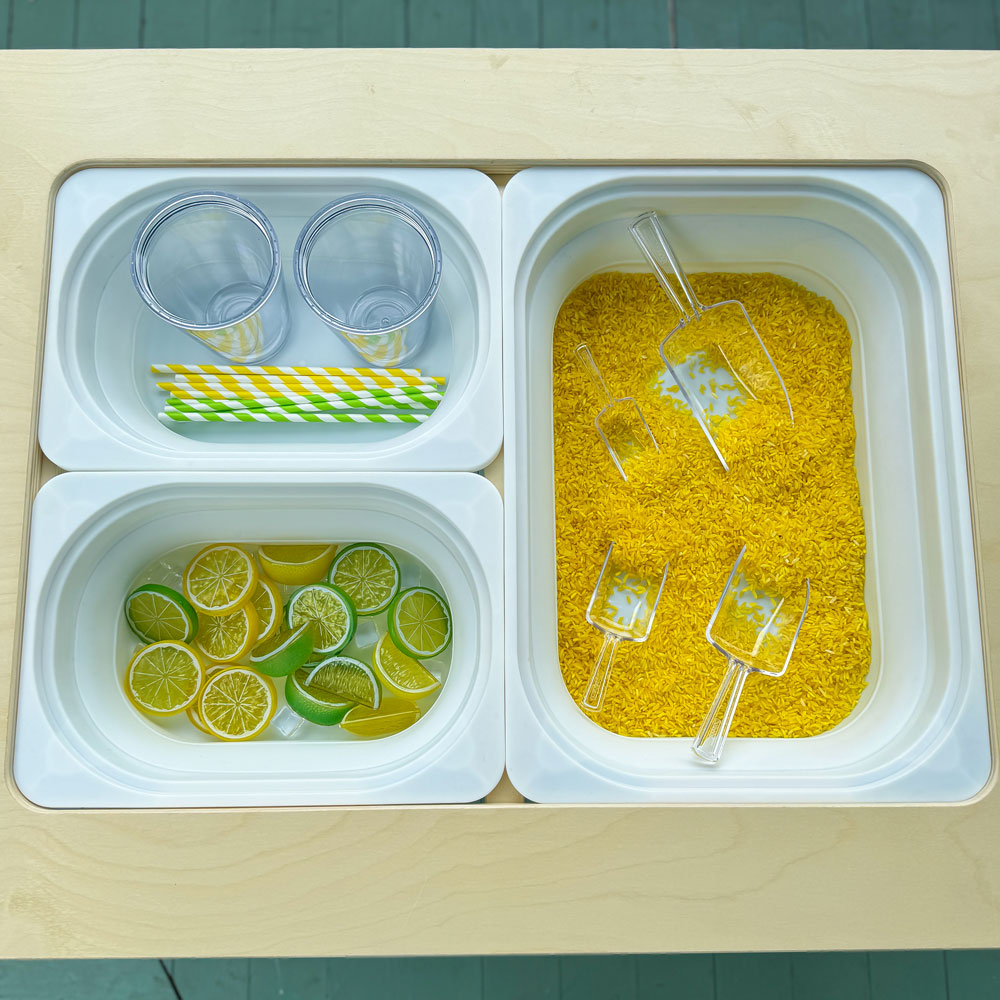
This lemonade sensory bin is a bright and cheerful activity that’s perfect for summer—or for when you just want to bring a little sunshine indoors! Kids can scoop, pour, and mix their own pretend lemonade using yellow-dyed rice, cups, scoops, and pretend fruit, all while building fine motor skills and engaging their senses.
Full step-by-step directions live on our lemonade sensory bin page. The two things worth grabbing first are the artificial ice, lemon and lime set and cups.
Dinosaur Swamp
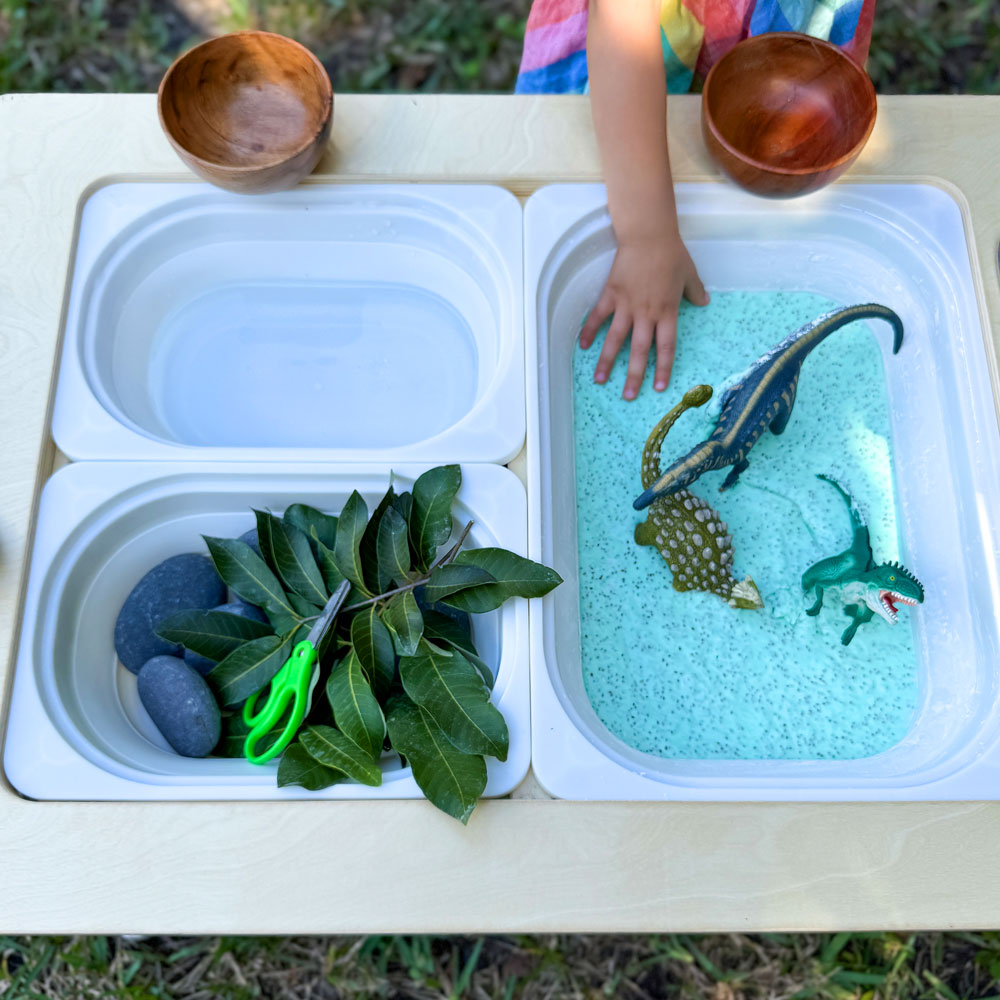
Ready to take dino play to the next level? This DIY chia slime dinosaur swamp is a squishy, stretchy sensory bin that feels like a prehistoric swamp—and it’s super easy to make at home. Kids will love stomping their dinosaur figures through the slime and exploring all the ooey-gooey textures!
Full step-by-step directions live on our chia slime swamp page. The two things worth grabbing first are dinosaur figurines and chia seeds.

Spaghetti Sensory Bin Idea
This colorful spaghetti sensory bin is a squishy, slippery, and totally irresistible way for kids to explore texture! You can dye the noodles in different colors, toss them into the bin, and let your child squish, squeeze, and mix for a wildly fun sensory experience that’s also taste-safe.
Full step-by-step directions live on our spaghetti sensory play page. The two things worth grabbing first are starter scissors and natural food coloring.
Taste-Safe Foam Sensory Bin Idea
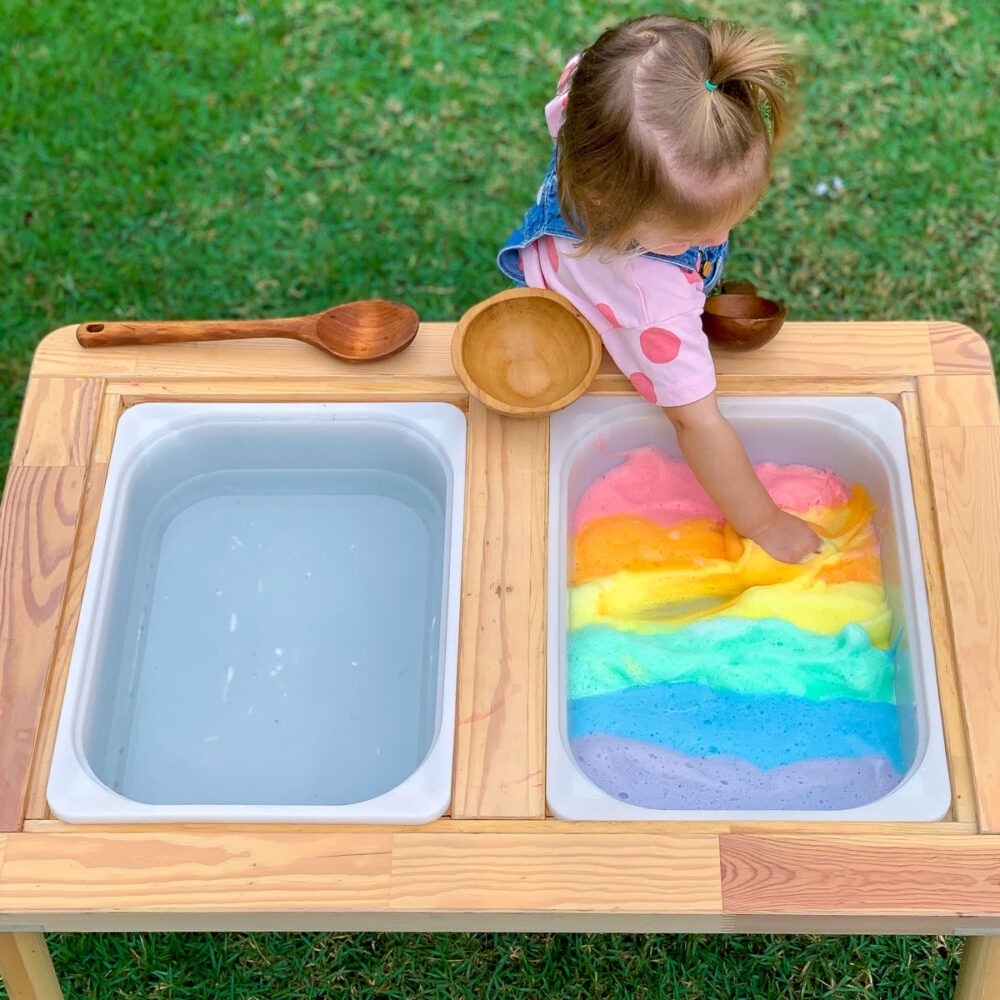
This taste-safe foam sensory bin is bubbly, fluffy fun for kids of all ages—especially toddlers who still like to explore with their mouths! Made with just a few simple ingredients, this foam is safe, easy to whip up, and perfect for scooping, swirling, and imaginative sensory play.
Full step-by-step directions live on our taste-safe foam recipe page. The two things worth grabbing first are an electric mixer and sensory bin tools.
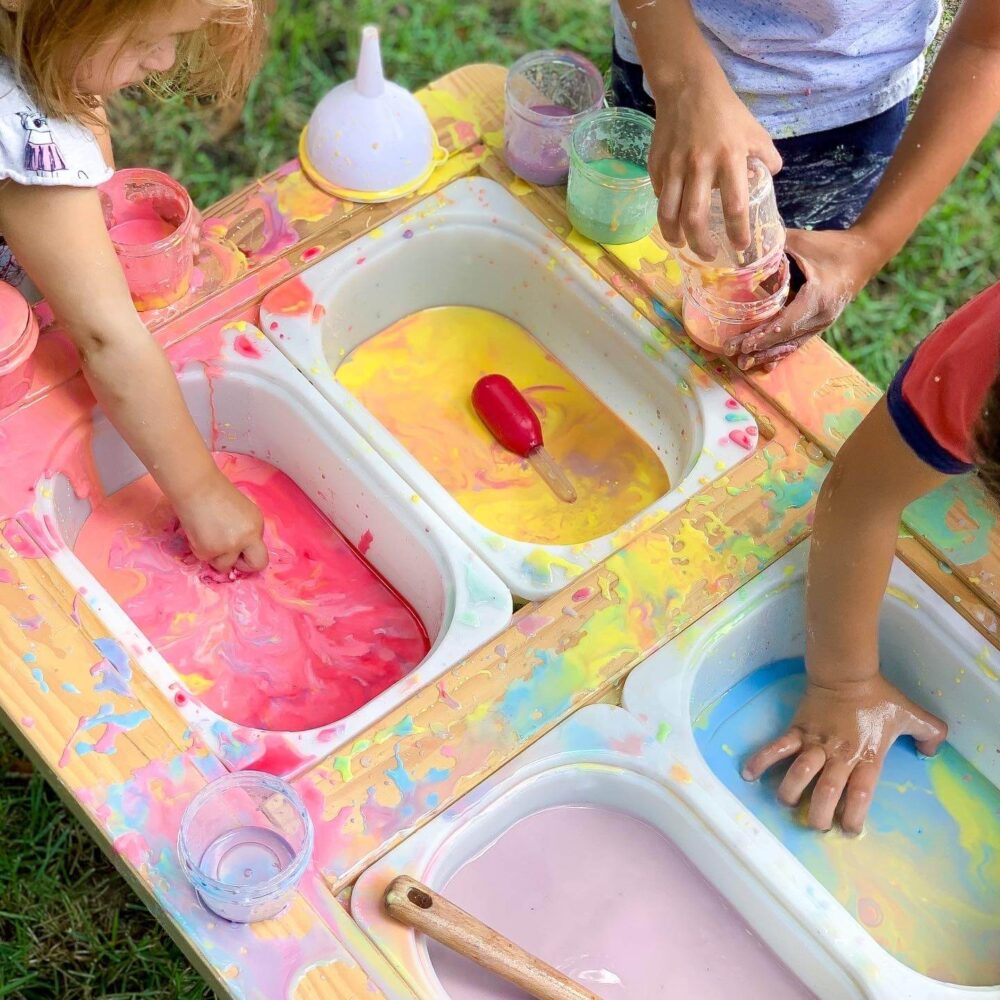
Color Mixing Sensory Bin Idea
This color mixing sensory bin is a vibrant way to introduce early science concepts through hands-on play! Using colored water, droppers, and clear containers, kids can explore how primary colors combine to make new ones—turning sensory fun into a mini science experiment.
Full step-by-step directions live on our color mixing for kids page. The two things worth grabbing first are liquid watercolor and cornstarch.
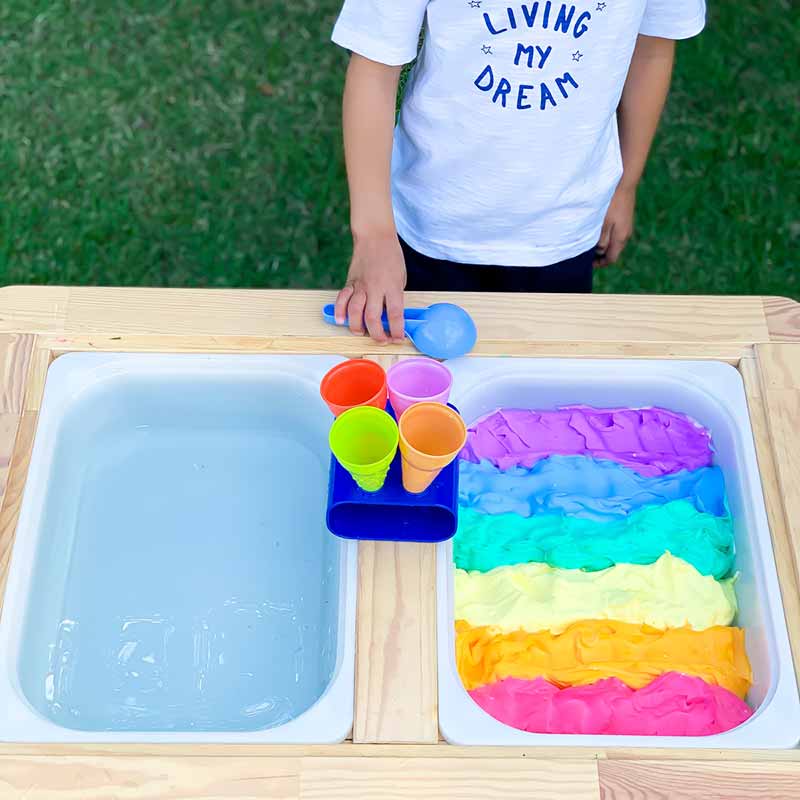
Shaving Cream Cones Sensory Bin Idea
This shaving cream cones sensory bin is a whipped and wonderful way to spark imaginative play! Kids can pretend they’re running their own ice cream shop while building fine motor skills as they scoop, swirl, and sprinkle colorful “ice cream” into toy cones.
Full step-by-step directions live on our shaving cream cones activity page. The two things worth grabbing first are the ice cream cones and scoop set and shaving cream.
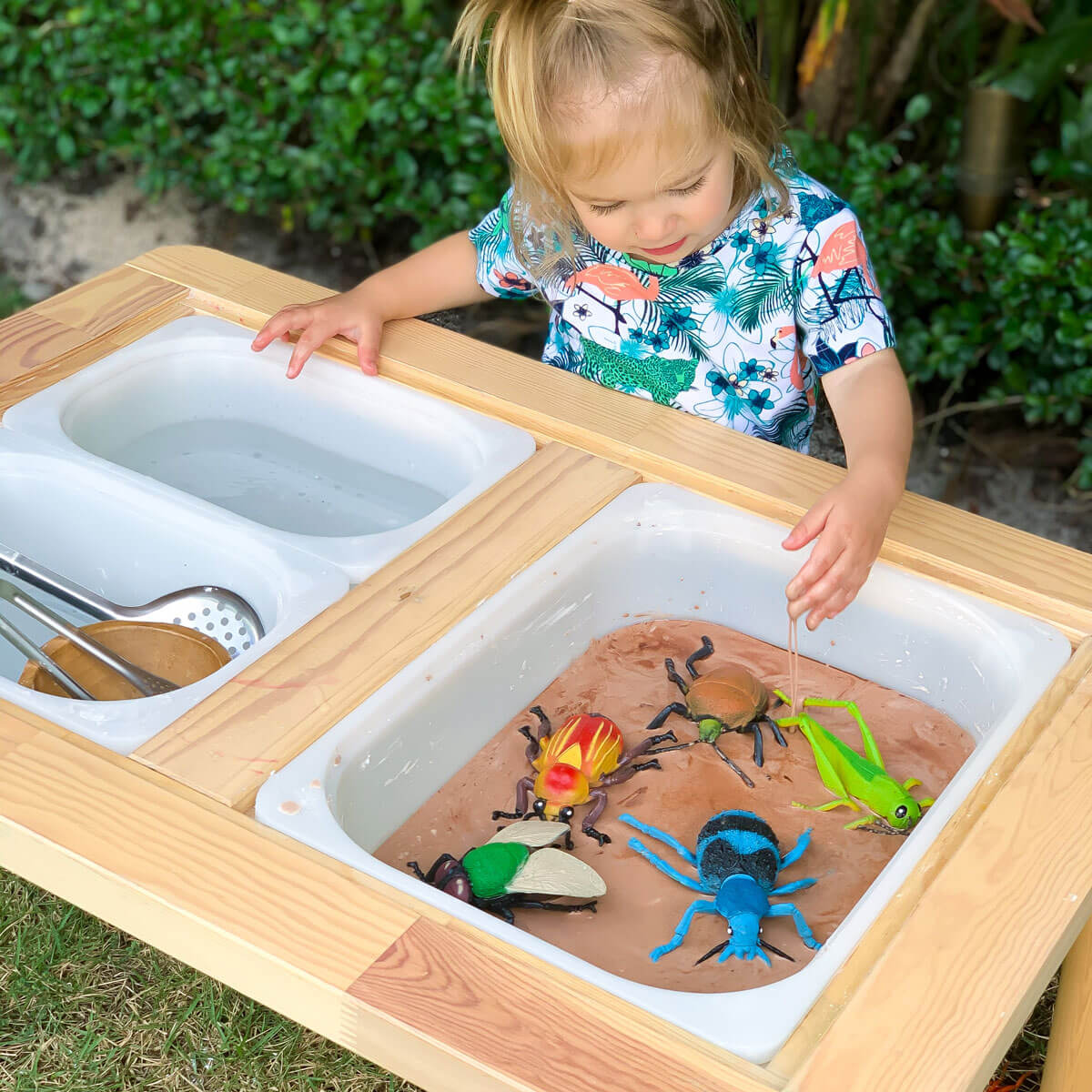
Taste-Safe Mud Oobleck Sensory Bin Idea
This taste-safe mud sensory bin uses oobleck to create a gooey, muddy mess that’s actually safe for little ones to explore! It’s the perfect setup for digging, scooping, and messy play—without any worry if your toddler decides to sneak a taste.
Full step-by-step directions live on our taste-safe mud oobleck recipe page. The two things worth grabbing first are a set of small insects and a set of big insects.
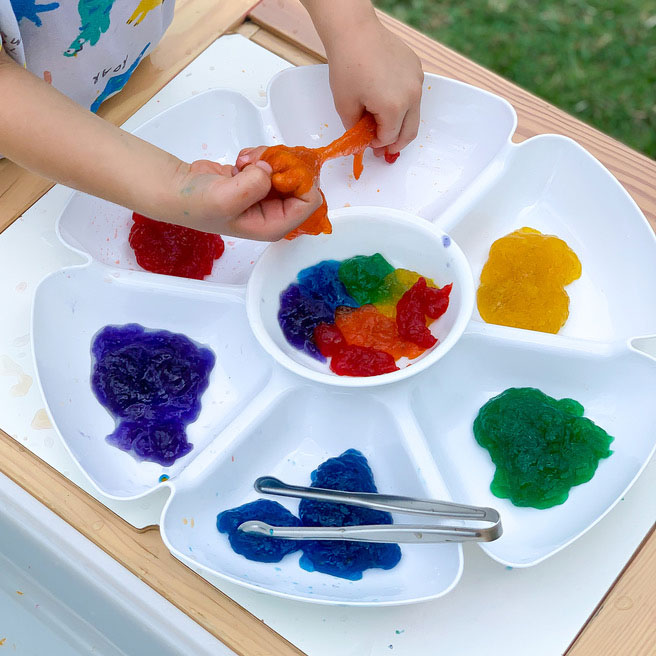
Toddler-Friendly Slime Sensory Bin Idea
This slime sensory bin for toddlers is stretchy, squishy fun made with safe, taste-friendly ingredients—perfect for little ones who love to explore textures! It’s easy to make, soothing to play with, and a great way to introduce slime without the worry of harsh chemicals.
Full step-by-step directions live on our toddler-friendly slime recipe page. The two things worth grabbing first are psyllium husk and natural food dyes.
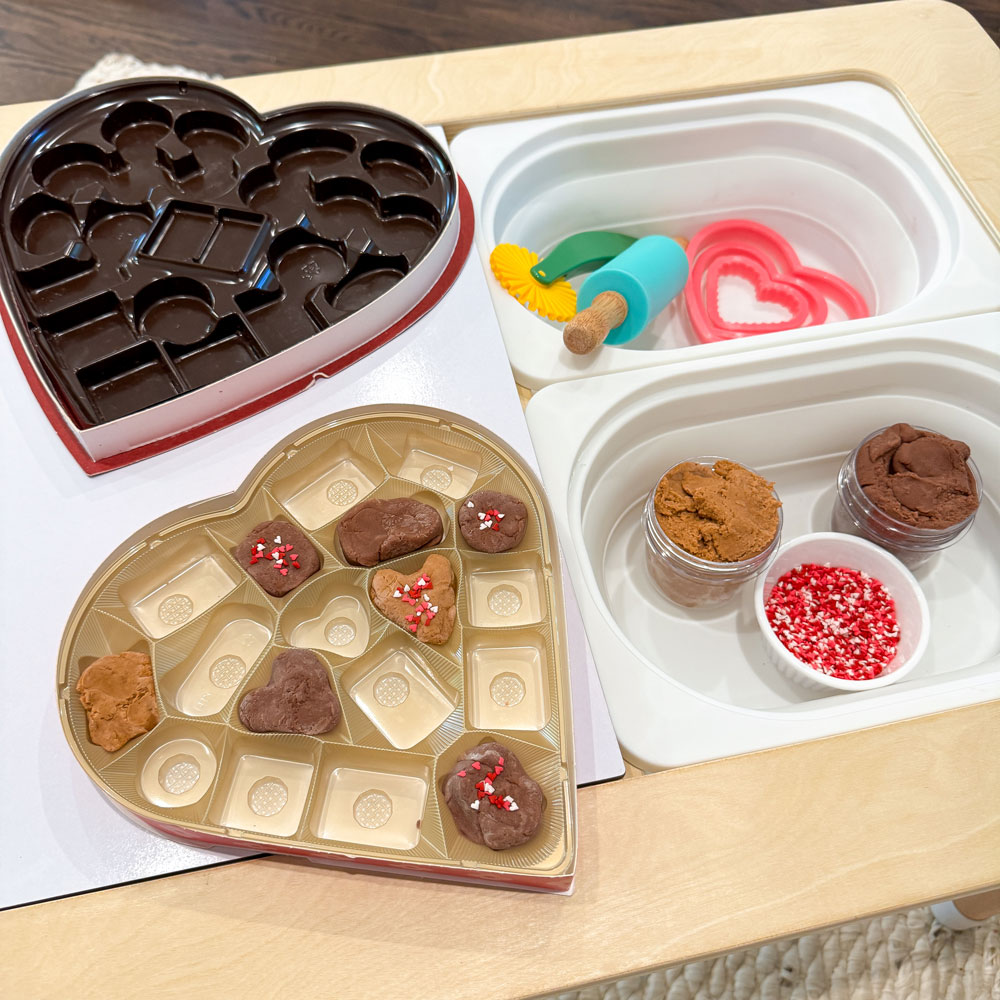
Cocoa Playdough Sensory Bin Idea
This cocoa playdough sensory bin smells just like chocolate and adds an extra layer of sensory fun to classic playdough time! It’s soft, easy to mold, and made with taste-safe ingredients—perfect for rolling, squishing, and pretend baking play.
Full step-by-step directions live on our cocoa playdough recipe page. The two things worth grabbing first are chocolate boxes and heart shape cutters.
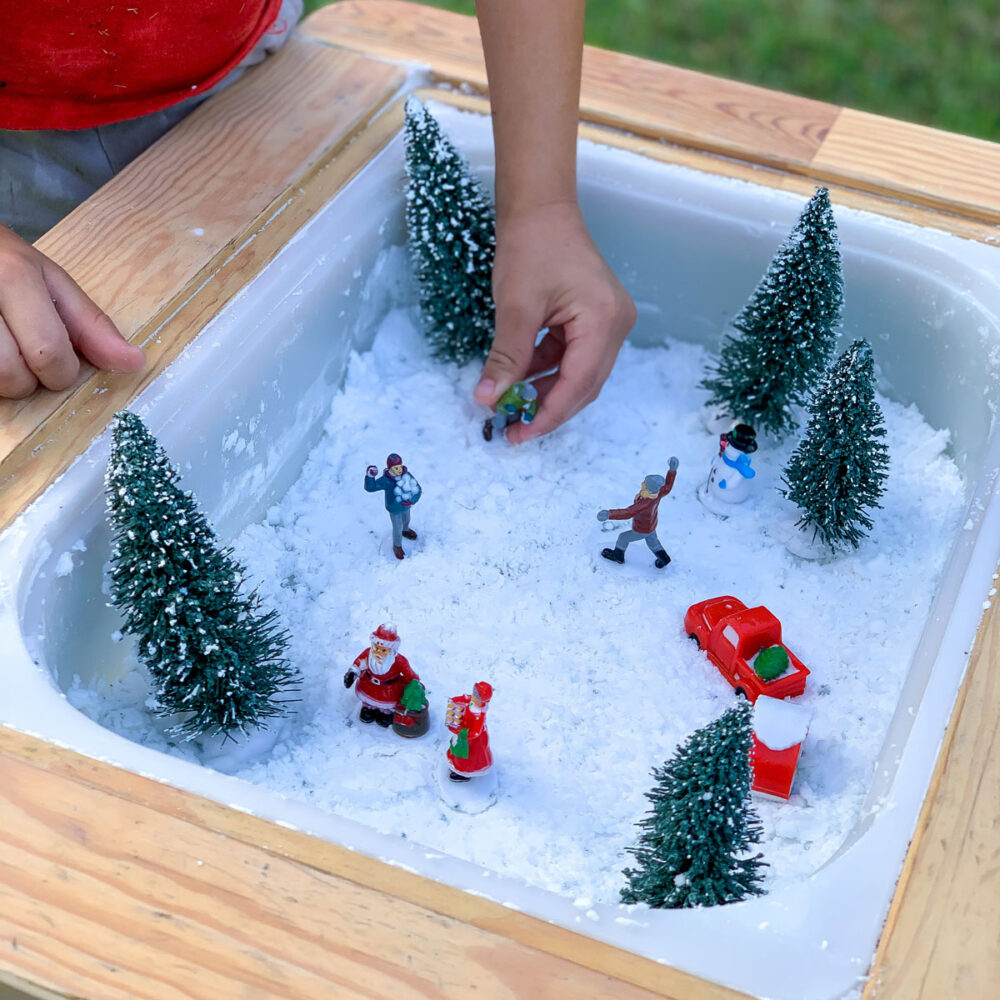
DIY Snow Sensory Bin Idea
This DIY snow sensory bin brings all the frosty fun indoors—no cold weather required! With just a couple of simple ingredients, you can create a cool, crumbly snow-like texture that’s perfect for scooping, molding, and pretend winter play.
Full step-by-step directions live on our DIY snow recipes page. The one thing worth grabbing first is arctic animal figurines.
Why sensory play is worth the mess
Sensory bins aren’t just fun—they’re packed with developmental benefits! They help:
- Build fine motor skills through scooping, grasping, and transferring objects.
- Encourage imaginative play and creative thinking.
- Strengthen problem-solving skills as kids explore different textures and materials.
- Support language development, especially when playing with themes like kitchens, construction sites, or ocean life.
By using a sensory bin, kids can learn through play while staying engaged for hours. Try these ideas, mix and match materials, and create your own unique sensory experiences!