
How to Use the Philips Pasta Maker 7000 and Its Shape Discs

The Philips Pasta Maker 7000 mixes, kneads and extrudes fresh pasta in minutes. The discs are what make it worth owning: swap one in and the same dough comes out as macaroni, a dinosaur, a jack-o-lantern or a Christmas tree. Here is every disc I own, which shapes actually hold up, and the two recipes I use.
Why this machine over the others
I have tested quite a few pasta makers, including hand-crank models and the ones that attach to a stand mixer. The Philips Pasta Maker 7000 is the best of them, because it is fully automatic: it mixes, kneads and extrudes in one go, in minutes, with no rolling and no drying rack gymnastics.
The parts are dishwasher safe, it stores in a normal cabinet, and it is forgiving enough for a beginner while still giving you real control over shape and texture.
See the Philips Pasta Maker 7000
All activities should be supervised by an adult. As an Amazon Associate I earn from qualifying purchases. This post may contain affiliate links.
The shape discs, and what each one makes
The machine ships with a handful of standard discs, and you buy the rest separately. That is where it gets fun: seasonal shapes for Halloween, fall and Christmas, plus everyday ones like dinosaurs, wheels and rigatoni. A note before you buy a stack of them: the finer the detail, the more fragile the shape. Below is what each disc makes. The two Halloween discs are the ones I have run myself, so those are the only ones with notes on how they held up.


The pumpkins and bats come out beautifully. The spiders have thin legs that break easily.
See this disc
The spider web and witch hat hold up well. The skull and bones tend to snap at the narrow joins.
See this disc
Pumpkin, fall leaf and mushroom designs.
See this disc
Christmas tree, Santa and angel designs.
See this disc
The official Philips set: shells, paccheri, rigatoni and macaroni.
See this disc
Knead at least three consecutive times, or rest the dough 30 minutes, before extruding. This dough wants to be wetter than usual.
See this disc
A non-seasonal option for everyday dinners.
See this disc
Classic rotelle wheels.
See this discMaking Halloween shapes: what it actually looks like
Swapping the disc is the easy part. What nobody tells you is that the shape you end up with depends almost entirely on how you cut it. Here is a batch of Halloween shapes coming off the machine in real time.
The cut is the whole trick
Hold a long, thin knife flat against the face of the disc and slice across in one smooth motion as the dough comes through. The closer the blade sits to the disc, the cleaner the shape. Let the pasta extrude even half an inch before you cut and the shape stretches, pulling the detail out of it.
Short shapes like these need frequent cuts, so plan on slicing every second or two the whole time the machine is running.
Which shapes hold up, and which break
Not every shape survives extrusion. After running both Halloween discs:
- Pumpkins and jack-o-lanterns are the best of the bunch. Thick enough to hold their detail.
- Bats came out beautifully. The wing detail is sturdier than it looks.
- Witch hats held up well, down to the small cut-out detail.
- Spider webs came out great as long as you cut close to the disc.
- Spiders have thin legs that break easily. Expect a lot of broken ones.
- Skulls and bones have the same problem. The narrow connections snap.
The fragile shapes are not a dealbreaker, since a bowlful still reads as Halloween either way. But if you are plating these for a party, lean on the pumpkins and bats.
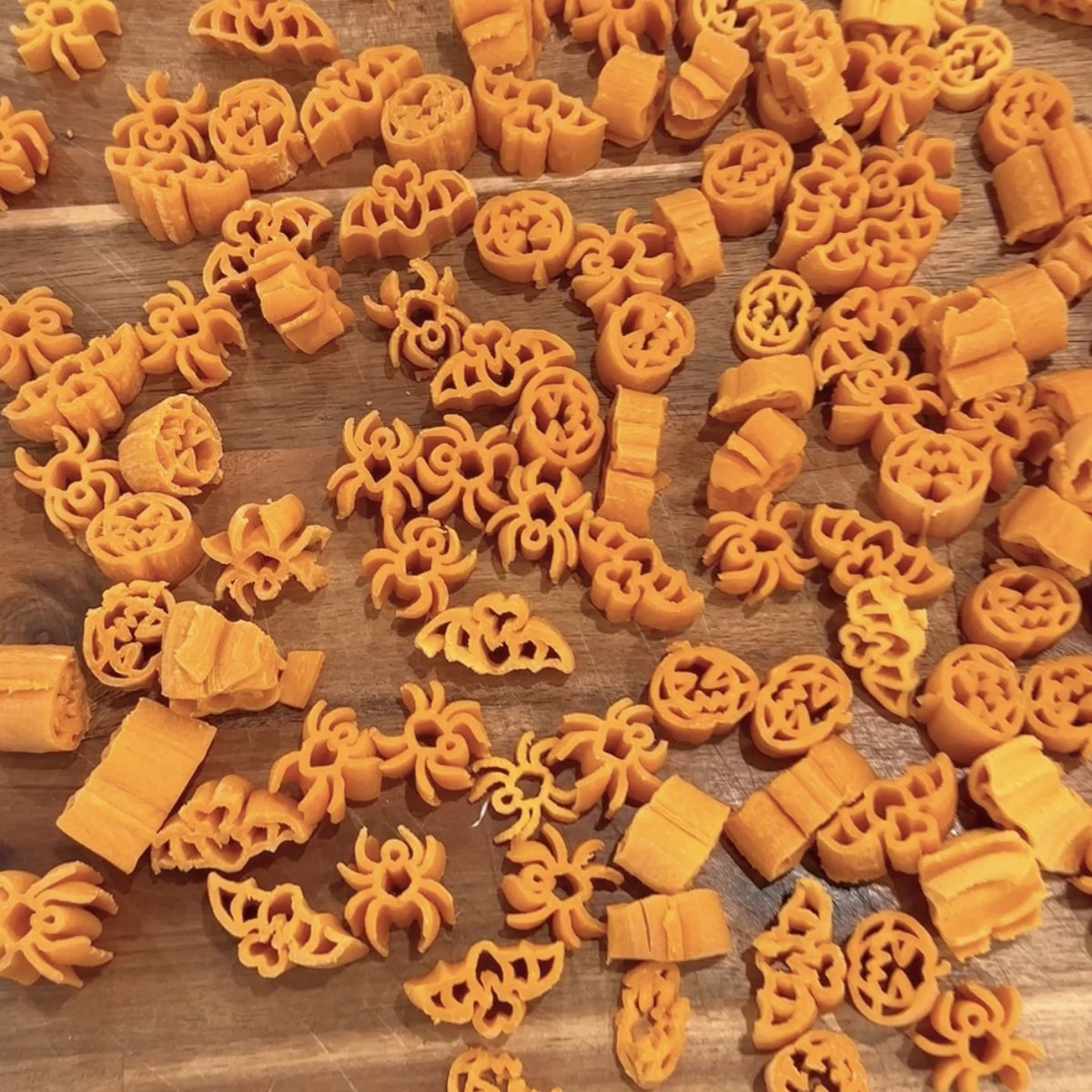
They are much smaller than you expect
Photos make these look cookie-cutter sized. They are not. A witch hat is about the width of a thumbnail, which is part of why the cut matters so much.
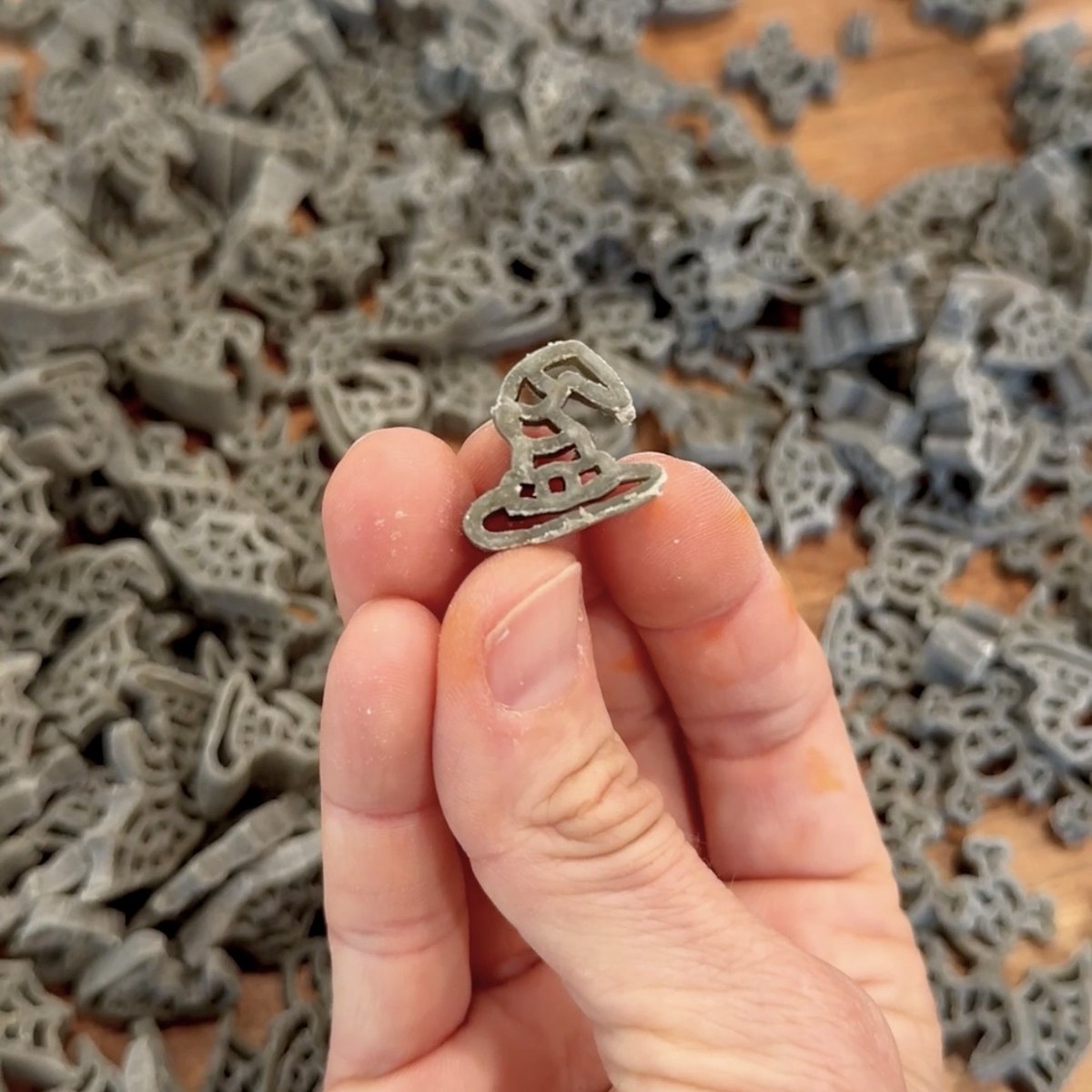
Two colors in one batch
The orange and the charcoal batches in the video were both made with ordinary food coloring, added to the liquid before it goes into the machine. That is the simplest route and the one I would start with.
If you would rather color naturally, it is very doable, but there is one rule that matters more here than in hand-made pasta: this machine needs a crumbly, pebble-like dough, so anything you add has to be counted as part of the liquid.
- Powders are the easy option. Carrot powder, turmeric, paprika or beet powder stir straight into the flour and barely move the moisture balance. Turmeric is potent, so start with half a teaspoon.
- For orange, try carrot, butternut squash or sweet potato puree, or carrot powder. Puree works but it is wet, so reduce the water by roughly the volume of puree you add and adjust from there.
- For black and charcoal, squid ink is the classic, and activated charcoal powder gets you the same color without the seafood flavor.
Whichever you use, check the dough once the machine has kneaded for a minute. If it has gone sticky rather than crumbly, add flour a tablespoon at a time until it looks like coarse pebbles again.
The two dough recipes
Each one is a single run of the machine. Weigh the flour if you can; this is the one measurement worth being fussy about.
Egg-based fresh pasta
200g (about 1¾ cups) all-purpose flour
1 large egg
60ml (¼ cup) water
A pinch of salt
Egg-free fresh pasta
200g (about 1¾ cups) all-purpose flour
100ml (about ⅓ cup plus 1 tbsp) water
1 tbsp olive oil (optional)
A pinch of salt
The method, either way
Flour into the machine
Measure the flour straight into the Philips Pasta Maker 7000 and close the lid. Make sure every part is clean and dry first, since leftover dough from a previous batch changes the texture of the new one.
Mix the liquid separately
For the egg version, beat the egg in a bowl and add the water. For the egg-free version, stir together the water, olive oil and salt. If you are coloring the dough, this is where the color goes in.
Start the machine, then pour slowly
Turn it on first, then pour the liquid in gradually through the opening while it kneads. Pouring it in all at once is the most common way to end up with a sticky, unextrudable dough.
Check the texture, then let it extrude
After a minute it should look like small, coarse pebbles that hold together when pressed, not a smooth elastic ball. Too dry, add water a teaspoon at a time. Too sticky, sprinkle in flour. Then fit your disc and let it run.
Egg-free dough generally wants more moisture than egg-based, so expect to add a little extra water. If your eggs are smaller than large, add a splash more water to the egg version too. Olive oil is optional and makes the dough slightly smoother and richer. For a more traditional bite, swap some of the all-purpose flour for semolina.

Tips that make the difference
Get the dough consistency right and everything else follows
This is the single thing that separates a good run from a jammed machine.
- Aim for pebbles, not a ball. The dough should look like small, coarse crumbs and feel slightly damp but not sticky. It should hold together when pressed between your fingers.
- Too dry and crumbly? It will not extrude. Add water a teaspoon at a time.
- Too wet or sticky? The pasta clumps as it comes out. Sprinkle in a little more flour.
- Weigh your flour. A kitchen scale beats cups here. Too much or too little flour is the usual reason a batch misbehaves.
- Start with a clean, dry machine. Residual dough from a previous batch will change the texture of the next one.
- Have your drying rack or pot ready. The machine works fast, and pasta starts appearing sooner than you expect.
- Color counts as liquid. Food coloring, purees and squid ink all add moisture, so reduce the water slightly to keep the dough crumbly.
- Flavor the dough, not just the sauce. Herbs, spices and vegetable purees all work, with the same moisture caveat.
- Leftovers keep. Dry the pasta for later or freeze it. Fresh pasta cooks in a couple of minutes, so watch the pot closely.

More fun family recipes
Making food from scratch does not need to be complicated. These are the ones my kids ask for again.


Halloween activities and craftsFall activities for kidsAll holiday hubs
What’s Next?
How to Drill a Pumpkin – An Easy Design Kids Can Do Themselves
Skip the carving knife. A cordless drill turns pumpkin decorating into something a child can do start to finish, and the holes glow beautifully at night.

84 Fun and Easy Halloween Crafts and Activities for Kids in 2026
Get into the spooky spirit with these 84 Halloween crafts and activities for kids! Easy and fun ideas to make Halloween extra special.
52 Fall Craft Ideas – Create Beautiful Keepsakes This Season
Discover 52 fall craft ideas perfect for kids in any setting—at home, in school, or outdoors. Get creative this autumn!