Gross Motor Skills: Fun Movement Games for Active Kids

Gross Motor Skills: Fun Movement Games for Active Kids

Gross Motor Skills: Fun Movement Games for Active Kids
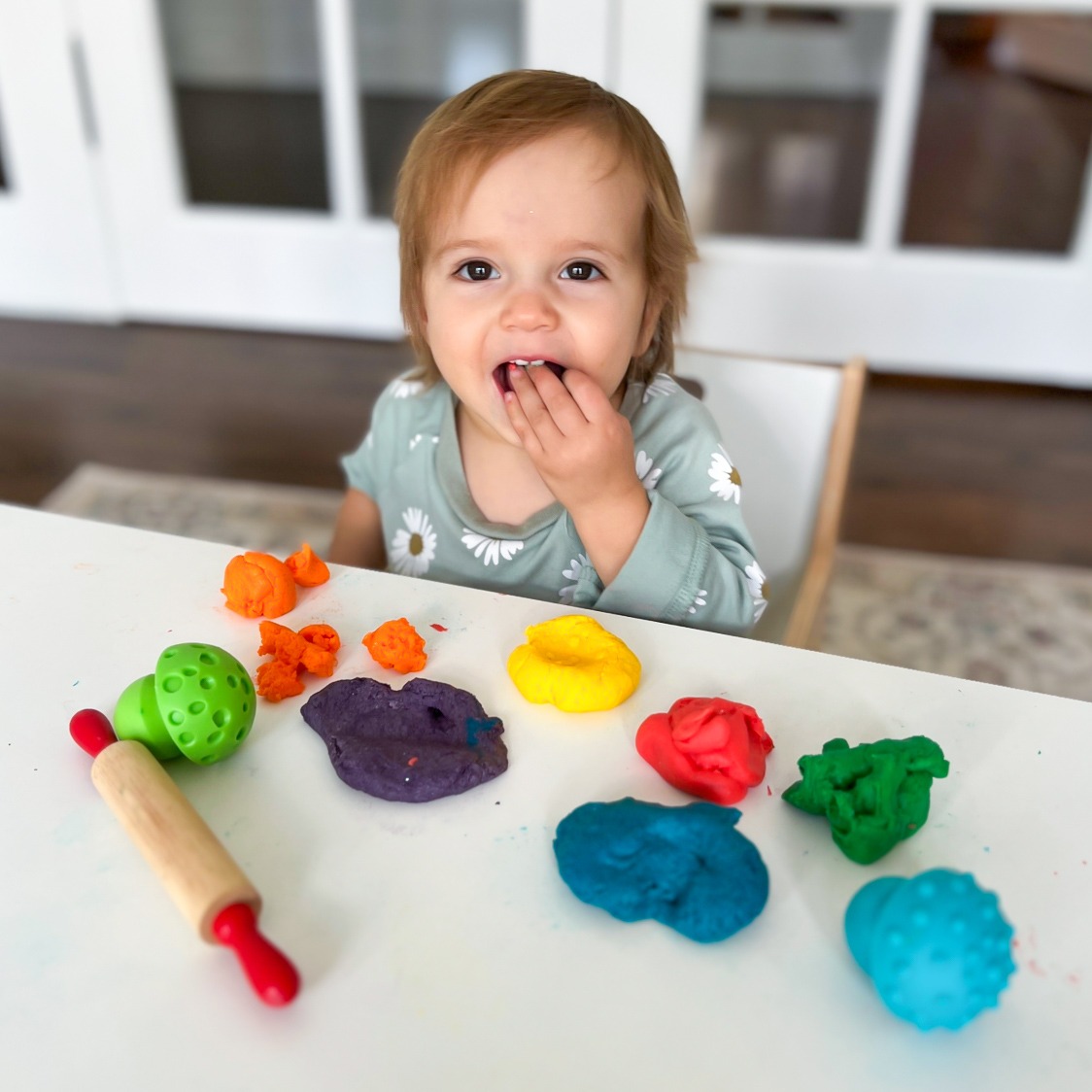
edible play dough

This is your ultimate guide to understanding gross motor skills including activity ideas, milestone timeline, and product suggestions!

Understanding Gross Motor Skills: Building Blocks for Physical Development

Gross motor skills encompass the coordination of large muscle groups to perform activities like walking, running, jumping, and throwing. In the preschool years, these fundamental abilities form the cornerstone of physical development, laying the groundwork for more refined movements later in life. From navigating playground equipment to participating in group games, gross motor skills enable children to explore their surroundings, interact with peers, and build confidence in their physical abilities. In this comprehensive guide, we’ll delve into the significance of gross motor skills and offer a wealth of engaging activities and product recommendations to foster their growth and enjoyment.

This article may contain affiliate links. As an Amazon Associate, I earn from qualifying purchases.

Fun Activities to Develop Gross Motor Skills

Engaging in playful and interactive activities is an excellent way to support your child’s gross motor skill development. Here are some enjoyable activities that promote movement and coordination:
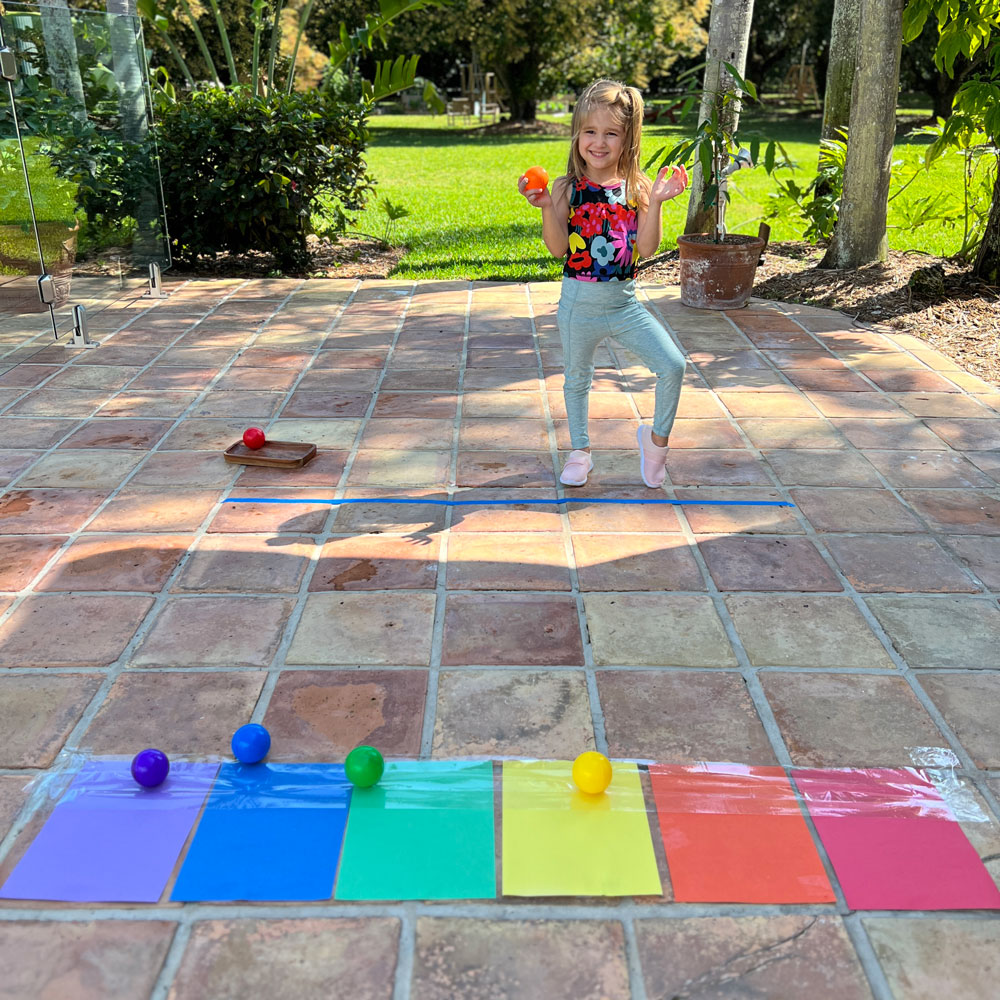
gross motor activities for preschoolers

AIM, ROLL, AND STICK!

Tape construction paper on the ground. Put another strip of tape across the papers, but sticky side up. Aim, throw/roll colorful balls at the corresponding paper. The tape will catch it, stopping the ball in its tracks! 
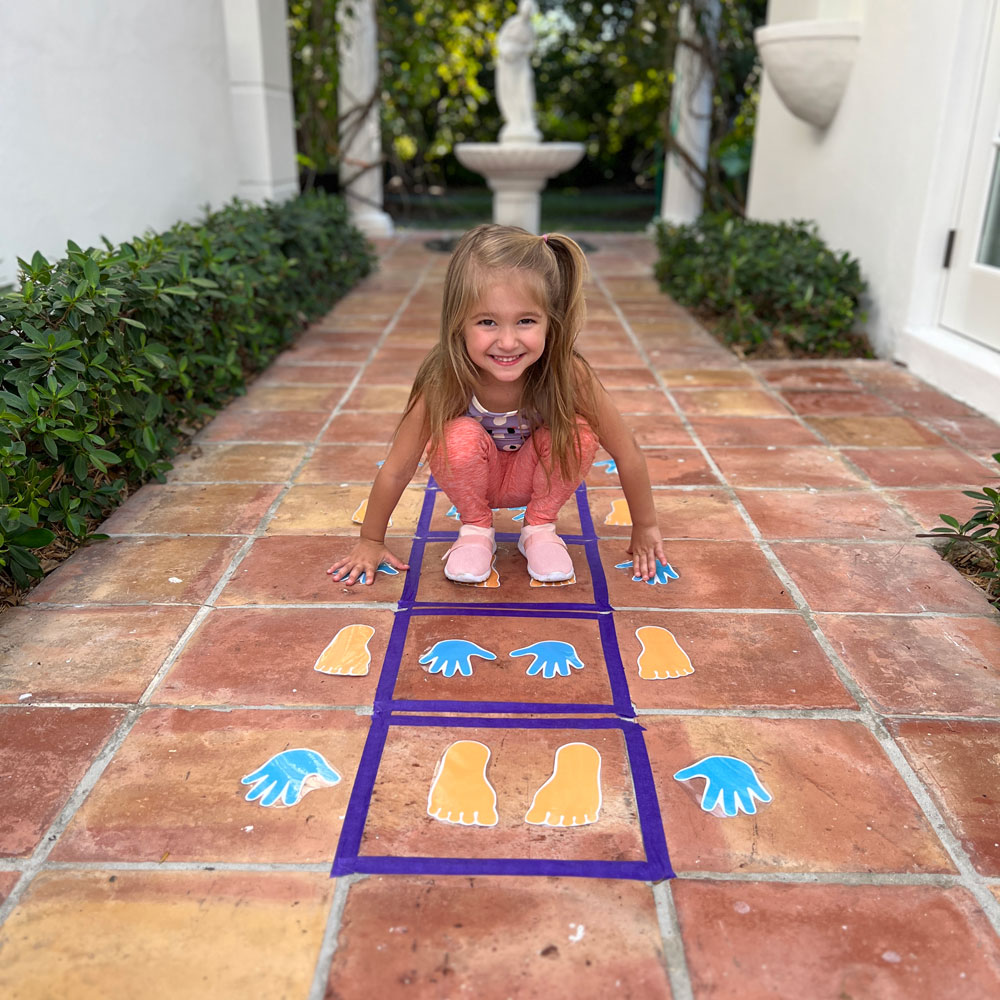
gross motor activities for preschoolers

HAND AND FEED COORDINATE

Get the free printable hands and feet HERE to practice coordinating hand and feet movements. Pictured above, I created a set up where you have to hop while alternating the position of your hands and feet.

gross motor activities for preschoolers

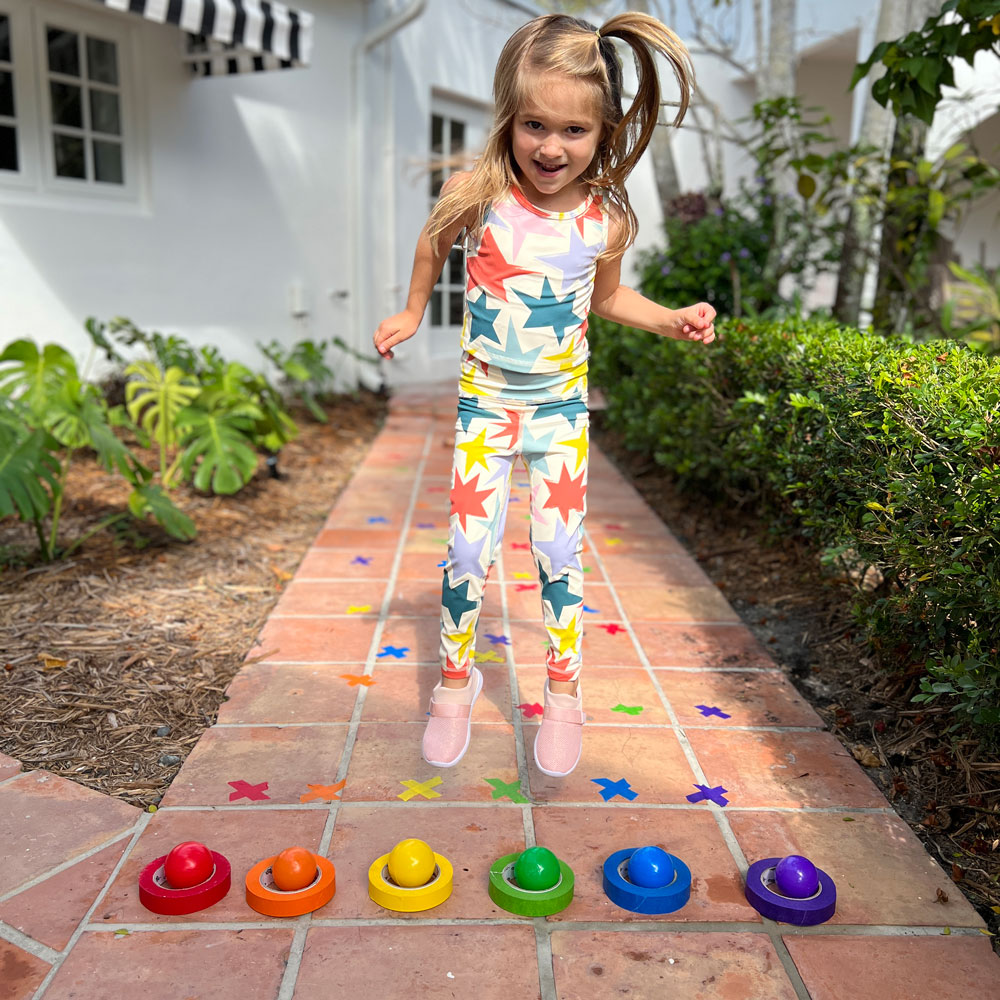
HOP AND COLOR MATCH

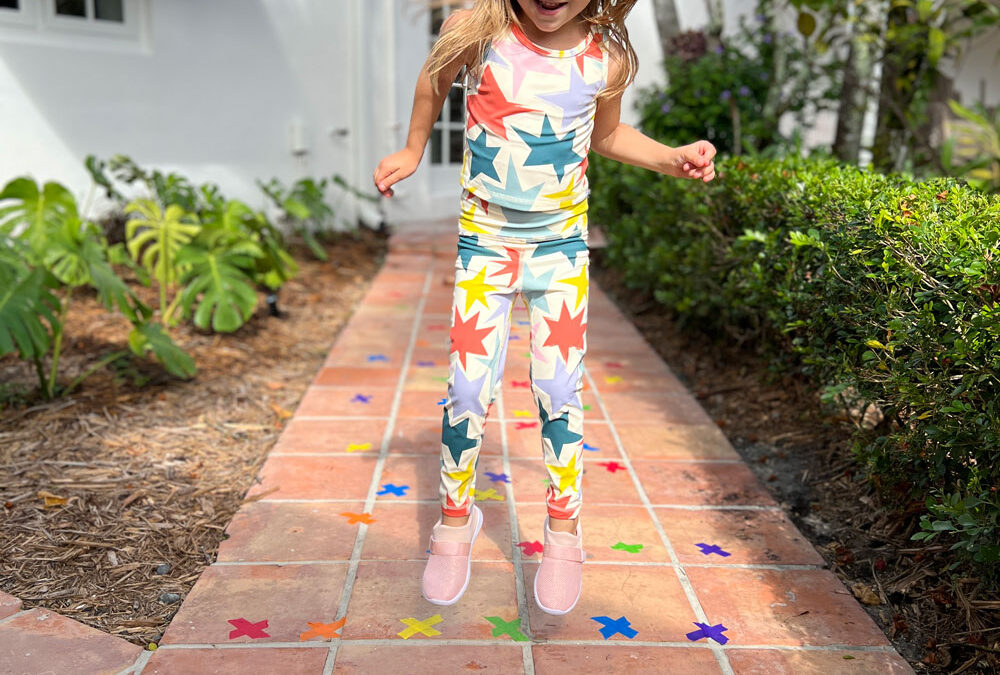
Just use X marks of colorful tape scattered across a small hallway. Place colorful balls at the starting point, and the tape rolls at the ending point. Task your kiddo to hop from on X mark to another while matching the ball to the corresponding colored tape roll.
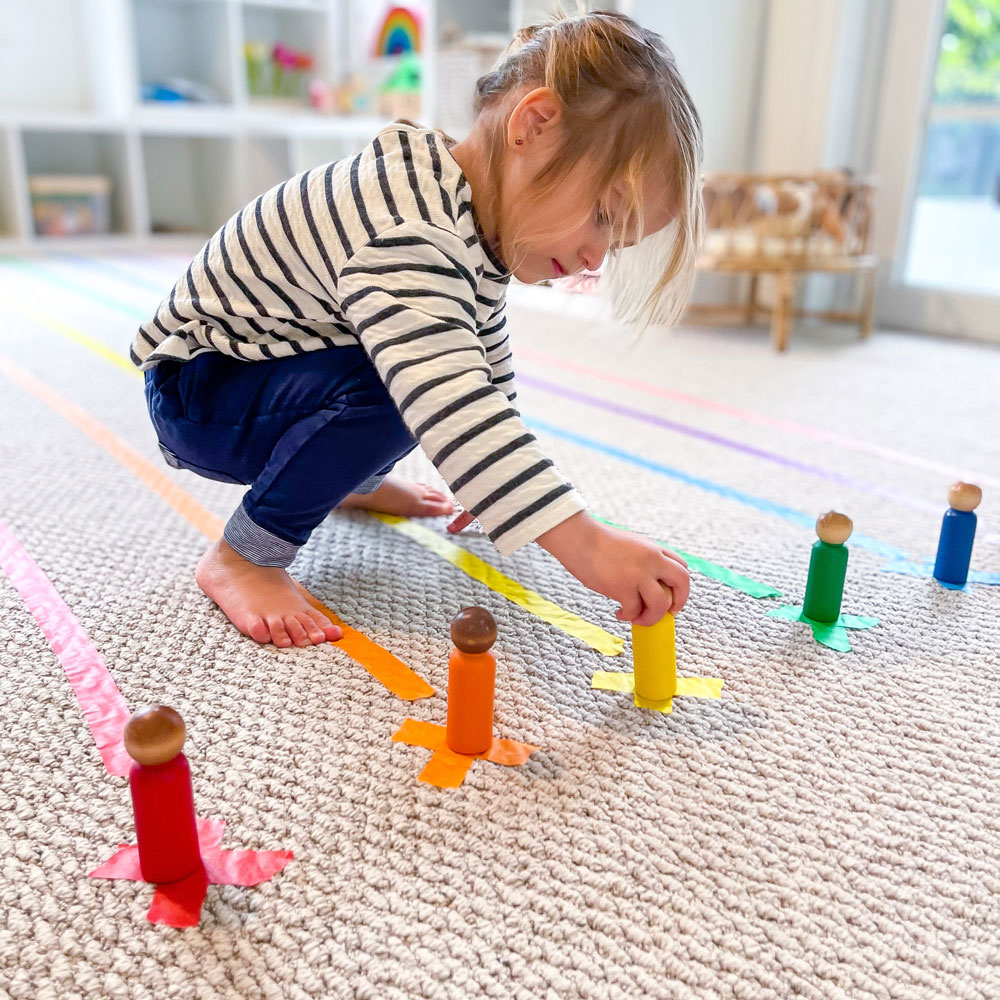
gross motor activities for preschoolers

WALK IN A STRAIGHT LINE!

Use tape to make a straight line for young kids to balance themselves as they walk.  I created 6 different colored lines ending with an X mark. I tasked my kiddo to walk in a straight line and match a colorful toy to it’s corresponding X.
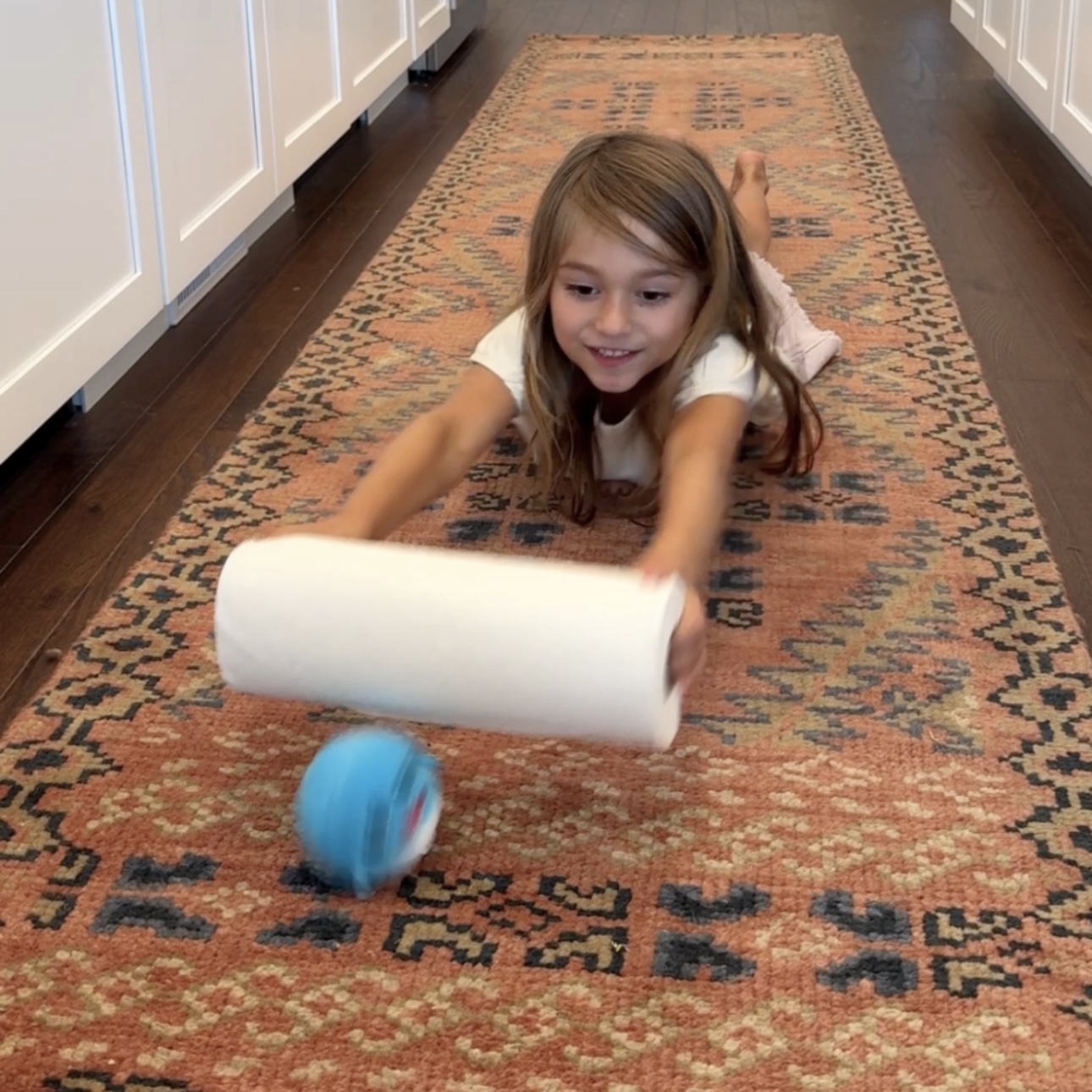
Child lying on stomach using a paper towel roll to push a plush ball forward

BALL BLASTER

Lie on your stomach and use your arms to push a ball away like Superman—this builds back and shoulder strength.
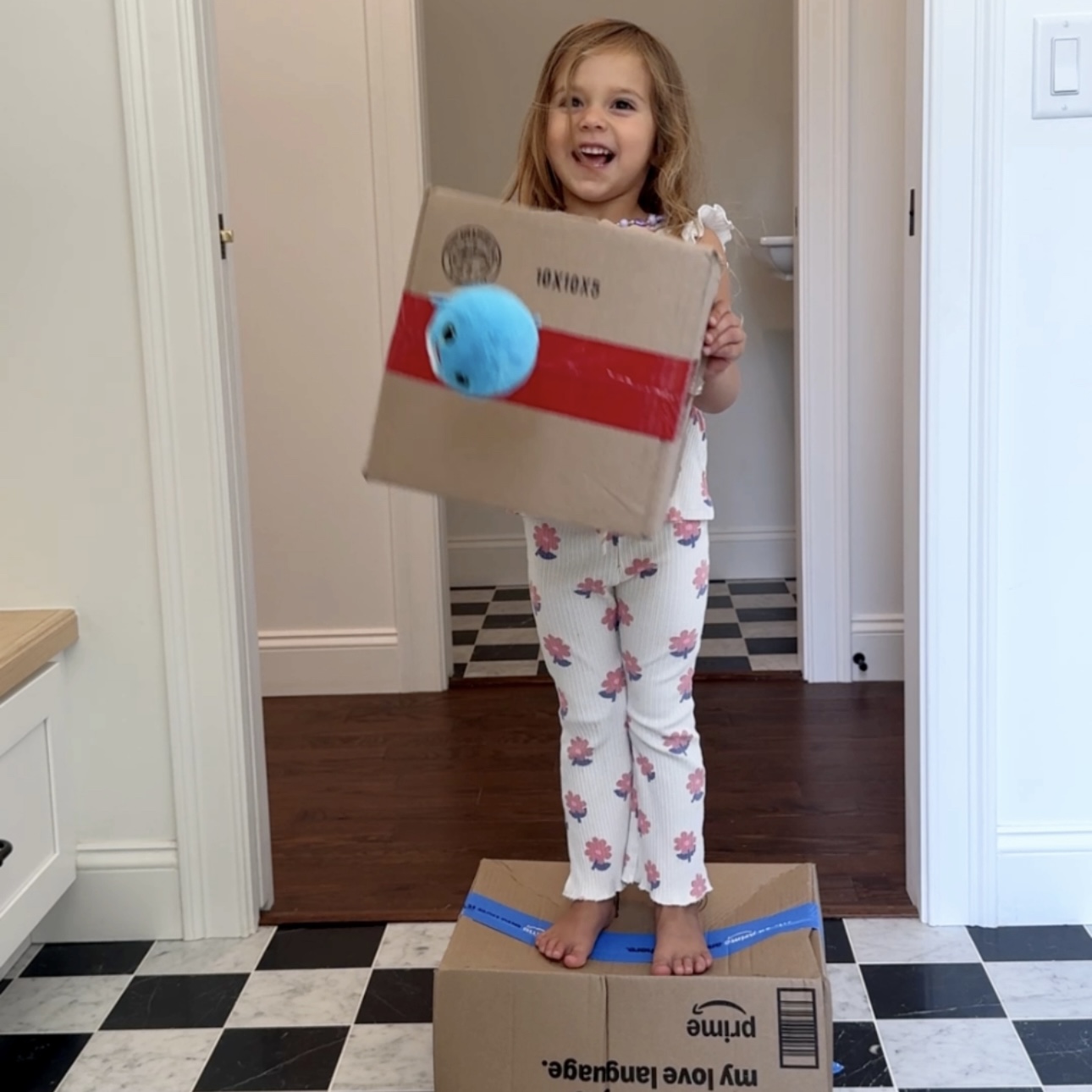
Child standing on a cardboard box balancing while holding a second box to block incoming plush balls

BALL BLOCK AND BALANCE

Stand on a cardboard box and use another box to block incoming balls—this playful challenge builds balance, core strength, and quick reflexes.
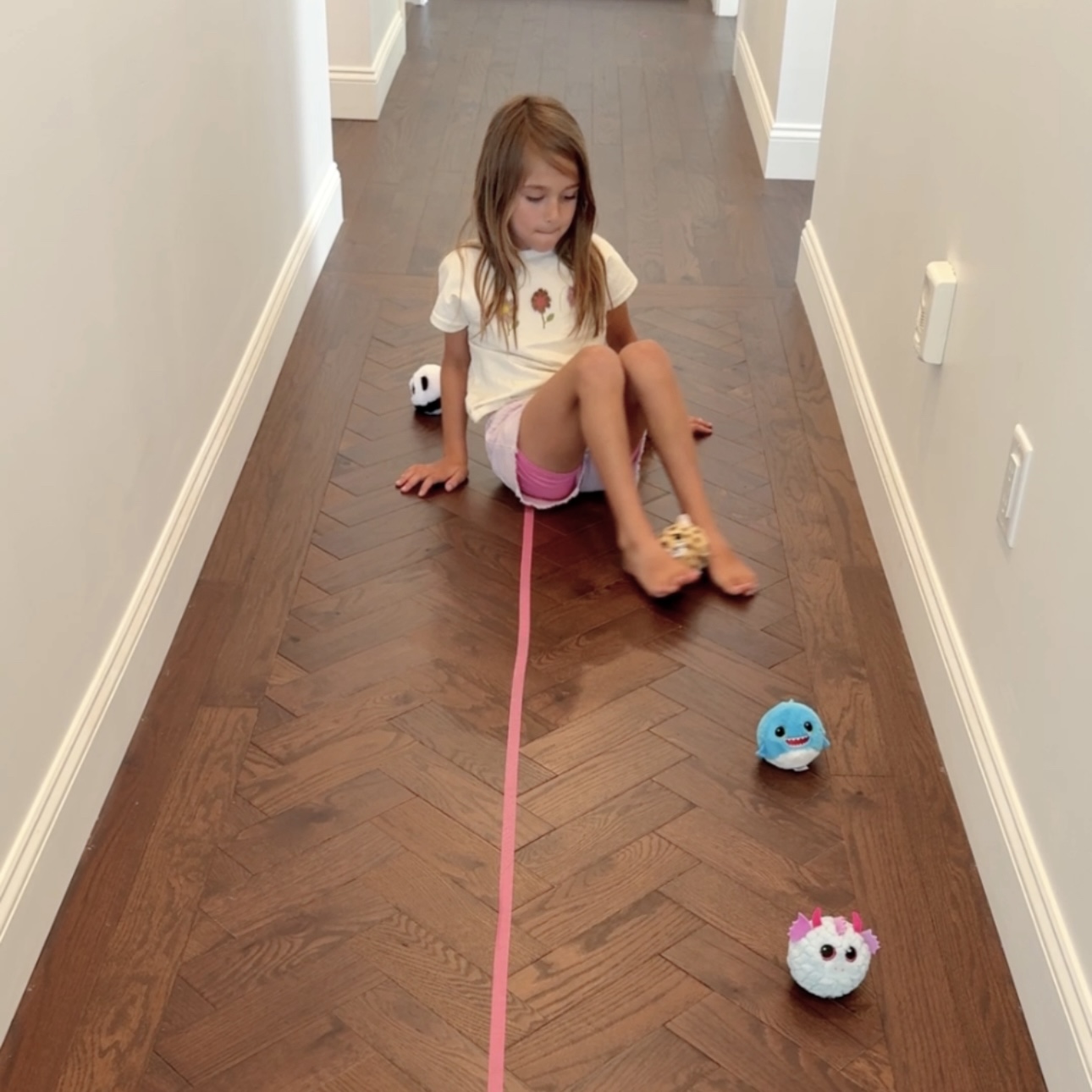
Child sitting and using feet to pass plush balls over a pink tape line on the floor

BALL LINE TRANSFER

Sit on the floor and use your feet to pass a ball over a tape line—this strengthens the core and improves coordination.
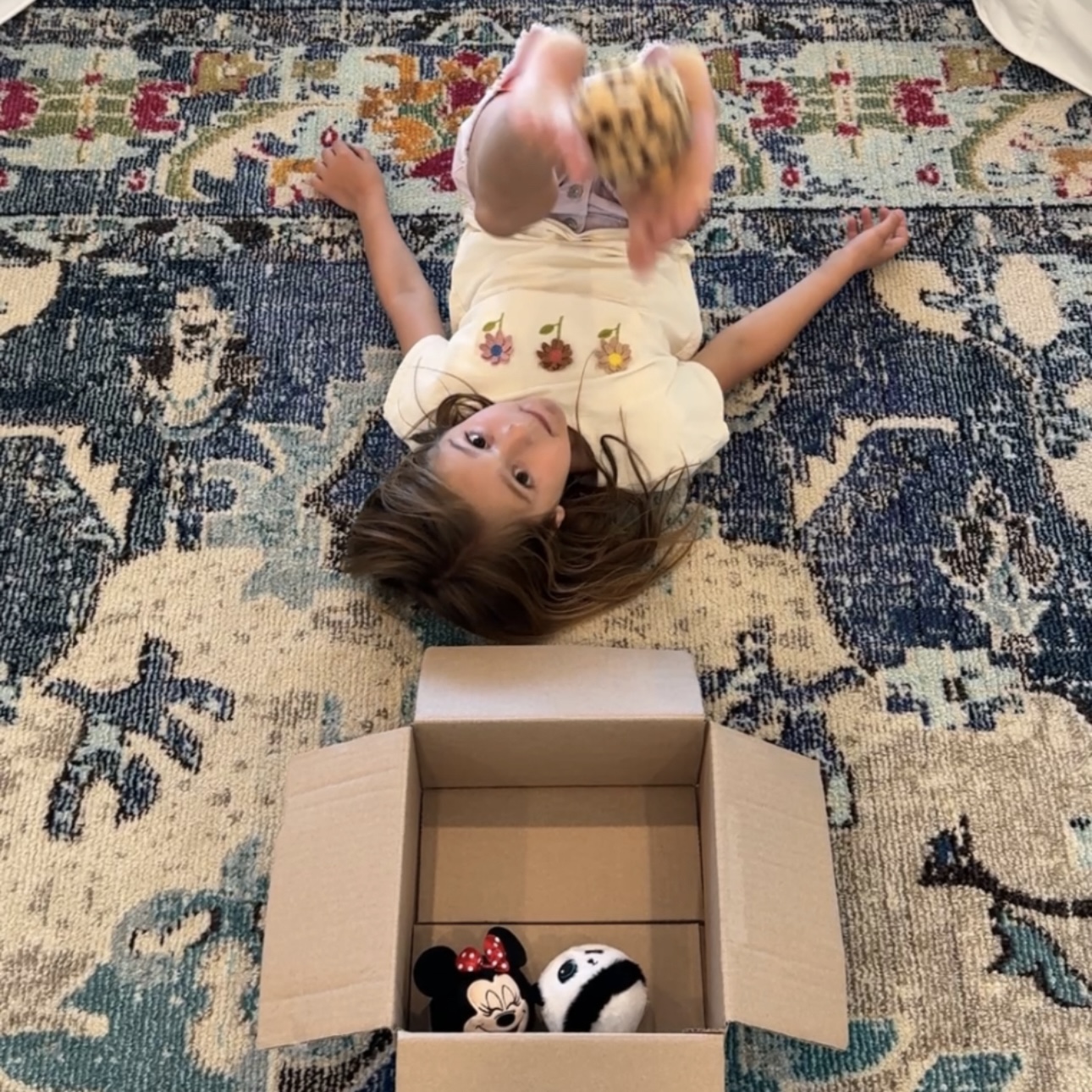
    Child lying on back lifting a plush ball with feet and dropping it into a cardboard box

    LEG LIFT AND DROP 

    Use your feet to lift a ball over your head and drop it into a box behind you—this targets lower abs and motor planning.
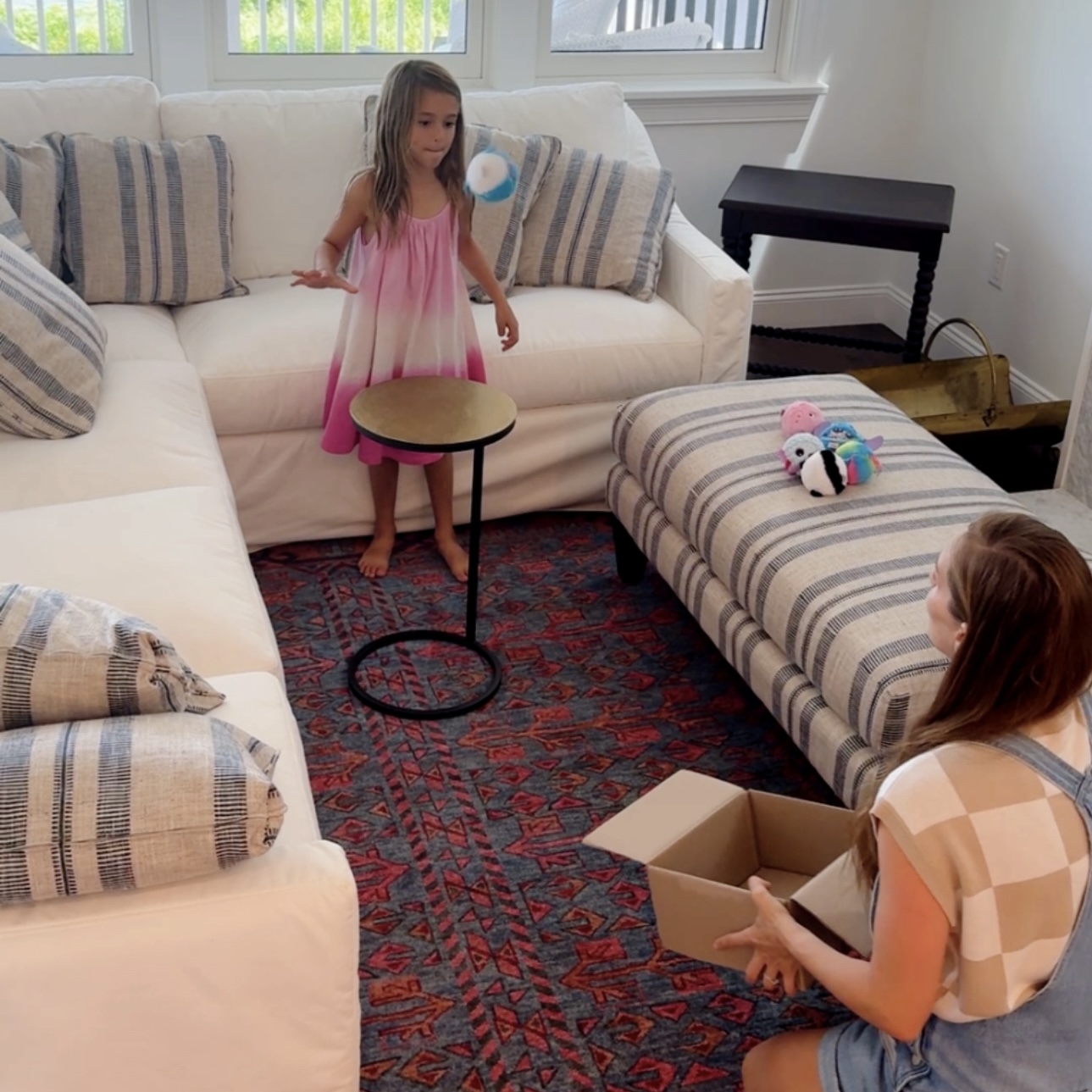
    Child bouncing a plush ball off a table while an adult catches it in a cardboard box

    BALL BOUNCE + CATCH

    Bounce a ball off a table and catch it in a box (or have someone catch it)—this builds hand-eye coordination and timing.
    gross motor activities for preschoolers

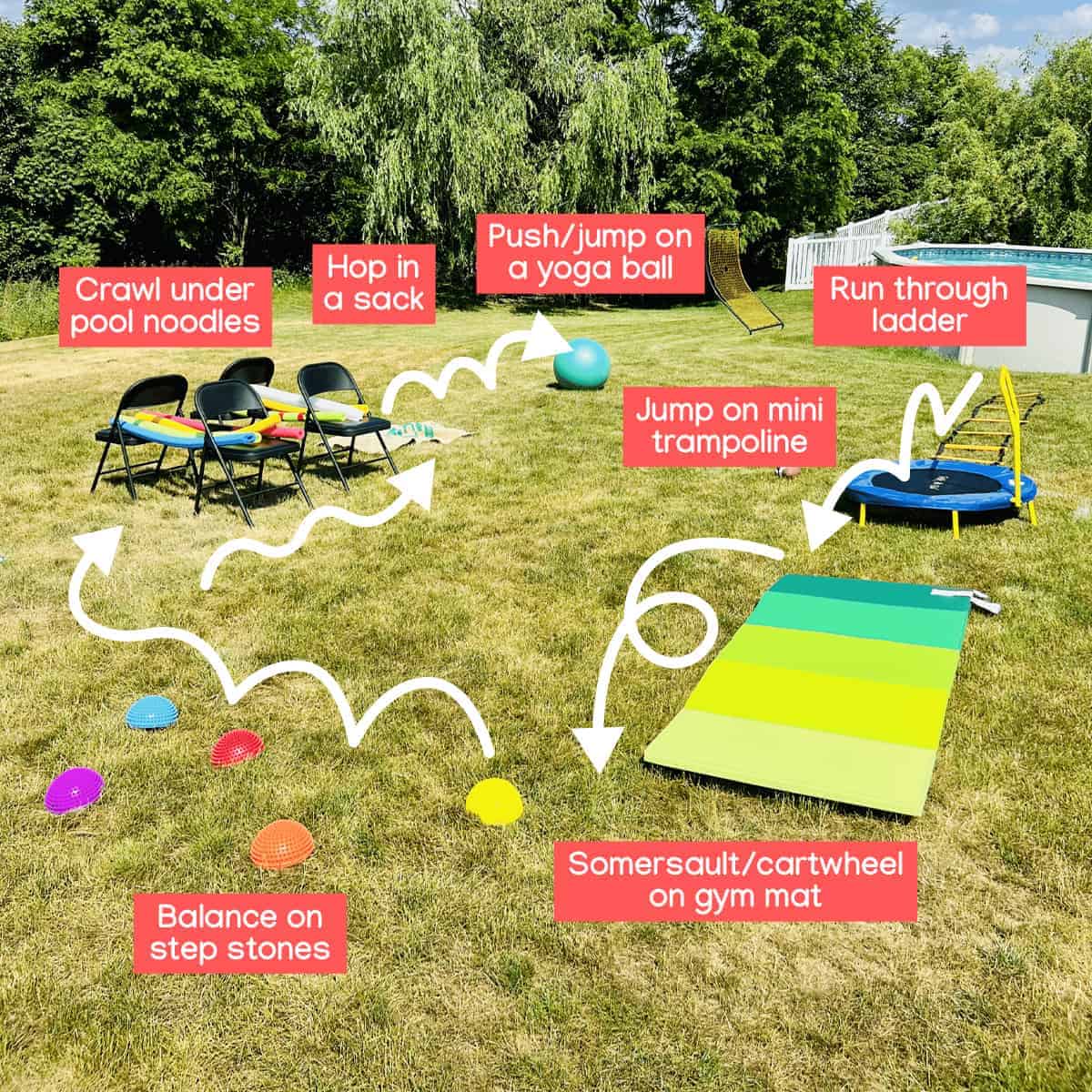
    OBSTACLE COURSE

    Create a mini obstacle course using cushions, hula hoops, cones, and tunnels. Encourage your child to climb over, crawl under, and weave through the obstacles to enhance their balance, agility, and spatial awareness.
    Yoga Poses - Printable for Kids

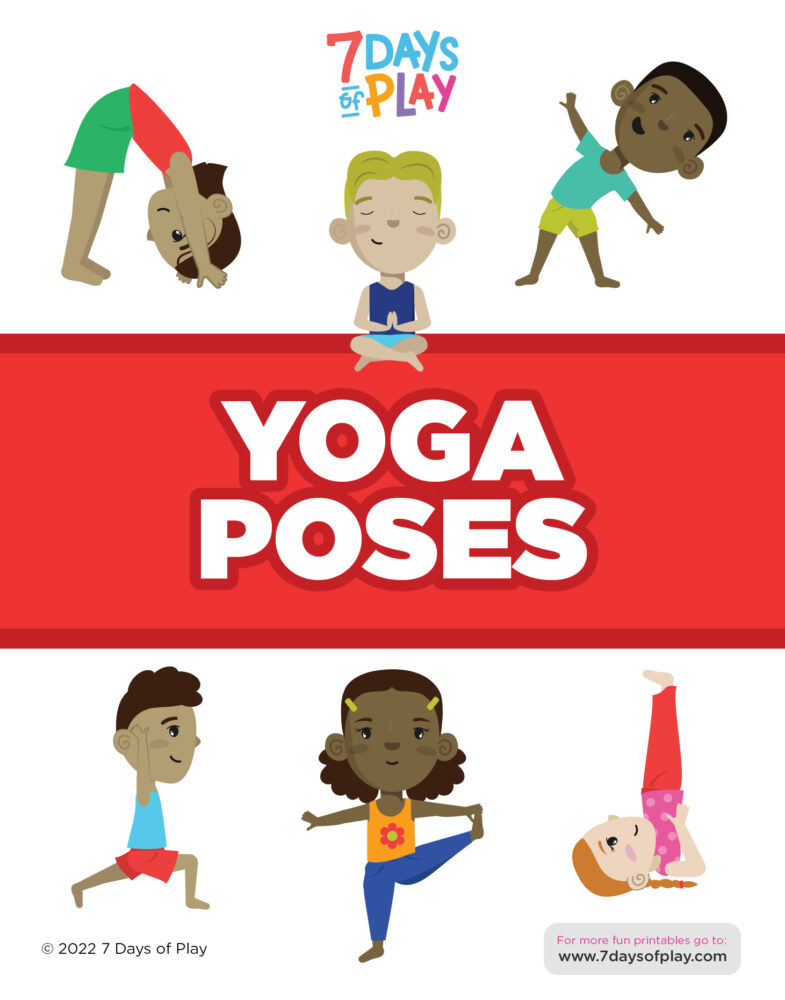
    YOGA FOR KIDS

    Introduce simple yoga poses tailored for children with a free printable dice game! Poses like downward dog, tree pose, and butterfly pose improve balance, strength, and flexibility while promoting mindfulness and body awareness.
      nature scavenger hunt

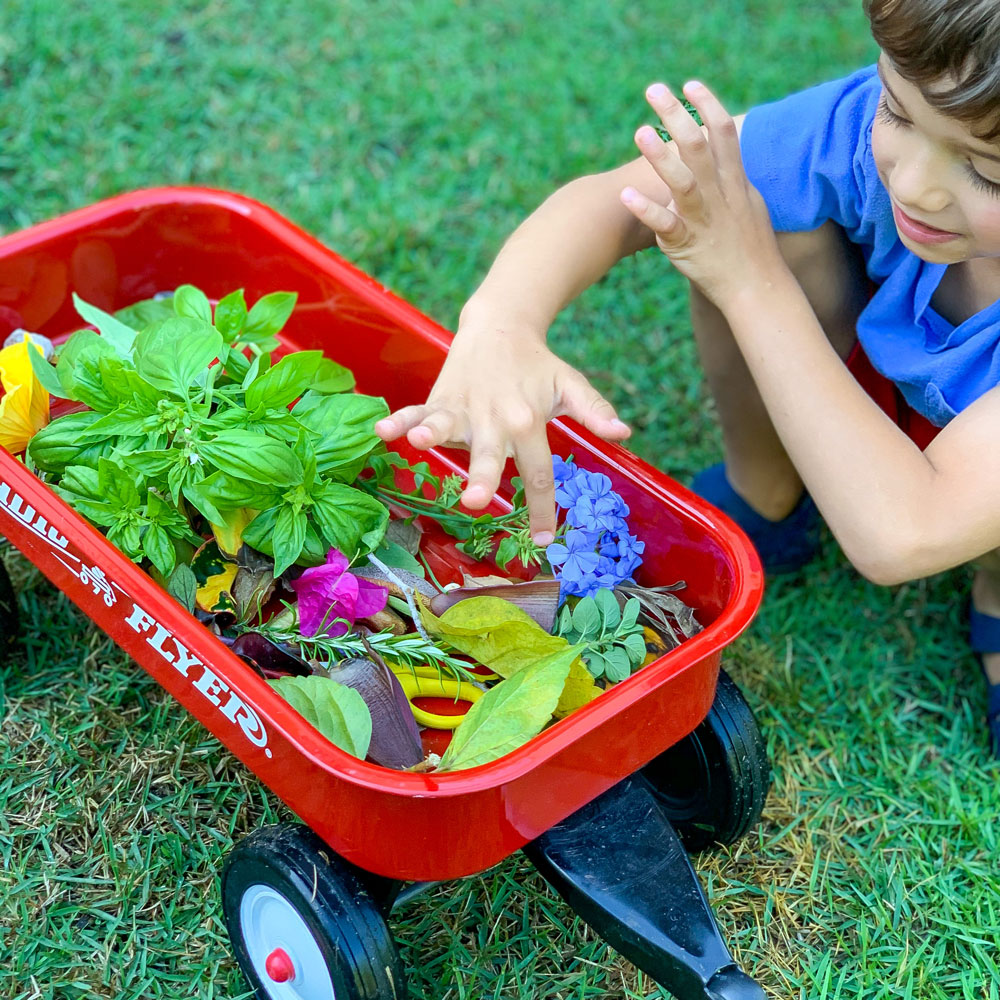
      NATURE SCAVENGER HUNT

      Take a nature walk with your child and create a scavenger hunt list of items to find such as leaves, rocks, flowers, or sticks. Encourage your child to walk, run, climb, and reach to collect the items, promoting balance, coordination, and spatial awareness. Combine it with a fun art project like this!
      gross motor activities for preschoolers

      BALL BOUNCE + CATCH

      Bounce a ball off a table and catch it in a box (or have someone catch it)—this builds hand-eye coordination and timing.

      gross motor activities for preschoolers

      OBSTACLE COURSE

      Create a mini obstacle course using cushions, hula hoops, cones, and tunnels. Encourage your child to climb over, crawl under, and weave through the obstacles to enhance their balance, agility, and spatial awareness.

      Yoga Poses - Printable for Kids

      YOGA FOR KIDS

      Introduce simple yoga poses tailored for children with a free printable dice game! Poses like downward dog, tree pose, and butterfly pose improve balance, strength, and flexibility while promoting mindfulness and body awareness.

        nature scavenger hunt

        NATURE SCAVENGER HUNT

        Take a nature walk with your child and create a scavenger hunt list of items to find such as leaves, rocks, flowers, or sticks. Encourage your child to walk, run, climb, and reach to collect the items, promoting balance, coordination, and spatial awareness. Combine it with a fun art project like this!

        Key Gross Motor Milestones

        Gross motor skills are essential for kids as they navigate the world around them. It’s important to remember that every child develops at their own pace, and these milestones are just general guidelines:

        (1) Walking Independently: Most children begin walking between 12 and 18 months. Initially, they may be unsteady on their feet but gradually gain confidence and stability.

        (2) Running and Jumping: Around the age of 2, children start to run with more coordination and may attempt to jump off low surfaces. By age 3, they can typically jump forward and possibly even hop on one foot briefly.

        (3) Climbing: Climbing skills improve throughout the preschool yers. Kids may start by climbing stairs with support and progress to climbing playground structures and trees.

        (4) Balancing: By age 4, children can often balance on one foot for a few seconds and walk in a straight line heel-to-toe, demonstrating improved balance and coordination

        (5) Throwing and Catching: Around age 4 or 5, children develop the ability to throw a ball overhand with some accuracy and may begin to experiment with catching objects.

        (6) Skipping: By age 5 or 6, children may start to experiment with skipping and galloping, demonstrating more advanced coordination and rhythm.

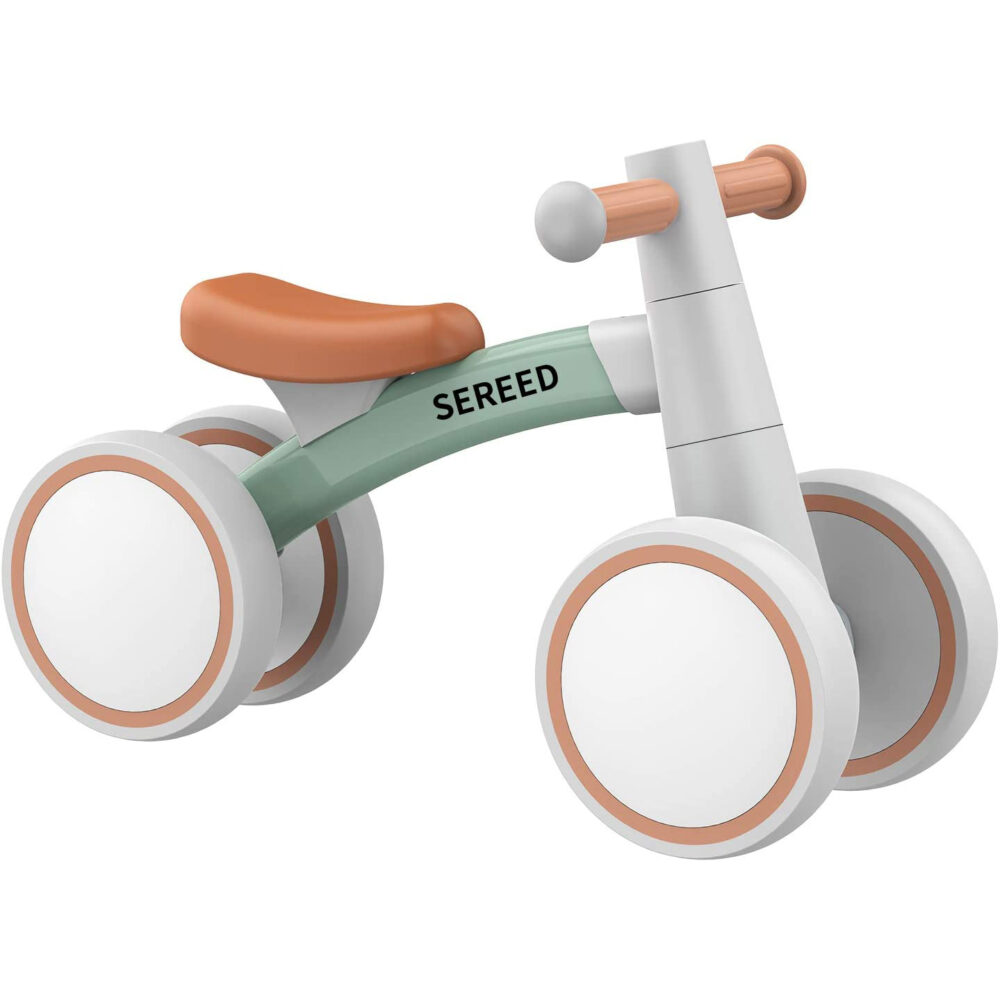
        (7) Pedaling and Bike Riding: Pedaling a tricycle typically becomes achievable around age 3 or 4, signaling improved leg strength and coordination. While some children may learn to ride a bike as early as age 3 with practice, mastering this skill often occurs later in childhood, around ages 5 to 7.

        Key Gross Motor Milestones

        Gross motor skills are essential for kids as they navigate the world around them. It’s important to remember that every child develops at their own pace, and these milestones are just general guidelines:

        (1) Walking Independently: Most children begin walking between 12 and 18 months. Initially, they may be unsteady on their feet but gradually gain confidence and stability.

        (2) Running and Jumping: Around the age of 2, children start to run with more coordination and may attempt to jump off low surfaces. By age 3, they can typically jump forward and possibly even hop on one foot briefly.

        (3) Climbing: Climbing skills improve throughout the preschool yers. Kids may start by climbing stairs with support and progress to climbing playground structures and trees.

        (4) Balancing: By age 4, children can often balance on one foot for a few seconds and walk in a straight line heel-to-toe, demonstrating improved balance and coordination

        (5) Throwing and Catching: Around age 4 or 5, children develop the ability to throw a ball overhand with some accuracy and may begin to experiment with catching objects.

        (6) Skipping: By age 5 or 6, children may start to experiment with skipping and galloping, demonstrating more advanced coordination and rhythm.

        (7) Pedaling and Bike Riding: Pedaling a tricycle typically becomes achievable around age 3 or 4, signaling improved leg strength and coordination. While some children may learn to ride a bike as early as age 3 with practice, mastering this skill often occurs later in childhood, around ages 5 to 7.


        Gear Up for Gross Motor Skills: Product Recommendations

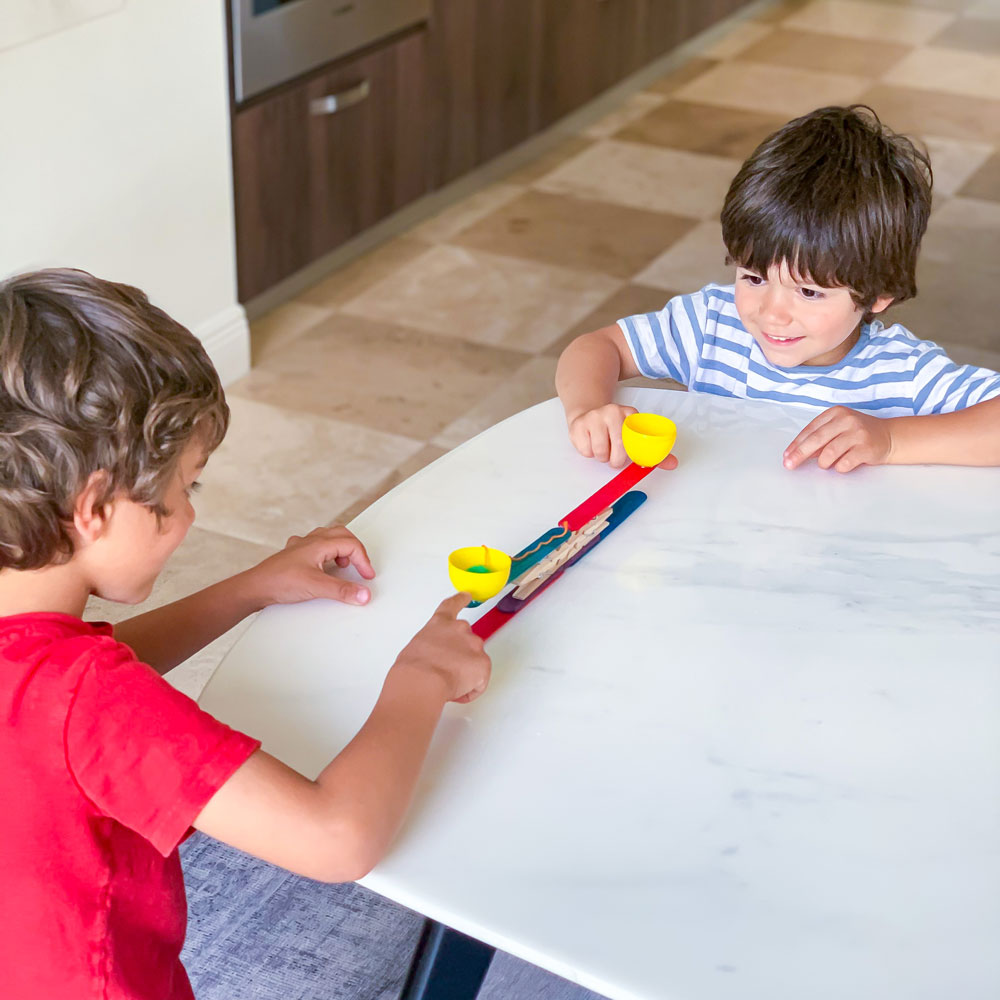
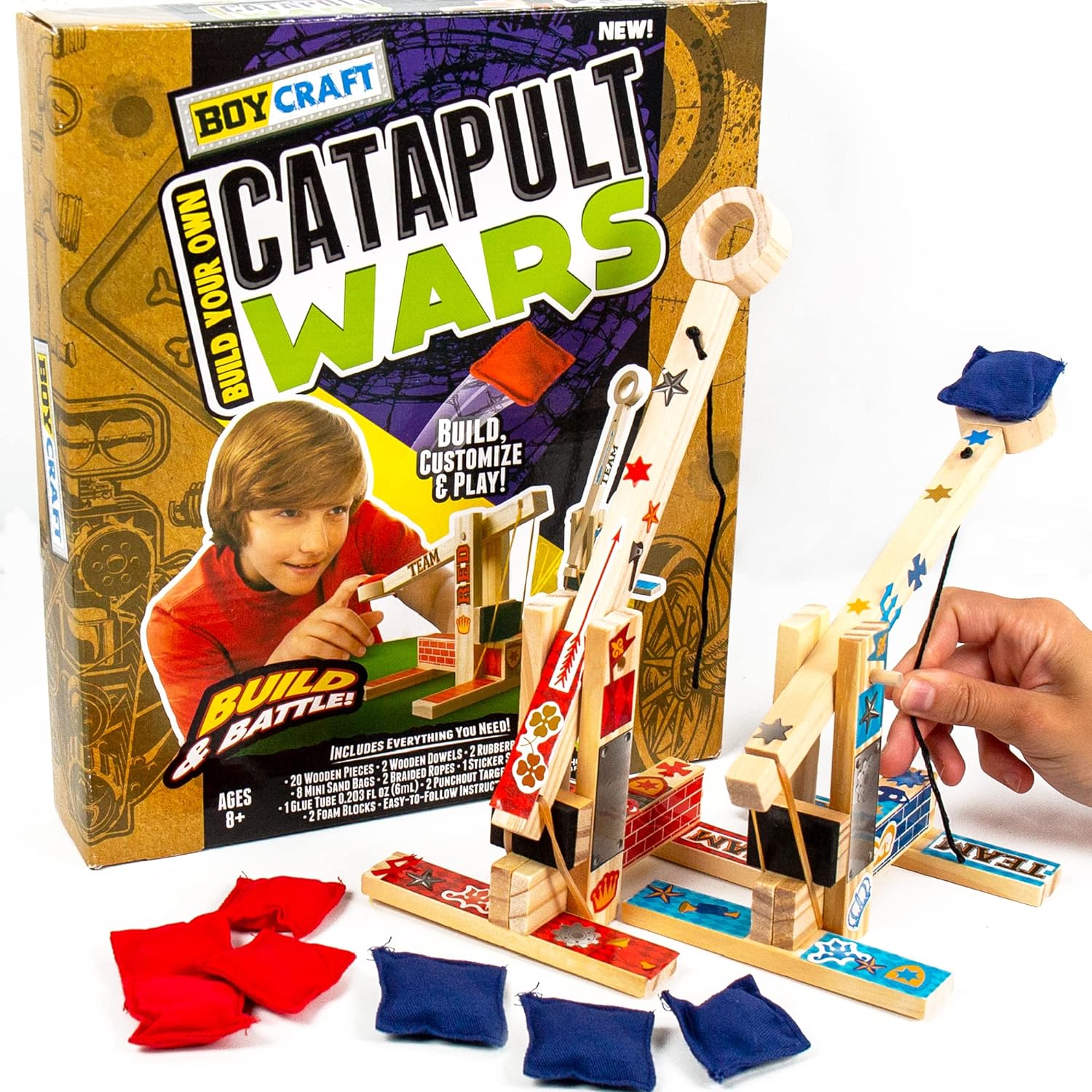
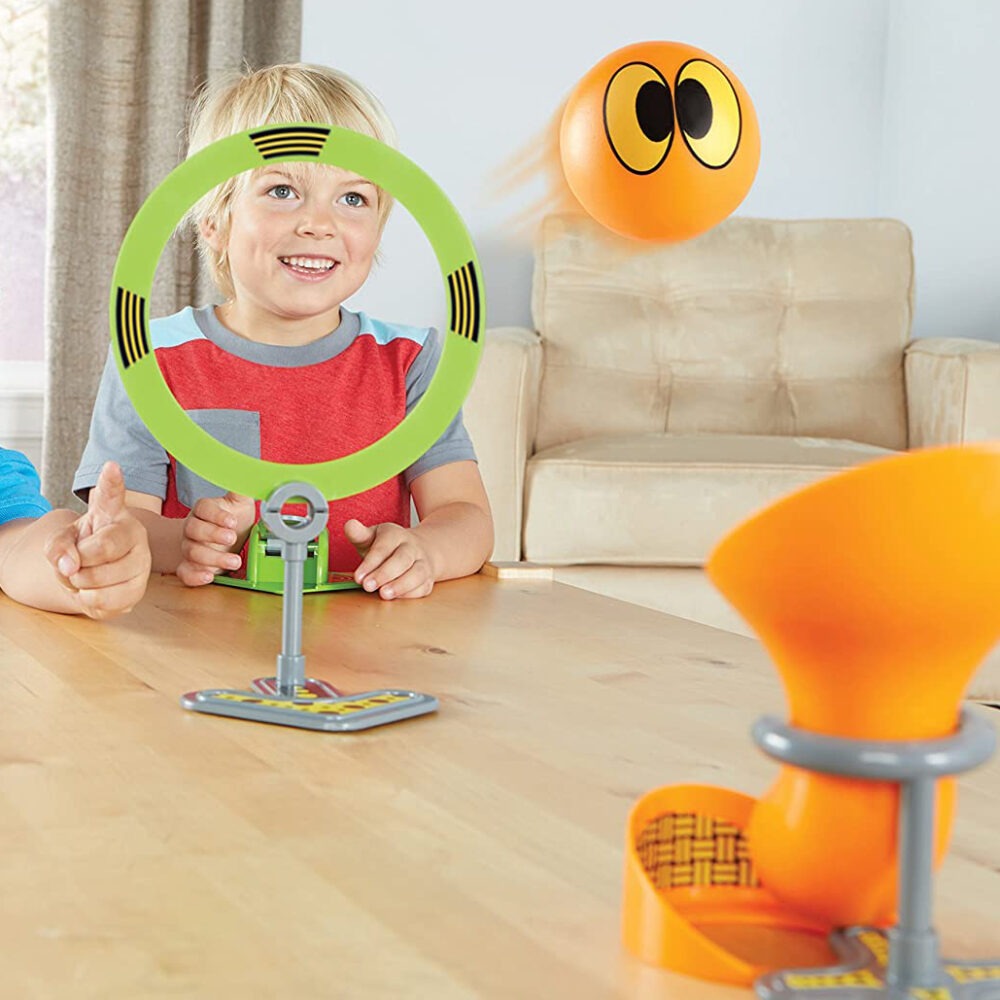
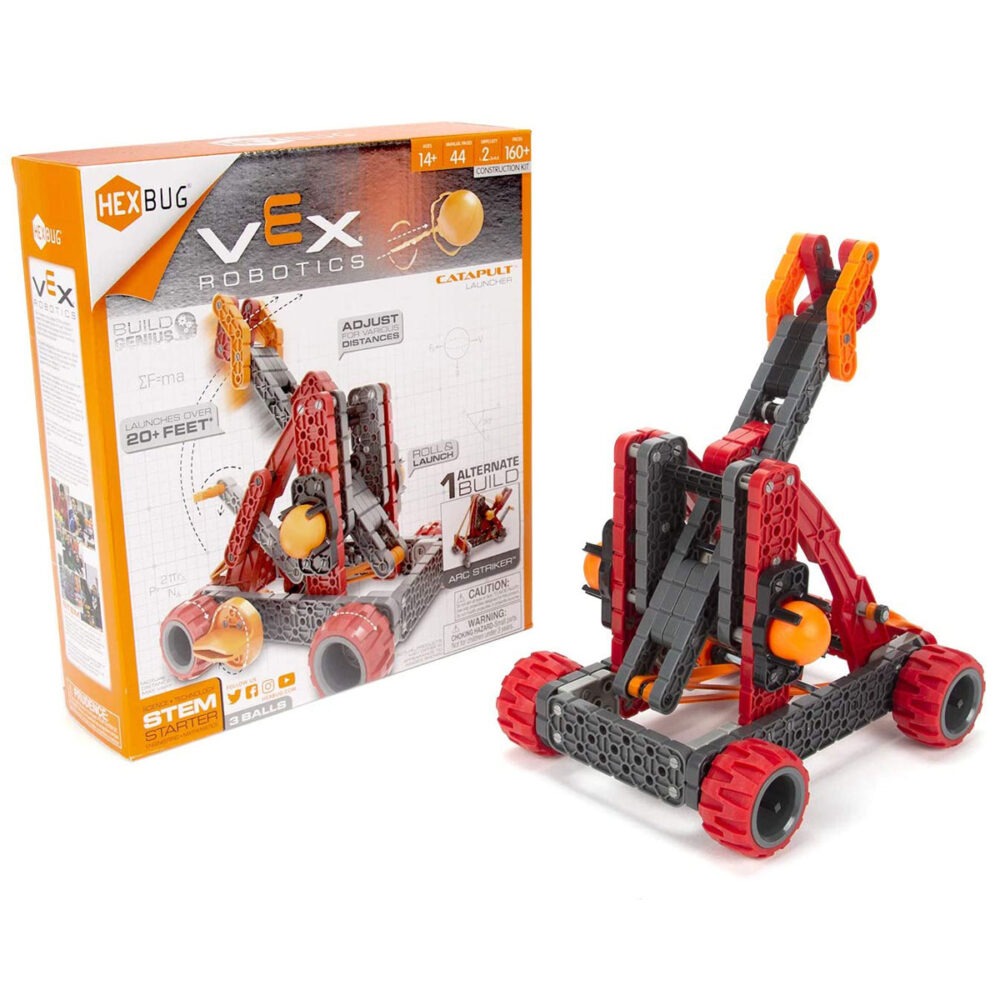
        Investing in the right toys, equipment, and tools can greatly enhance your kid’s gross motor skill development. Here’s a selection of products tailored to various budgets and space requirements.
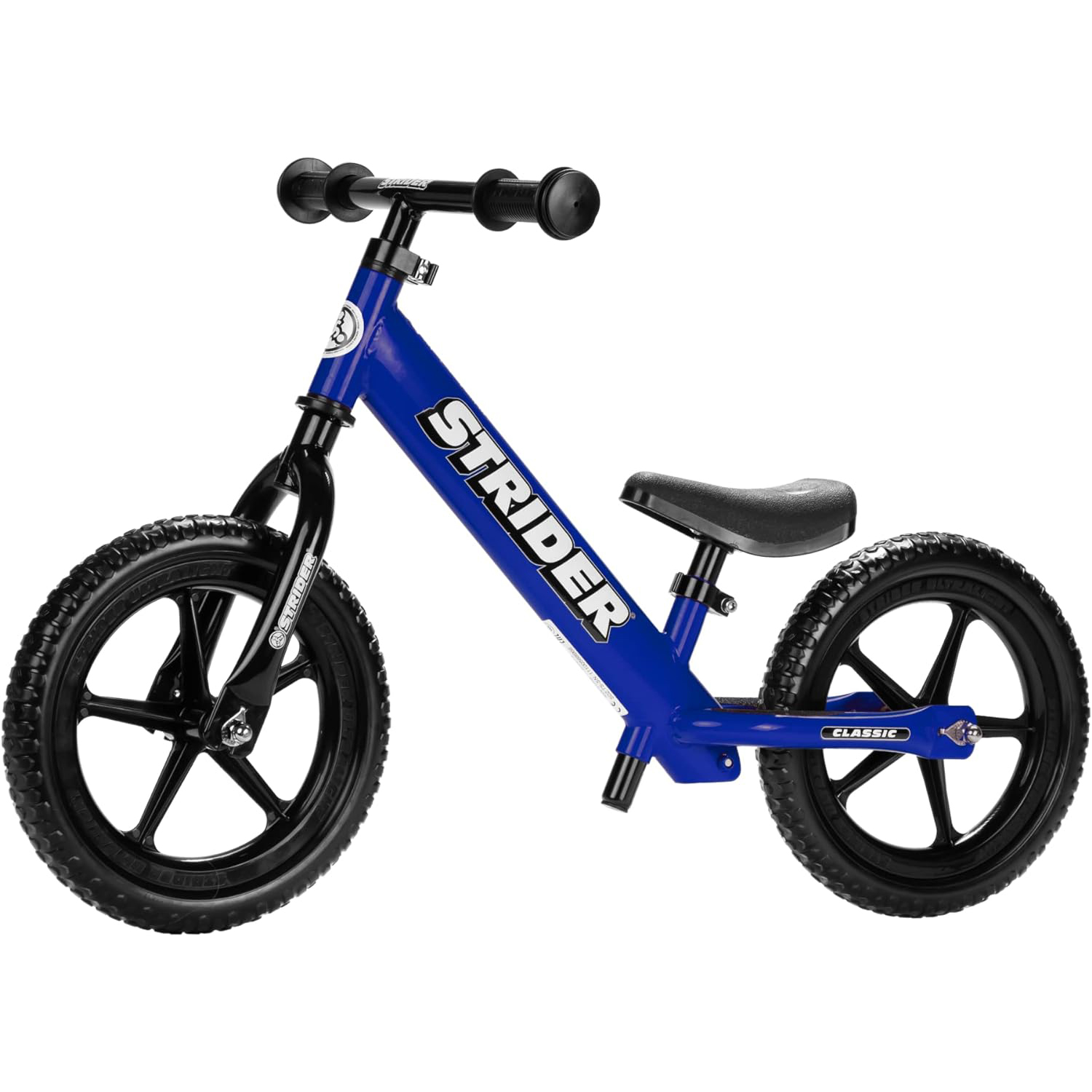
        gross motor skills balance bike

        Balance Bike

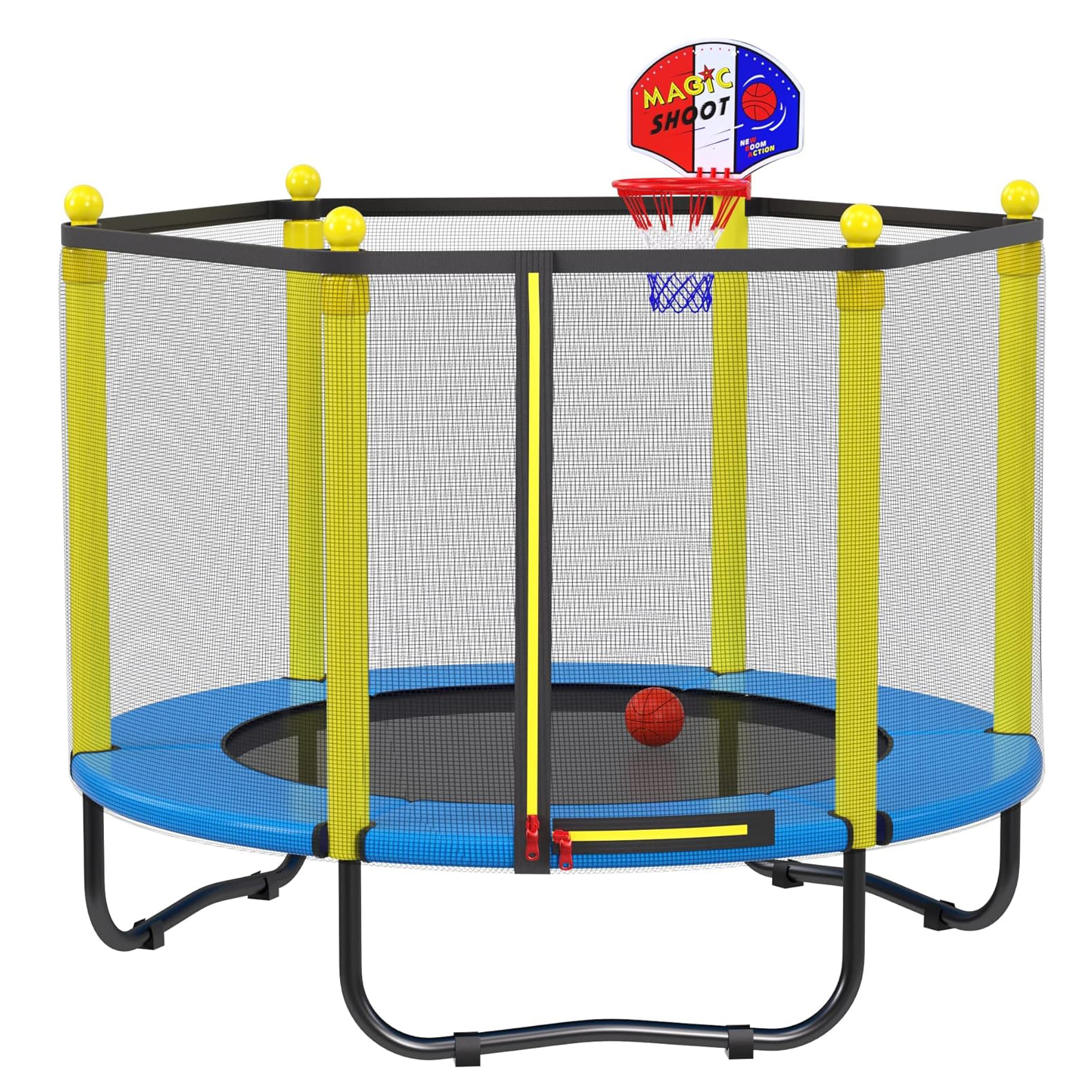
        gross motor skills trampoline

        Indoor Mini Trampoline

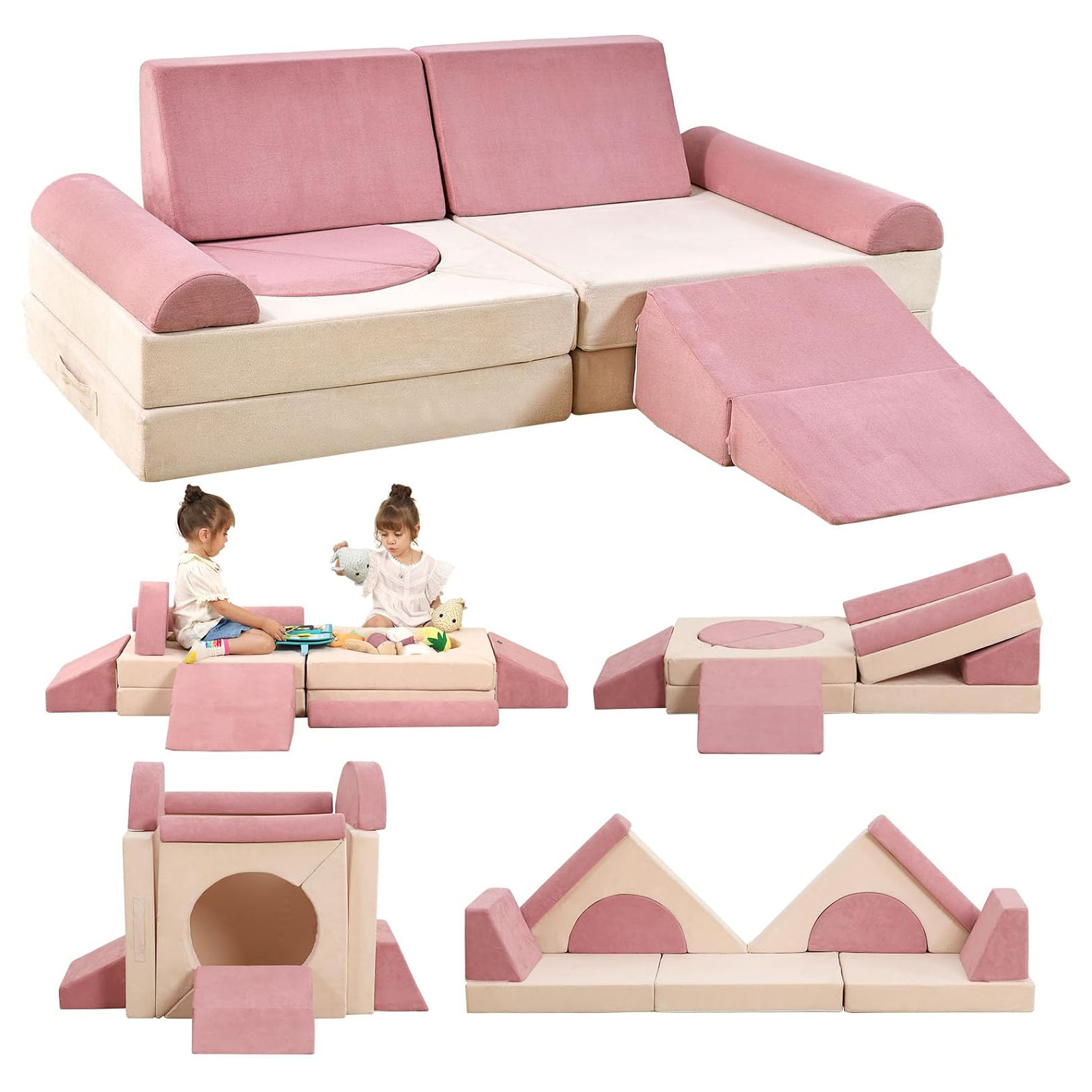
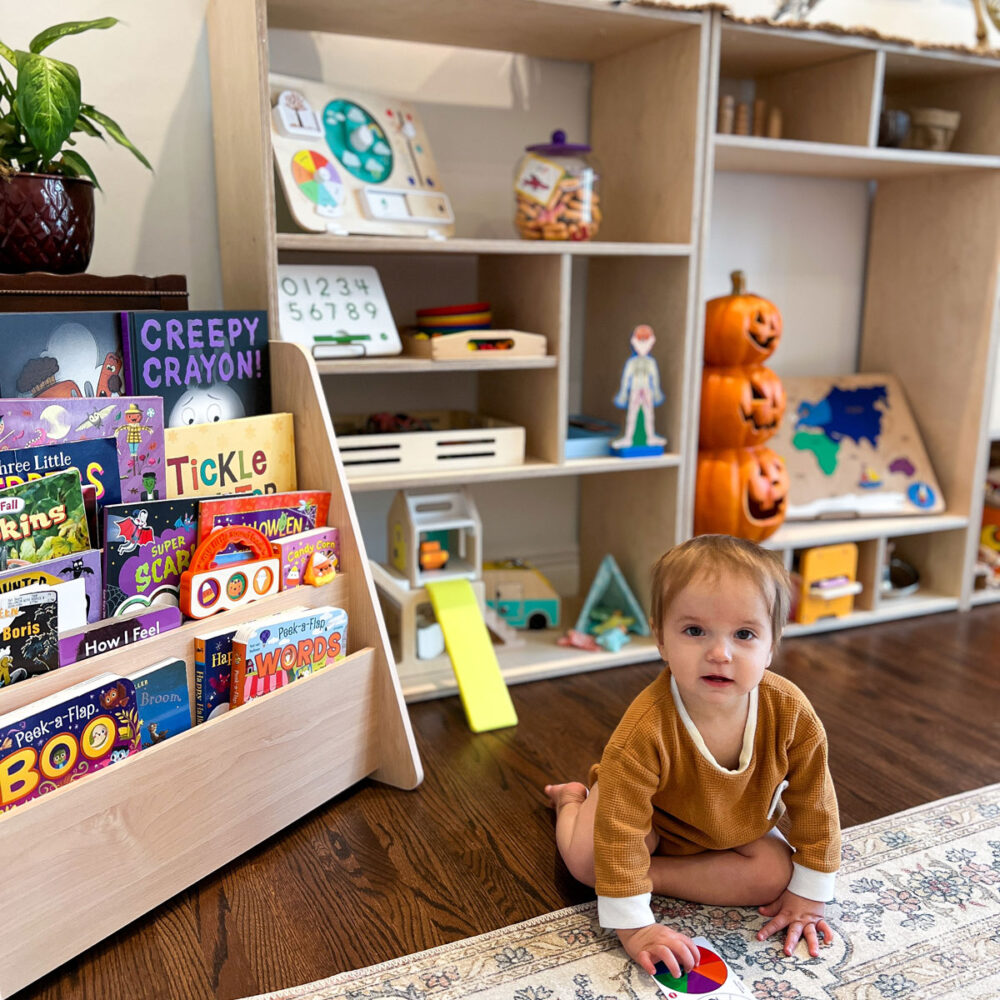
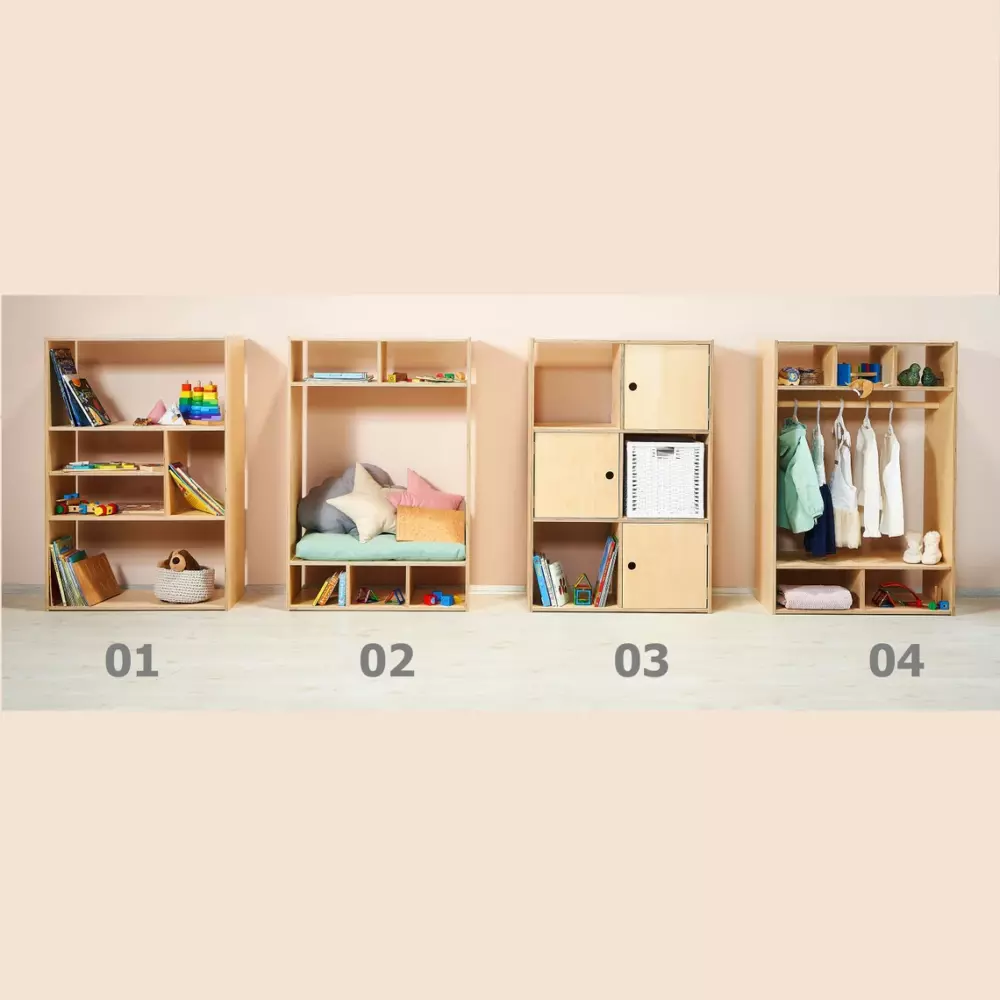
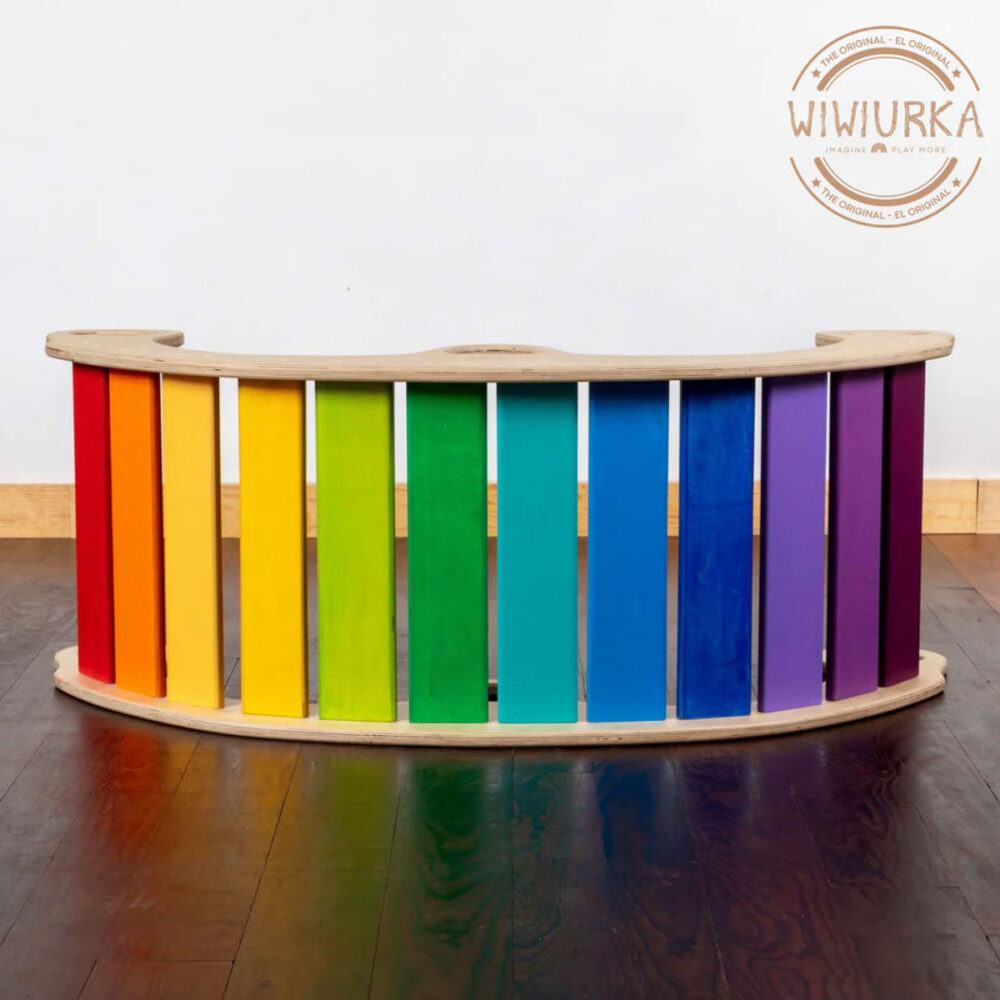
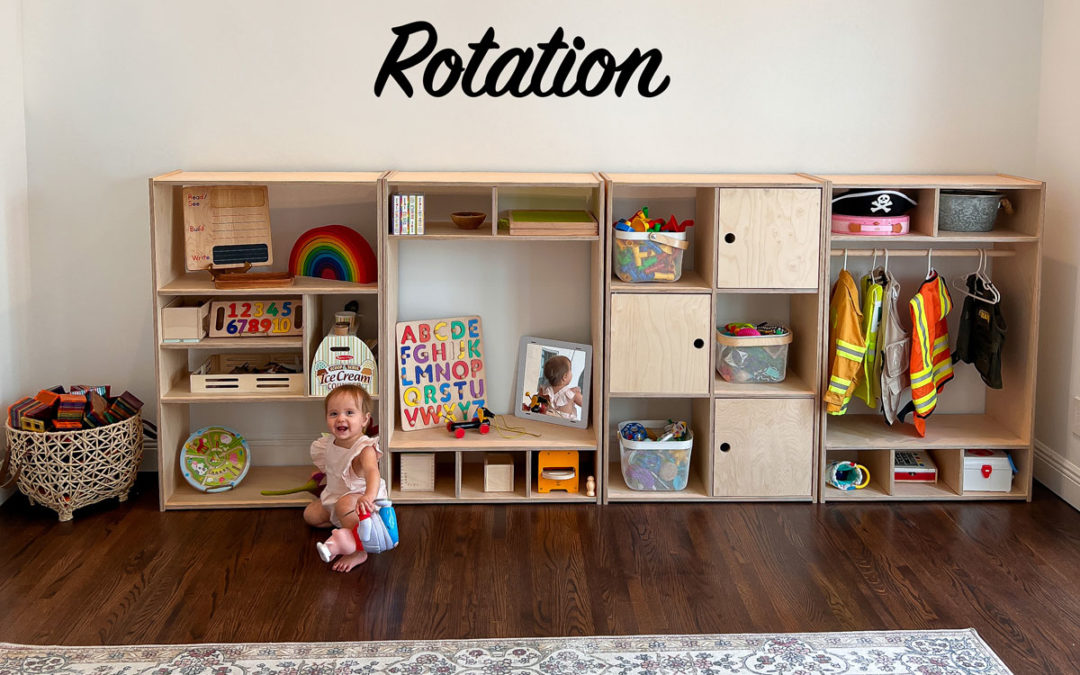
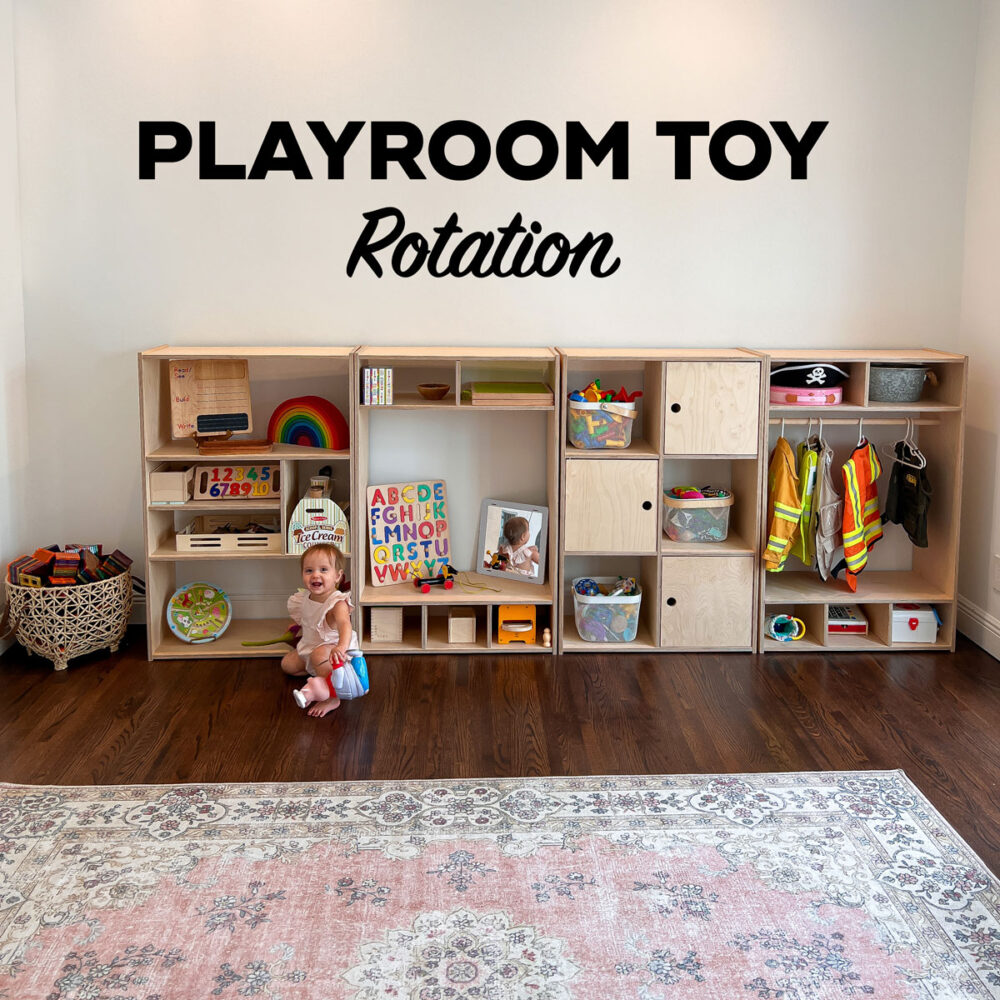
        gross motor skills modular furniture

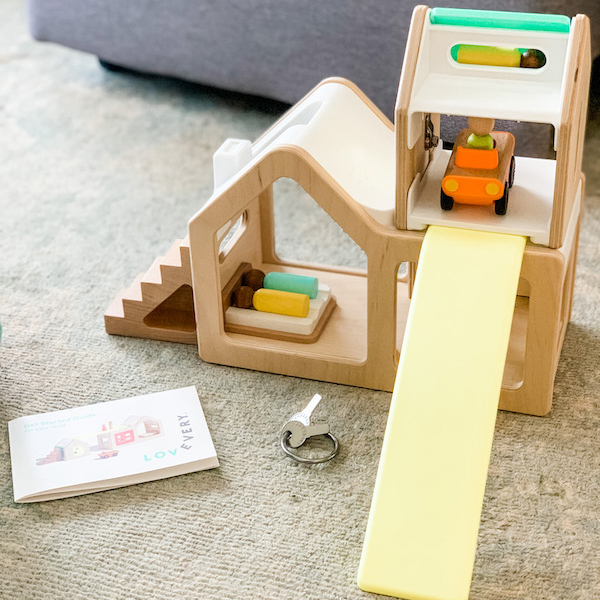
        Modular Play Furniture

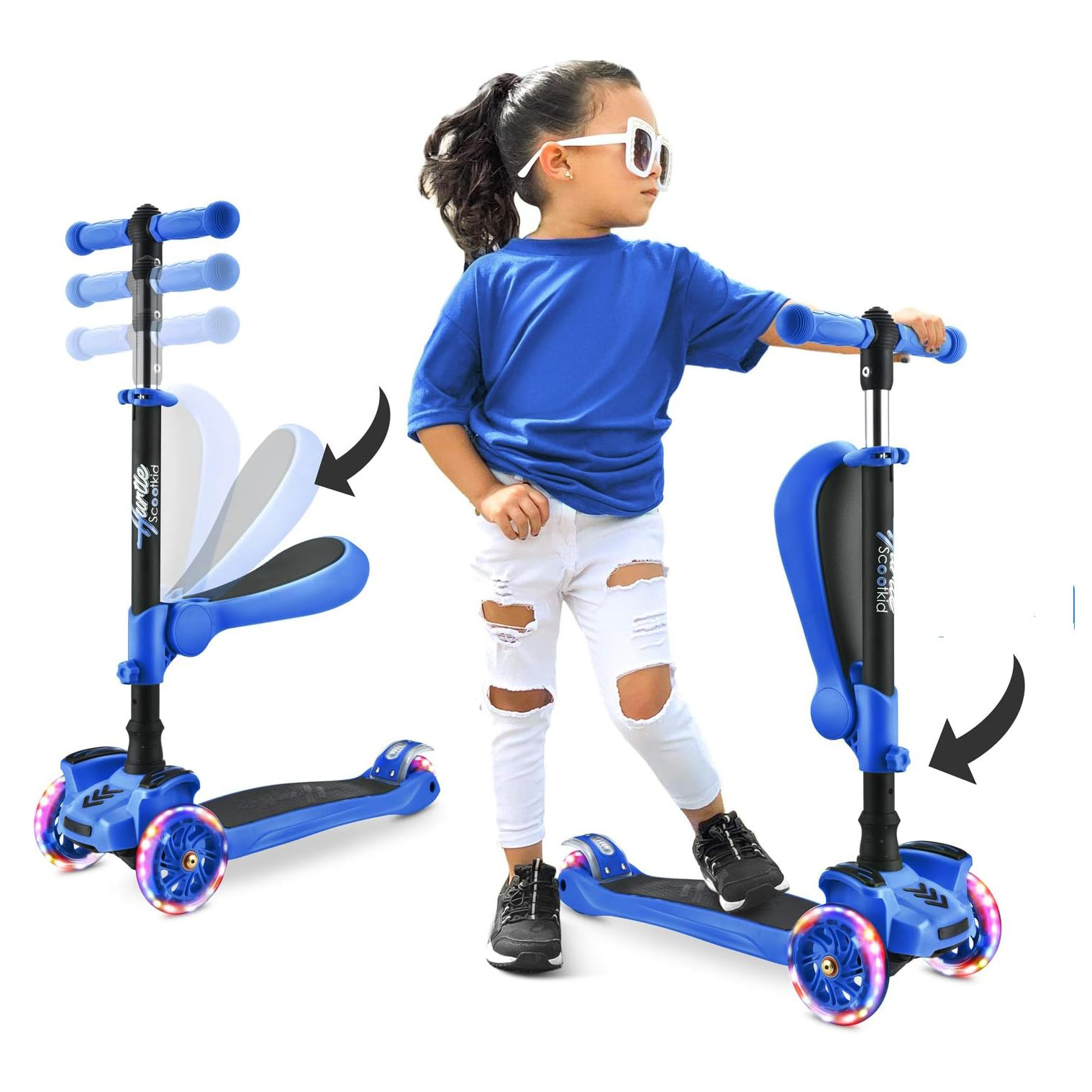
        gross motor skills scooter

        Scooter

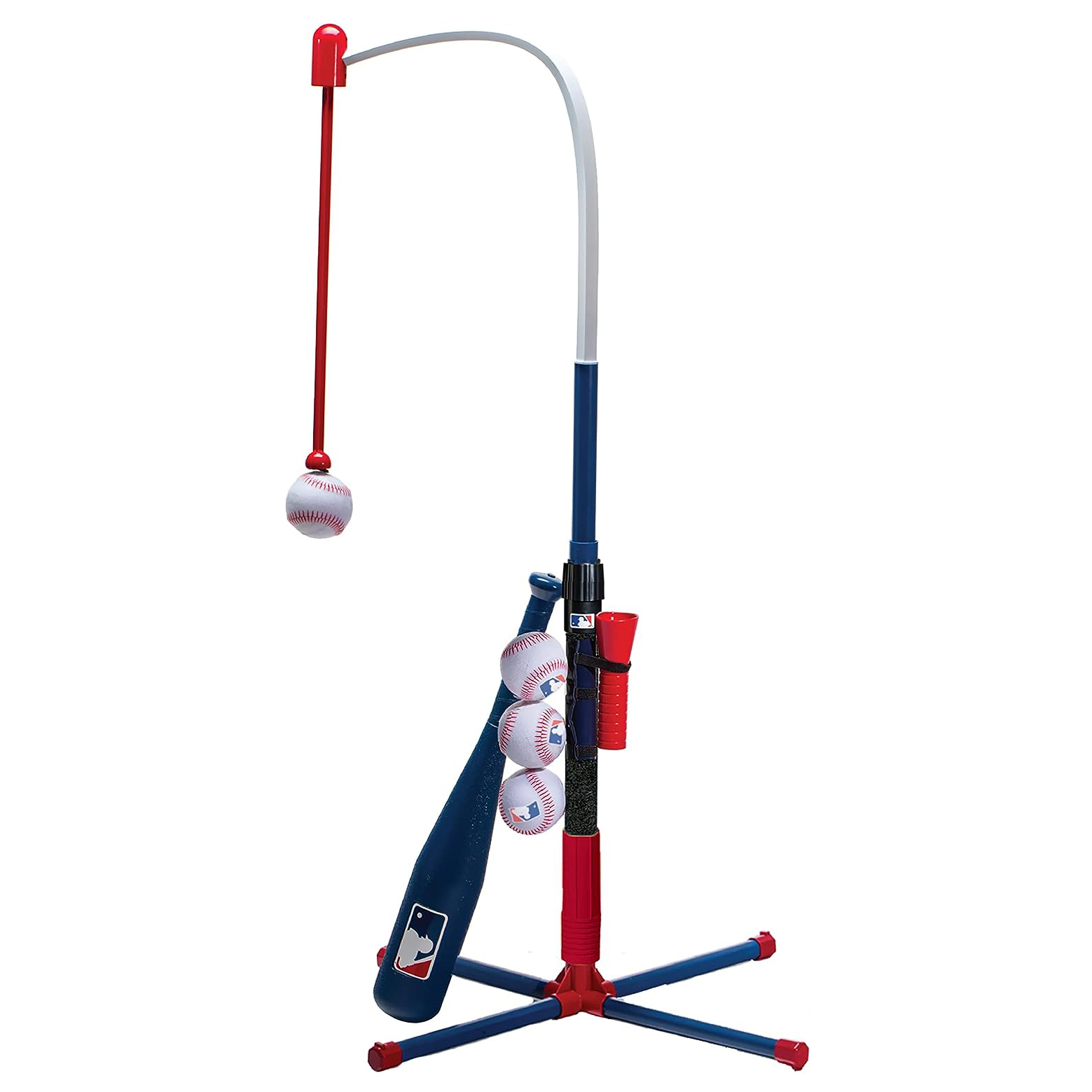
        gross motor skills baseball

        Baseball Tee

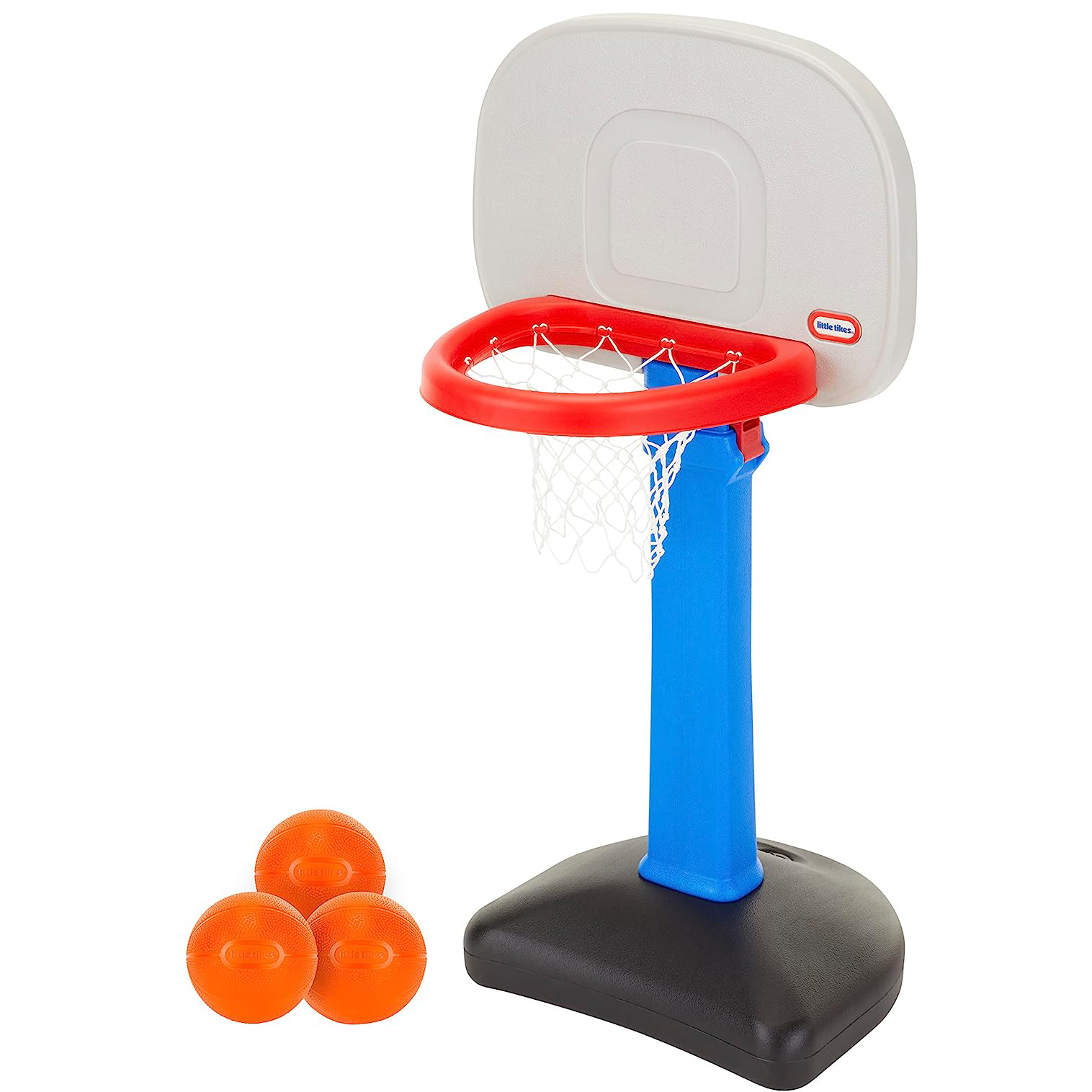
        gross motor skills basketball

        Basketball Hoop

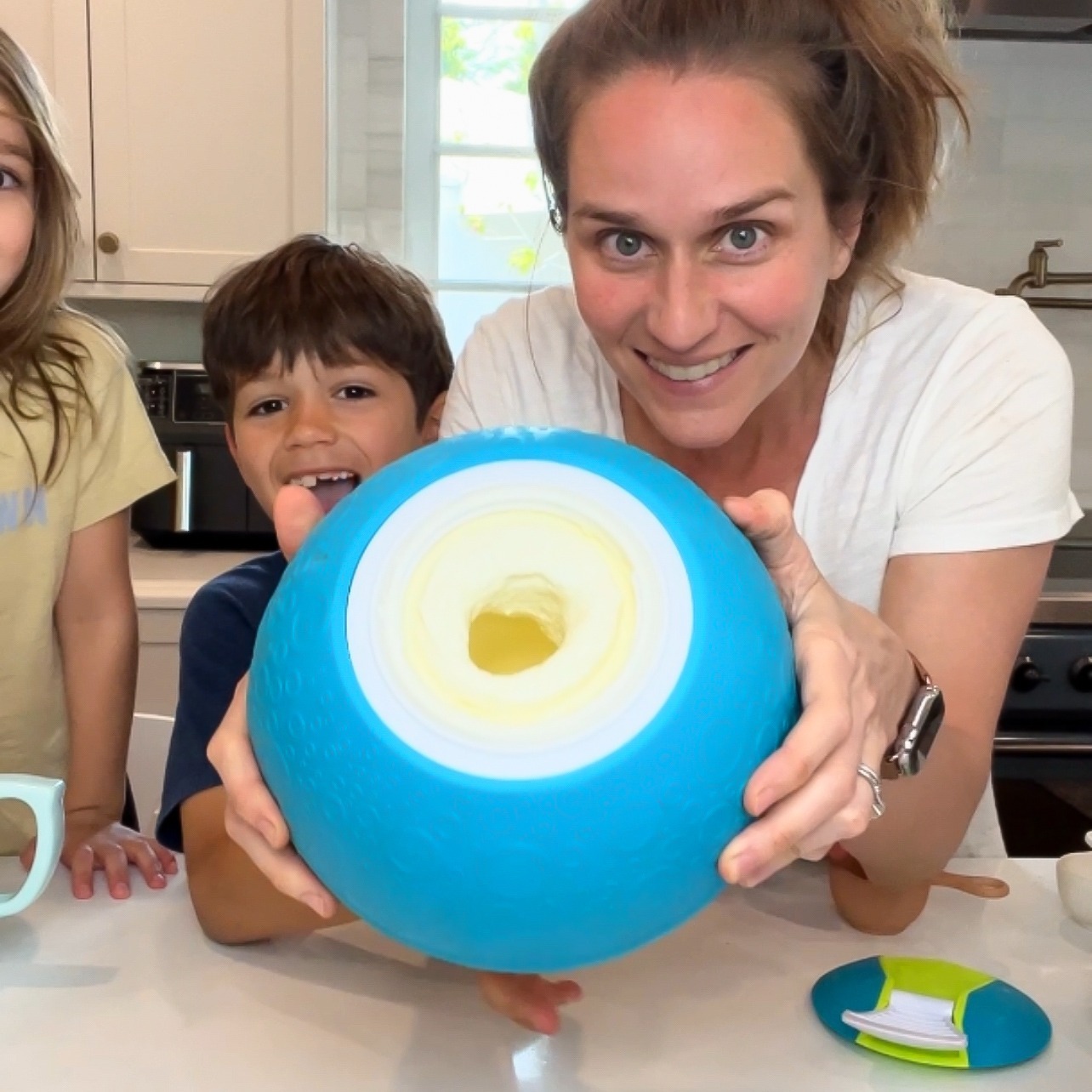
        ice cream maker toy ball how to use it

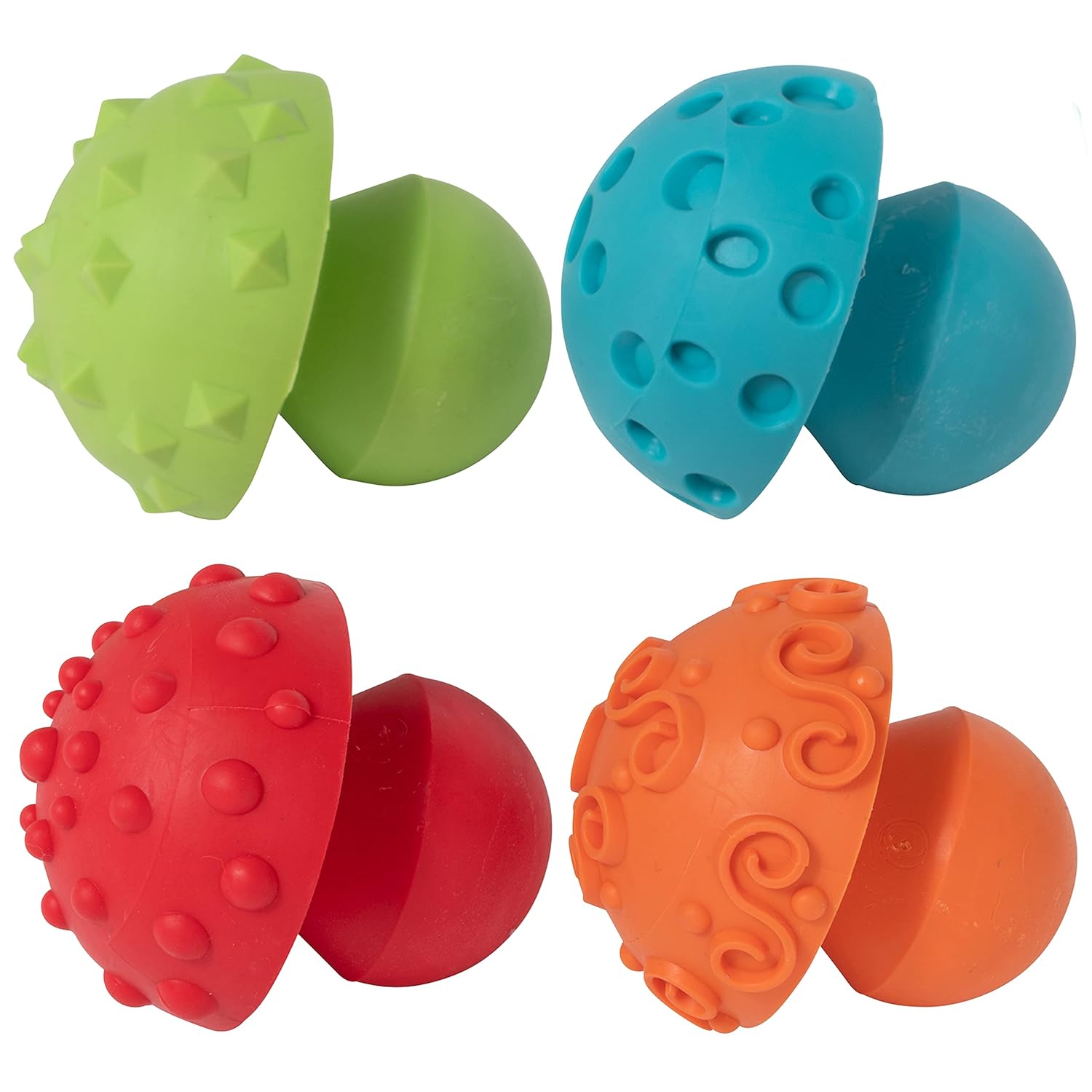
        Ice Cream Maker Ball

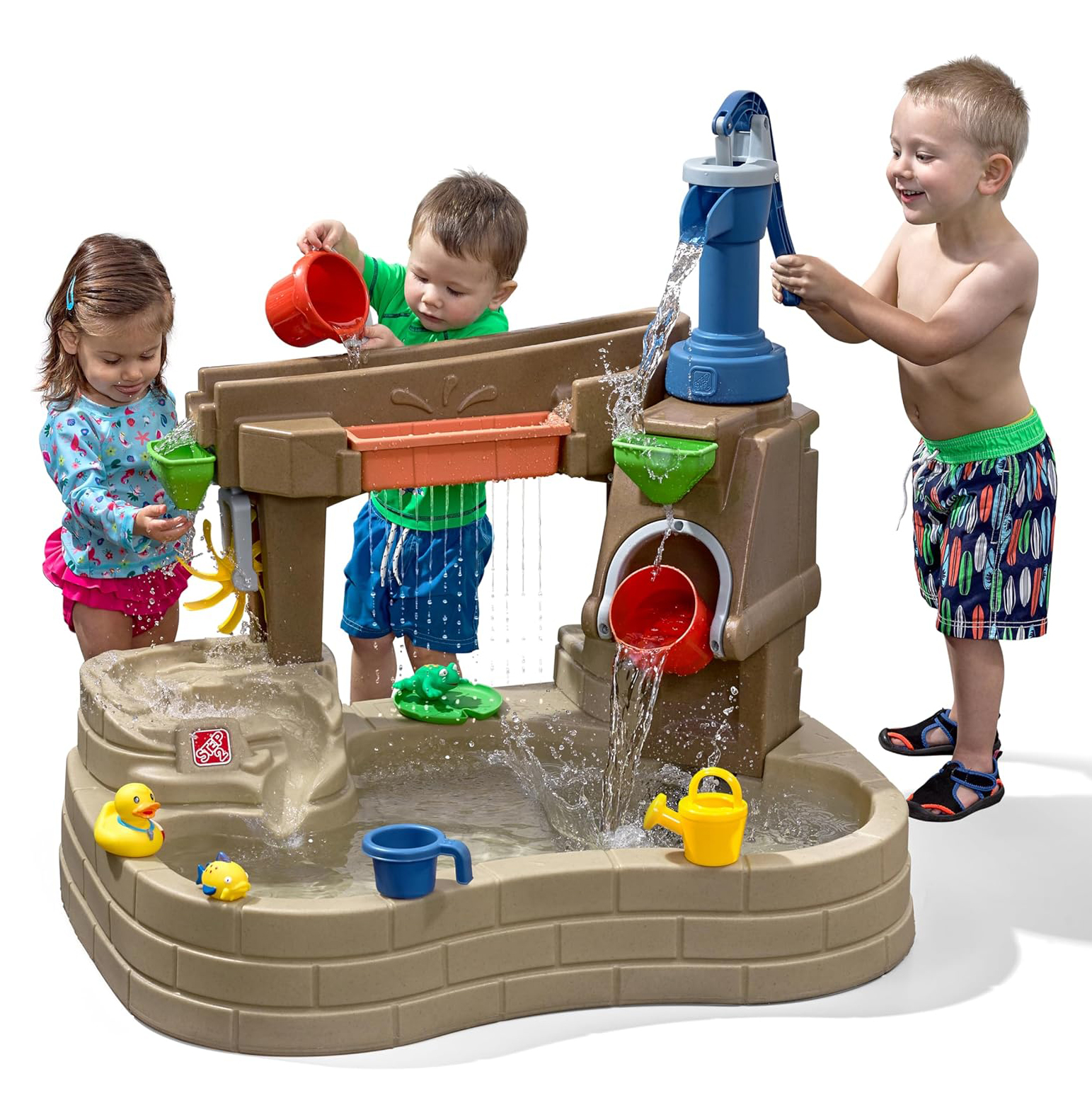
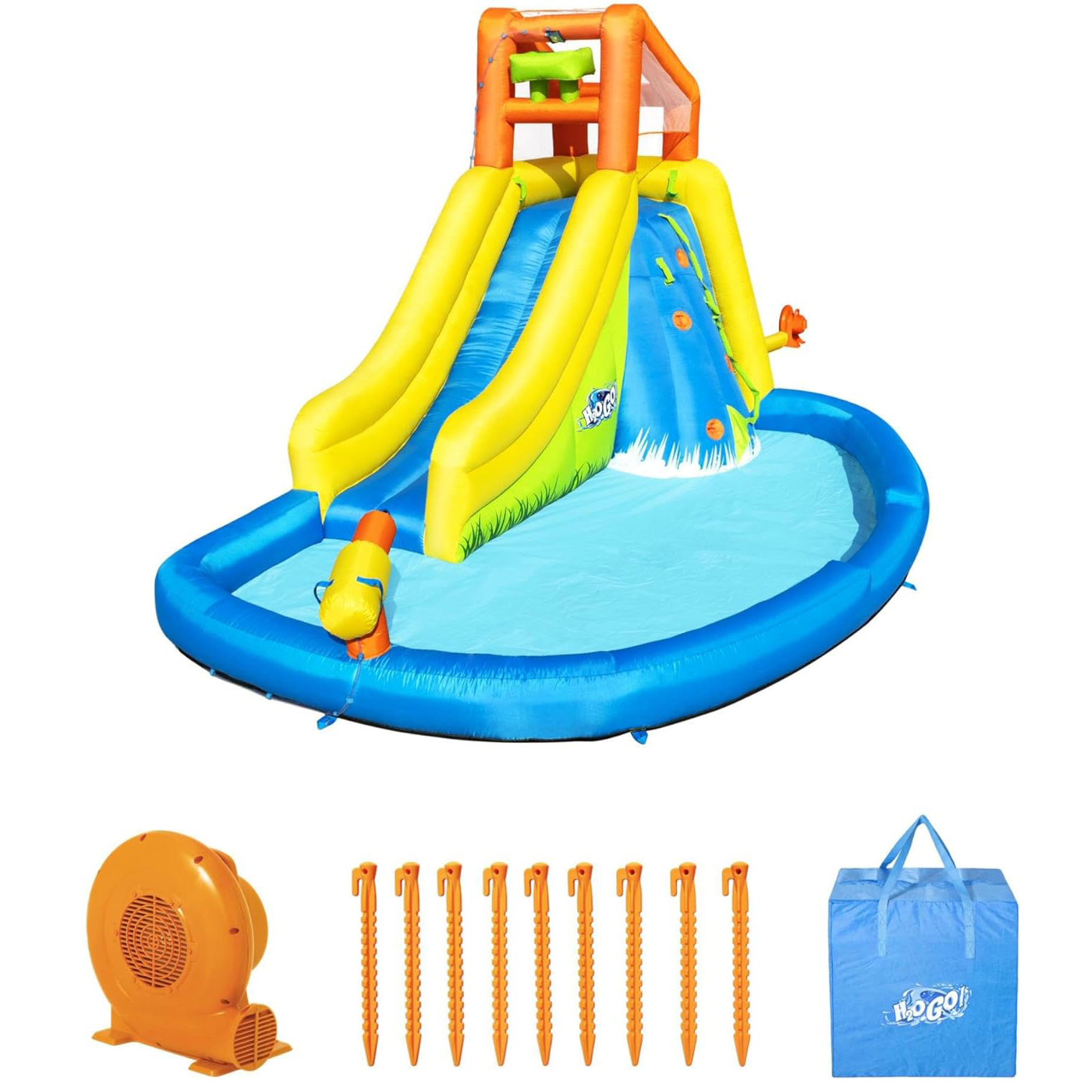
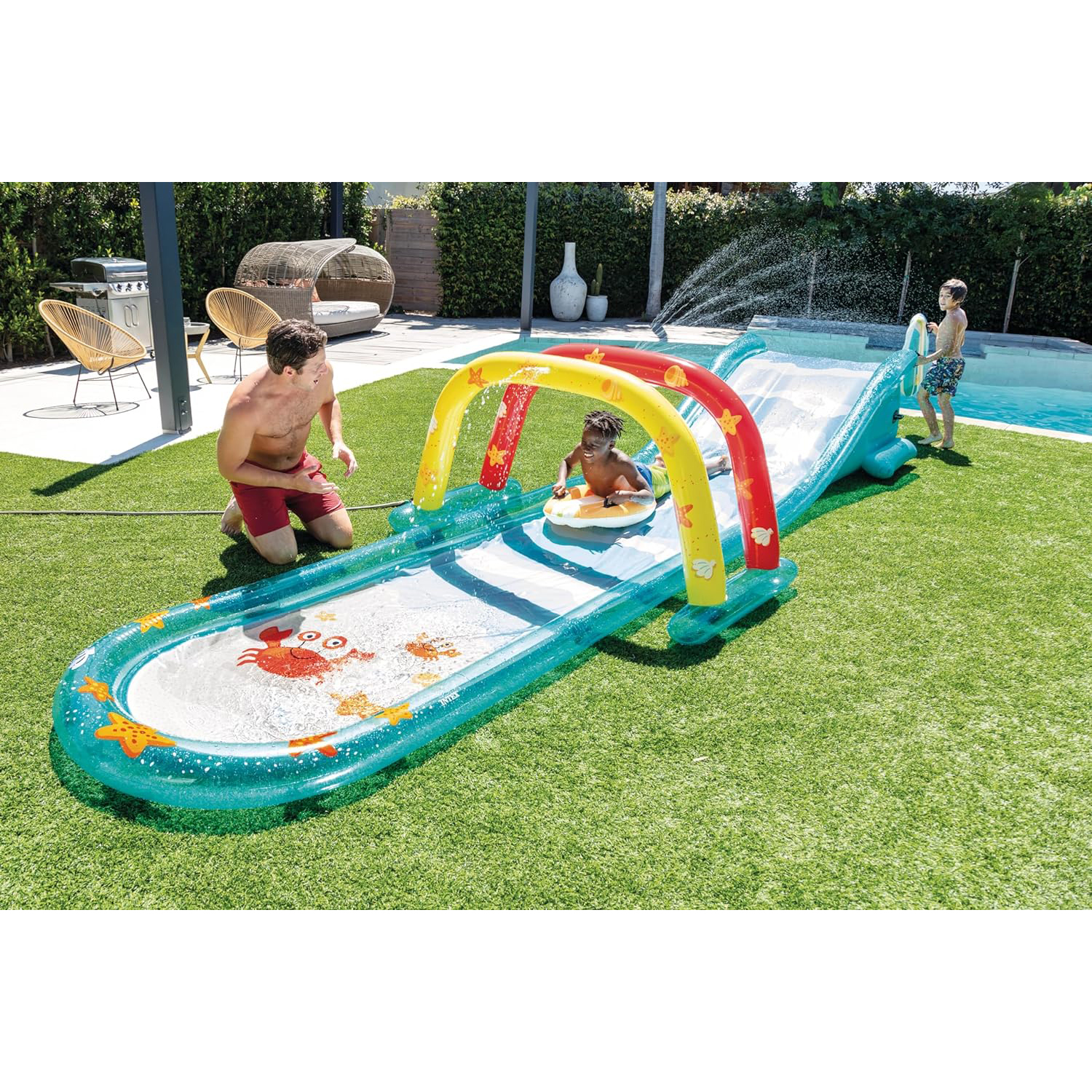
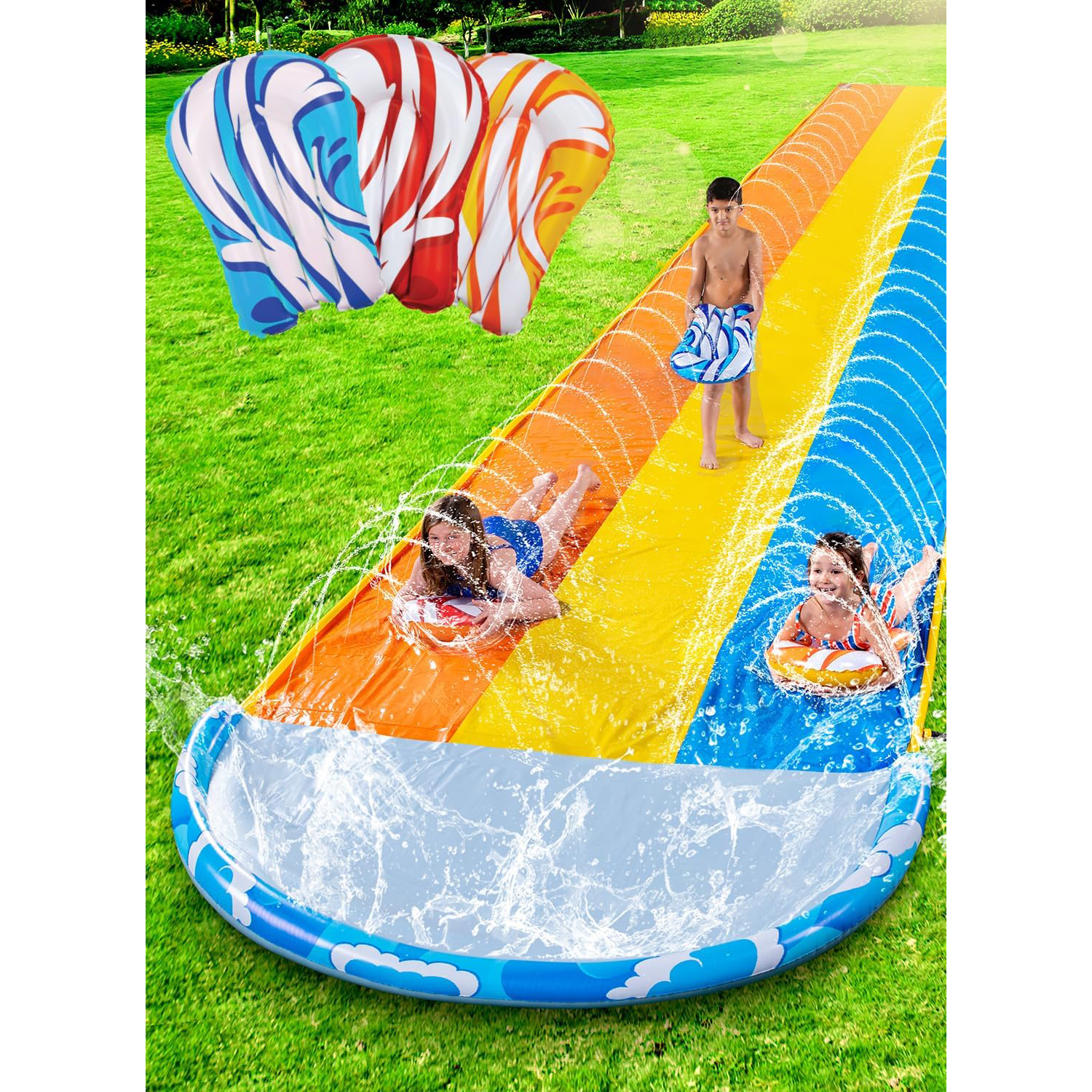
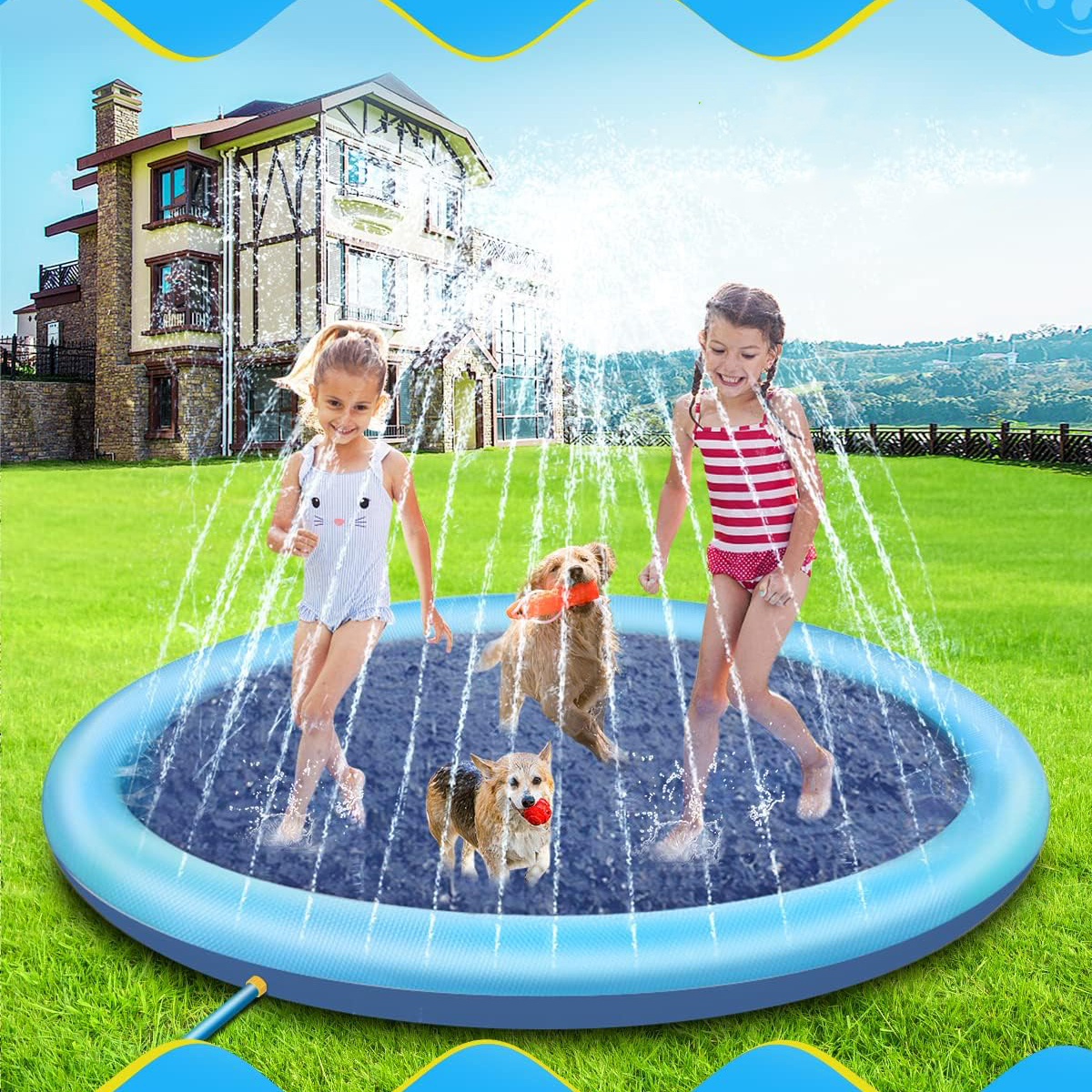
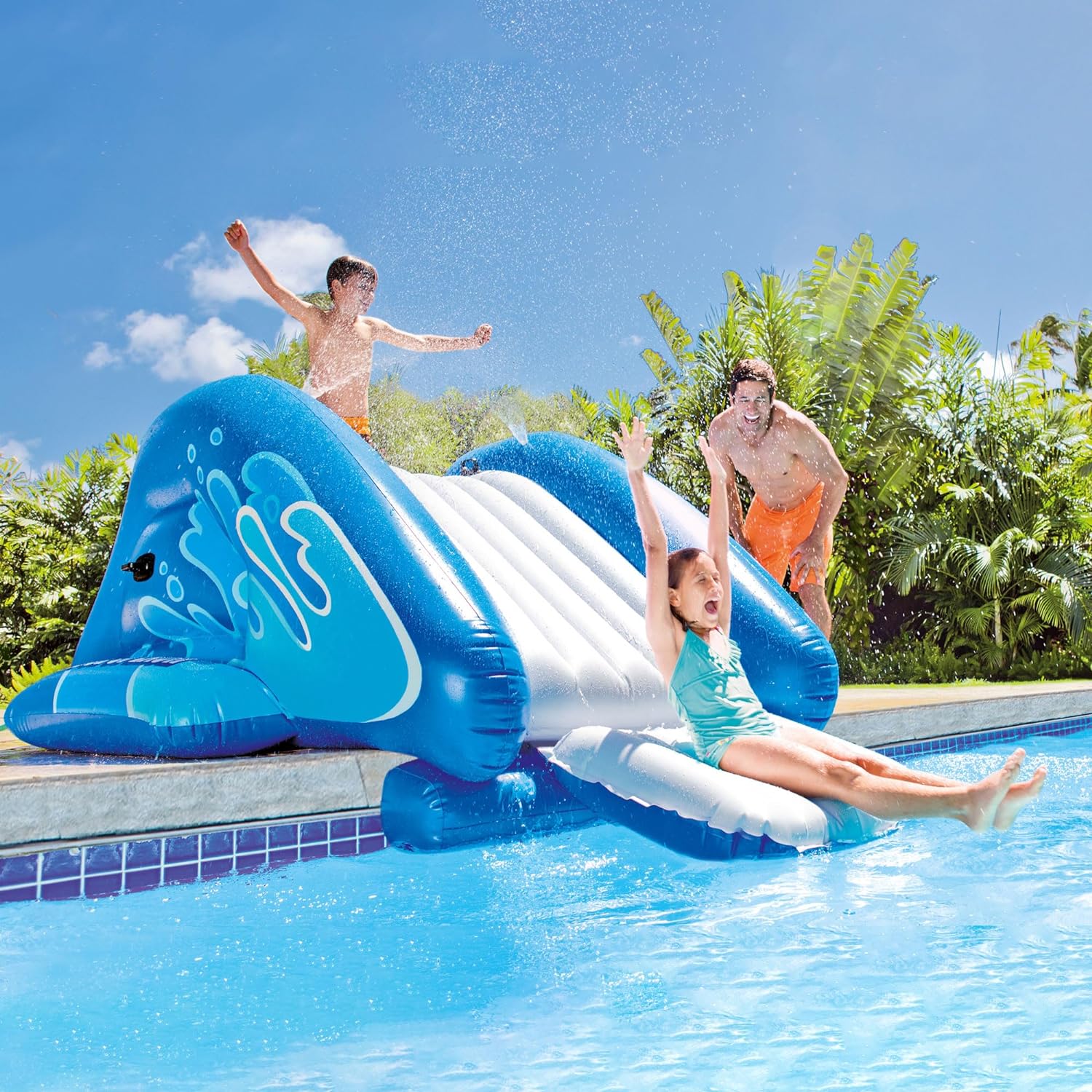
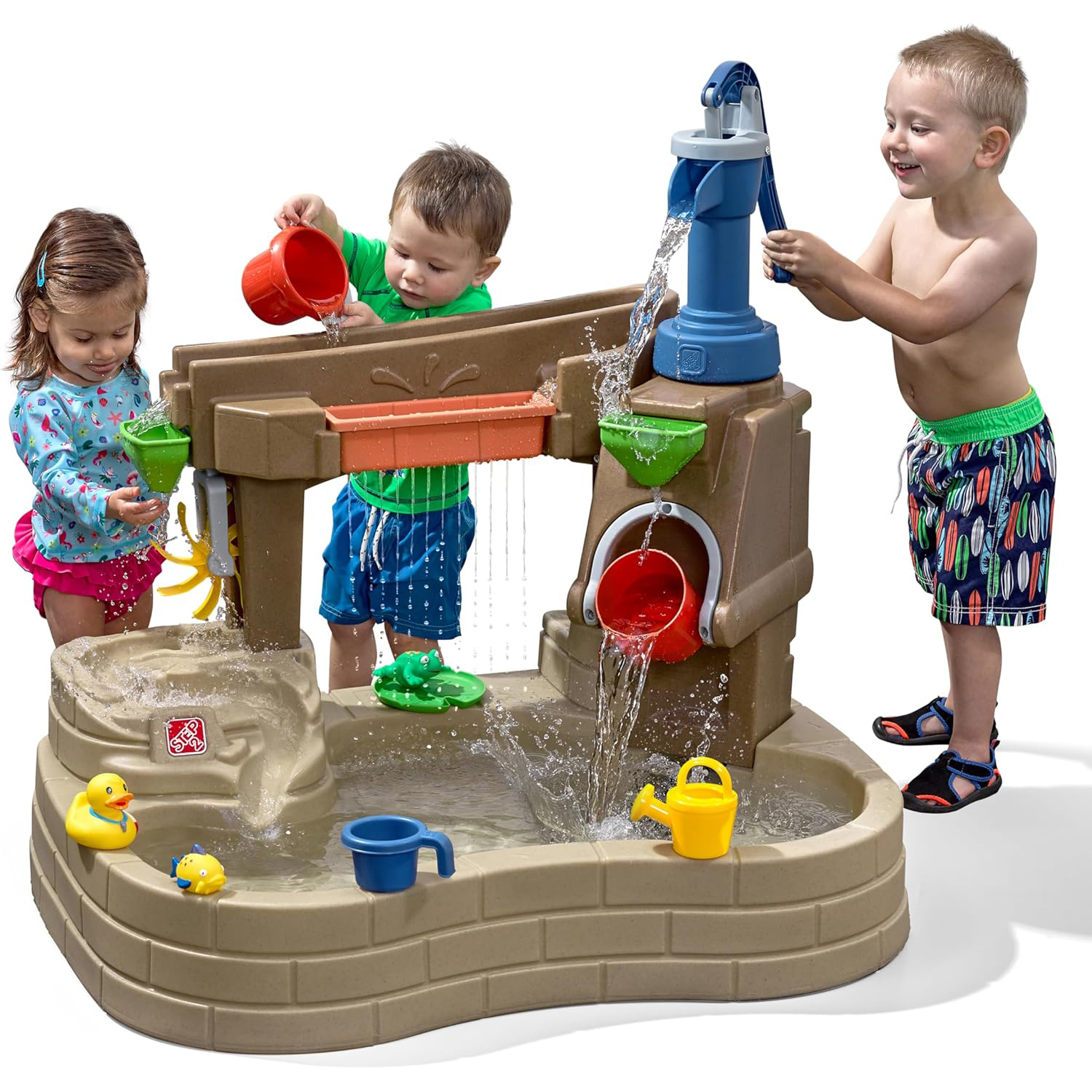
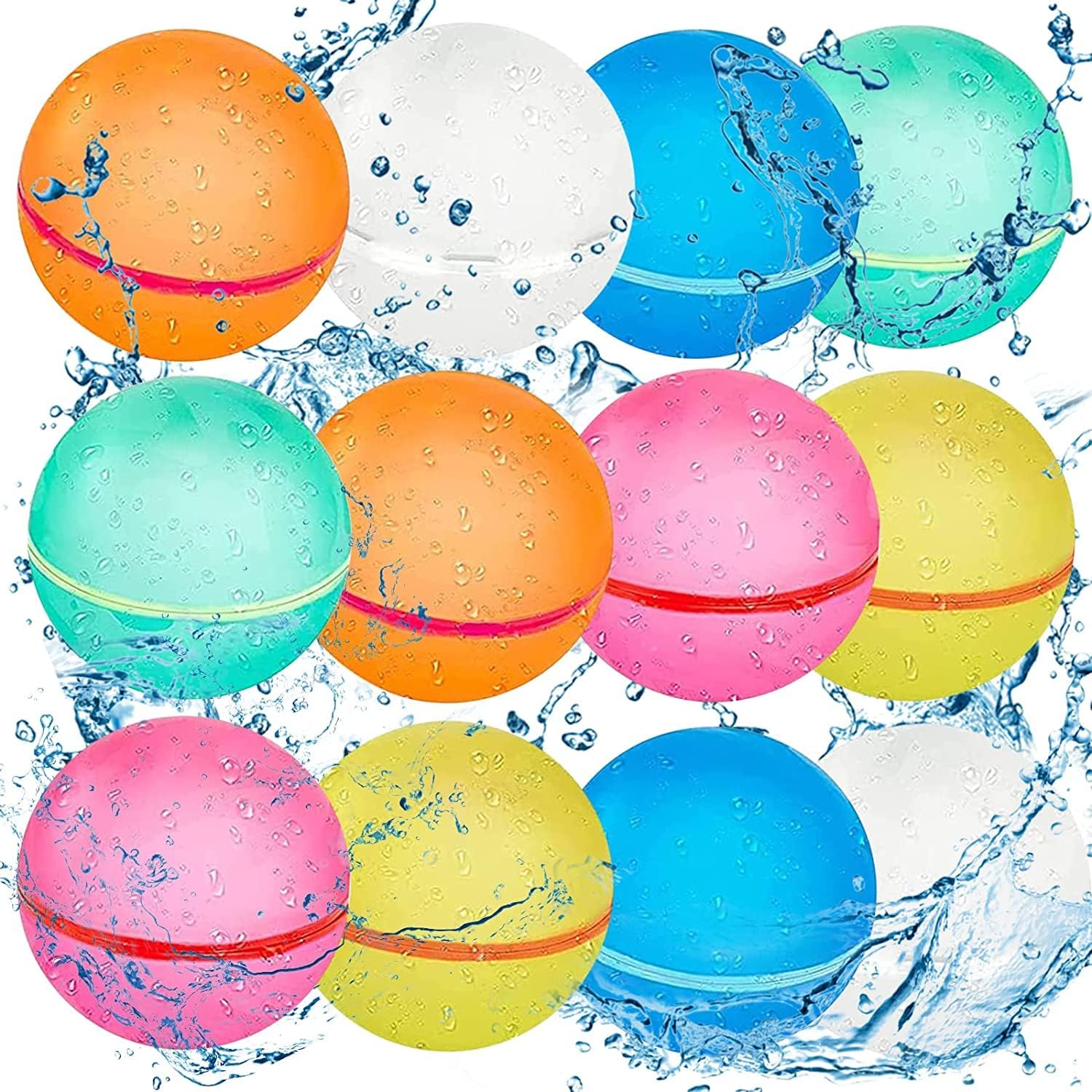
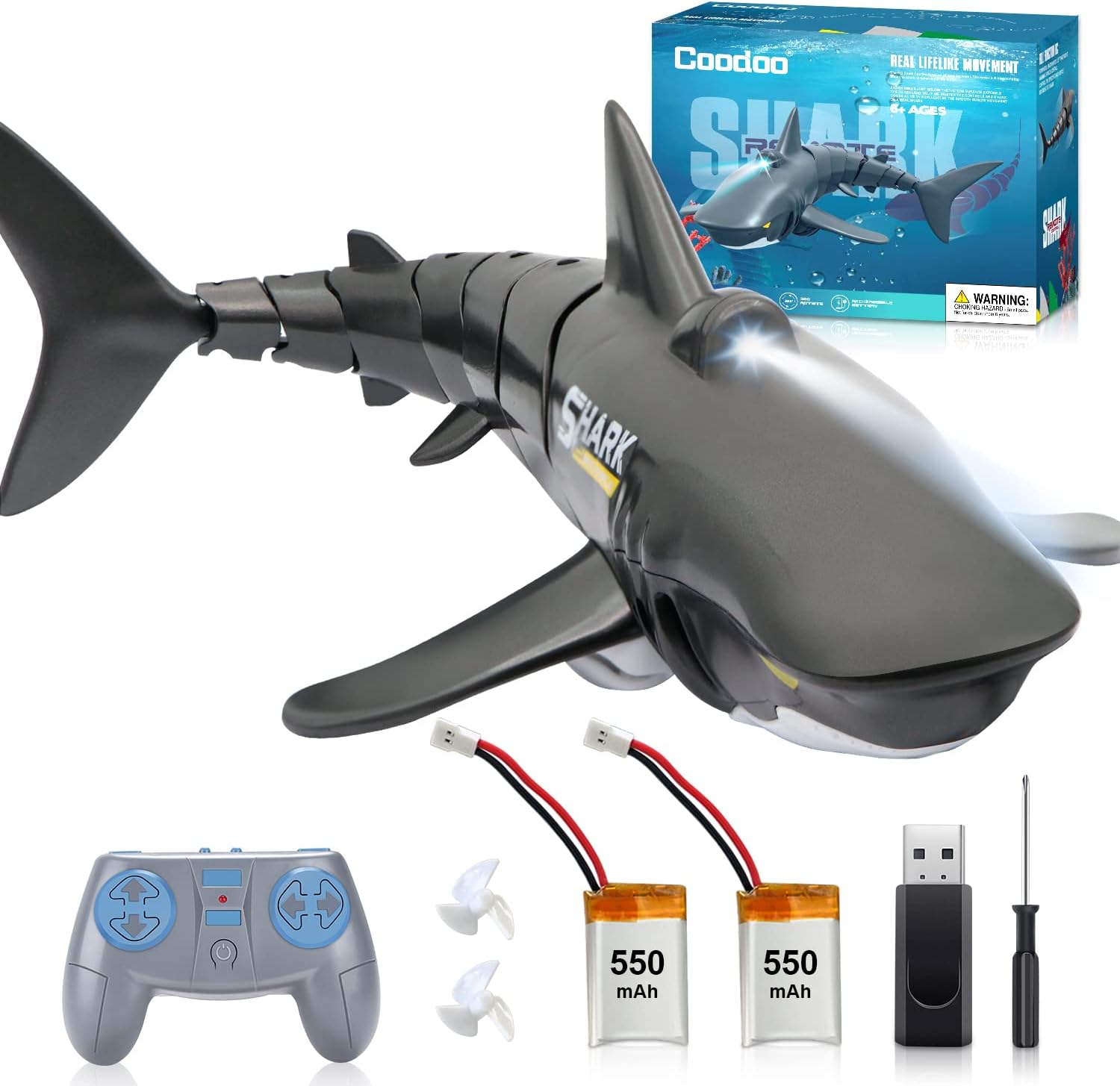
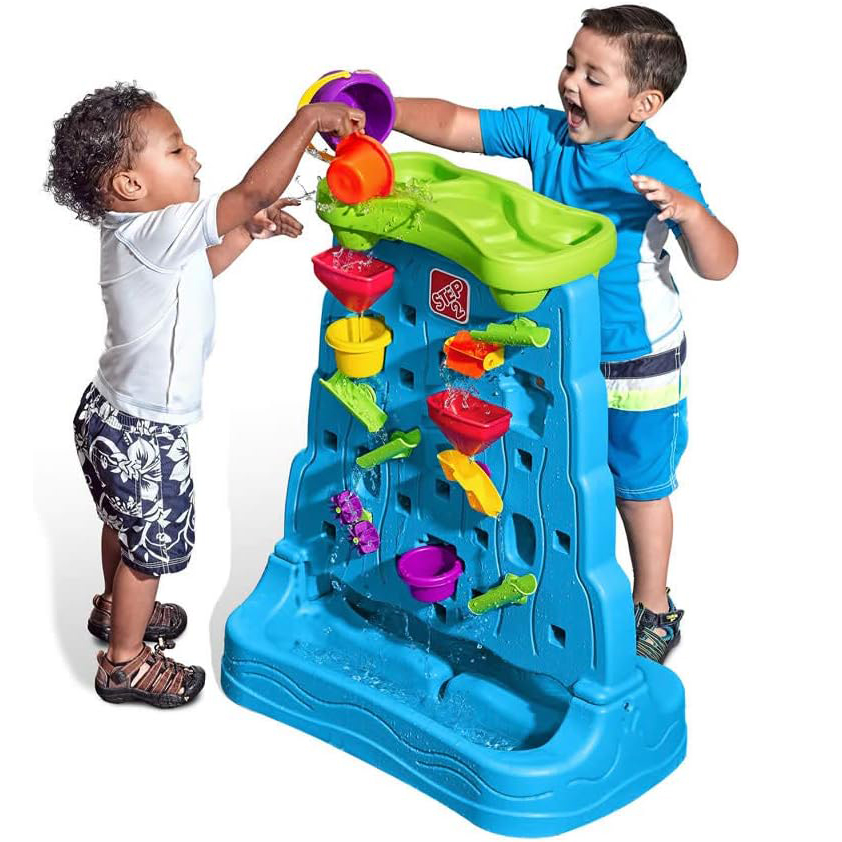
        gross motor skills water play

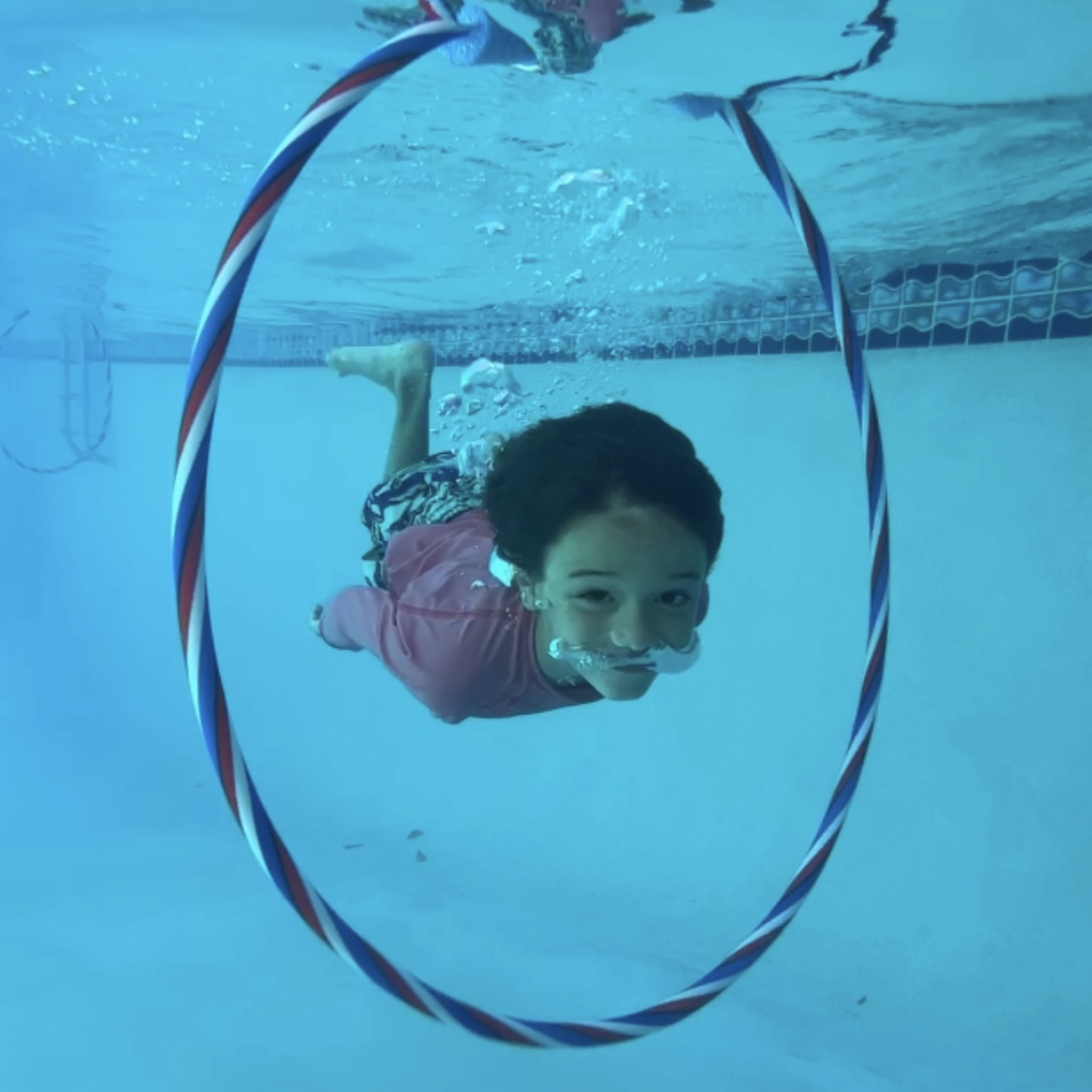
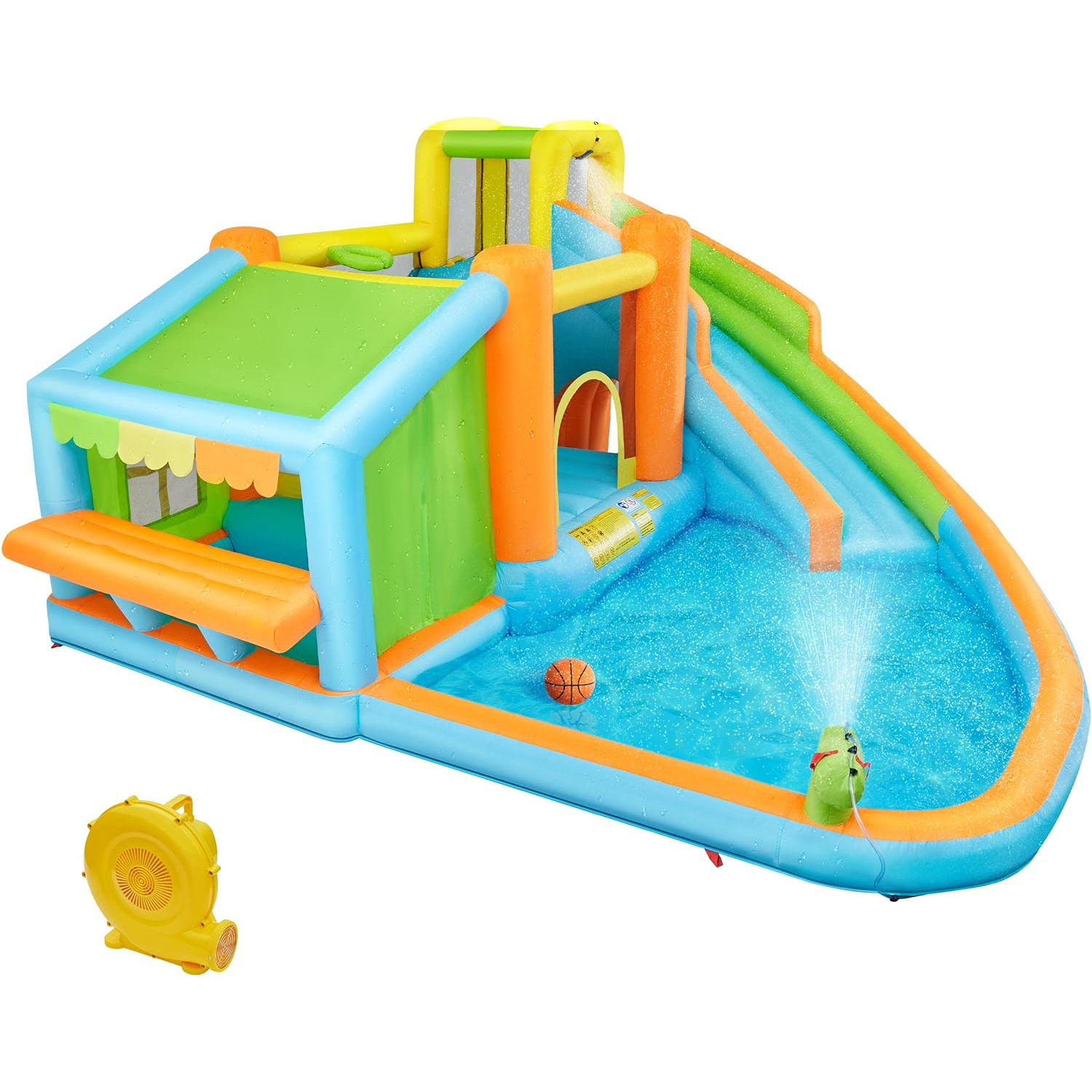
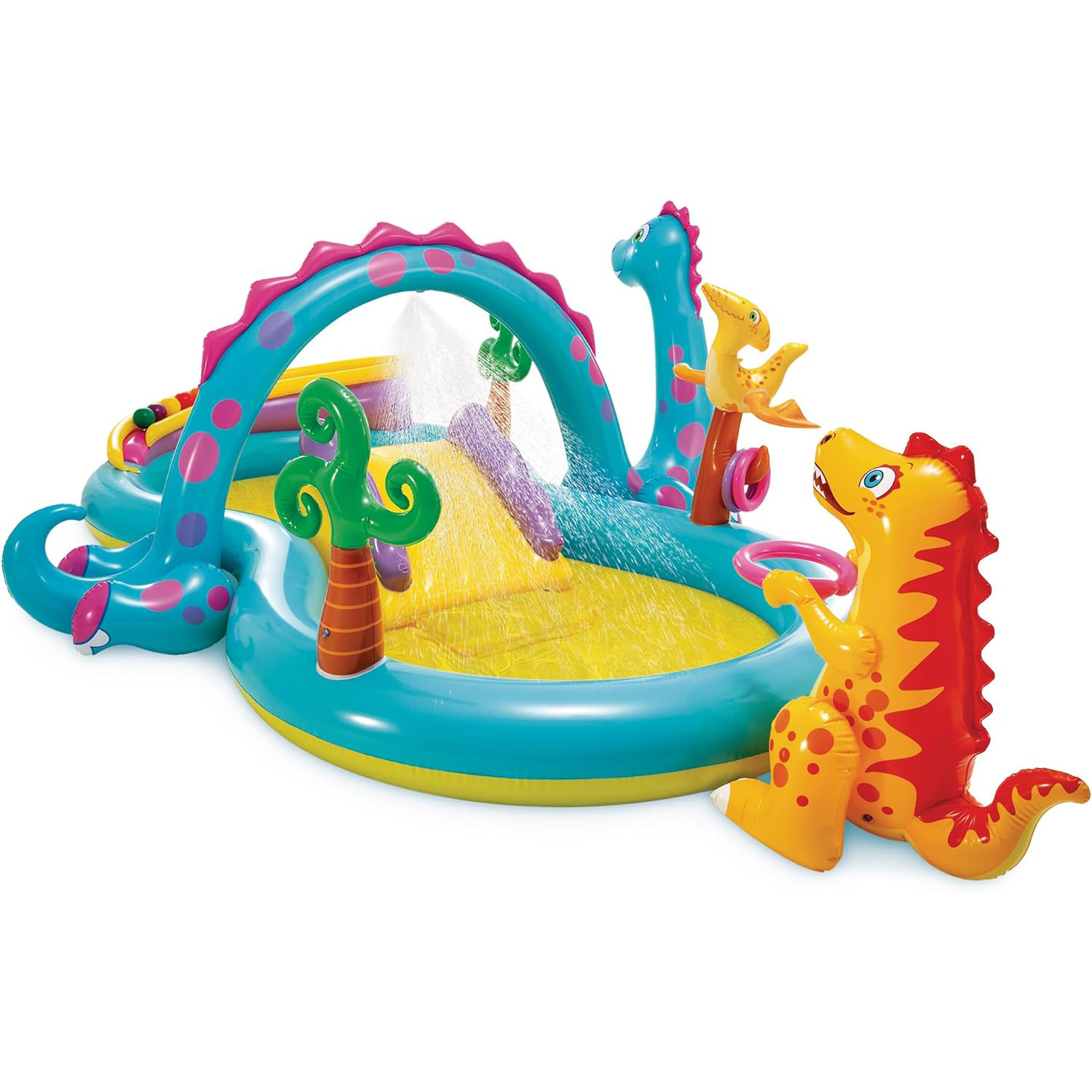
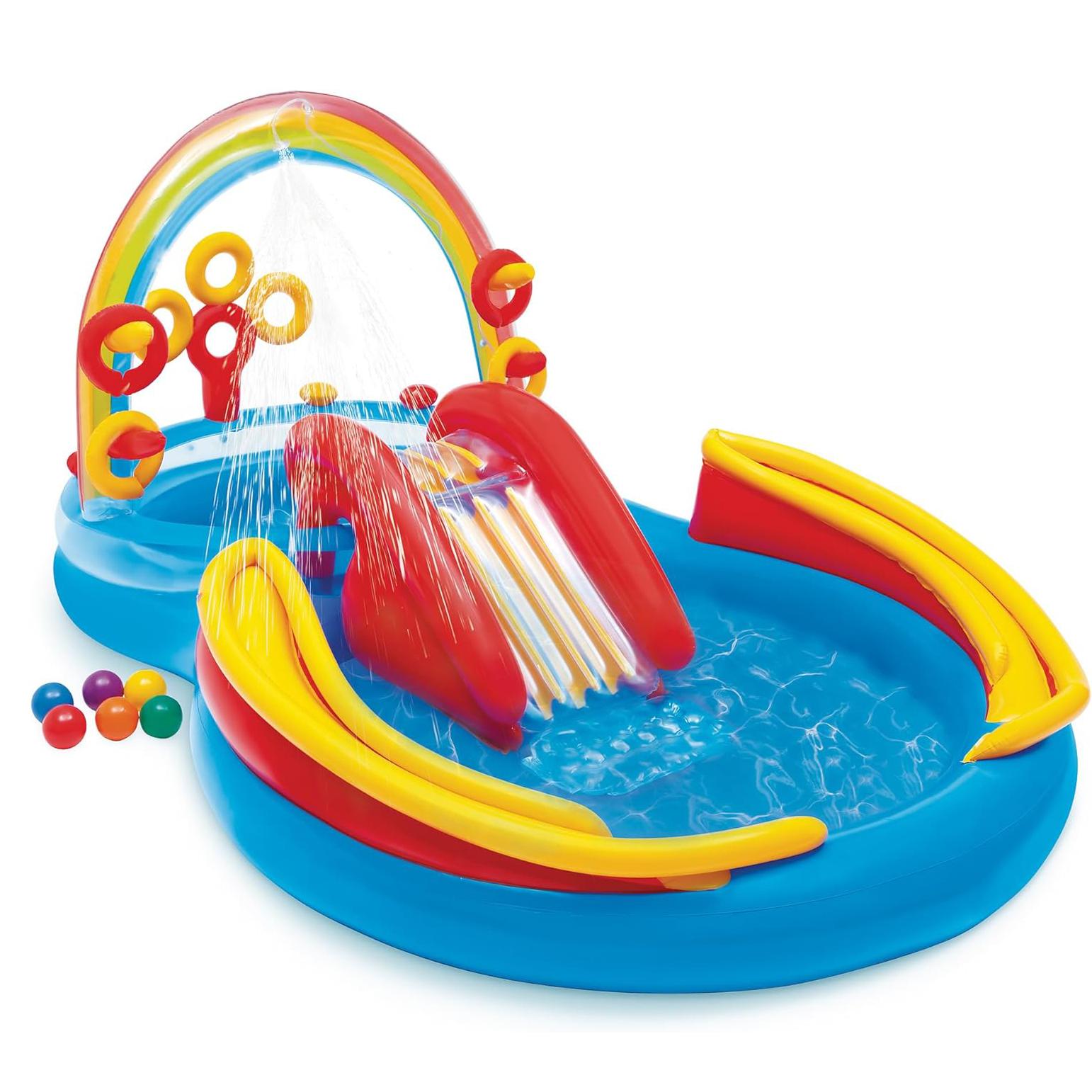
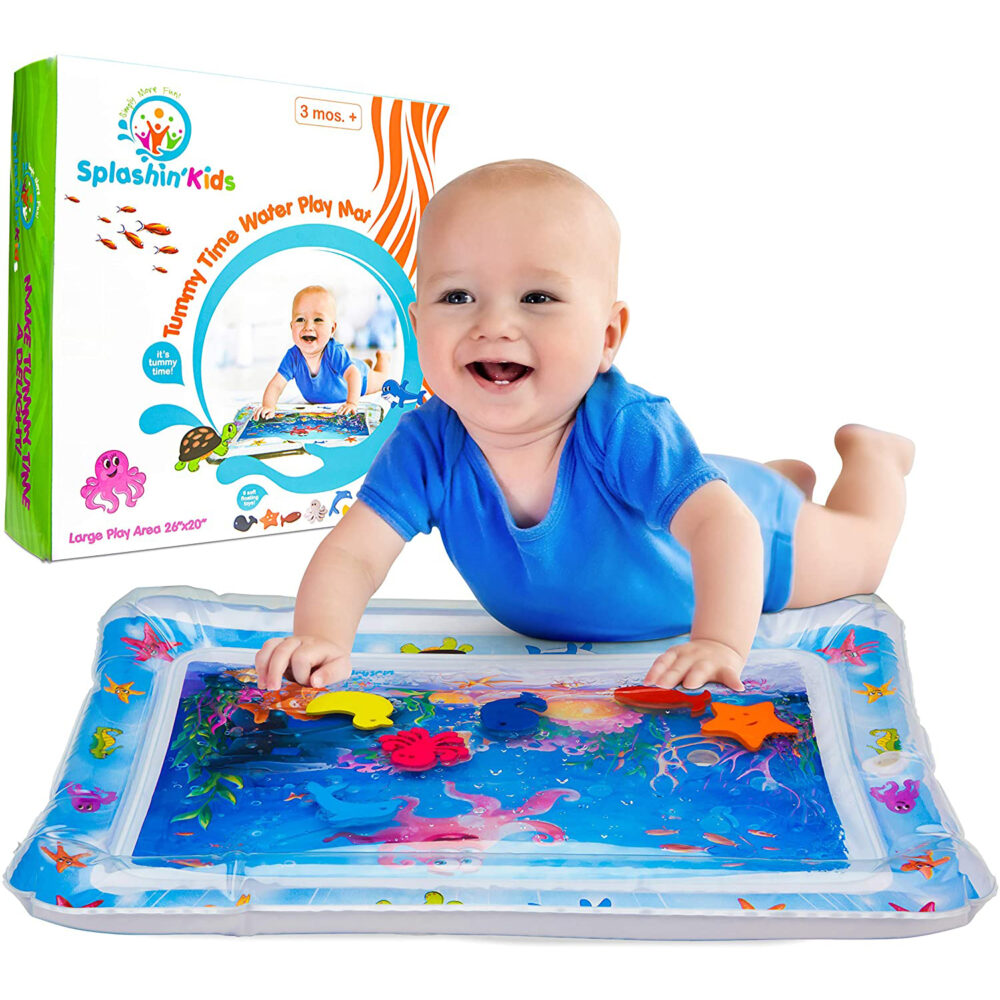
        Water Play

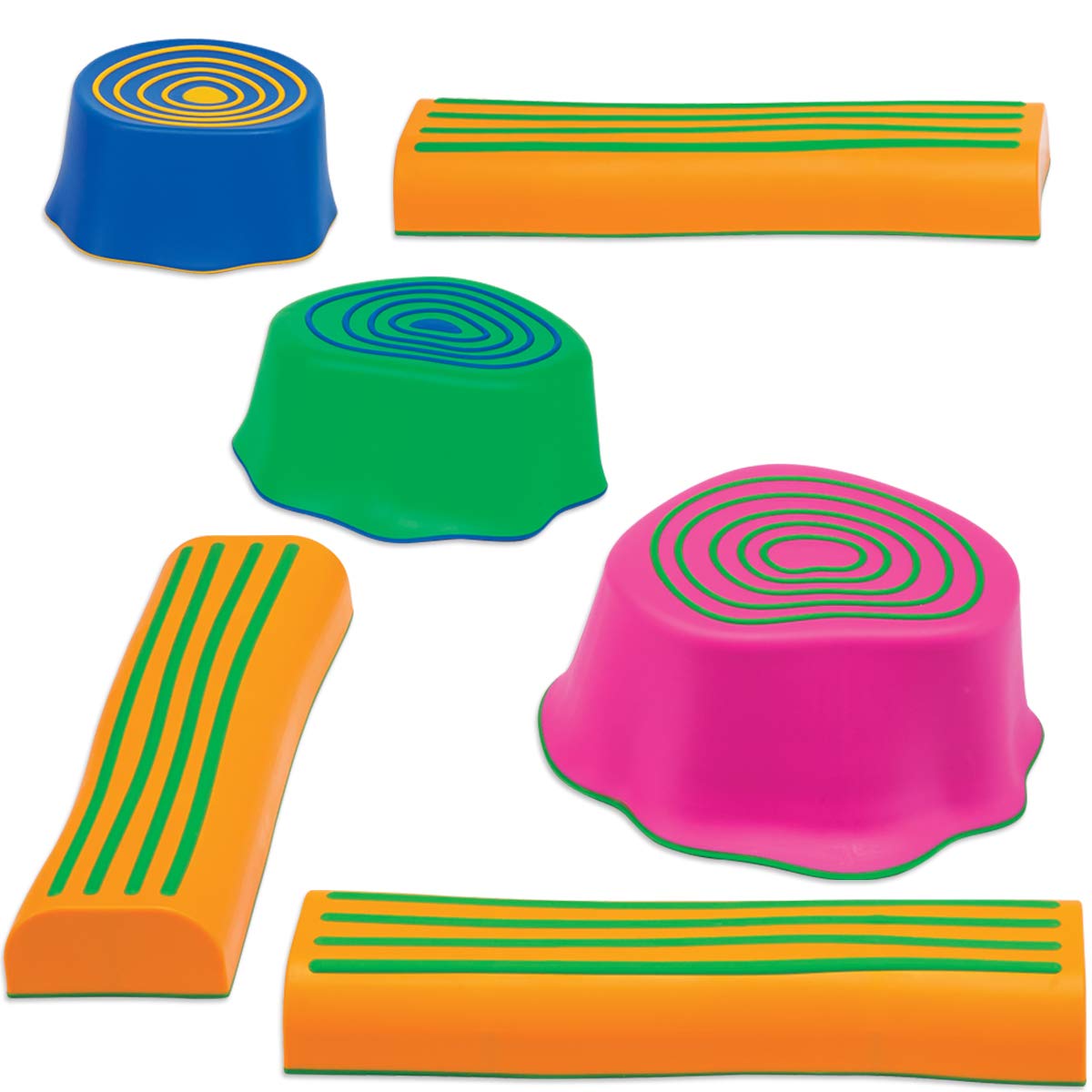
        gross motor skills stepping stone and beam

        Balance Beam and Stepping Stones

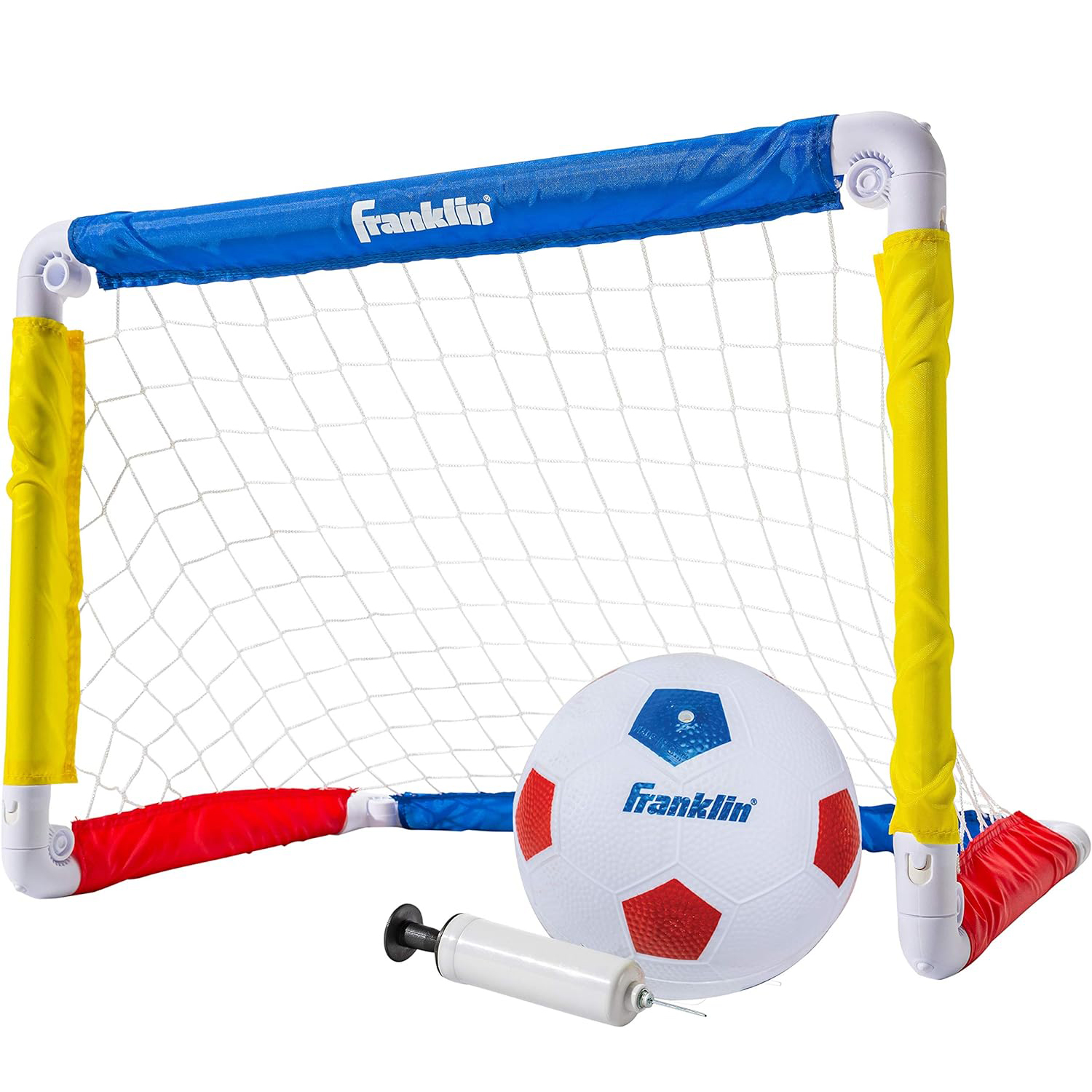
        gross motor skills soccer

        Soccer Ball and Goal

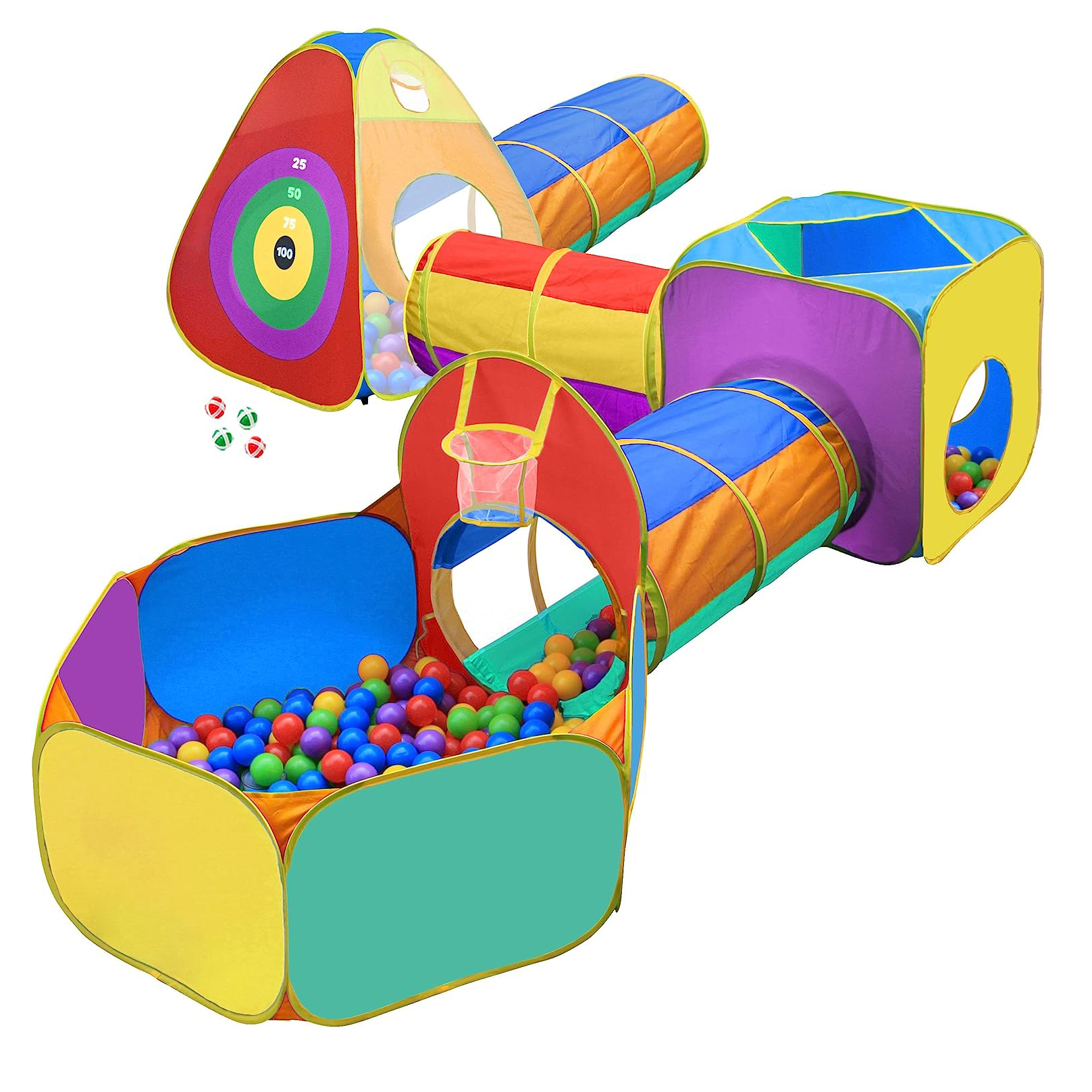
        gross motor skills tunnel

        Tunnels

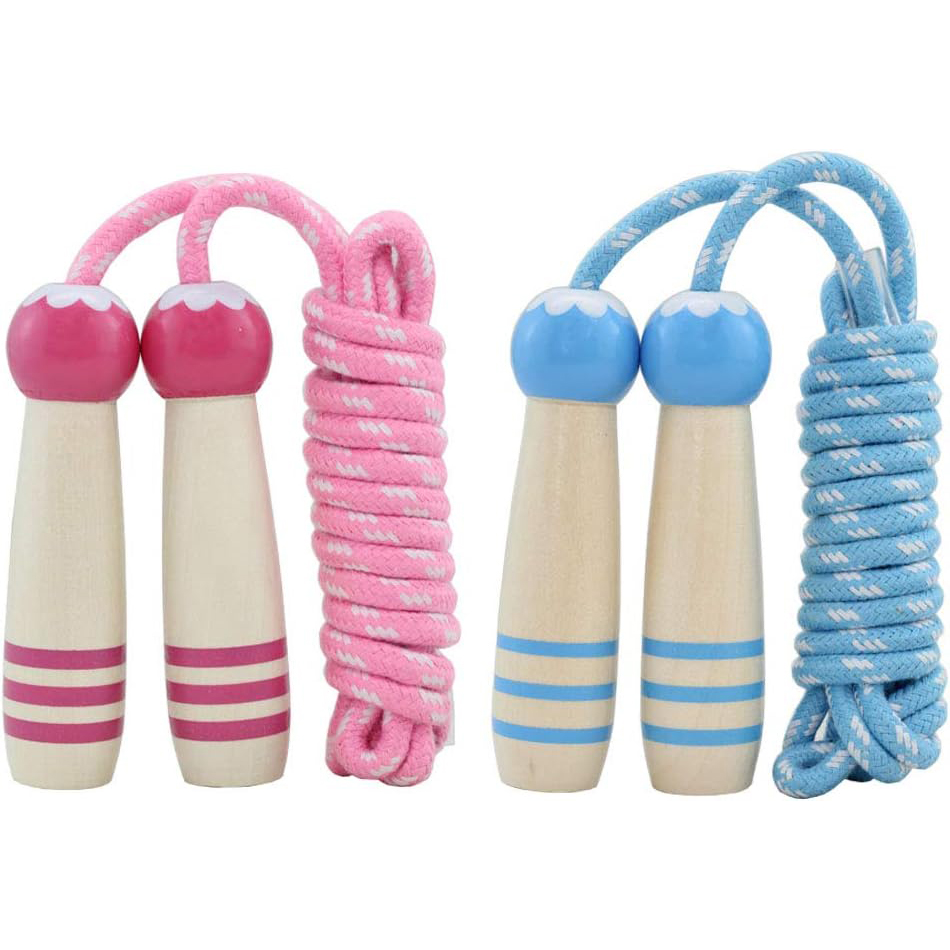
        gross motor skills jump rope

        Jump Rope

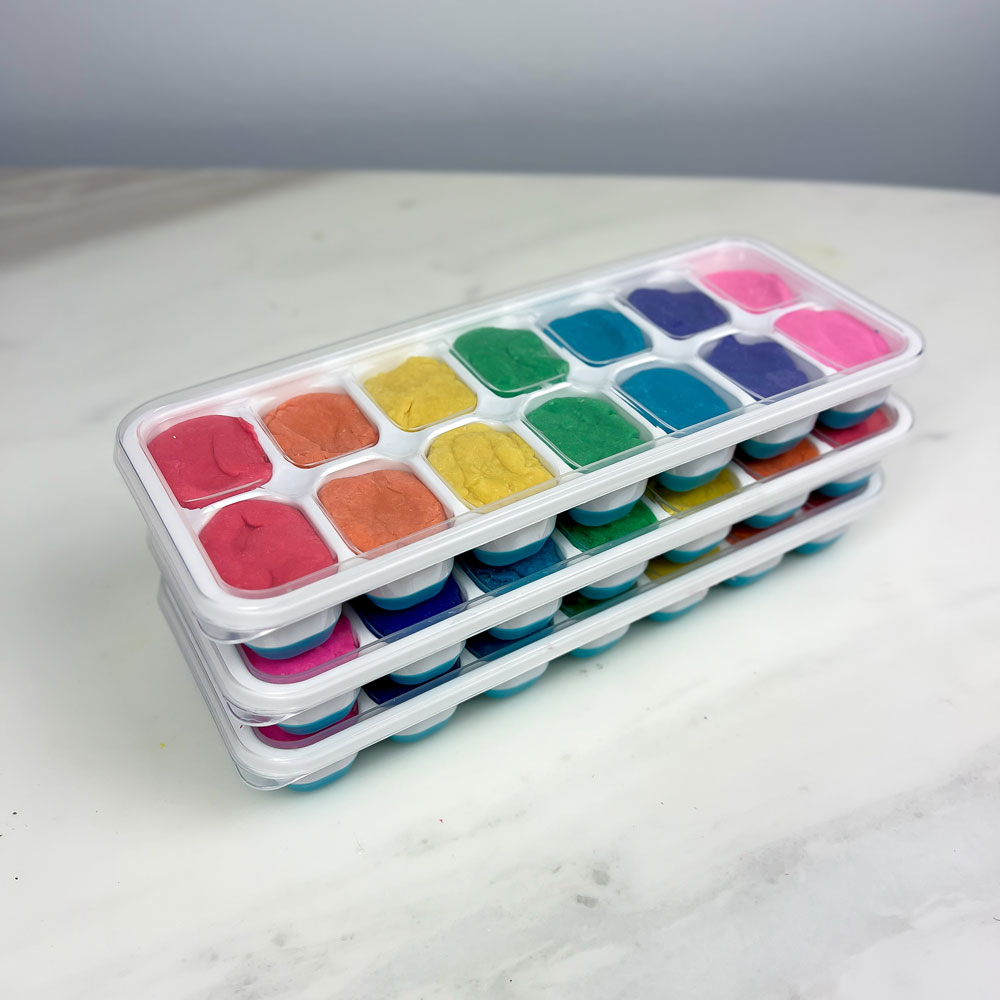
        edible play dough

        Conclusion: Fostering Gross Motor Skill Development in Kids

        Encouraging the development of gross motor skills in kids is vital for their overall physical, cognitive, and social growth. Through a combination of engaging activities, appropriate equipment, and supportive environments, parents can provide valuable opportunities for their children to explore and strengthen these essential skills. Whether it’s jumping, climbing, balancing, or pedaling, each activity offers unique benefits, from enhancing muscle strength and coordination to promoting creativity and social interaction.

        Incorporating gross motor activities into daily routines, such as including them in chores, errands, and outings, seamlessly integrates physical development into everyday life, further reinforcing these skills. While challenges or delays in gross motor skill development may arise, it’s important for parents to stay vigilant and seek professional assessment or intervention if concerns persist. By fostering a nurturing environment that prioritizes physical activity and exploration, parents can empower their kids to thrive and reach their full potential in all areas of development.

        What’s Next?
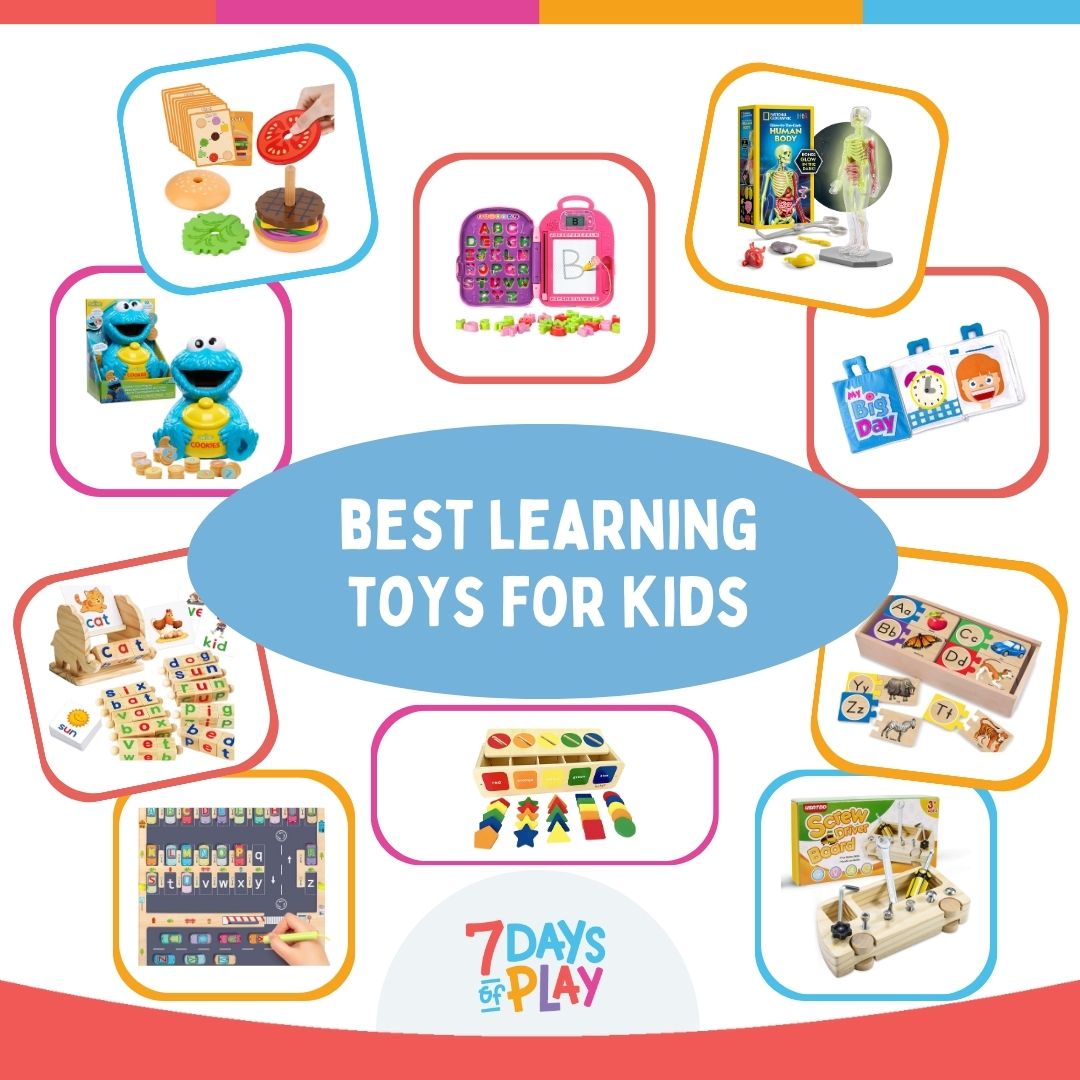
        Best Learning Toys for Kids

        Best Learning Toys for Kids

        Looking for the best learning toys for kids? We’ve got you covered with this list of educational gifts that kids will love and learn from!
        read more
        Fathers Day Card Template – Get the Free Slider Hug Card

        Fathers Day Card Template – Get the Free Slider Hug Card

        Fathers Day Card Template – Get the Free Slider Hug Card

        fathers day card template free printable slider hug card

        Looking for a creative way to celebrate Father’s Day this year? Our free, printable Fathers Day card template is the perfect solution!

        Create a Memorable Father’s Day with Our Free Printable Fathers Day Card Template

        This DIY slider card allows you to create a unique, personalized card that shows your dad just how much he means to you. With this easy-to-use Father’s Day card template, you can add a special touch by incorporating personal photos and messages, making it a memorable keepsake. Keep reading to discover how you can craft this delightful card in just a few simple steps and make this Father’s Day truly unforgettable.

        All activities should be supervised by an adult. As an Amazon Associate, I earn from qualifying purchases. This post may contain affiliate links.

        Skills:
        Ages: 
        Prep Time:

        What is a DIY Slider Card?

        A DIY slider card is a unique and interactive greeting card that adds an element of surprise. Unlike traditional cards, a slider card features a movable component that creates a dynamic, engaging experience for the recipient.

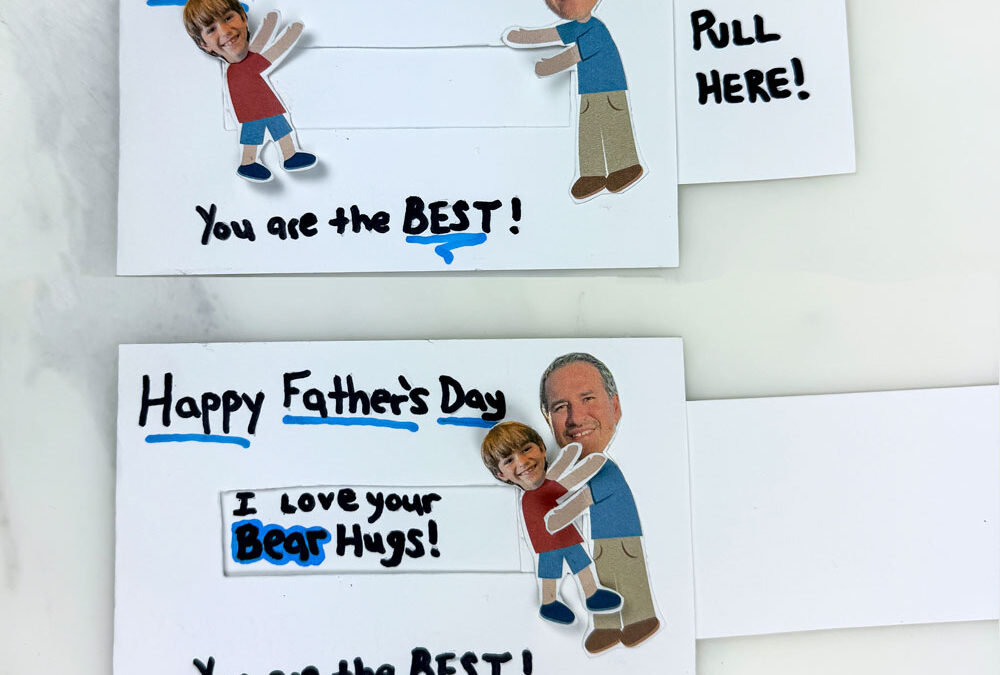
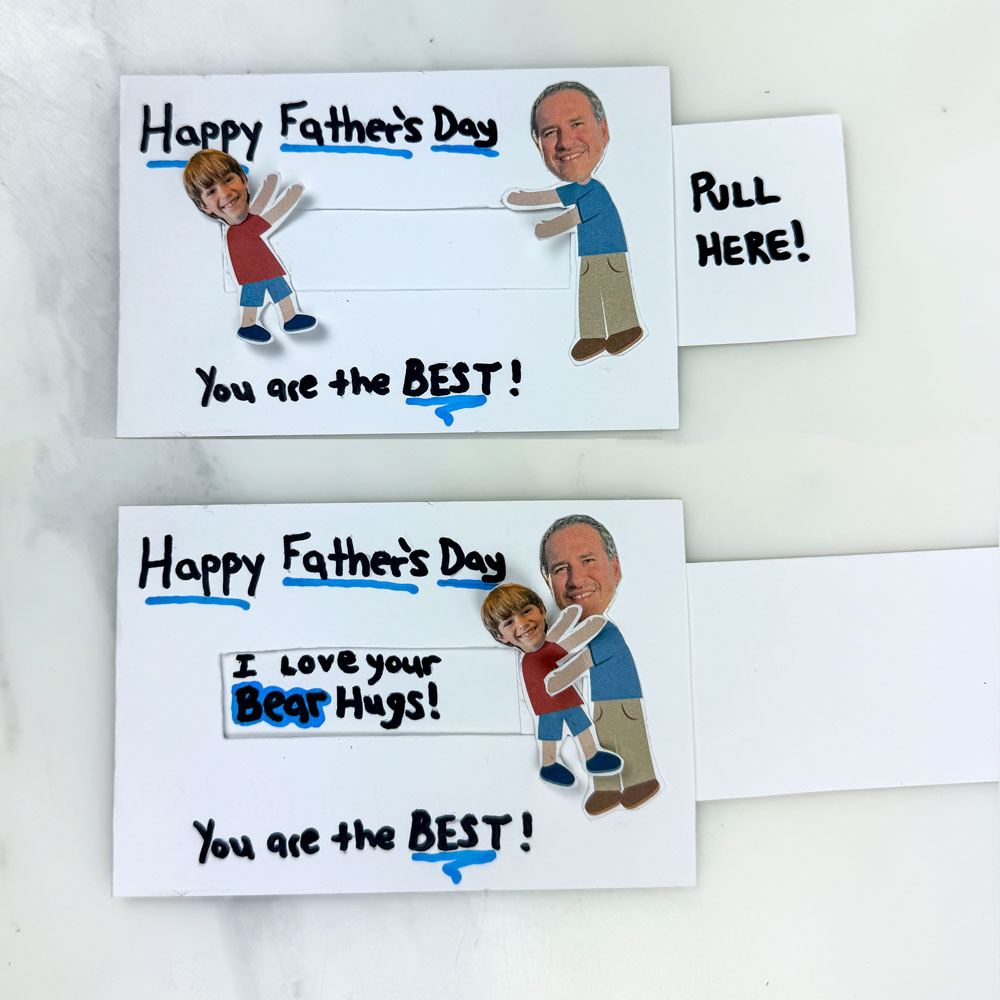
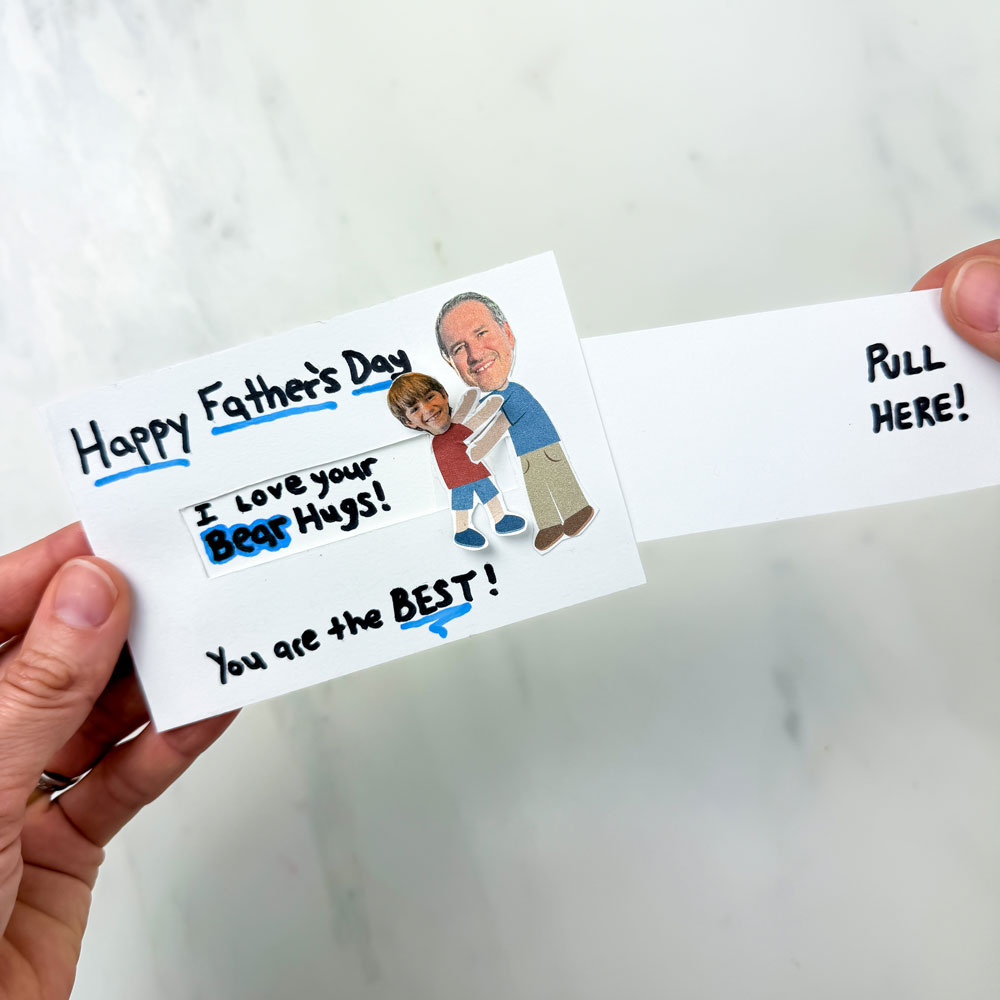
        In this particular Fathers Day card template, the design allows a child to “move” towards their father when the tab is pulled, creating the heartwarming visual effect of a hug. This is achieved by attaching images of the father and child with outstretched arms to the card and the inner tab, respectively. As the inner tab is pulled, the child’s image slides across the card towards the father’s image, culminating in a touching embrace.

        One of the best aspects of this DIY slider card is its customizable nature. You can personalize the card by using your own photos of the child and father, adding a deeply personal touch. Additionally, you can write a heartfelt message on the inner tab that is revealed when the card is in motion, along with a special greeting on the outer part of the card, such as “Happy Father’s Day” at the top and sentiments like “You are the best” or “I love you!” at the bottom. This flexibility allows you to create a truly unique and meaningful gift that perfectly expresses your love and appreciation.

        What is a DIY Slider Card?

        A DIY slider card is a unique and interactive greeting card that adds an element of surprise. Unlike traditional cards, a slider card features a movable component that creates a dynamic, engaging experience for the recipient.

        In this particular Fathers Day card template, the design allows a child to “move” towards their father when the tab is pulled, creating the heartwarming visual effect of a hug. This is achieved by attaching images of the father and child with outstretched arms to the card and the inner tab, respectively. As the inner tab is pulled, the child’s image slides across the card towards the father’s image, culminating in a touching embrace.

        One of the best aspects of this DIY slider card is its customizable nature. You can personalize the card by using your own photos of the child and father, adding a deeply personal touch. Additionally, you can write a heartfelt message on the inner tab that is revealed when the card is in motion, along with a special greeting on the outer part of the card, such as “Happy Father’s Day” at the top and sentiments like “You are the best” or “I love you!” at the bottom. This flexibility allows you to create a truly unique and meaningful gift that perfectly expresses your love and appreciation.

        fathers day card template free printable slider hug card

        Customization Tips and Download Instructions for this Fathers Day Card Template

        Creating a DIY slider card is not only a fun and engaging activity but also a wonderful way to express your creativity and affection. To make your card even more special, consider customizing it with unique touches. Use colorful markers or pens to add vibrant details and designs around the card. Incorporate stickers, glitter, or other embellishments to give it a personalized flair. For a truly unique card, you can use your own photos of the child and father, making the card a cherished keepsake. Don’t forget to write a heartfelt message on the inner tab, such as “Happy Father’s Day,” “You are the best,” or “I love you!” This message will be revealed when the tab is pulled, adding an extra layer of surprise and delight.

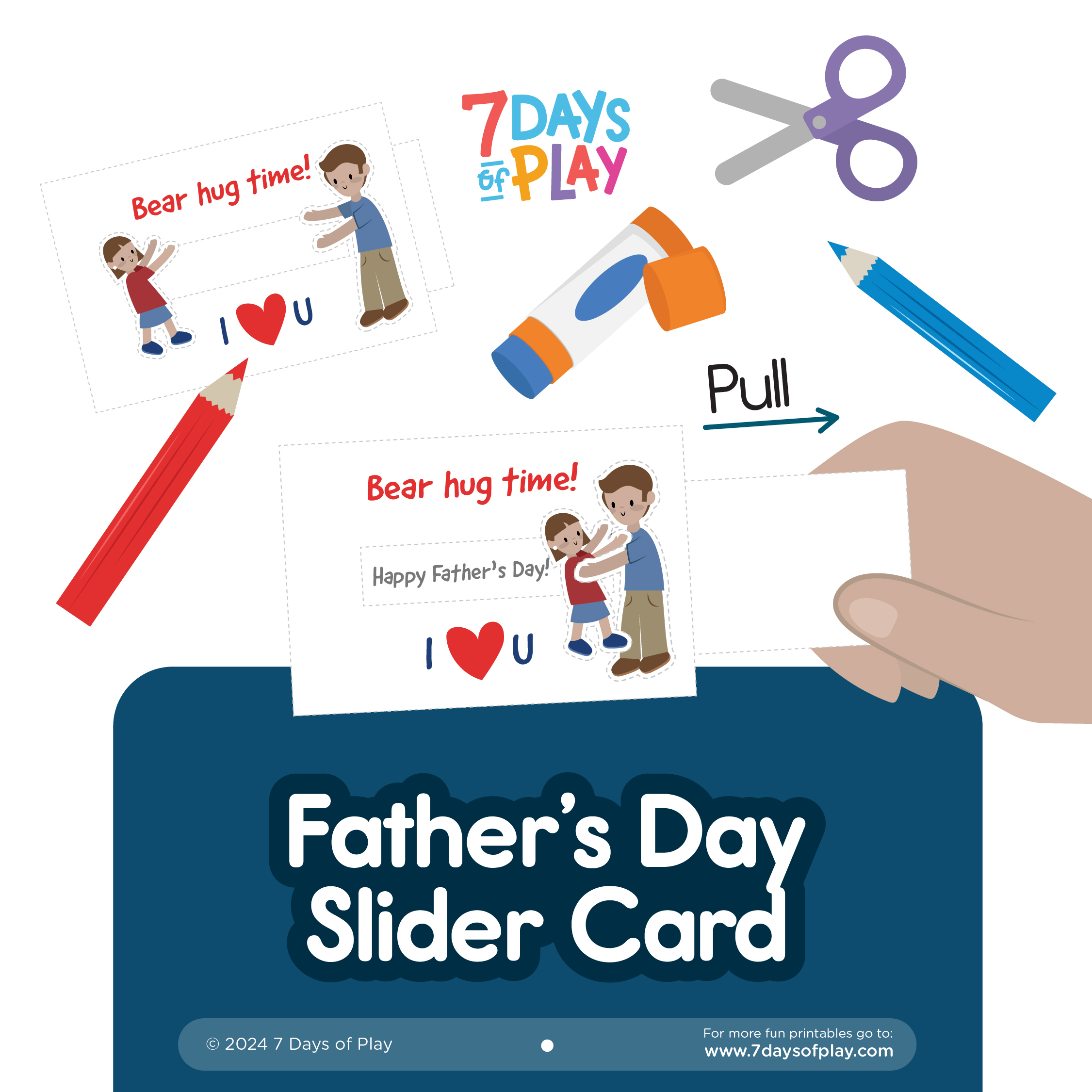
        Ready to get started? Download and print your free Father’s Day card template here. Follow the printing instructions for the best results, and gather all the necessary materials. By combining your creativity with our easy-to-follow template, you’ll craft a memorable and heartfelt card that your dad will treasure forever.

        Materials

        Step-by-Step Instructions 

        Step 1

        Cut Out the Card and Inner Tab: Print the Fathers Day card template. Carefully cut along the dotted lines to separate the card and the inner tab. Ensure you cut out the inner rectangle within the card as well.

        Step 2

        Choose and Cut Out Characters: Select the characters you’d like to use from the template or use your own photos. If using personal photos, cut out the heads and paste them onto the printable cutout figurines.

        Step 3

        Fold and Glue the Card: Fold the paper card along the indicated lines. Apply glue to the edges as shown on the template. Paste the father’s picture at the right base of the inner rectangle cutout, making sure the front arm remains free.

        Step 4

        Insert the Inner Tab and Attach the Kid’s Picture: Insert the inner tab into the card through the slot.  While the tab is inside, attach the kid’s picture to the left edge of the inner tab.

        Step 5

        Write Messages: Customize the card by writing messages around it, including on the inner tab. Suggestions include “Happy Father’s Day” on top and sweet messages like “You are the best” or “I love you!” at the bottom.

        Step 1

        Cut Out the Card and Inner Tab: Print the Fathers Day card template. Carefully cut along the dotted lines to separate the card and the inner tab. Ensure you cut out the inner rectangle within the card as well.

        Step 2

        Choose and Cut Out Characters: Select the characters you’d like to use from the template or use your own photos. If using personal photos, cut out the heads and paste them onto the printable cutout figurines.

        Step 3

        Fold and Glue the Card: Fold the paper card along the indicated lines. Apply glue to the edges as shown on the template. Paste the father’s picture at the right base of the inner rectangle cutout, making sure the front arm remains free.

        Step 4

        Insert the Inner Tab and Attach the Kid’s Picture: Insert the inner tab into the card through the slot.  While the tab is inside, attach the kid’s picture to the left edge of the inner tab.

        Step 5

        Write Messages: Customize the card by writing messages around it, including on the inner tab. Suggestions include “Happy Father’s Day” on top and sweet messages like “You are the best” or “I love you!” at the bottom.

        The Benefits of Using this Fathers Day Card Template

        Handmade cards carry a unique emotional impact that store-bought cards simply can’t match. By creating a DIY slider card with this Fathers Day card template, you’re not just giving a card, but a heartfelt gesture that shows thoughtfulness and effort.

        The process of making the card can be a fun and rewarding experience, whether you’re crafting alone or with family members. The customization options allow you to tailor the card specifically for your dad, making it a truly personal gift that he’ll cherish.

        fathers day card template free printable slider hug card
        fathers day card template free printable slider hug card

        The Benefits of Using this Fathers Day Card Template

        Handmade cards carry a unique emotional impact that store-bought cards simply can’t match. By creating a DIY slider card with this Fathers Day card template, you’re not just giving a card, but a heartfelt gesture that shows thoughtfulness and effort.

        The process of making the card can be a fun and rewarding experience, whether you’re crafting alone or with family members. The customization options allow you to tailor the card specifically for your dad, making it a truly personal gift that he’ll cherish.


        Father’s Day Gift Ideas!

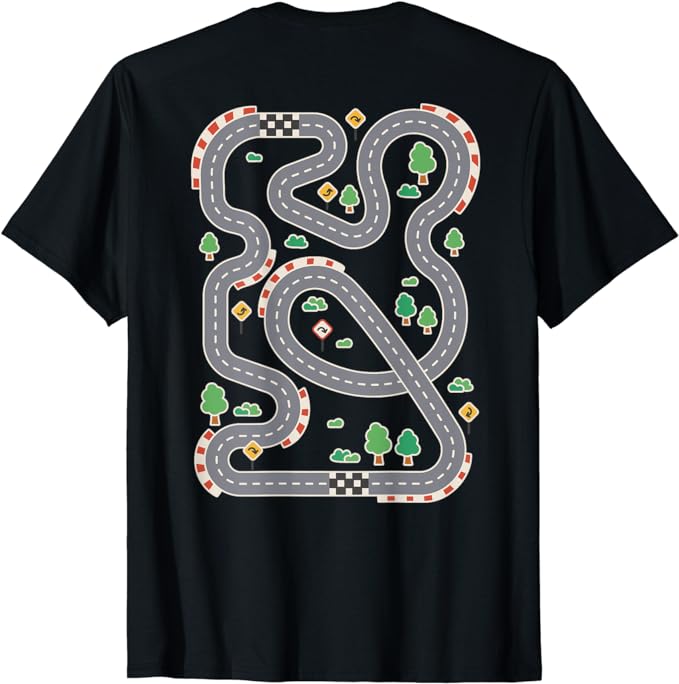
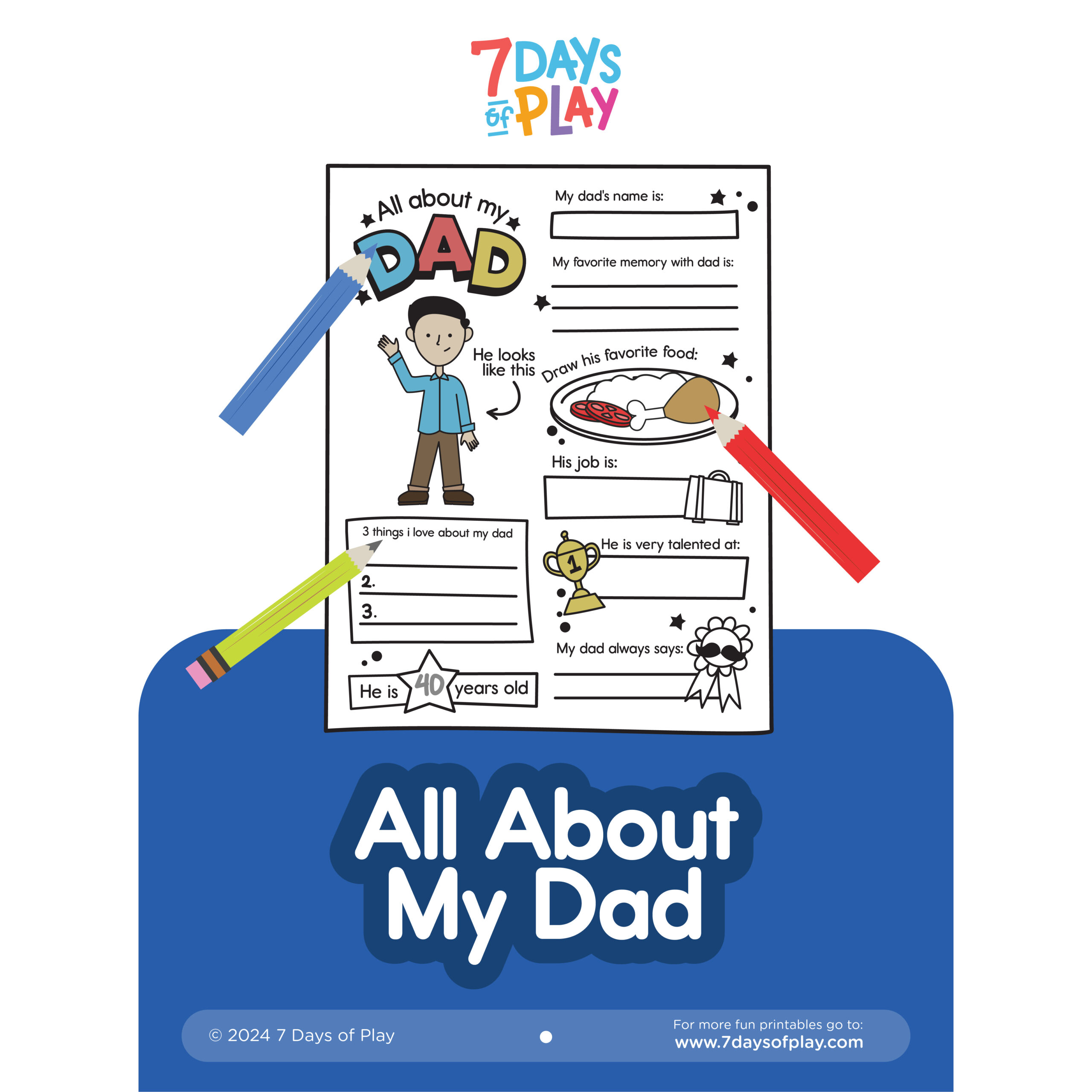
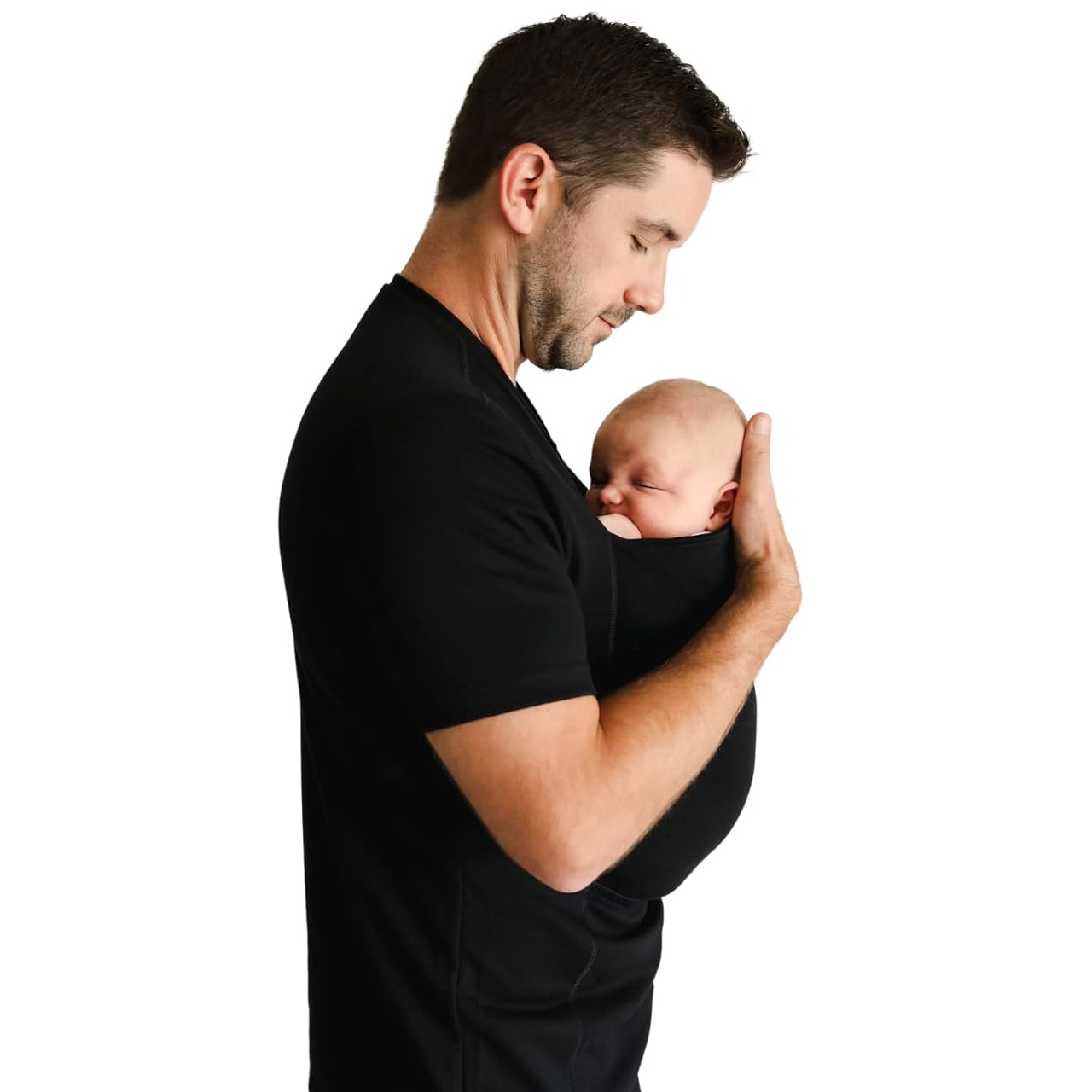
        Looking for more ways to make Father’s Day special? Beyond the DIY slider card, there are plenty of creative and thoughtful gift ideas that kids can give, make, or contribute to. These gifts can complement the fathers day card template and make the day even more memorable for dad.

        fathers day gift shirt car track race track

        Shirt for Playing Cars on Daddy’s Back

        All about dad fathers day gift card template

        All About My Dad Free Printable Card

        Dad baby carrier shirt for newborns

        Shirt for Dad with Built in Baby Carrier

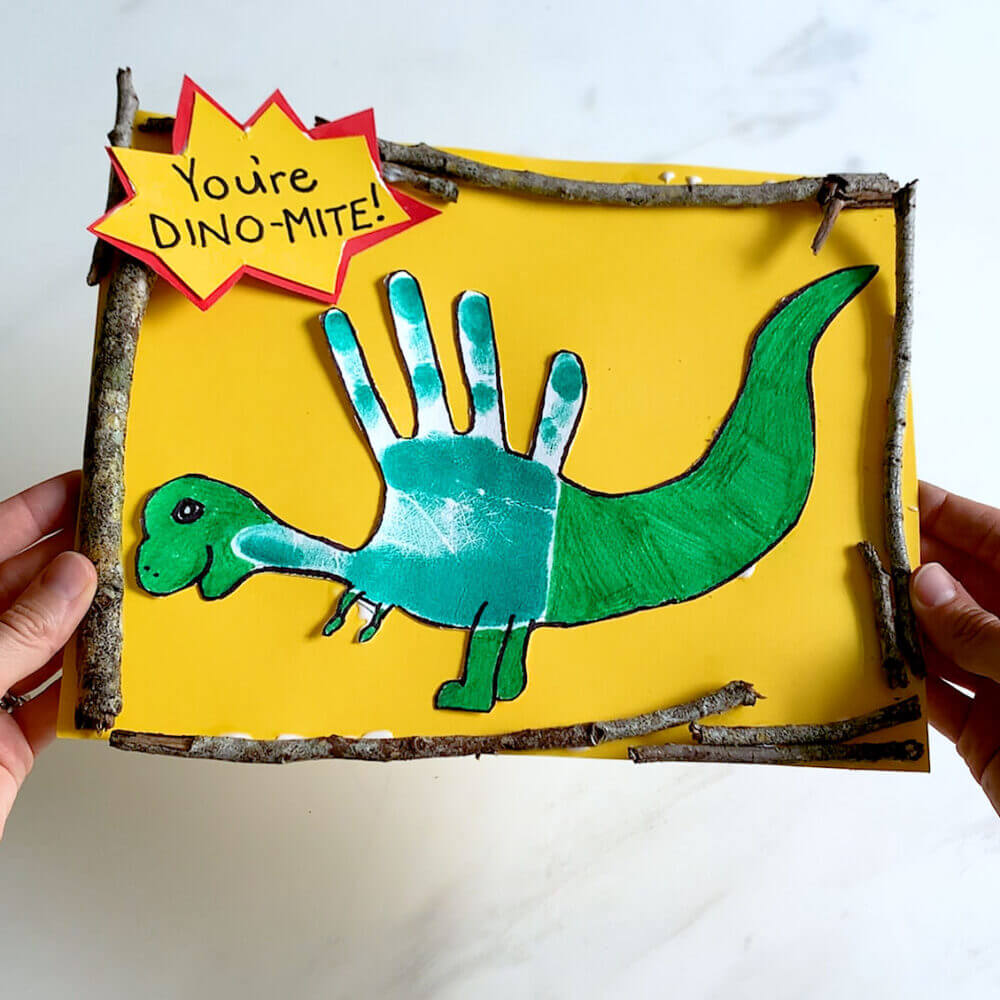
        dinosaur kid craft handprint

        Dinosaur Handprint Craft

        What’s Next?

        Best Learning Toys for Kids

        Best Learning Toys for Kids

        Looking for the best learning toys for kids? We’ve got you covered with this list of educational gifts that kids will love and learn from!

        read more
        Printable Mother’s Day Cards – A Beautiful and Free Template!

        Printable Mother’s Day Cards – A Beautiful and Free Template!

        Printable Mother’s Day Card – A Beautiful and Free Template!

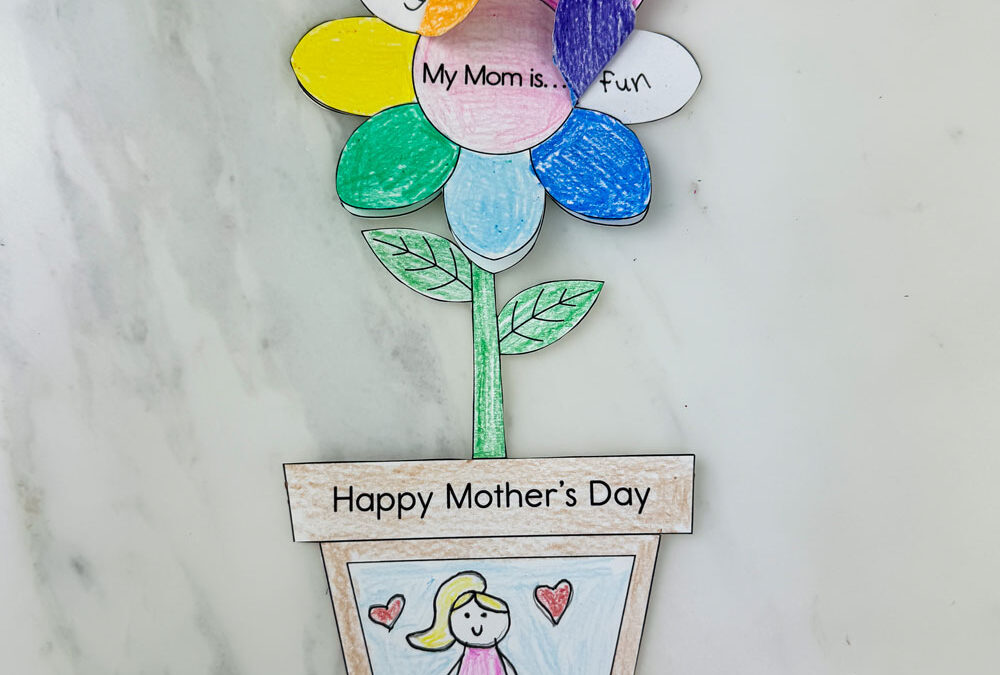
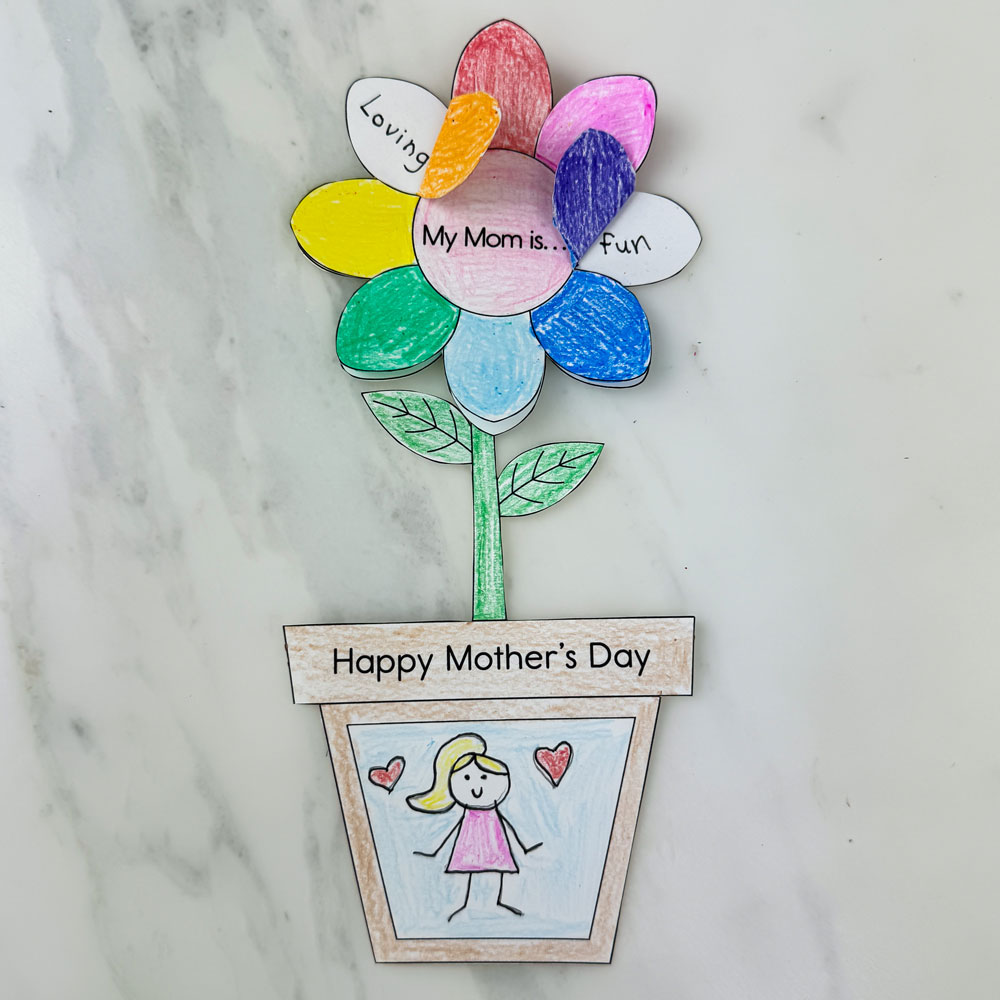
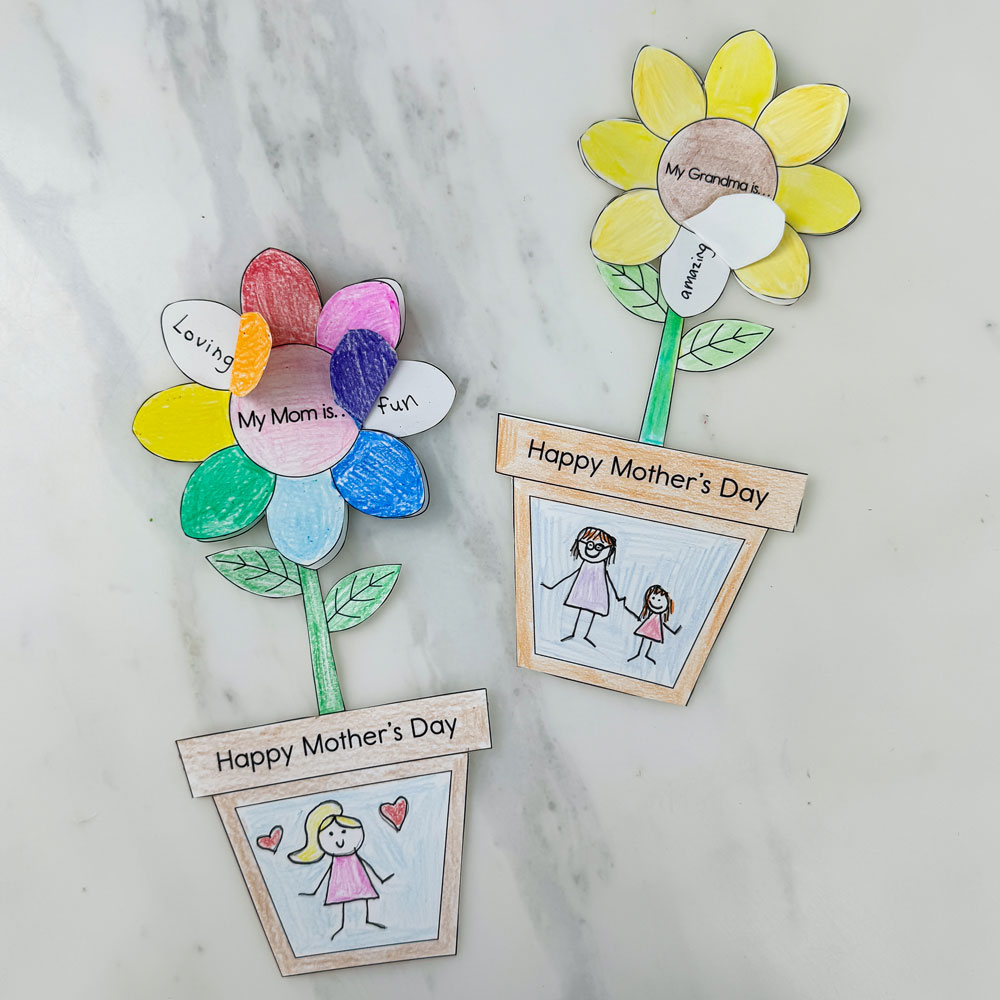
        printable mother's day cards flower template

        Need a heartfelt printable Mother’s Day card? Look no further than this free, customizable flower gift! Personalize with loving words for a memorable surprise.

        Peel Back Love: Free Printable Mother’s Day Card!

        Welcome to a heartfelt celebration of the extraordinary women in our lives! With Mother’s Day just around the corner, it’s time to honor the incredible moms, grandmas, aunts, and mother figures who fill our world with love and wisdom. This year, why not add a touch of creativity and personalization to your Mother’s Day gift-giving with our printable Mother’s Day card!

        This free printable resource is a unique and meaningful activity that doubles as a heartfelt gift for the special women we cherish. The beauty of this printable flower activity lies in its ability to encapsulate the depth of love and appreciation we hold for the special women in our lives. As each petal is adorned with words that describe the qualities, virtues, and memories we cherish about our moms, grandmas, or aunts, it becomes a tangible expression of gratitude and admiration.

        All activities should be supervised by an adult. As an Amazon Associate, I earn from qualifying purchases. This post may contain affiliate links.

        Skills: Arts and Crafts

        Ages: 4+

        Prep Time: 15 minutes 

        Tips on How to Assemble This Printable Mother’s Day Card.

        Choose Quality Paper: Opt for a sturdy paper stock for printing the template. This ensures durability and longevity for the finished card.

        Color with Care: Encourage creativity while coloring the flower template. Remind participants to color within the lines and use vibrant colors to make the design pop.

        Precision in Cutting: When cutting out the flower template, precision is key. Advise cutting along the edges carefully to maintain the shape and details of the flower.

        Peeling Back Petals: When assembling the card, demonstrate how to gently peel back each petal to reveal the heartfelt words underneath. Emphasize the importance of handling the petals delicately to avoid tearing.

        Secure Layers: Use adhesive to secure the colored flower template onto the layer with the words. Ensure each petal aligns perfectly to maintain the surprise element of peeling back the petals.

        Personalize with Love: Encourage adding personal touches to the card, such as writing a heartfelt message on the back or embellishing the design with additional decorations like glitter or stickers.

        Tips on How to Assemble This Printable Mother’s Day Card.

        Choose Quality Paper: Opt for a sturdy paper stock for printing the template. This ensures durability and longevity for the finished card.

        Color with Care: Encourage creativity while coloring the flower template. Remind participants to color within the lines and use vibrant colors to make the design pop.

        Precision in Cutting: When cutting out the flower template, precision is key. Advise cutting along the edges carefully to maintain the shape and details of the flower.

        Peeling Back Petals: When assembling the card, demonstrate how to gently peel back each petal to reveal the heartfelt words underneath. Emphasize the importance of handling the petals delicately to avoid tearing.

        Secure Layers: Use adhesive to secure the colored flower template onto the layer with the words. Ensure each petal aligns perfectly to maintain the surprise element of peeling back the petals.

        Personalize with Love: Encourage adding personal touches to the card, such as writing a heartfelt message on the back or embellishing the design with additional decorations like glitter or stickers.

        number learning game with balloons for number recognition in preschoolers and toddlers

        Get the Printable Mother’s Day Card Here

        Ready to start crafting your heartfelt Mother’s Day card? Click HERE to download the free printable flower template! Whether it’s for mom, grandma, aunt, or any other maternal figure in your life, we’ve got you covered. There is a blank flower where you can customize for any important maternal figure in your life!

        And if you love our printables and want access to hundreds more, don’t miss out on our printable membership, currently 50% off! You’ll have access to our “instant download” feature and will be able to explore a world of arts and crafts, playful learning bundles, and so much more that goes beyond traditional boring worksheets.  

        Materials

        Step-by-Step Instructions 

        Step 1

        Print, color, and cut. There are multiple options of flowers depending on who the recipient is. You can also use the blank flower to fill in your own custom recipient information.

        Step 2

        Write words that describe the recipient on each petal, then draw her a picture in the pot.

        Step 3

        Paste the flower with the messages at the top of the stem.


        Step 4

        On the colored flower, cut along the black line of each petal so they can be easily folded.

        Step 5

        Paste the colored flower on top of the flower with the messages. Glue only where it says “Glue Here.”

        Step 6

        Unfold each petal to reveal the hidden messages you wrote for your mom as a sweet gift for Mother’s Day!

        Step 1

        Print, color, and cut. There are multiple options of flowers depending on who the recipient is. You can also use the blank flower to fill in your own custom recipient information.

        Step 2

        Write words that describe the recipient on each petal, then draw her a picture in the pot.

        Step 3

        Paste the flower with the messages at the top of the stem.

        Step 4

        On the colored flower, cut along the black line of each petal so they can be easily folded.

        Step 5

        Paste the colored flower on top of the flower with the messages. Glue only where it says “Glue Here.”

        Step 6

        Unfold each petal to reveal the hidden messages you wrote for your mom as a sweet gift for Mother’s Day!

        More Printable Mother’s Day Cards!

        Need more printable Mother’s Day cards? We have lots more to download and print to make a Mom’s day extra special! From adorable handprint flower cards to a superhero mom candy bar template, a “My Mom and Me” printable booklet, and a personalized 3D Mother’s Day card, there’s something here to warm every mother’s heart. Let’s dive in and explore these heartfelt creations!

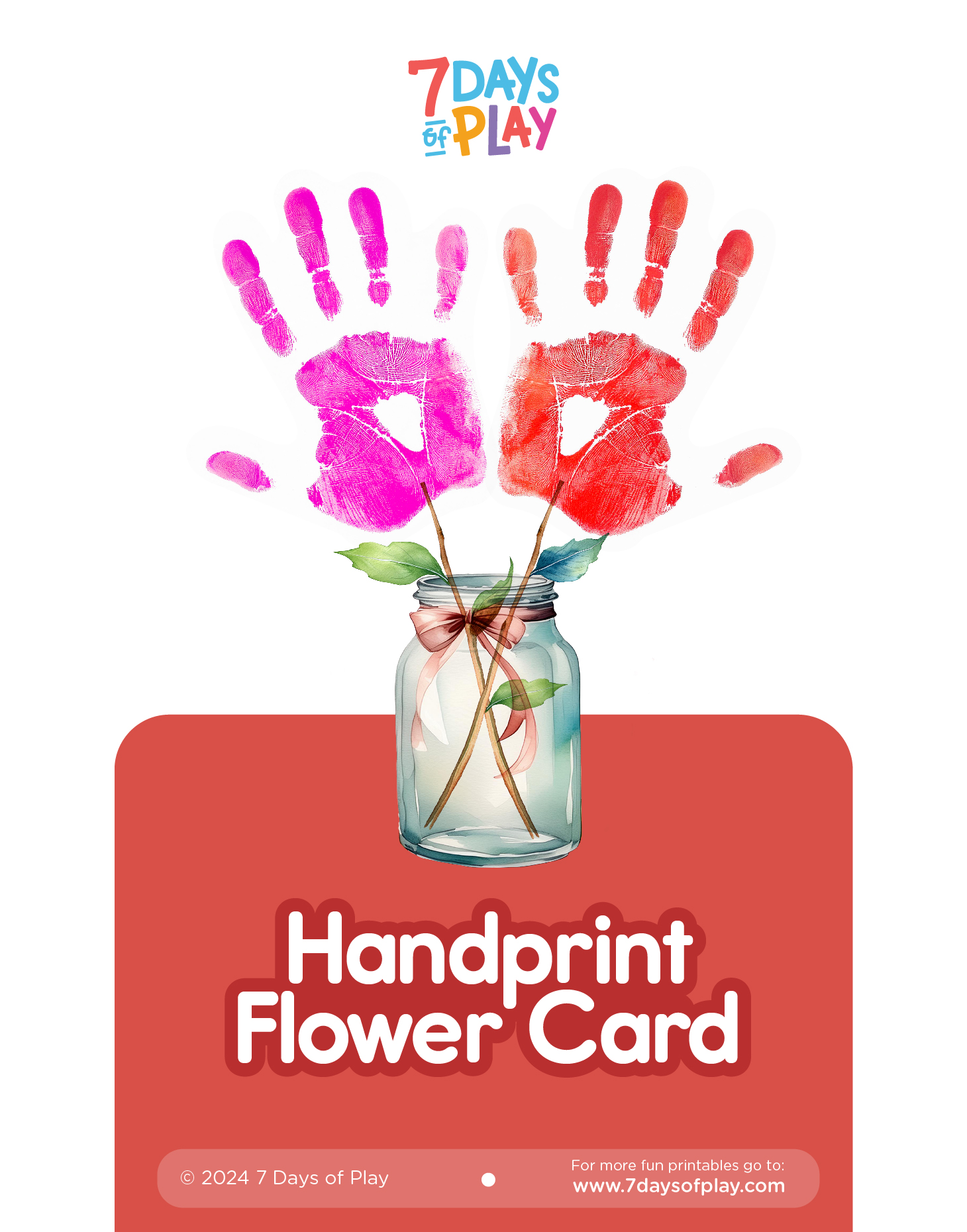
        Handprint Flower Card - Printable

        Handprint Card

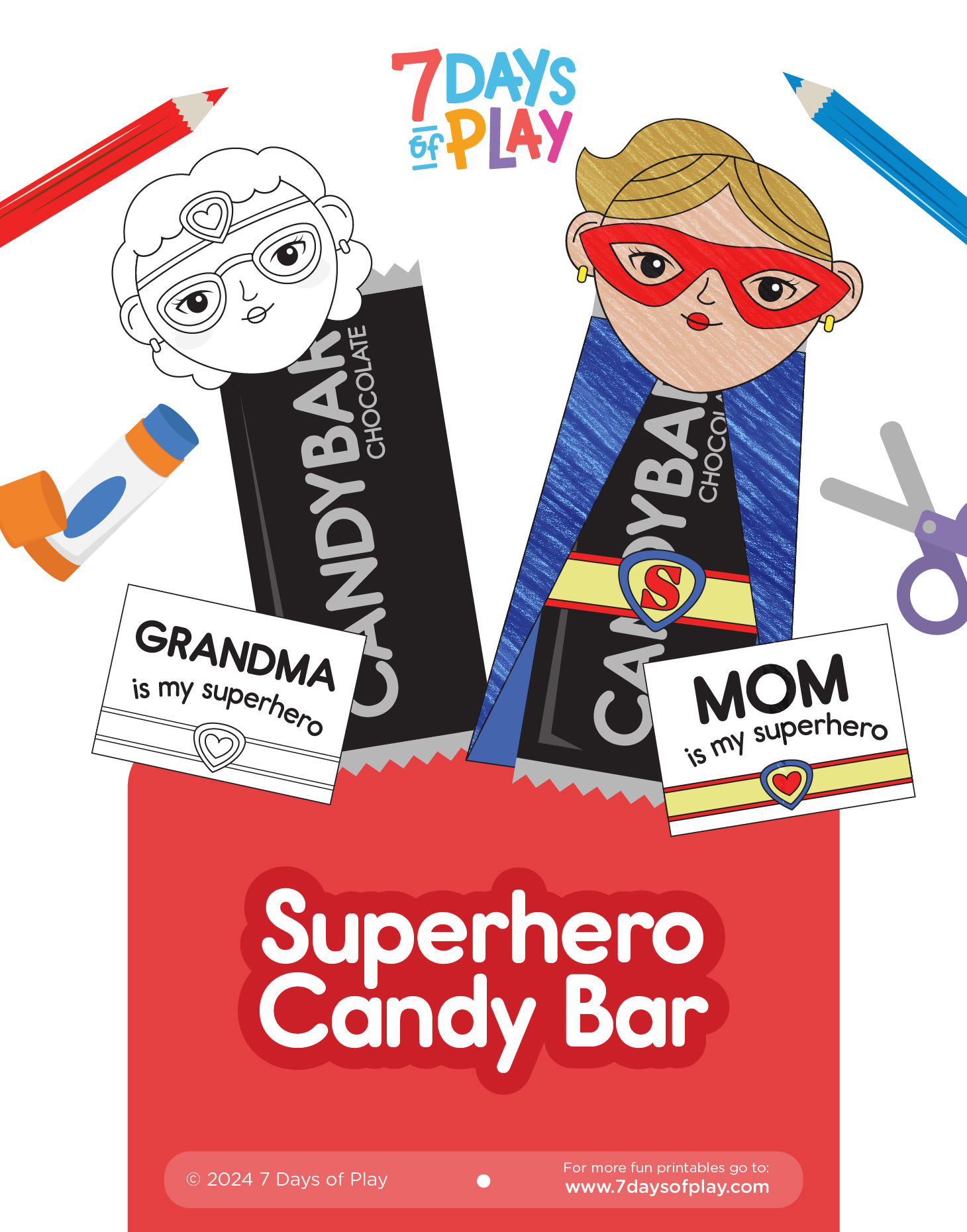
        Superhero Candy Bar - Printable

        Superhero Mom Candy Template

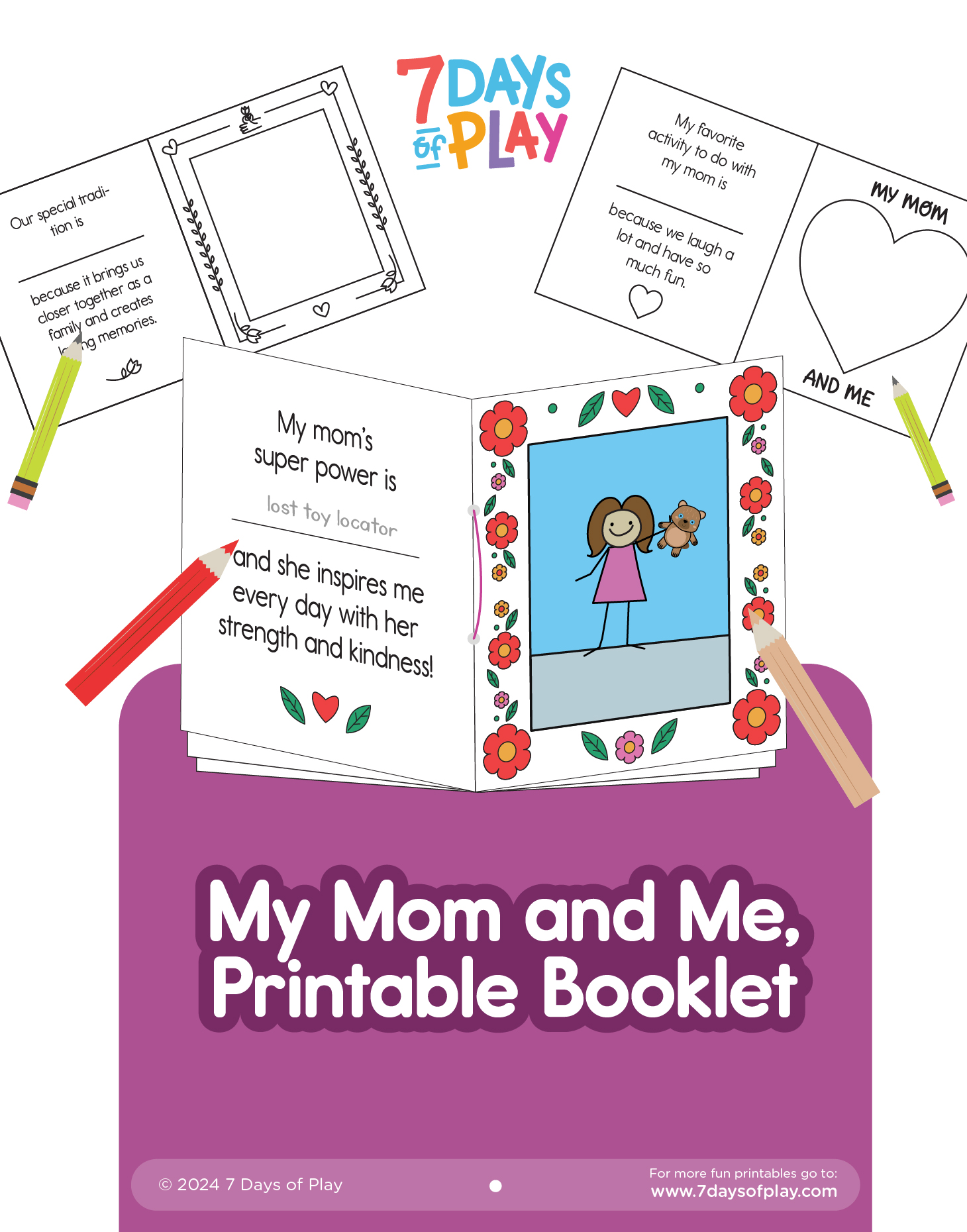
        My Mom and Me Printable Booklet - Printable

        My Mom and Me Printable Booklet

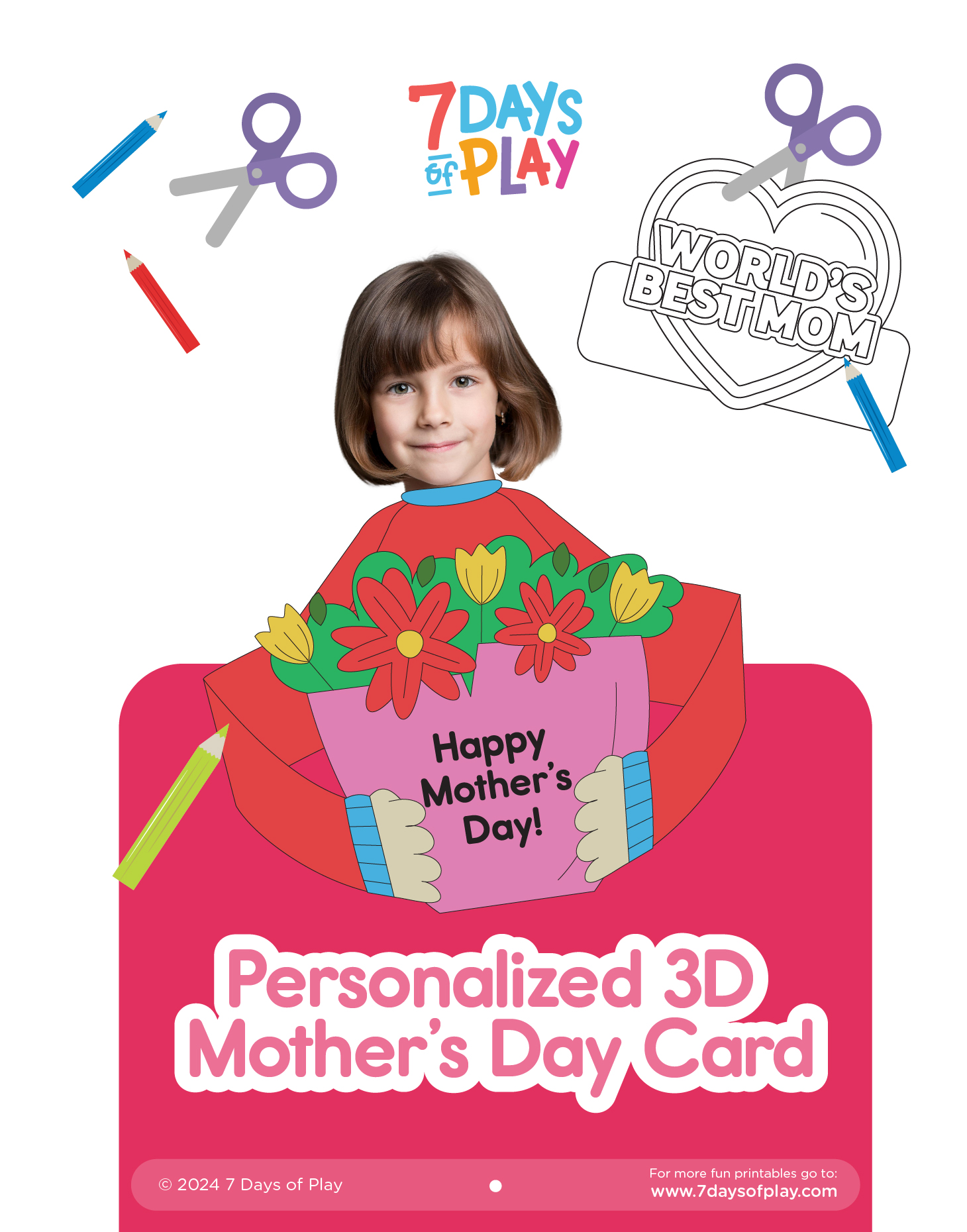
        Personalized 3D Mother’s Day Card - Printable

        Personalized 3D Mother’s Day Card

        Celebrate Mom: Printable Cards for Every Heartfelt Moment

        As we celebrate the remarkable women in our lives this Mother’s Day, let these printable cards serve as tokens of our love and appreciation. Whether it’s through a personalized flower activity, handprint creations, or heartfelt booklets, each card carries a message straight from the heart. Let’s make this Mother’s Day one to remember, filled with love, laughter, and cherished memories. Happy Mother’s Day to all the incredible moms, grandmas, aunts, and mother figures out there—you truly make the world a brighter place.

        printable mother's day cards flower template
        printable mother's day cards flower template

        Celebrate Mom: Printable Cards for Every Heartfelt Moment

        As we celebrate the remarkable women in our lives this Mother’s Day, let these printable cards serve as tokens of our love and appreciation. Whether it’s through a personalized flower activity, handprint creations, or heartfelt booklets, each card carries a message straight from the heart. Let’s make this Mother’s Day one to remember, filled with love, laughter, and cherished memories. Happy Mother’s Day to all the incredible moms, grandmas, aunts, and mother figures out there—you truly make the world a brighter place.

        What’s Next?

        Best Learning Toys for Kids

        Best Learning Toys for Kids

        Looking for the best learning toys for kids? We’ve got you covered with this list of educational gifts that kids will love and learn from!

        read more
        Simple Slime Recipe – Ooey Gooey Egg Inspired

        Simple Slime Recipe – Ooey Gooey Egg Inspired

        Simple Slime Recipe – Ooey Gooey Egg Inspired

        egg slime sensory play taste safe slime

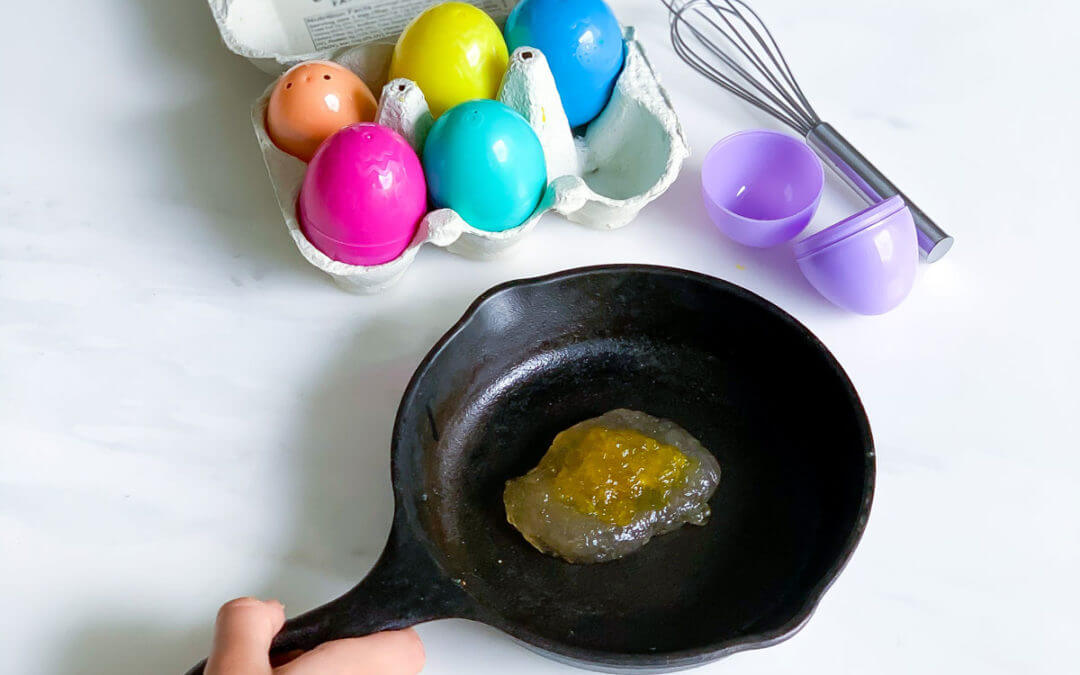
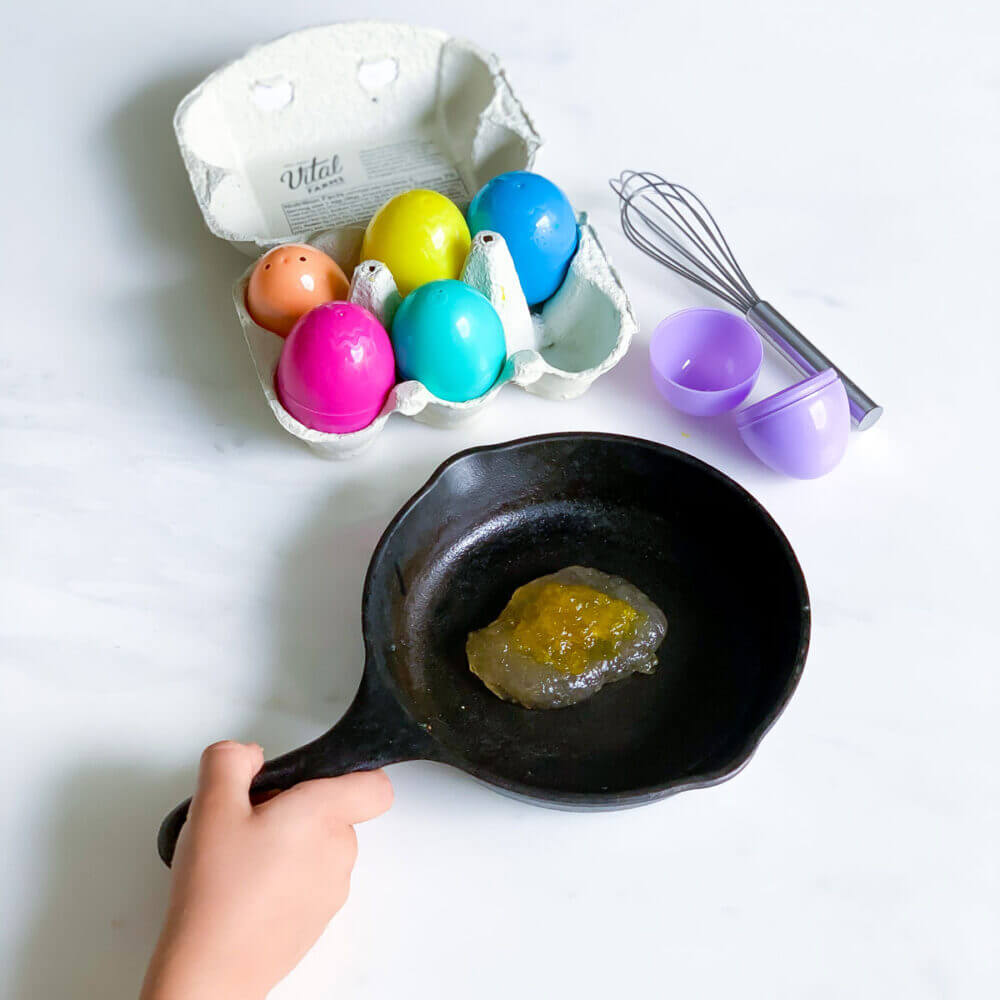
        This simple slime recipe looks just like an egg! Not only is it taste-safe, but it also makes for a fun egg-making pretend play set up! Read on to find out just how easy this slime recipe is to make and how kids of all ages can enjoy it!

        Sensory Play to Inspire Your Little Chef

        My kids are always asking to help in the kitchen, but there are some things that I just don’t know if they’re quite ready to do. Egg cracking is one of those things! This simple slime recipe is a fun way to teach kiddos how to crack and handle eggs before helping with the real stuff! The fact that the recipe is taste-safe (aka not made with borax, glue, or boric acid), allows even the youngest kids to enjoy and explore! I love seeing the imaginative play that unfolds, as they begin cracking each egg into a pan to cook and serve!


        Skills:
        Ages: 
        Prep Time:

        Egg Slime – A Simple Slime Recipe for All Ages

        Here’s a video showing you how you can easily mix up this simple slime recipe. I made this egg slime, no glue recipe, with just three ingredients! Continue to watch to see how kids of all ages will love learning how to crack eggs, finding the homemade egg slime right inside, and using it to dish up a imaginative meal!

        All activities should be supervised by an adult. As an Amazon Associate, I earn from qualifying purchases. This post may contain affiliate links.

        Egg Slime – A Simple Slime Recipe for All Ages

        Here’s a video showing you how you can easily mix up this simple slime recipe. I made this egg slime, no glue recipe, with just three ingredients! Continue to watch to see how kids of all ages will love learning how to crack eggs, finding the homemade egg slime right inside, and using it to dish up a imaginative meal!

        All activities should be supervised by an adult. As an Amazon Associate, I earn from qualifying purchases. This post may contain affiliate links.

        egg slime sensory play taste safe slime

        How to Make This Simple Slime Recipe

        Making slime is so simple with this DIY recipe. Bonus points for using taste safe ingredients that babies and toddlers can safely handle! Traditional slime has boric acid and sodium borate, which should not be ingested or put in the mouth – this recipe has none of that bad stuff! If you’re hoping to teach kids the best way to crack eggs with a fun sensory twist, they’ll have a lot of fun with this unique egg slime activity.

        Plus, it’s a great way to use toy eggs, even if it isn’t Easter! And remember to do it during the Easter Holidays too along with our printable bundle of over 20 Easter and Spring Themed Activities. This bundle includes worksheets for practicing early childhood education skills, including alphabet recognition, number recognition, tracing, writing, coloring, counting, shapes, patterning, and so much more!


        Materials

        Step-by-Step Instructions 

        Step 1

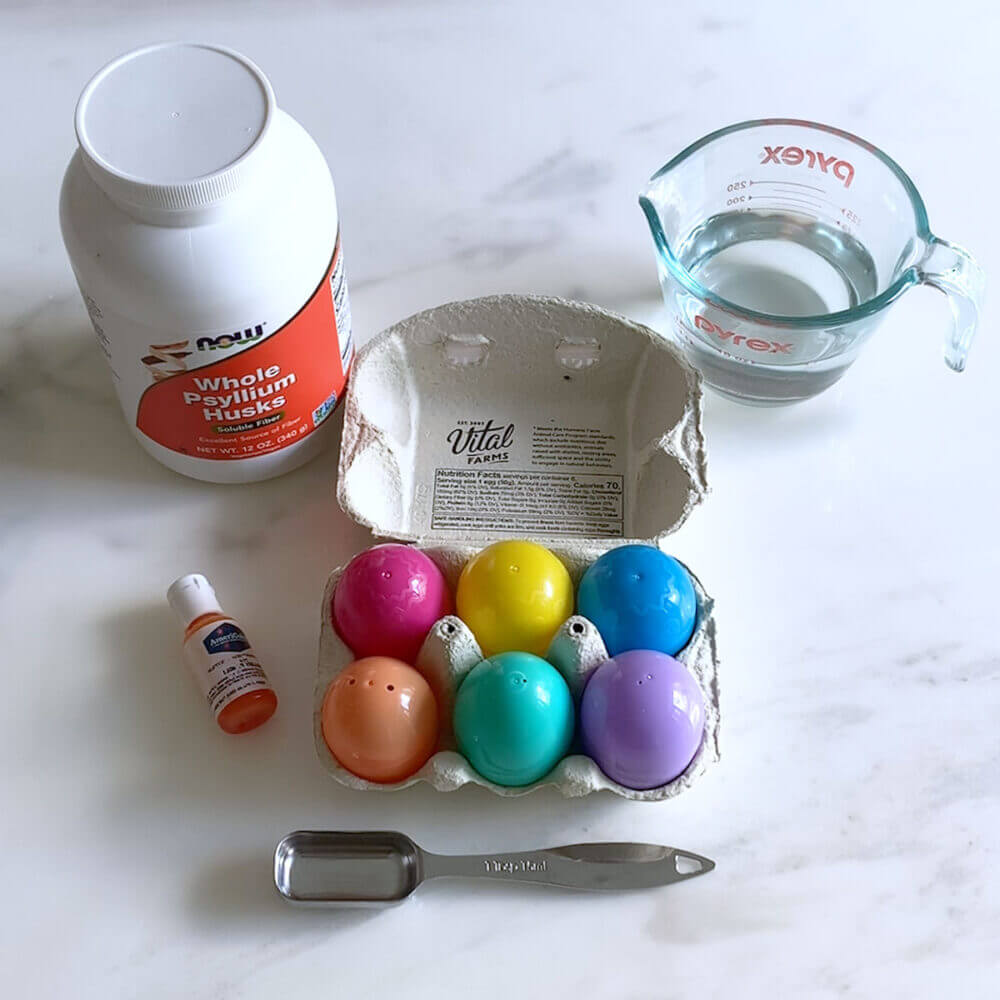
        For the Egg Whites: Mix 2 tbsp psyllium husk powder and 2 cups of water in a big microwave-safe bowl; Microwave for 10 minutes, and be sure to let the mixture cool before handling!

        Step 2

        For the Egg Yolks: Mix 1 tbsp psyllium husk powder, 1 cup of water, and yellow food coloring in a big microwave-safe bowl; Microwave for 10 minutes, and be sure to let the mixture cool before handling!


        Step 3

        Assemble the Eggs: Separate a piece of the clear slime and add a small ball of the yellow slime to the center to resemble an egg. Then, close them up in plastic eggs for your kiddos to discover!

        Step 4

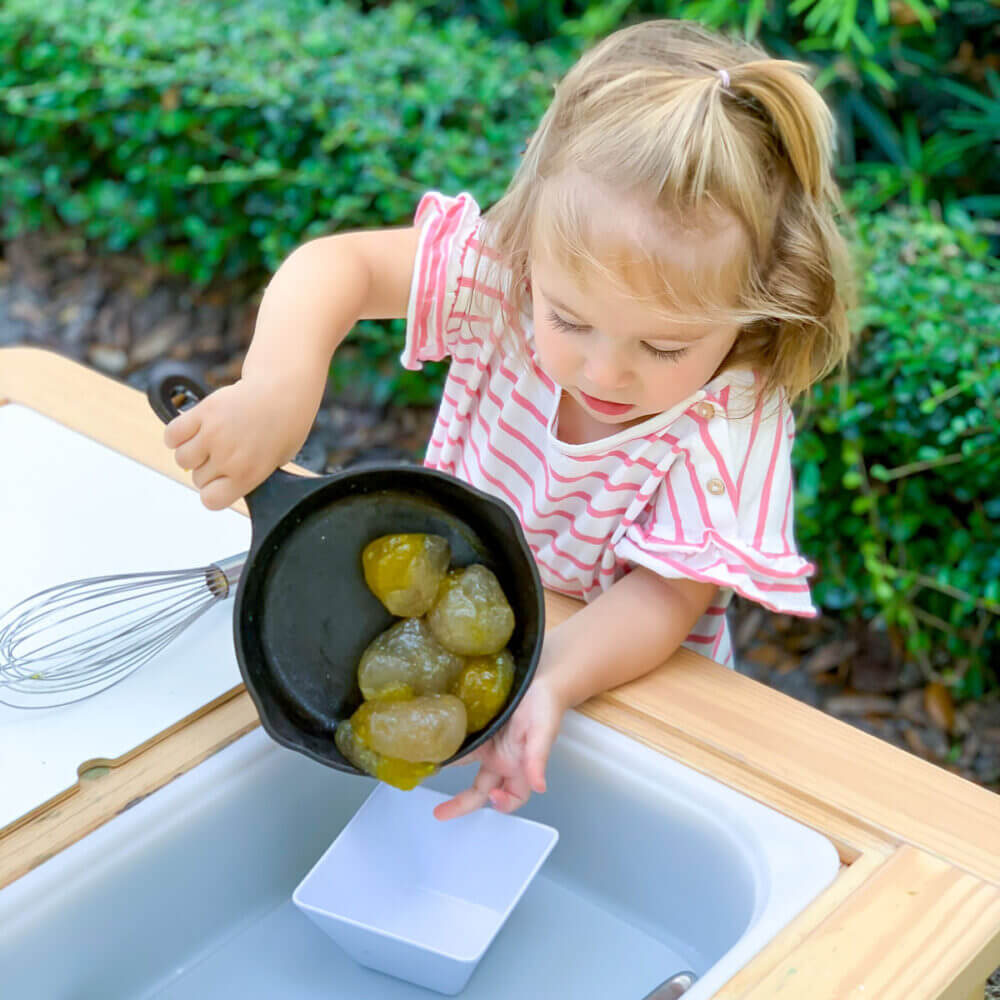
        Provide a skillet or pan and other cooking tools for your kiddo to explore with the egg slime.

        Step 1

        For the Egg Whites: Mix 2 tbsp psyllium husk powder and 2 cups of water in a big microwave-safe bowl; Microwave for 10 minutes, and be sure to let the mixture cool before handling!

        Step 2

        For the Egg Yolks: Mix 1 tbsp psyllium husk powder, 1 cup of water, and yellow food coloring in a big microwave-safe bowl; Microwave for 10 minutes, and be sure to let the mixture cool before handling!

        Step 3

        Assemble the Eggs: Separate a piece of the clear slime and add a small ball of the yellow slime to the center to resemble an egg. Then, close them up in plastic eggs for your kiddos to discover!

        Step 4

        Provide a skillet or pan and other cooking tools for your kiddo to explore with the egg slime.

        Educational Benefits for this fun Egg Slime Activity

        Sensory Play. Did you know that sensory play has been said to create new nerve connections in the brain?! Yes, there is so much educational value in allowing your kiddo to experience sensory play. Sensory play is often long-lasting with a ton of engagement – even with young kids who have typically short attention spans. Plus, it provides opportunities for kids to play independently.
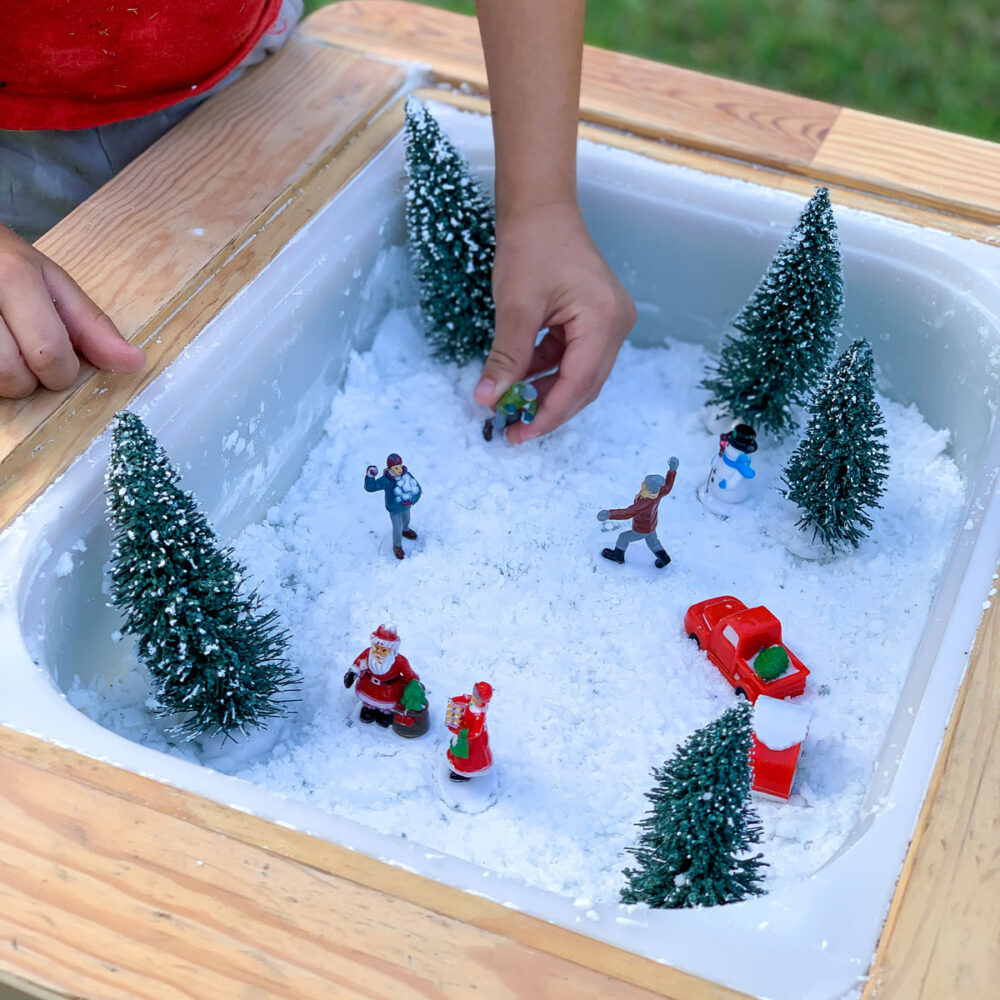
        Additionaly, by making this activity taste-safe it allows even the youngest of kids to learn how to play with sensory bases. Taste-safe does not mean it is intended to be eaten, but it is safe if it is ingested. In other words, you do not want to encourage your toddler to eat the egg slime, but rather, if a child was to put it in their mouth and even consume it, this is the perfect opportunity to explain verbally that slime is not for the mouth and is not food. This is how they will learn to safely play with sensory bases of all types in the future!
        egg slime sensory play taste safe slime

        Fine Motor Skills. Fine motor skills are so important! Slime itself allows kiddos to engage the small muscles in their hand and fingers. Think: stretching, pulling, smooshing. But you can extend that fine motor strengthening further by providing tools like whisks, spoons, and bowls where kids will also be able to practice some important practice life skills like pouring, transferring, and scooping! 

        egg slime sensory play taste safe slime

        Educational Benefits for this fun Egg Slime Activity

        Sensory Play. Did you know that sensory play has been said to create new nerve connections in the brain?! Yes, there is so much educational value in allowing your kiddo to experience sensory play. Sensory play is often long-lasting with a ton of engagement – even with young kids who have typically short attention spans. Plus, it provides opportunities for kids to play independently.
        Additionaly, by making this activity taste-safe it allows even the youngest of kids to learn how to play with sensory bases. Taste-safe does not mean it is intended to be eaten, but it is safe if it is ingested. In other words, you do not want to encourage your toddler to eat the egg slime, but rather, if a child was to put it in their mouth and even consume it, this is the perfect opportunity to explain verbally that slime is not for the mouth and is not food. This is how they will learn to safely play with sensory bases of all types in the future!
        Fine Motor Skills. Fine motor skills are so important! Slime itself allows kiddos to engage the small muscles in their hand and fingers. Think: stretching, pulling, smooshing. But you can extend that fine motor strengthening further by providing tools like whisks, spoons, and bowls where kids will also be able to practice some important practice life skills like pouring, transferring, and scooping!

        More Sensory Bases to Explore

        Here are my top picks for different types of sensory bases.

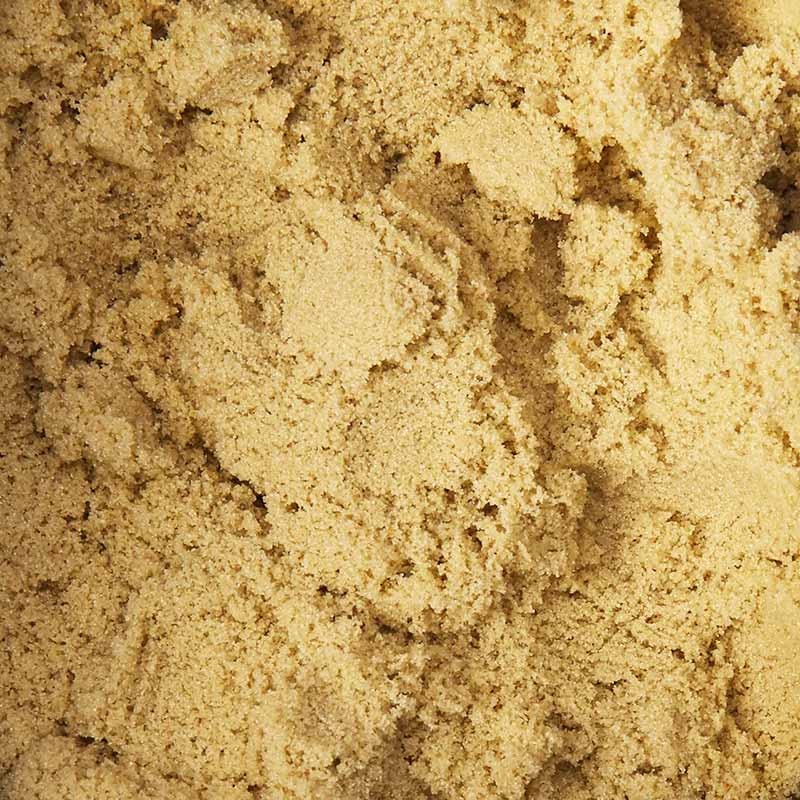
        sensory sand play for kids

        Sensory Sand

        Sensory sand is moldable! This bulk pack comes with enough to fill an entire bin for lasting fun! Bonus points for including a storage bin!

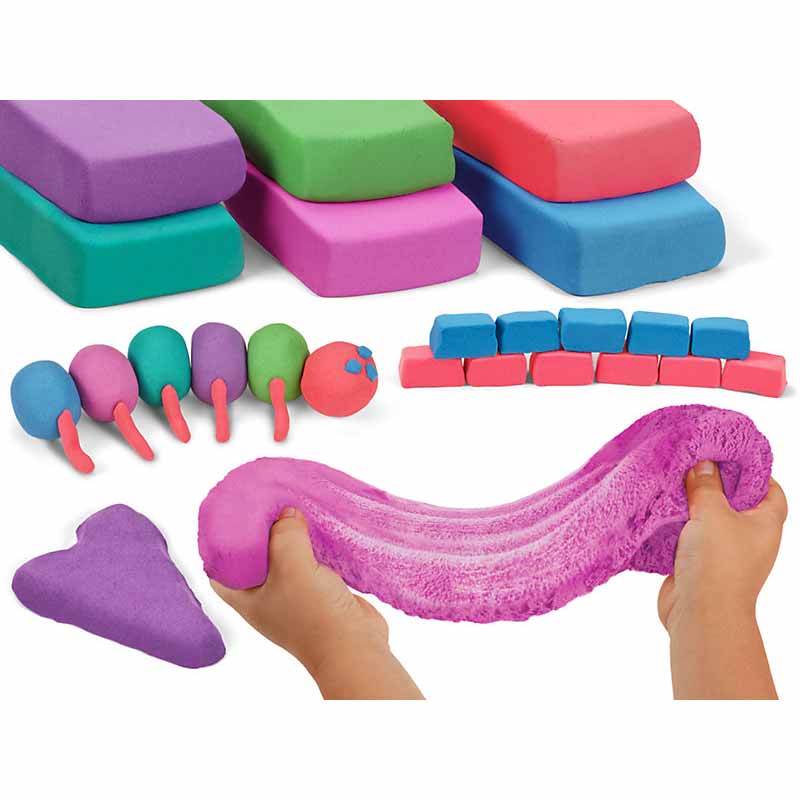
        mad mattr sensory dough modeling dough

        Modelling Dough

        This modelling dough compound NEVER dries out! It is a fun texture – it is stretchy like play dough, moldable like kinetic sand, and odorless.

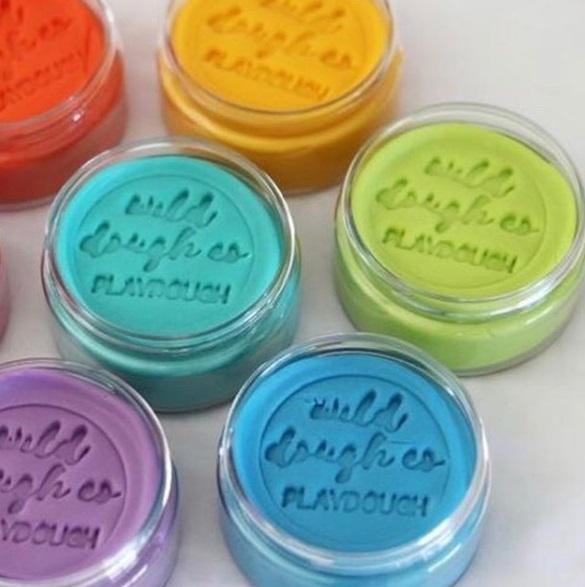
        play dough wild dough sensory

        Premium Play Dough

        This play dough is the cream of the crop! It is ridiculously silky and smooth, lasts for 6 months, and is scented!

        slime kit sensory play for kids

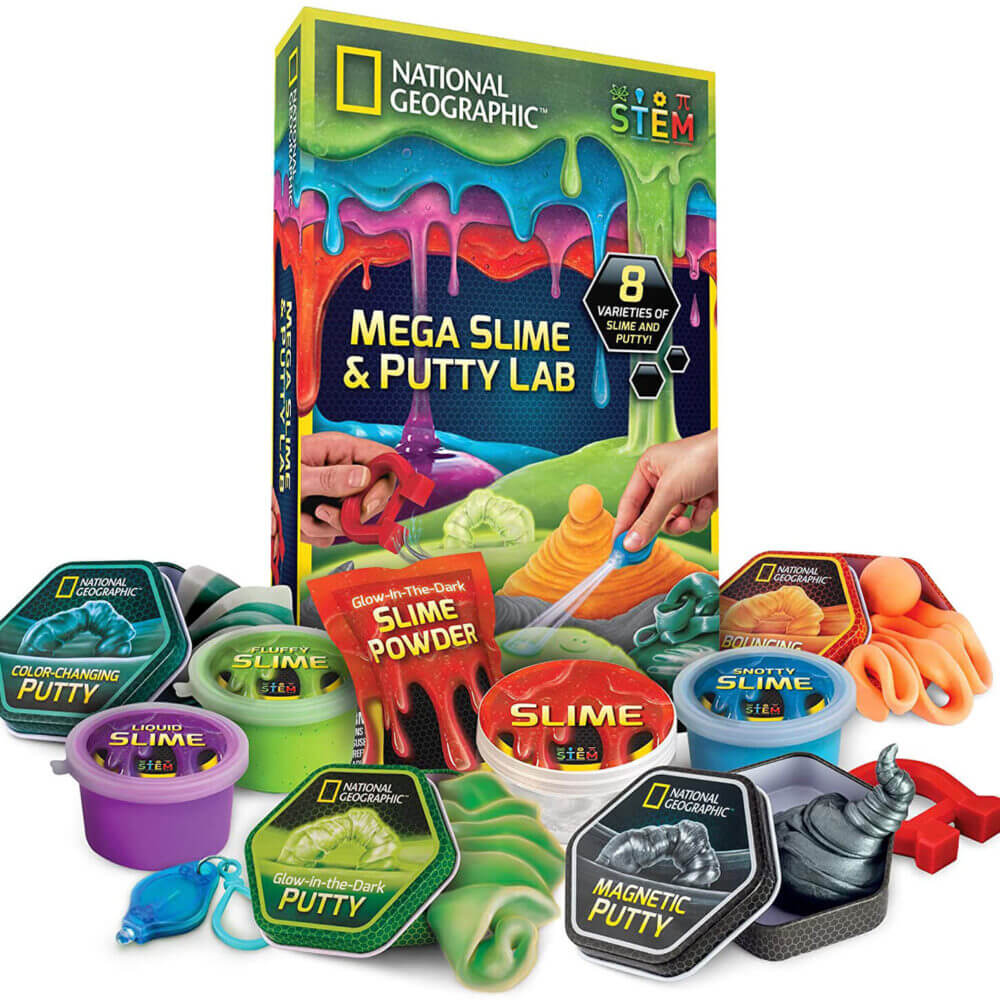
        The Ultimate Slime and Putty Kit

        This kit includes 8 fascinating varieties of slime and putty, including premade putty, magnetic slime, glow in the dark putty, and so much more.

        What’s Next?

        Best Learning Toys for Kids

        Best Learning Toys for Kids

        Looking for the best learning toys for kids? We’ve got you covered with this list of educational gifts that kids will love and learn from!

        read more
        Counting Numbers for Kids – Count the Petals

        Counting Numbers for Kids – Count the Petals

        Counting Numbers for Kids: Count the Petals


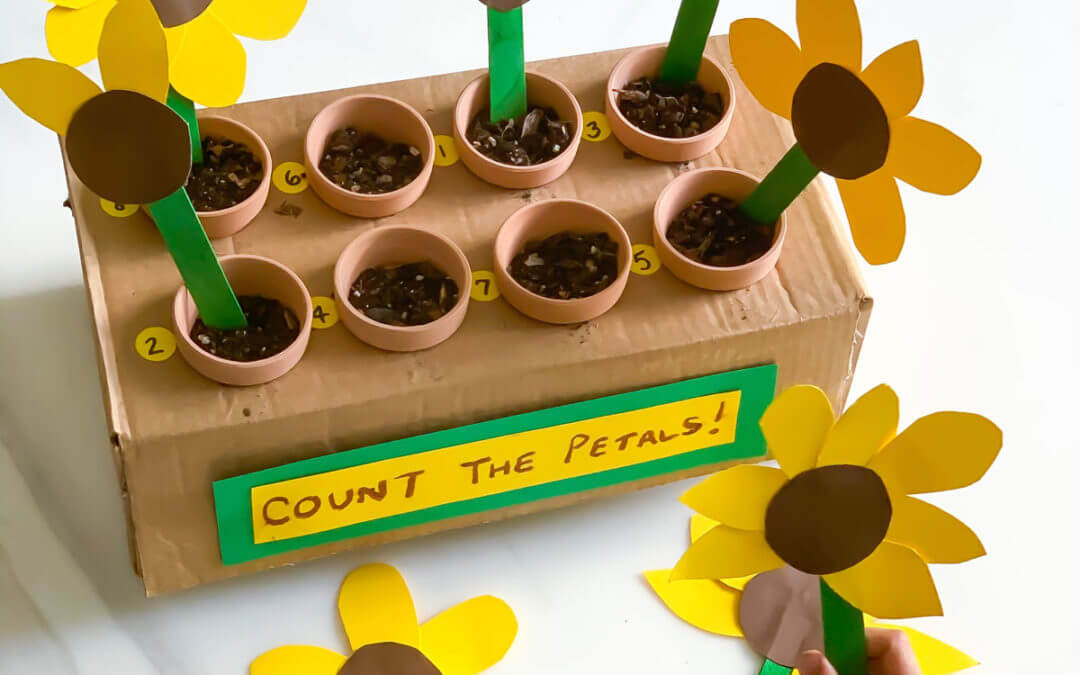
        Have some Spring-themed early math fun with this DIY game of “Count the Petals.”  This is such a great way to learn counting numbers for kids!

        Paper Flowers That Teach Early Math

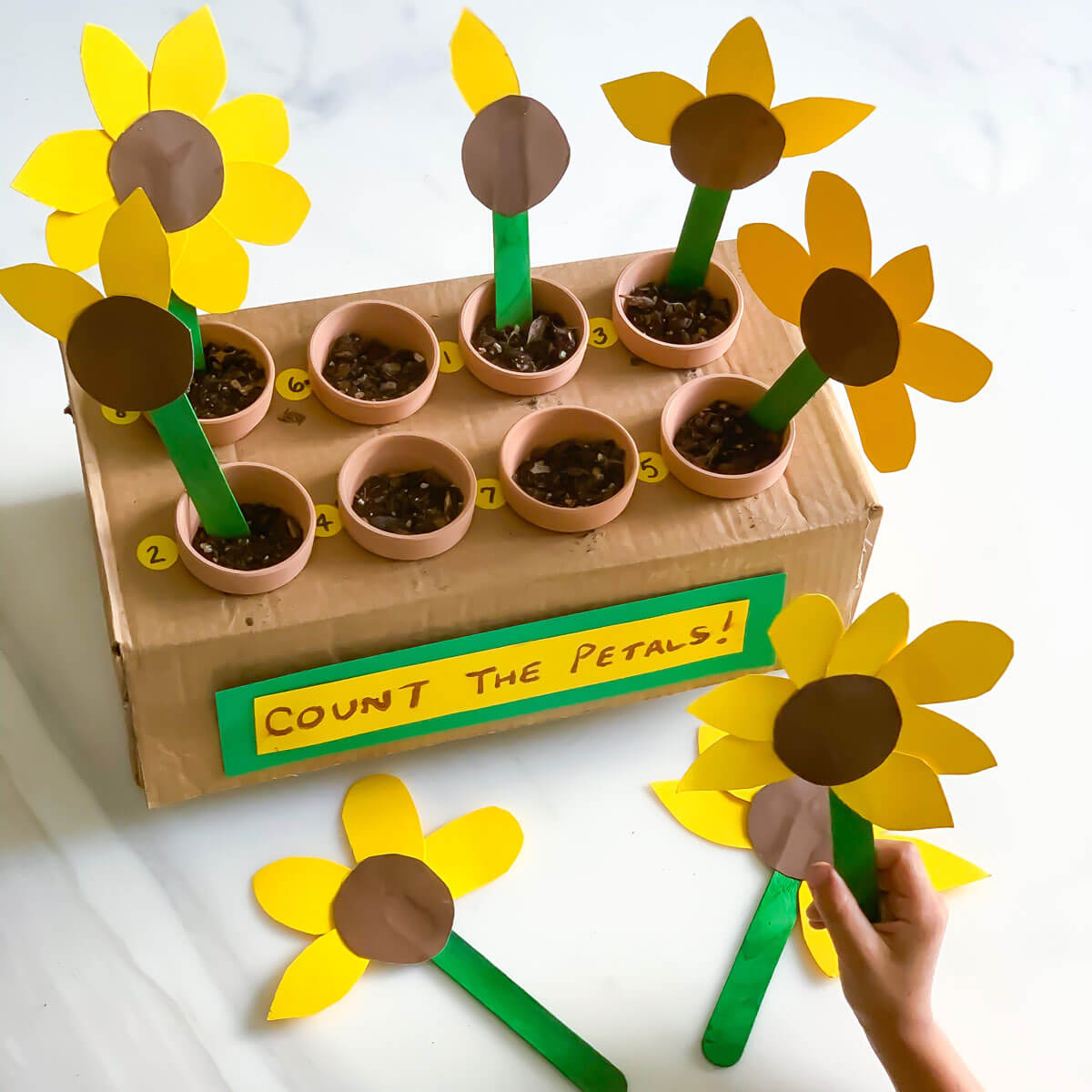
        This fun and easy-to-make game of counting petals on a flower brings the color and spirit of Spring inside while teaching kids early math. 

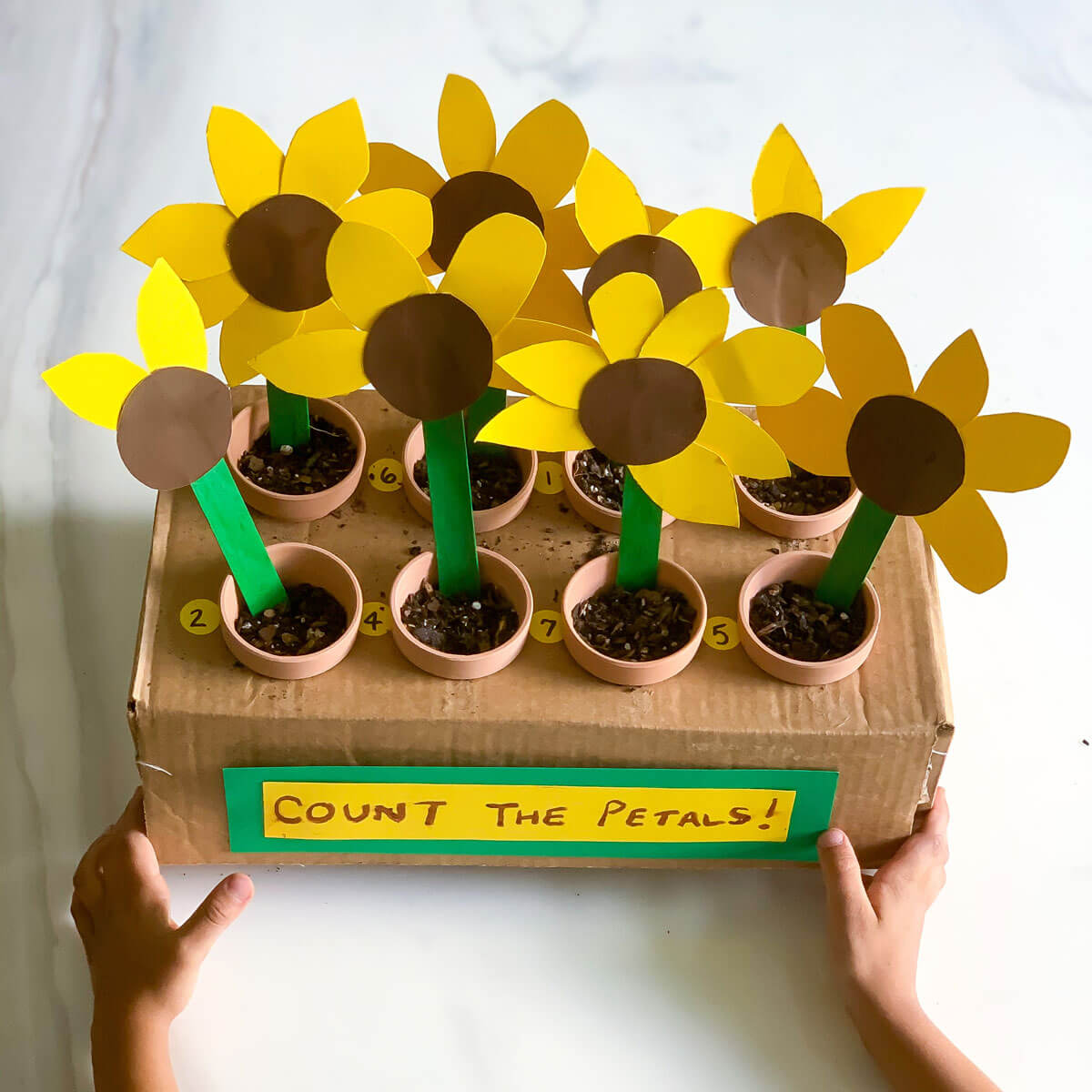
        To play, kids count the petals on the paper flowers and “plant” each one in the pot with the corresponding number. 

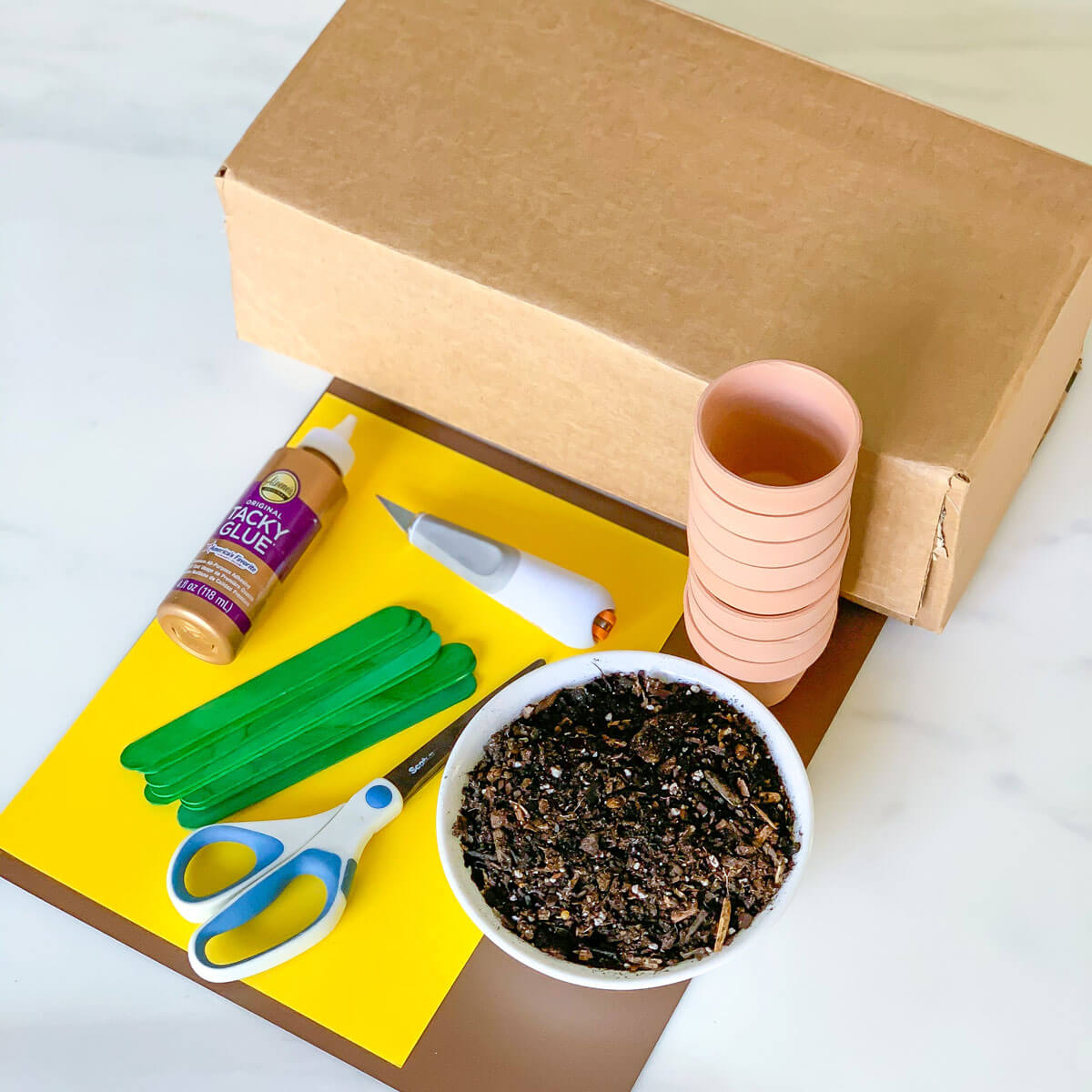
        All you need to create this project are some basic craft supplies and glue. If you are in need of craft supplies, be sure to check out our Comprehensive Arts and Crafts Supply List.

        Plus, we made things extra easy for busy grown ups with a free printable version of this counting numbers with kids activity. Read on to get it!

        Skills: Early Math

        Ages: 2 Years +

        Prep Time: 20 Minutes

        How to Make and Play This Counting Numbers for Kids Game!

        This counting numbers for kids game is a fun way to explore early math, using the digits one through eight. Watch the video to first see how to make this game yourself, and then watch to see how a child will engage with this DIY game. 

        All activities should be supervised by an adult. As an Amazon Associate I earn from qualifying purchases. This post may contain affiliate links.

        How to Make and Play This Counting Numbers for Kids Game!

        This counting numbers for kids game is a fun way to explore early math, using the digits one through eight. Watch the video to first see how to make this game yourself, and then watch to see how a child will engage with this DIY game. 

        All activities should be supervised by an adult. As an Amazon Associate I earn from qualifying purchases. This post may contain affiliate links.

        counting-activity-for-kids-spring-themed-count-the-petals-on-a-flower-materials

        A Spring-Themed Way to do Counting with Kids and More!

        One of the  great things about this game is that you can adapt it to your child’s age and abilities.

        For the very young, it is a perfect way to introduce basic counting and number recognition.  

        Older kids can help make the game, cutting out shapes (with safe scissors, of course), and work on fine motor skills. Or, have some creative fun and draw some faces on those flowers.

        This is also a great way to talk about the anatomy of a flower, weather or the four seasons.

        Bonus: you can use the pots and soil to plant some easy-to-grow seeds!

        Materials 

        Step-by-Step Instructions 

        Step 1

        Use a knife to cut circles in your cardboard box, making sure your cups will fit in them. 

        Step 2

        Assign a number to each cup. I used removable dot stickers, but you could also write the number on top of the cardboard for a permanent set up.

        Step 3

        Fill your planters up with a sensory material. We used potting soil, but you could use sand, rocks, rice, etc.

        Step 4

        For a final cute touch, use glue to secure a “Count the Petals” sign on your box!

        Step 1

        Use a knife to cut circles in your cardboard box, making sure your cups will fit in them.

        Step 2

        Assign a number to each cup. I used removable dot stickers, but you could also write the number on top of the cardboard for a permanent set up.

        Step 3

        Fill your planters up with a sensory material. We used potting soil, but you could use sand, rocks, rice, etc.

        Step 4

        For a final cute touch, use glue to secure a “Count the Petals” sign on your box!

        counting-activity-for-kids-spring-themed-count-the-petals-on-a-flower-printable

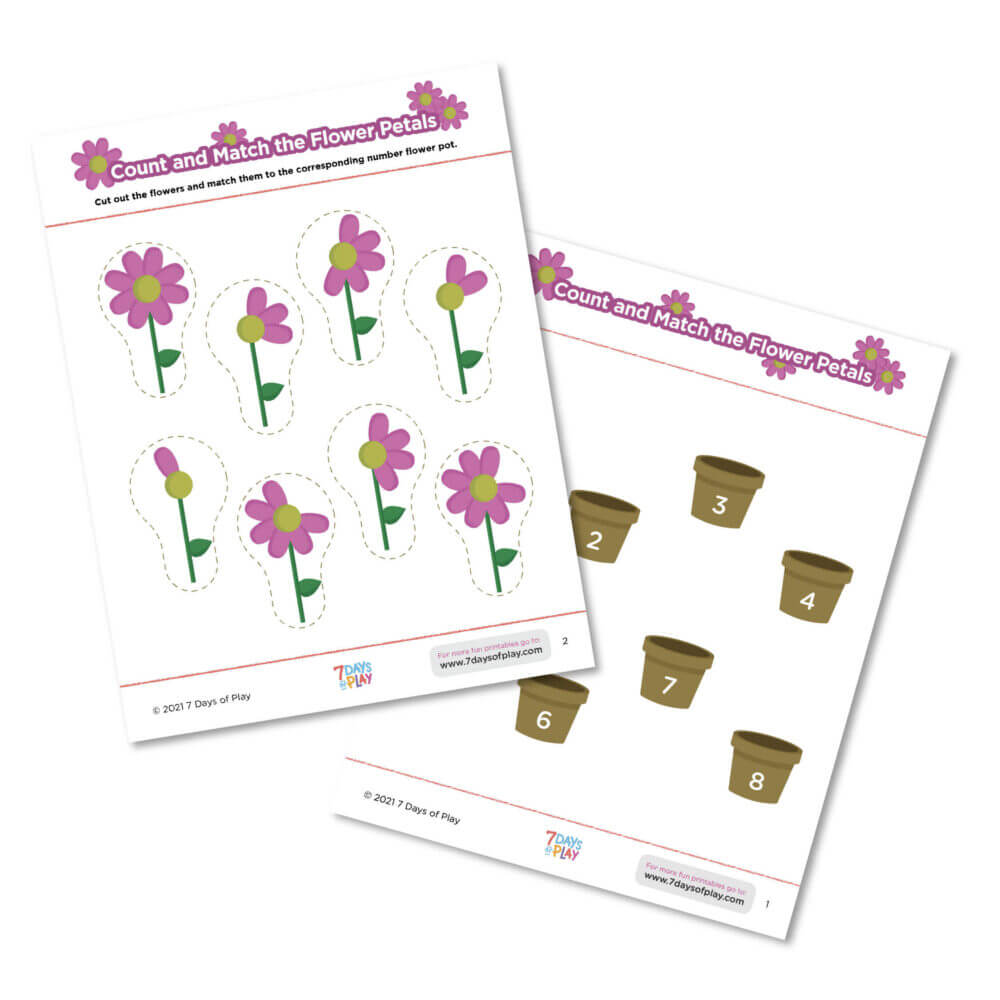
        Free Printable of This Count the Petals Game

        Don’t have time to create this DIY game? No problem! I wanted to make things extra easy for busy grown ups by providing a FREE printable version of this activity!

        Just print the pages, cut out the flowers and match the blooms to the corresponding flower pot!

        And if you like this, don’t miss our free Number Parking Lot printable and Count the Pizza Topping printable! Counting numbers for kids can be tricky, but this is a fun way to do it!

        For more printable activities, visit our Printable Shop. It is filled with easy to set-up activities that help strengthen early childhood education skills!

        The Educational Benefits of The Count the Petals Game

        This educational counting for kids game with flower petals isn’t just a fun and pretty activity, it familiarizes your child with basic math concepts, too. 

        The first, is rote counting, or counting numbers in sequential order. Depending on your child’s age, you can help with this or not.

        Next, is one-to-one correspondence, the idea that every item counted gets a number.

        The game can also develop subitizing, or the ability to recognize how many items are in a small set, such as instantly recognizing a group of four.

        For little ones, ask them what number comes next as they play; for older kids, you could work in some basic addition.

        counting-activity-for-kids-spring-themed-count-the-petals-on-a-flower

        Sticking the flowers into the individual pots will also help develop fine motor skills, too.

        For more ways to explore early math be sure to visit our comprehensive list of activities!

        counting-activity-for-kids-spring-themed-count-the-petals-on-a-flower

        This educational counting for kids game with flower petals isn’t just a fun and pretty activity, it familiarizes your child with basic math concepts, too. 

        The first, is rote counting, or counting numbers in sequential order. Depending on your child’s age, you can help with this or not.

        Next, is one-to-one correspondence, the idea that every item counted gets a number.

        The game can also develop subitizing, or the ability to recognize how many items are in a small set, such as instantly recognizing a group of four.

        For little ones, ask them what number comes next as they play; for older kids, you could work in some basic addition.

        Store-Bought Early Math Games

        Here are my top picks for the best early math games you can buy!

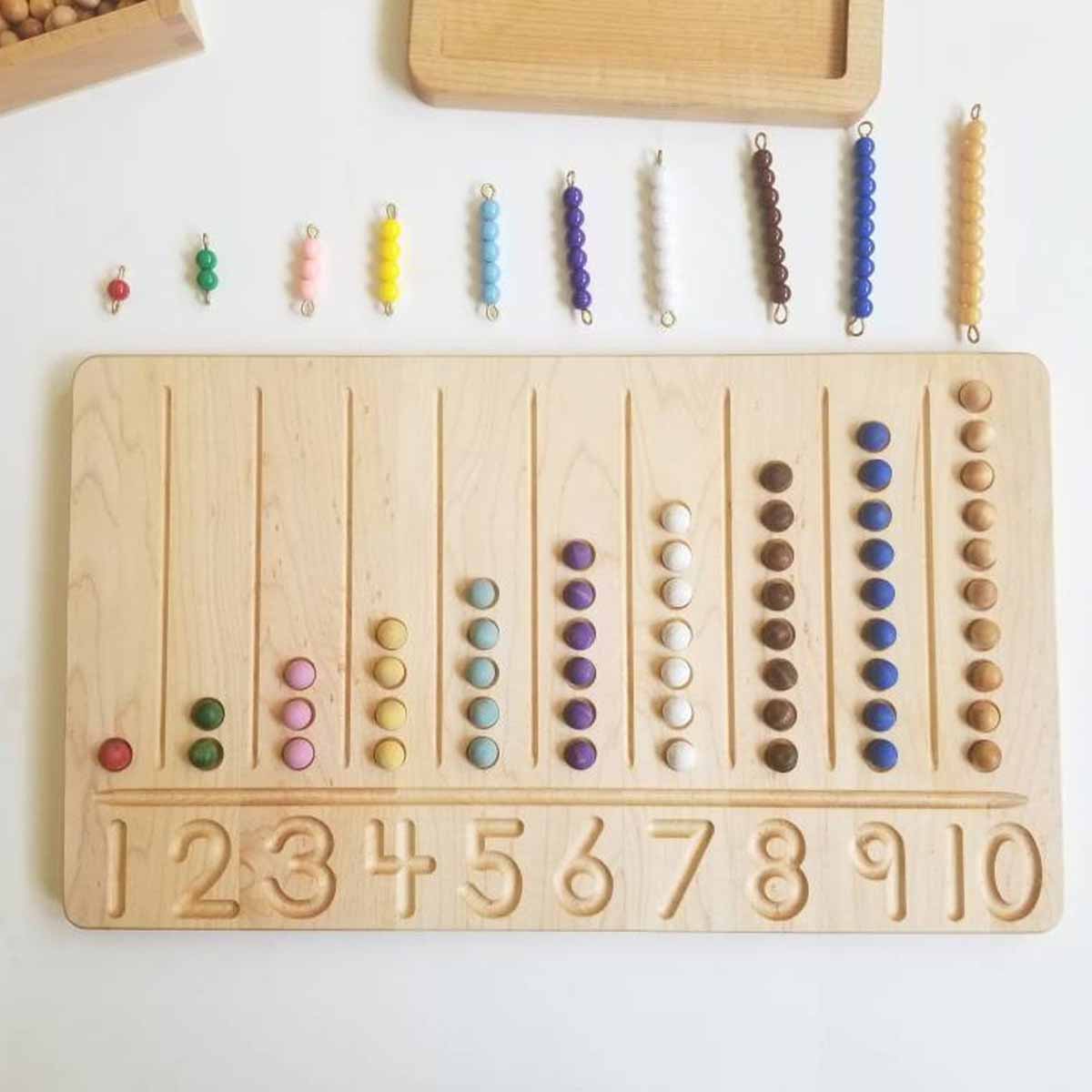
        counting board wooden resources

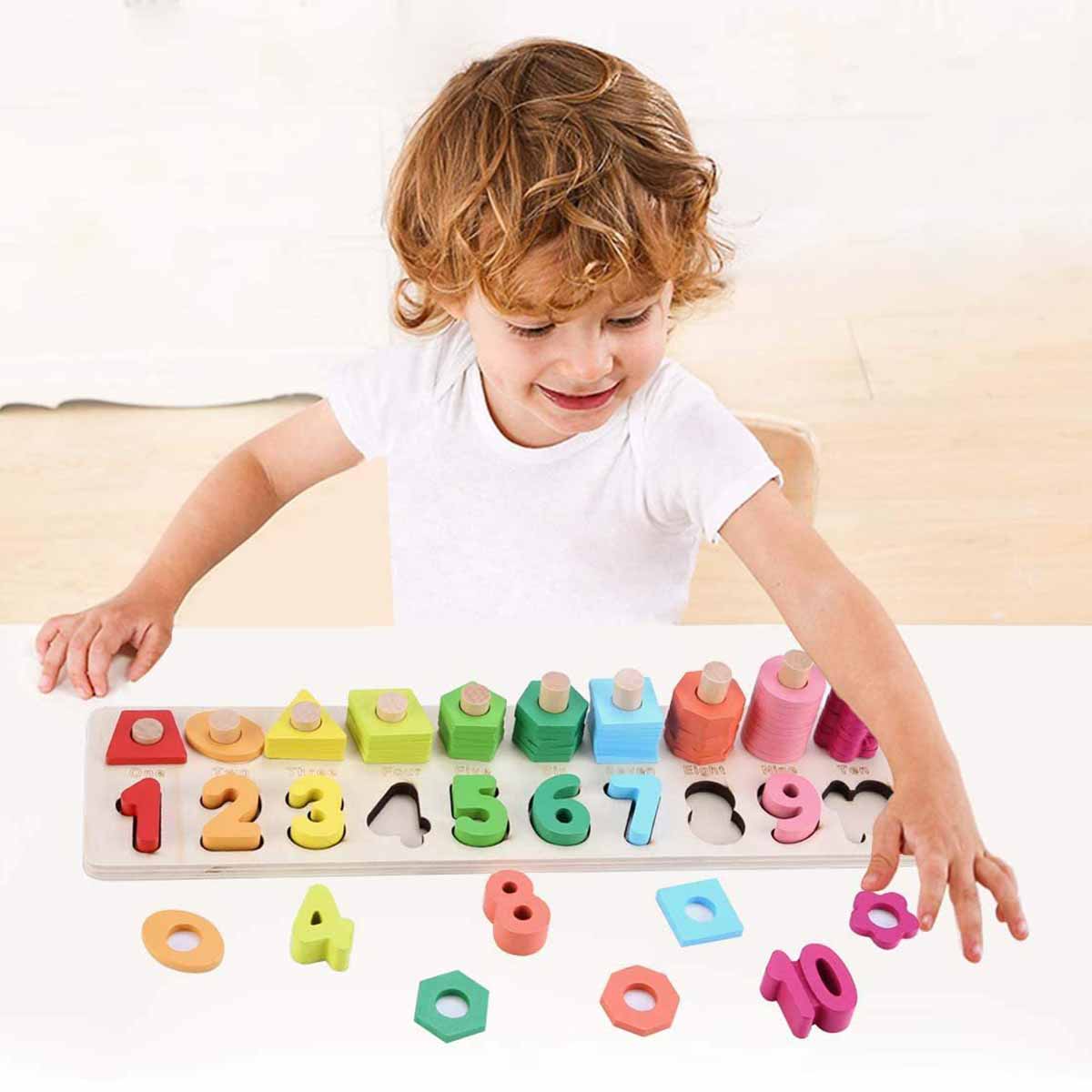
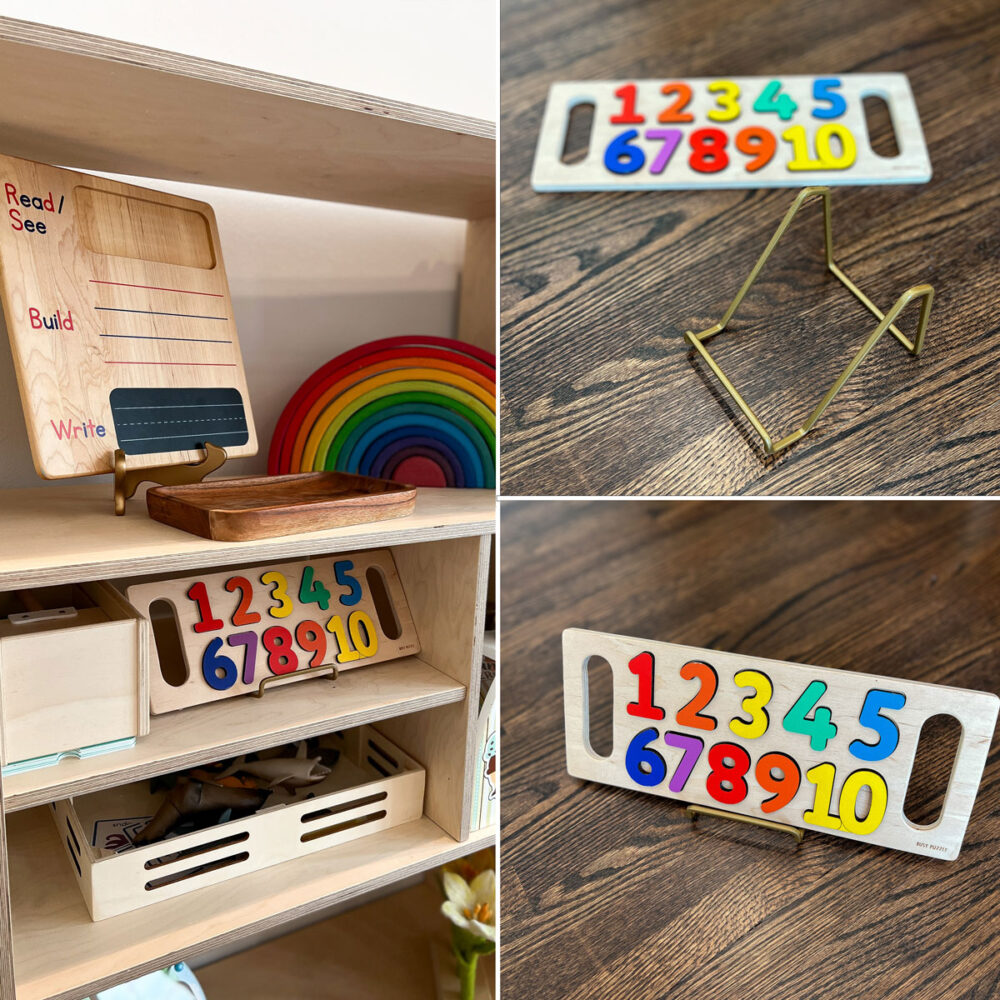
        Wooden Number Puzzle 

        If you want something really simple, this is perfect! It’s a puzzle made of wooden numbers.

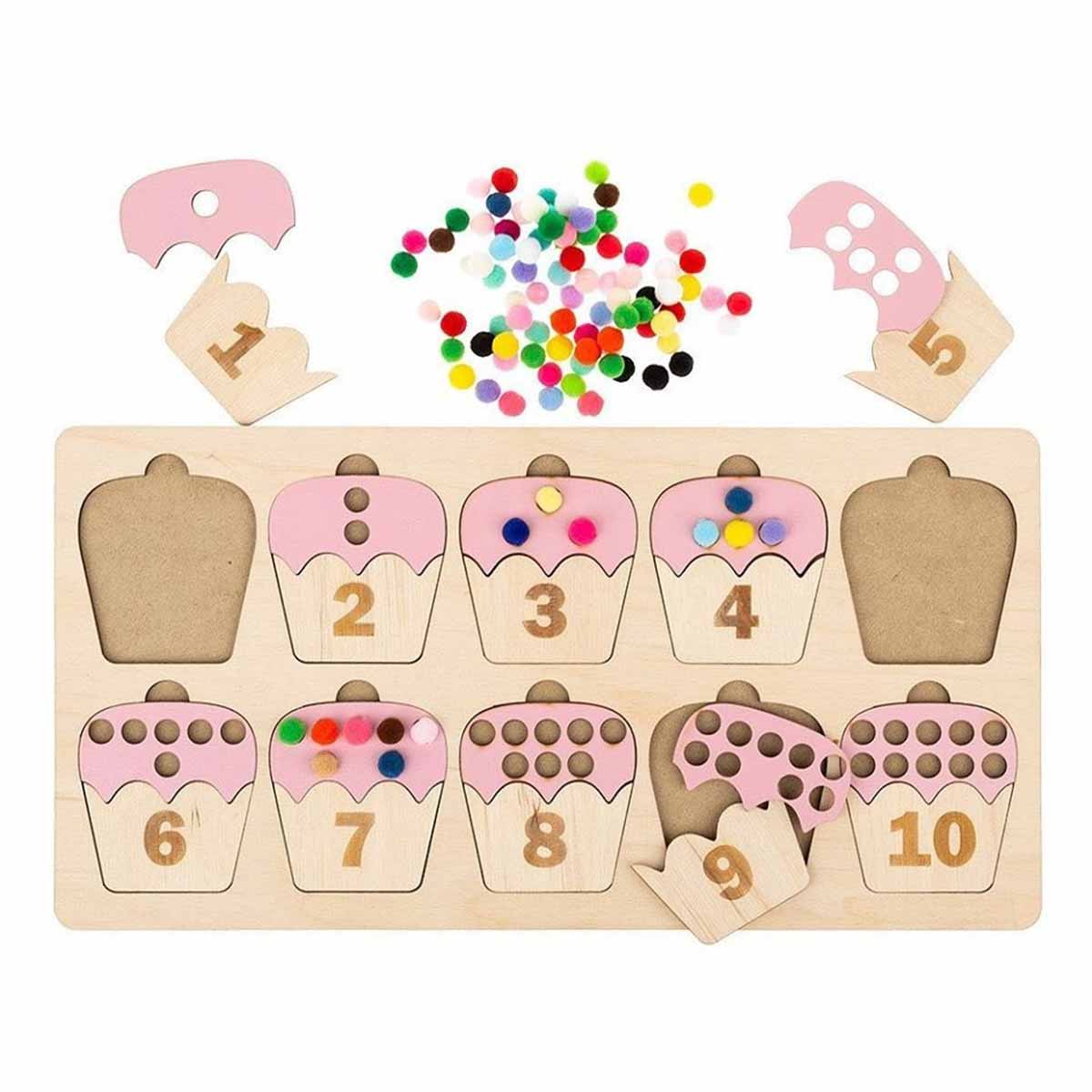
        counting game with cupcake puzzle

        Pom Pom Counting Cupcakes 

        This activity uses soft pom poms and wooden cupcakes for early counting. It strengthens fine motor skills too.

        counting toy for young kids

        Math Shapes Puzzle 

        This wooden puzzle lets your toddler match both the number with the correct amount of shapes.

        count the chocolate chip cookie game

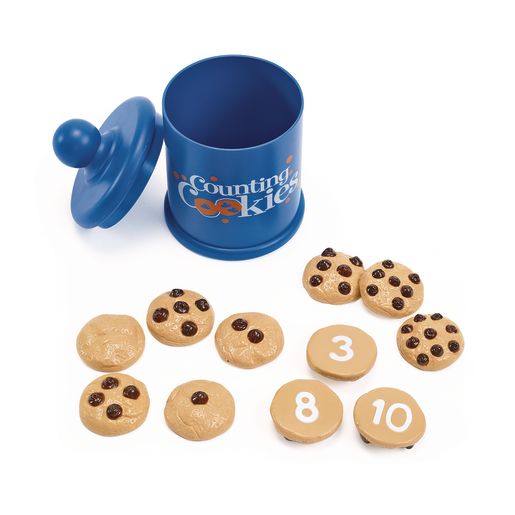
        Count the Cookies

        This count the cookie chips game is a fun way to learn numbers! The game comes with a cute cookie jar too!

        What’s Next?

        Best Learning Toys for Kids

        Best Learning Toys for Kids

        Looking for the best learning toys for kids? We’ve got you covered with this list of educational gifts that kids will love and learn from!

        read more
        Color Matching Game – Cotton Swab Rainbow

        Color Matching Game – Cotton Swab Rainbow

        Color Matching Game – Cotton Swab Rainbow

        rainbow-science-experiment-frozen-baking-soda-vinegar-science-kids-toddlers

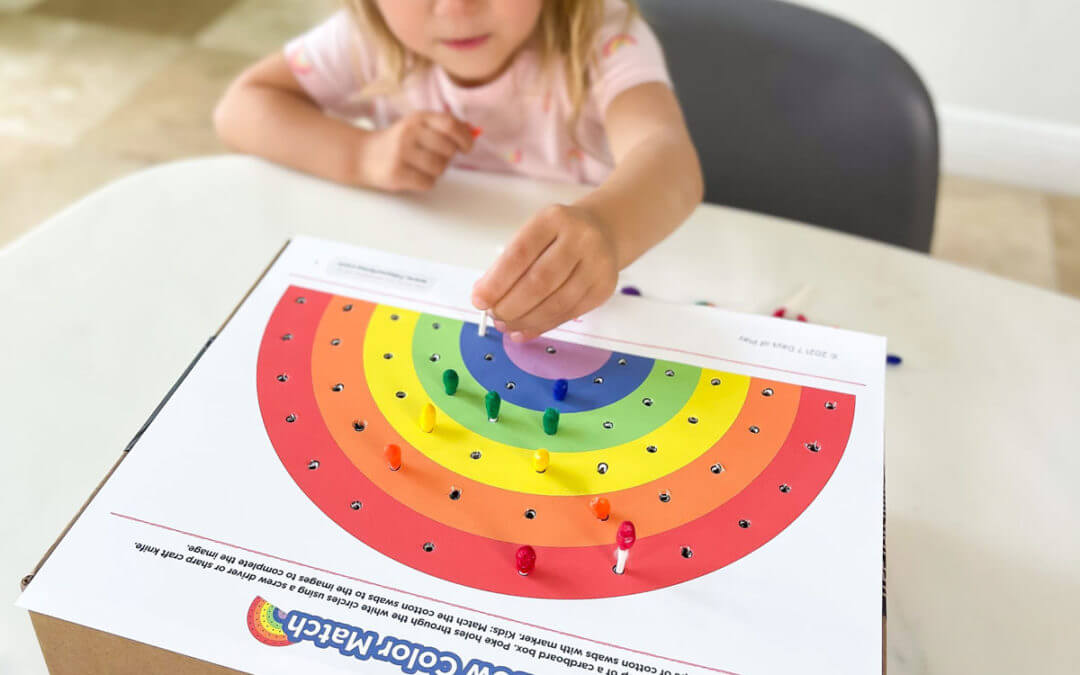
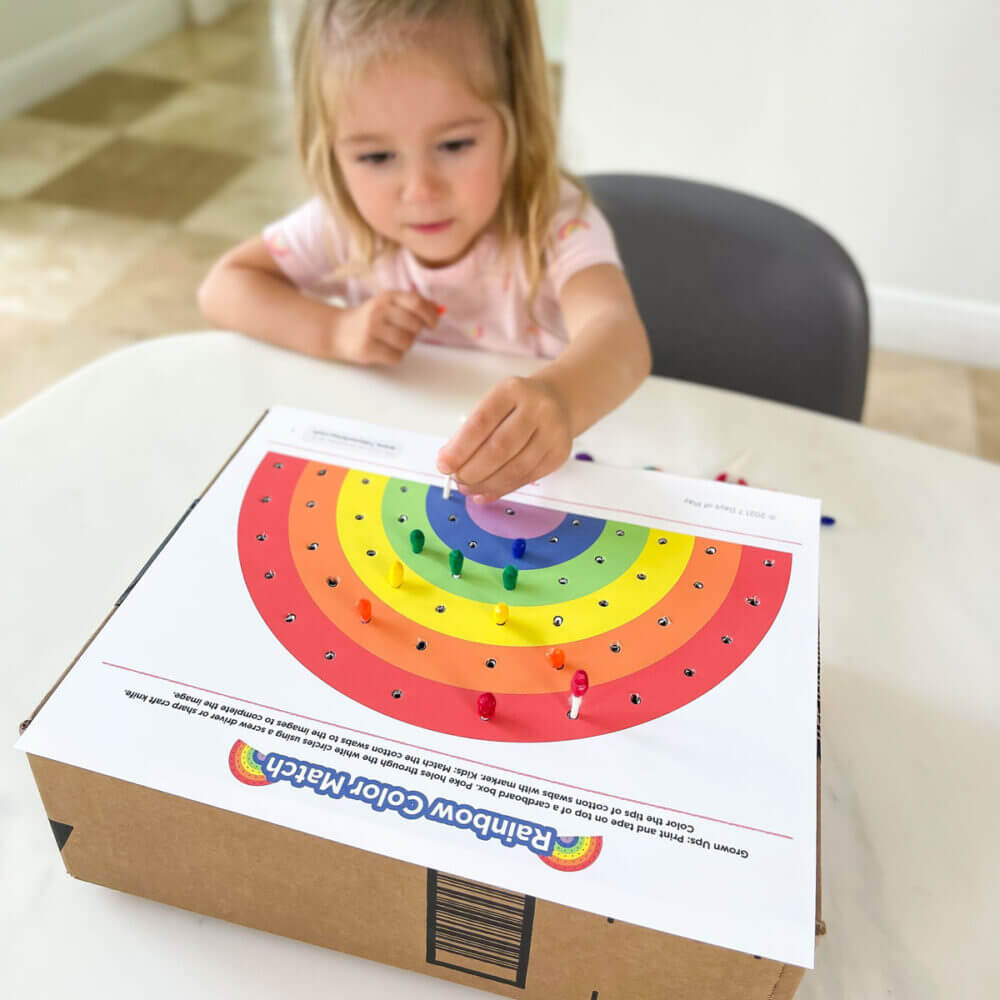
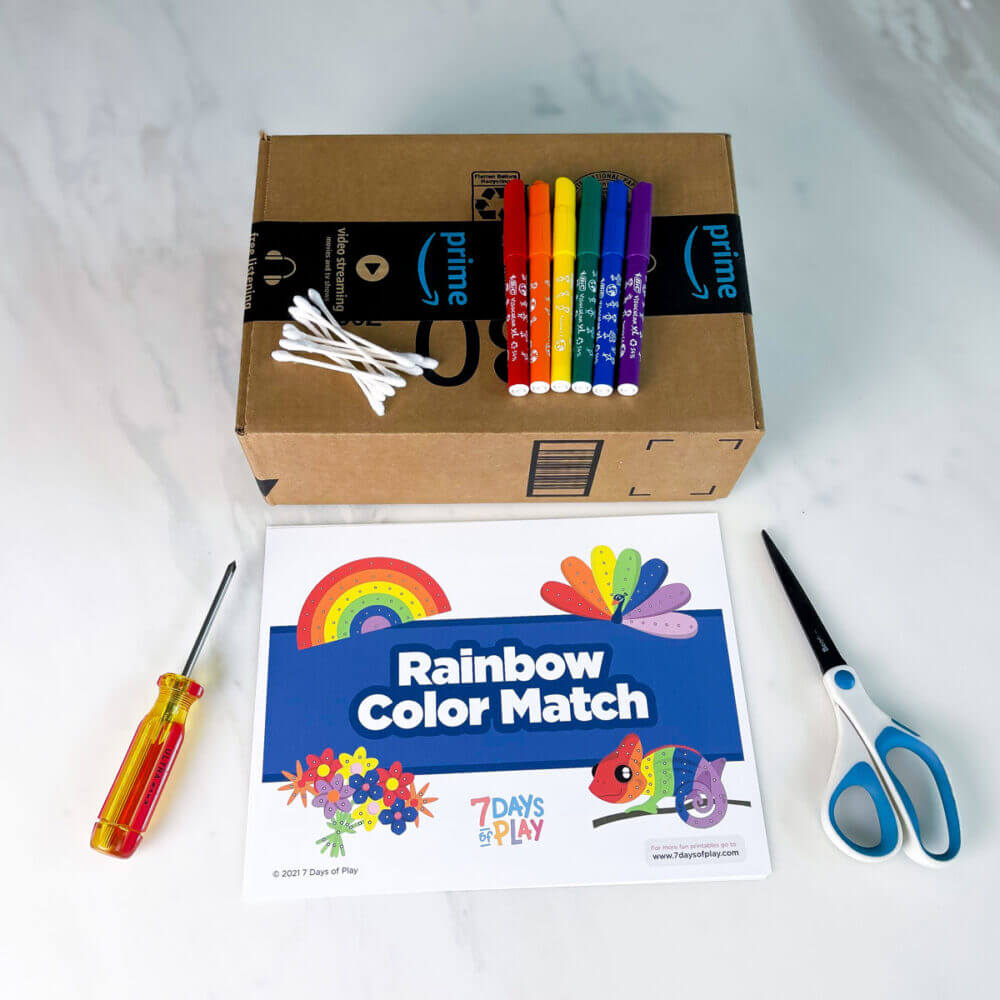
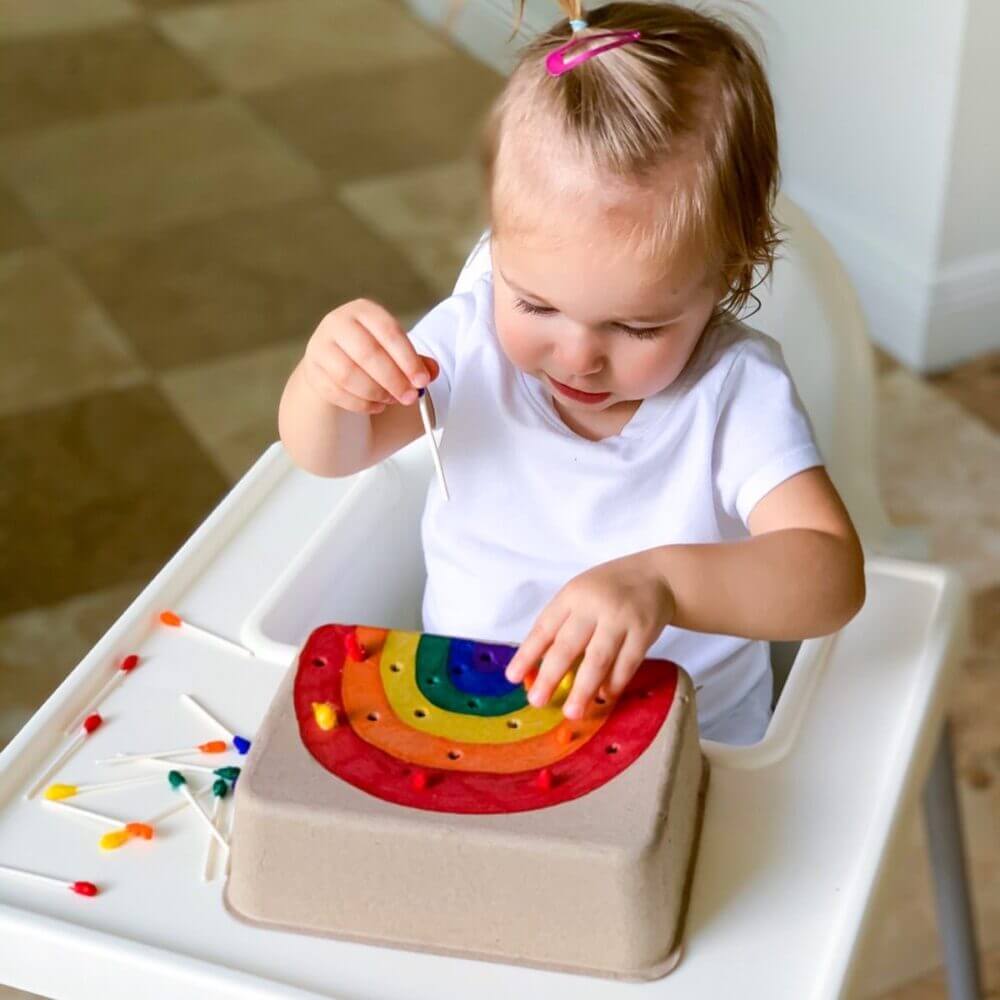
        This color matching game using cotton swabs is a fun way to learn colors while strengthening fine motor skills. It’s a budget-friendly way to make your own puzzle using an old box and cotton swabs. You can draw your own patterns, or grab our free printables to tape on top! Read on below to get it!

        A Color Matching Game You Can Make!

        The best part about this simple craft is that it’s so easy to do. Our printable comes with 4 different images, all of which showcase each color in the rainbow! Setting it up is a fast way to have the kids working on something beautiful, creative, and fun. They’ll really enjoy the process and won’t even realize that they’re working on their fine motor skills and hand-eye coordination at the same time!

        Skills:
        Ages: 
        Prep Time:

        How to Make This Color Matching Game

        In this video you’ll see how easy this game is to create! Grabbing our free printable images will make the set-up process even quicker! This makes it super simple to print out and have the kids start working on their color matching skills right away! 

        All activities should be supervised by an adult. As an Amazon Associate I earn from qualifying purchases. This post may contain affiliate links.

        How to Make This Color Matching Game

        In this video you’ll see how easy this game is to create! Grabbing our free printable images will make the set-up process even quicker! This makes it super simple to print out and have the kids start working on their color matching skills right away! 

        All activities should be supervised by an adult. As an Amazon Associate I earn from qualifying purchases. This post may contain affiliate links.

        rainbow-science-experiment-frozen-baking-soda-vinegar-science-kids-toddlers

        Free Printable Sheets for Cotton Swab Puzzle Making!

        Our free printable pages come with 4 different ways to explore the colors in the rainbow! It includes a peacock, chameleon, bouquet of flowers, and of course, a rainbow!

        We used an old cardboard box, but you could also use some styrofoam if you have some leftover from packaging! There are a few ways you can color the cotton swabs – I made things easy and quick-drying with a non toxic marker. You could also dip them in paint or watercolor and allow them to dry.

        Also, make sure to grab a screw driver because it is a great tool for making small holes!

        Materials

        Step-by-Step Instructions 

        Step 1

        On an old box or piece of styrofoam, tape one of our free printable images. You can also draw something else of your choice!

        Step 2

        Use a screw driver to poke holes.

        Step 3

        Color the tips of the cotton swabs with various colors, and cut in half.

        Step 4

        The game is ready to start matching up the colors!

        Step 1

        On an old box or piece of styrofoam, tape one of our free printable images. You can also draw something else of your choice!

        Step 2

        Use a screw driver to poke holes.

        Step 3

        Color the tips of the cotton swabs with various colors, and cut in half.

        Step 4

        The game is ready to start matching up the colors!

        color mixing printable worksheet for kids

        More Ways to Explore Colors!

        If your kiddo asking questions like – red and white make what color? You can’t miss our printable Hands on Color Mixing Activities. This printable set has 5 unique activities for exploring color mixing!

        Enjoy coloring and distinguishing each of the colors in the rainbow! Then, learn all about what happens when primary colors mix to form secondary colors. Next, learn about shades (making colors darker) and tints (making colors lighter). And finally, go over all those concepts in a final round up review!

        Plus, don’t miss our fun Dot the Rainbow activity for toddlers! 


        The Educational Benefits of This Cotton Swab Rainbow

        One of the most significant benefits of this cotton swab craft is that it’s an easy way to help kids learn and be able to match colors. This is geared toward early learners but older kids will enjoy it as well. My four year old had a blast putting all the pieces together!

        It’s also a great way to strengthen hand muscles and fine motor skills. Fine motor skill development is critical for your kids! Through this activity, as kids pick up the cotton swabs and put them in the colored areas, they are exercising hand-eye coordination, pincer grasp, and strengthening finger and hand muscles. 

        rainbow-science-experiment-frozen-baking-soda-vinegar-science-kids-toddlers

         Fine motor skills is a skill we often incorporate into activities. Here is our full list of fun ways to strengthen find motor skills!

        rainbow-science-experiment-frozen-baking-soda-vinegar-science-kids-toddlers

        The Educational Benefits of This Cotton Swab Rainbow

        One of the most significant benefits of this cotton swab craft is that it’s an easy way to help kids learn and be able to match colors. This is geared toward early learners but older kids will enjoy it as well. My four year old had a blast putting all the pieces together!

        It’s also a great way to strengthen hand muscles and fine motor skills. Fine motor skill development is critical for your kids! Through this activity, as kids pick up the cotton swabs and put them in the colored areas, they are exercising hand-eye coordination, pincer grasp, and strengthening finger and hand muscles. Fine motor skills is a skill we often incorporate into activities. Here is our full list of fun ways to strengthen find motor skills!

        More Ways to Match Colors

        Here are my top picks for toys you can buy that strengthen color recognition skills!

        wooden rainbow color sorting toy

        Color Sorting Rainbow

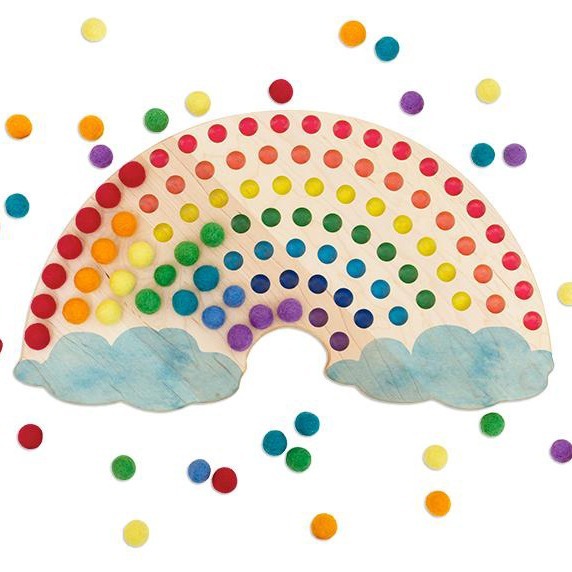
        Transfer pom poms or balls to color sort this rainbow! If you use tongs it is great for fine motor skills too! (Caution: small parts!)

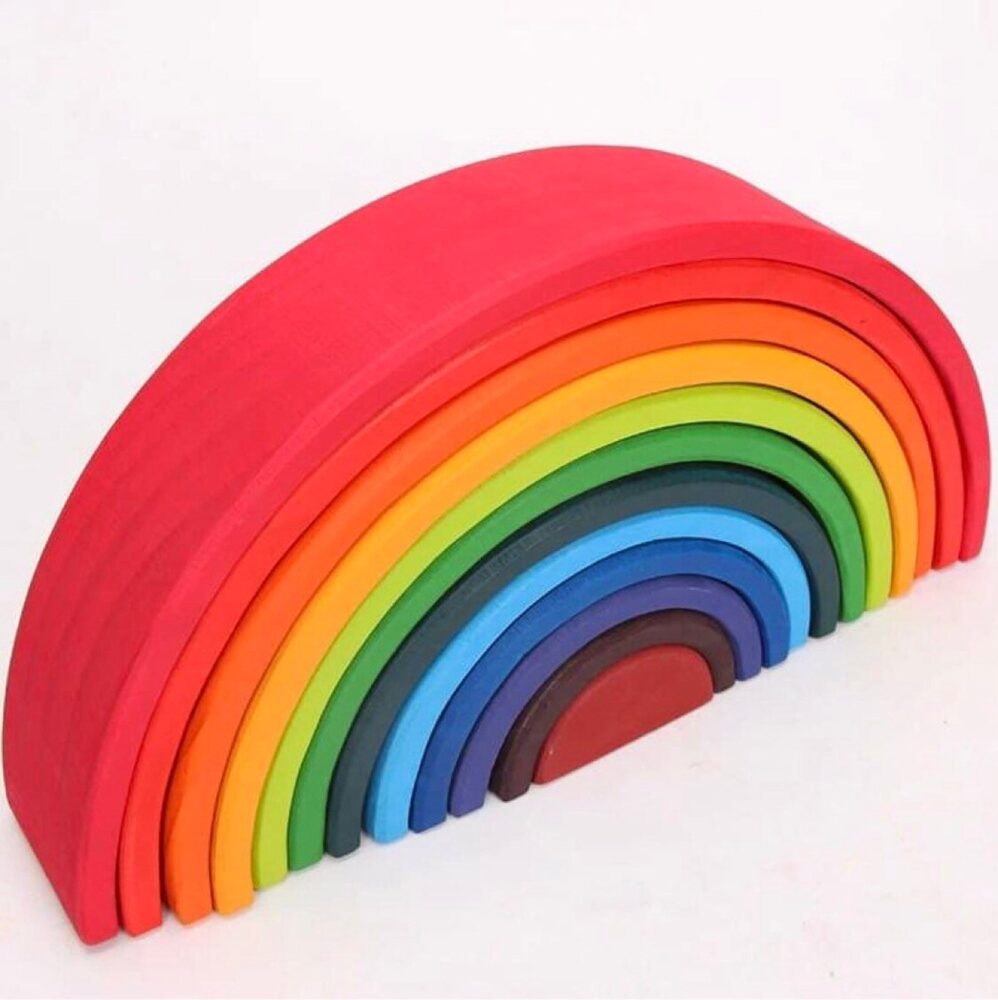
        rainbow wooden stacking toy for color recognition

        Wooden Rainbow Stacker

        This wooden rainbow stacker is  not only great for color sorting, it is also a fantastic open-ended play toy!

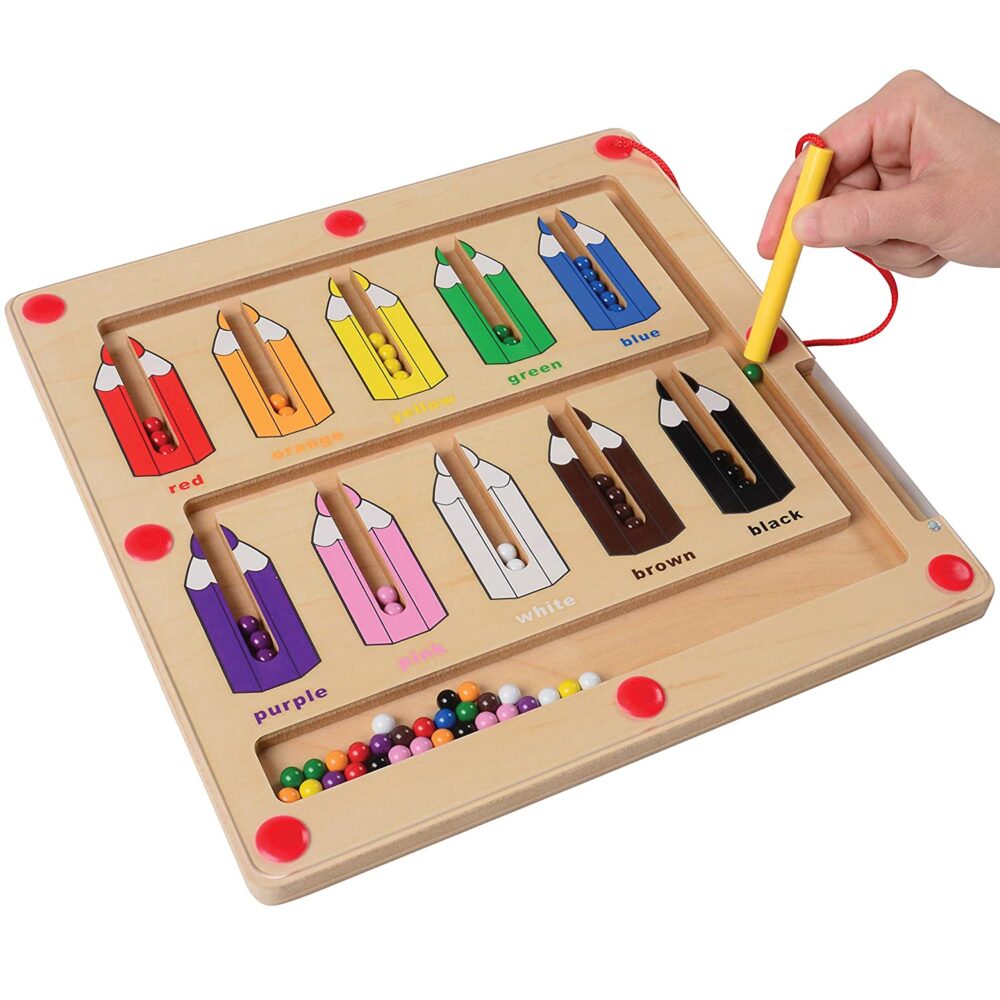
        color sorting magnetic game

        Color Sorting Maze

        This wooden board has a magnetic wand and beads that can be sorted based on color! Great for fine motor skills too!

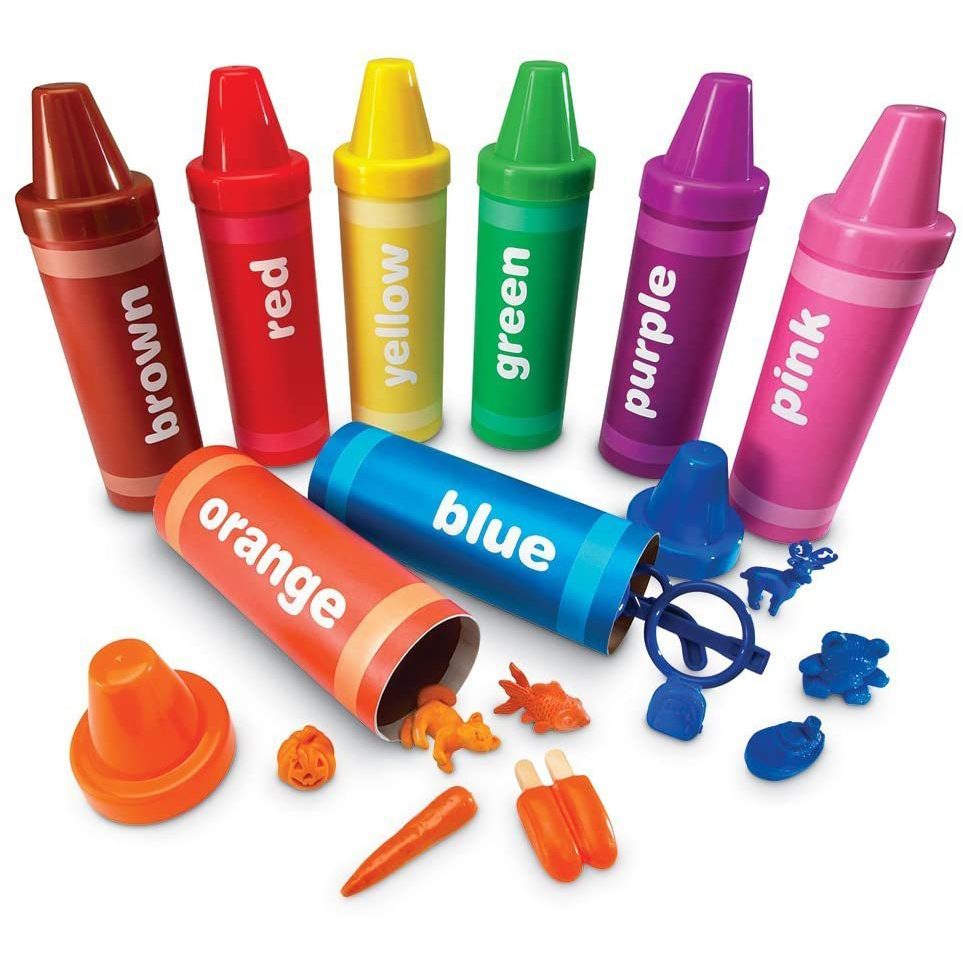
        Color sorting game

        Color Sort the Objects

        This game is a great way to learn color recognition while strengthening language development.

        What’s Next?

        Best Learning Toys for Kids

        Best Learning Toys for Kids

        Looking for the best learning toys for kids? We’ve got you covered with this list of educational gifts that kids will love and learn from!

        read more
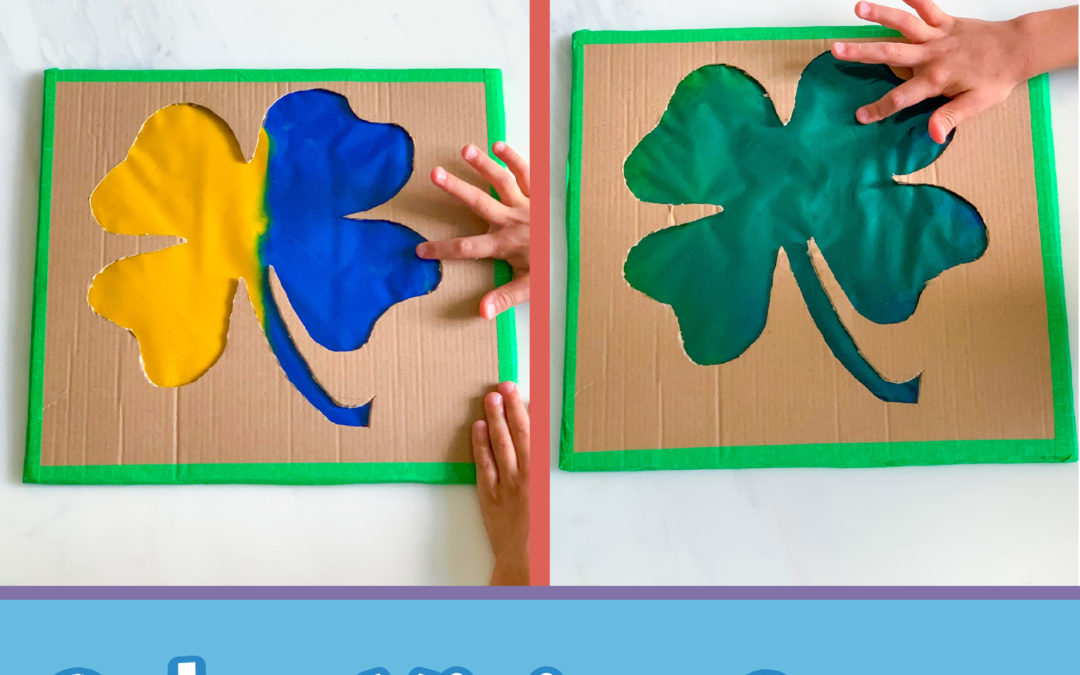
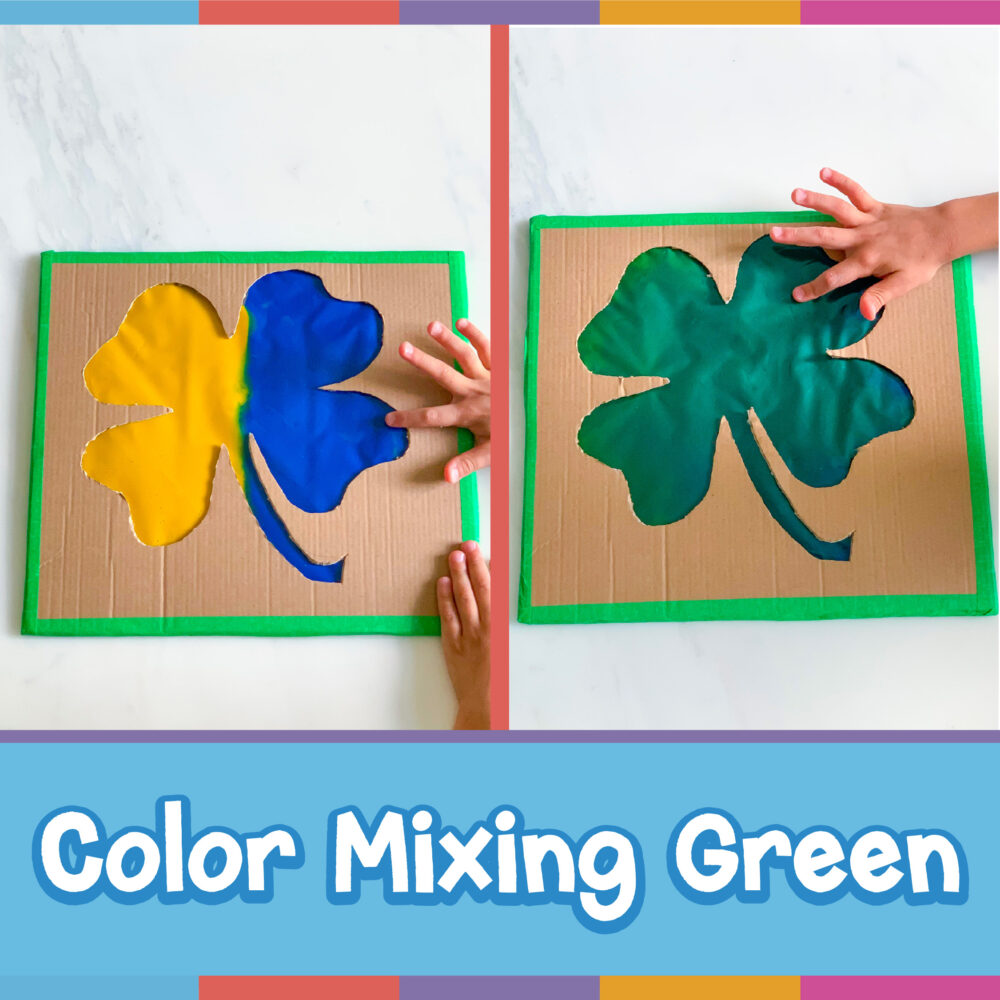
        Color Mixing Green – Make the Leaf Activity

        Color Mixing Green – Make the Leaf Activity

        Color Mixing Green – Make the Leaf Activity

        color mixing green activity blue and yellow colors make

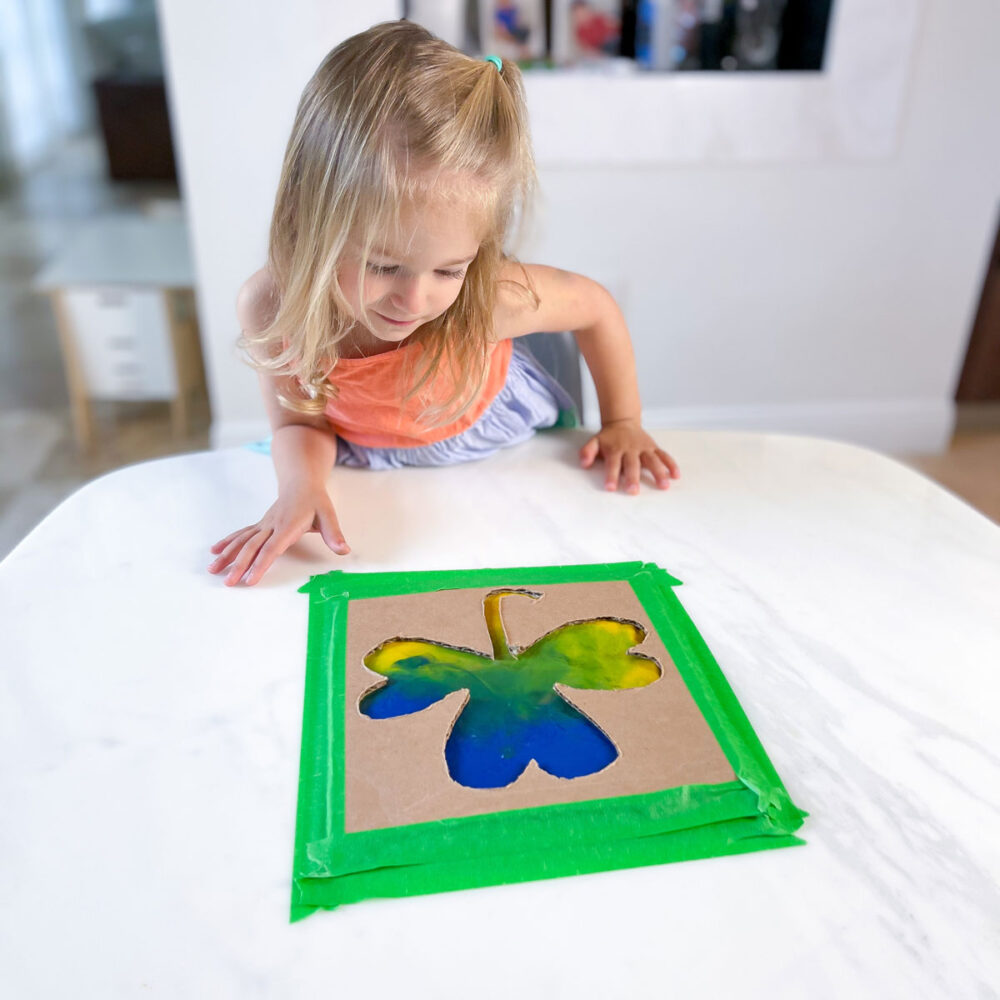
        This color mixing green activity is a fun way to explore how primary colors make a secondary color.

        Best part for the grown ups? It is a mess free! I’ll show you how easy it is to set up this simple project that teaches children the basics of primary and secondary colors!

        Explore What Color Blue and Yellow Create, and More! 

        For the super color mixing fan, we have an awesome (and FREE) printable that allows kids to explore colors, mixing, shades, and tints! Keep reading to get it!

        This activity is super adaptable. Celebrating Easter? Combine yellow and red to make a carrot! Is it Valentine’s Day? Combine white and red to make a pink heart! Is Spring in the air? Combine blue and red to make a purple flower. The options are endless!

        Skills:
        Ages: 
        Prep Time:

        How to Make This Color Mixing Green Leaf Activity

        This is quick to set up from materials you likely already have at home!  You don’t need any special art skills either – it’s so easy! Such a visual way to understand color mixing green.

        All activities should be supervised by an adult. As an Amazon Associate I earn from qualifying purchases. This post may contain affiliate links.

        How to Make This Color Mixing Green Leaf Activity

        This is quick to set up from materials you likely already have at home!  You don’t need any special art skills either – it’s so easy! Such a visual way to understand color mixing green.

        All activities should be supervised by an adult. As an Amazon Associate I earn from qualifying purchases. This post may contain affiliate links.

        What Are Primary and Secondary Colors?

        The primary colors are red, blue, and yellow. When primary colors combine, they create secondary colors. To make orange – combine yellow and red. To make purple – combine blue and red. And finally, to make green – combine yellow and blue!

        Understanding primary and secondary colors is half the fun! Next comes the concept of shades and tints. When black is added to a color it becomes a darker shade. When white is added to a color it becomes a lighter tint!

        We love this color mixing green leaf activity because it provides a real life object to better understand colors and how they combine to resemble something tangible!

        Materials 

        Step-by-Step Instructions 

        Step 1

        On a piece of cardboard, trace the outline of a leaf and then use a sharp knife to cut out the shape.

        Step 2

        To remove the white label on the plastic bag all you need to do is rub it off with an alcohol swab or a cotton swab soaked in nail polish.

        Step 3

        Put the yellow and blue paints inside separate parts of the bag to avoid mixing.

        Step 4

        Close the bag while removing the air bubbles.

        Step 5

        Tape the top of the bag to ensure it doesn’t leak.

        Step 6

        Tape the plastic bag down to the table and then tape the cardboard down to the table as well (to avoid it moving around while your child is mixing the colors).

        Step 1

        On a piece of cardboard, trace the outline of a heart and then use a sharp knife to cut out the shape.

        Step 2

        To remove the white label on the plastic bag all you need to do is rub it off with an alcohol swab or a cotton swab soaked in nail polish.

        Step 3

        Put the red and white paints inside separate parts of the bag to avoid mixing.

        Step 4

        Close the bag while removing the air bubbles.

        Step 5

        Tape the top of the bag to ensure it doesn’t leak.

        Step 6

        Tape the plastic bag down to the table and then tape the cardboard down to the table as well (to avoid it moving around while your child is mixing the colors).

        FREE Printable Activity for Exploring Color Mixing

        If your kiddo asking questions like – yellow and blue make what color? You can’t miss our printable Hands on Color Mixing Activities. This printable set has 5 unique activities for exploring color mixing!

        Enjoy coloring and distinguishing each of the colors in the rainbow! Then, learn all about what happens when primary colors mix to form secondary colors. Next, learn about shades (making colors darker) and tints (making colors lighter). And finally, go over all those concepts in a final round up review!

        FREE Printable Activity for Exploring Color Mixing

        If your kiddo asking questions like – red and white make what color? You can’t miss our printable Hands on Color Mixing Activities. This printable set has 5 unique activities for exploring color mixing!

        Enjoy coloring and distinguishing each of the colors in the rainbow! Then, learn all about what happens when primary colors mix to form secondary colors. Next, learn about shades (making colors darker) and tints (making colors lighter). And finally, go over all those concepts in a final round up review!

        St. Patrick’s Day Printable Activities

        If you are learning about color mixing green during St. Patrick’s Day (like we did, hence the clover and shamrock!), don’t miss our St. Patrick’s Day printable activities.

        It includes 20 activities for practicing early childhood education skills, including alphabet recognition, number recognition, comparisons, tracing, writing, coloring, counting, color recognition, shapes, patterning, and so much more.

        The trim the leprechaun’s beard activity was one of my kid’s favorites!

        Store-Bought Color Mixing Toys

        Here are my top picks for store-bought items that teach color mixing for kids!

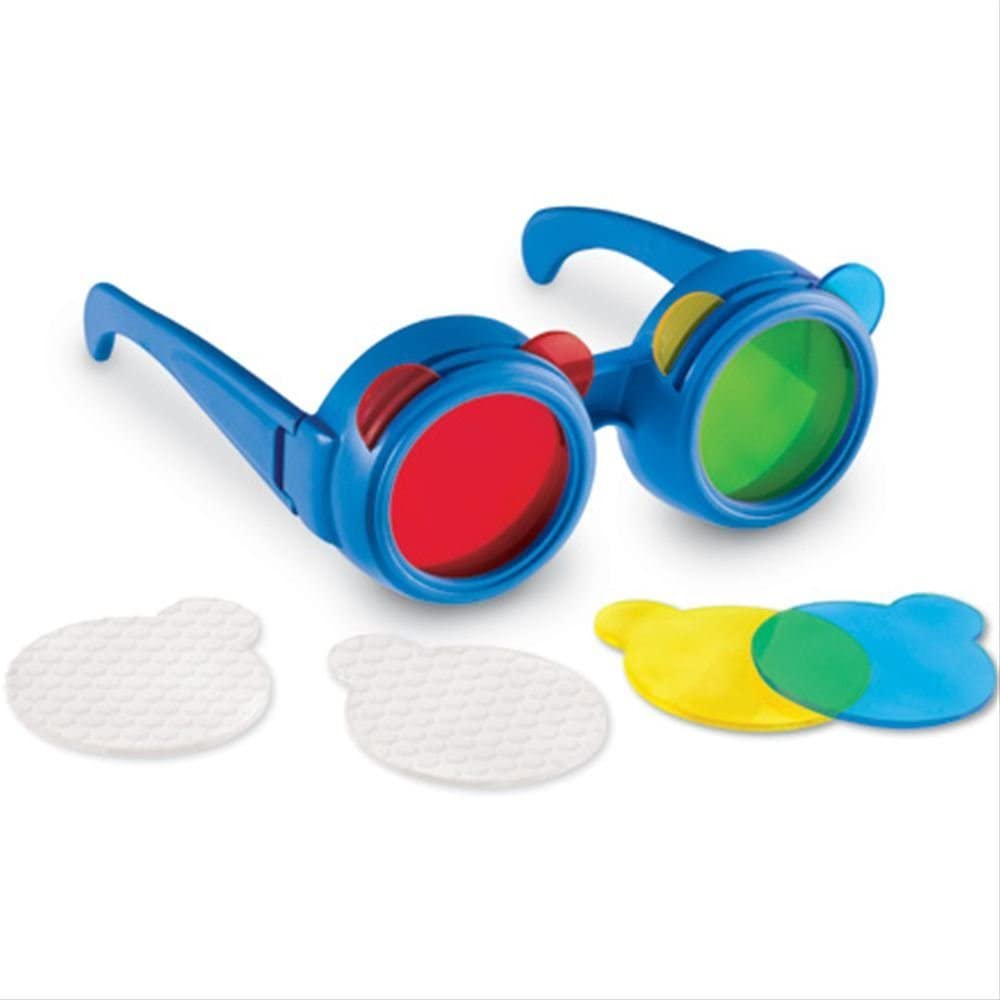
        Color Mixing Glasses

        Layer colored lenses in the plastic glasses to see different shades of colors all around you!

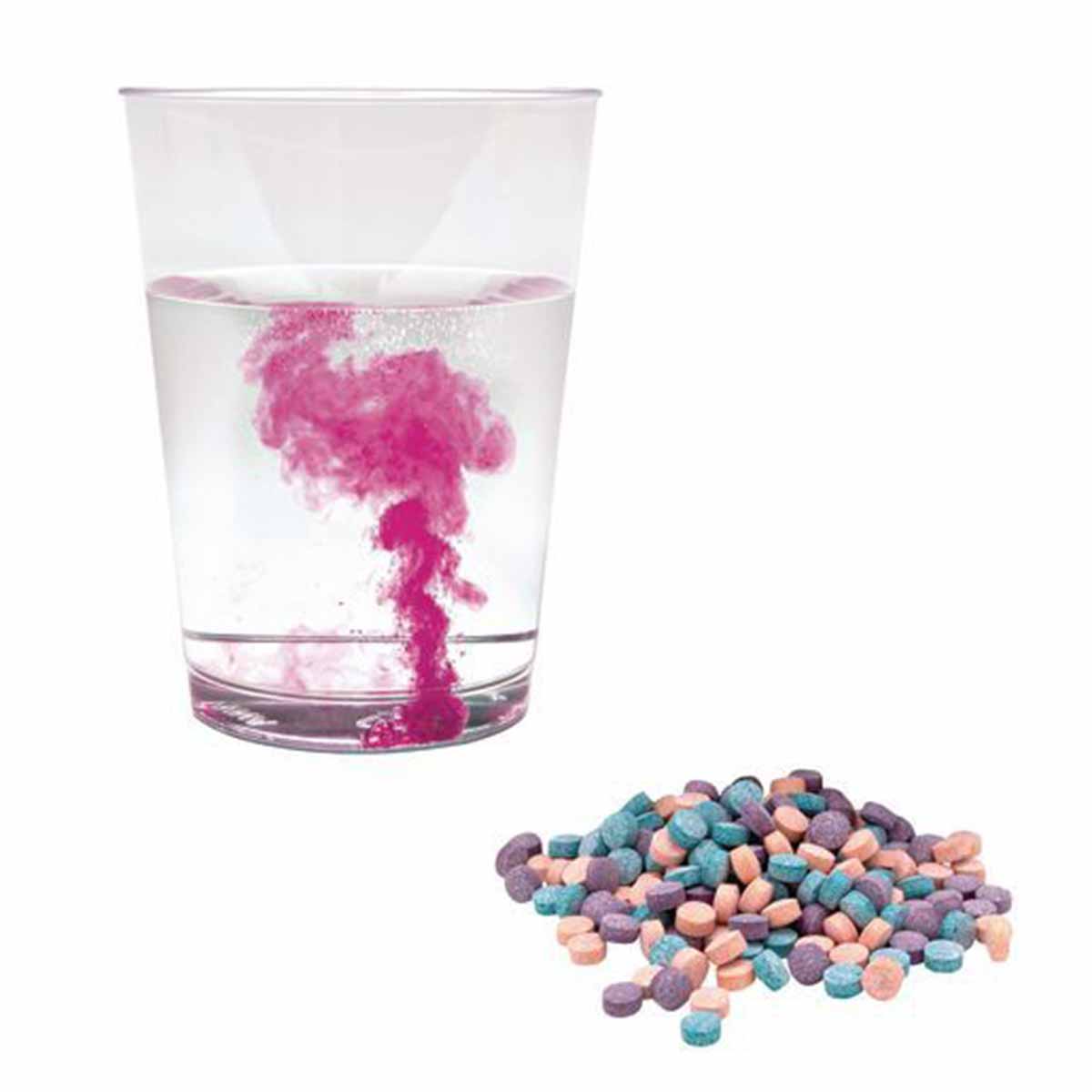
        Steve Spangler Science Color Fizzers

        This set of 100 tablets comes in primary colors. You can mix the colored water to create different colors.

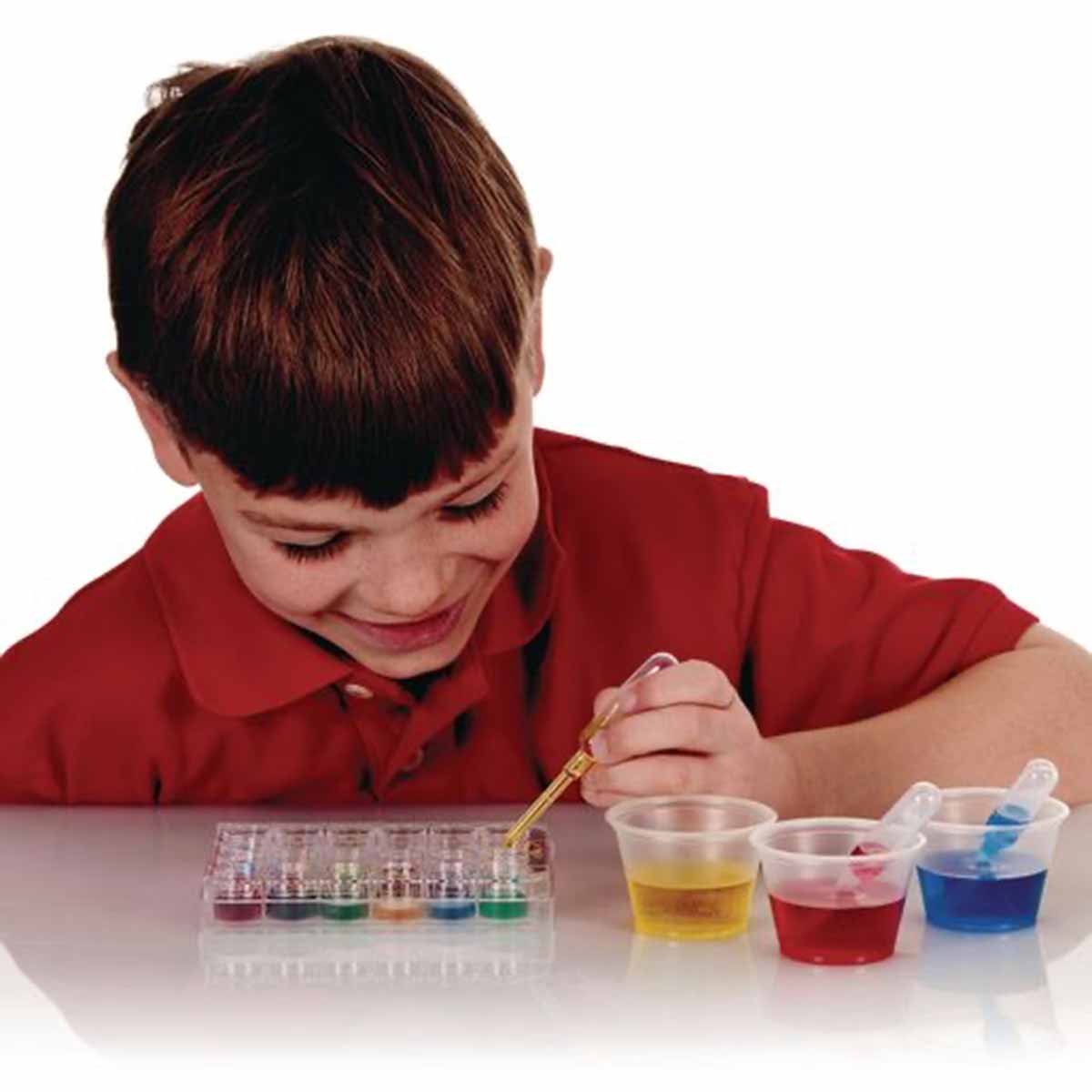
        Splash of Color Kit

        This great kit includes a mini mixing tray, color mixing tablets, and pipettes for creating an amazing splash of colors!

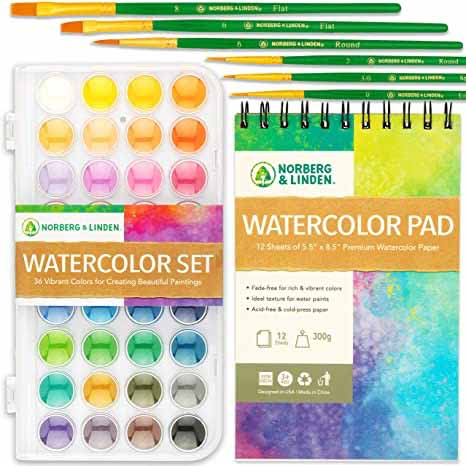
        Watercolor Set

        This set includes paint, brushes, and paper. Watercolors are a classic way to watch colors mix and create new shades.

        What’s Next?

        Best Learning Toys for Kids

        Best Learning Toys for Kids

        Looking for the best learning toys for kids? We’ve got you covered with this list of educational gifts that kids will love and learn from!

        read more
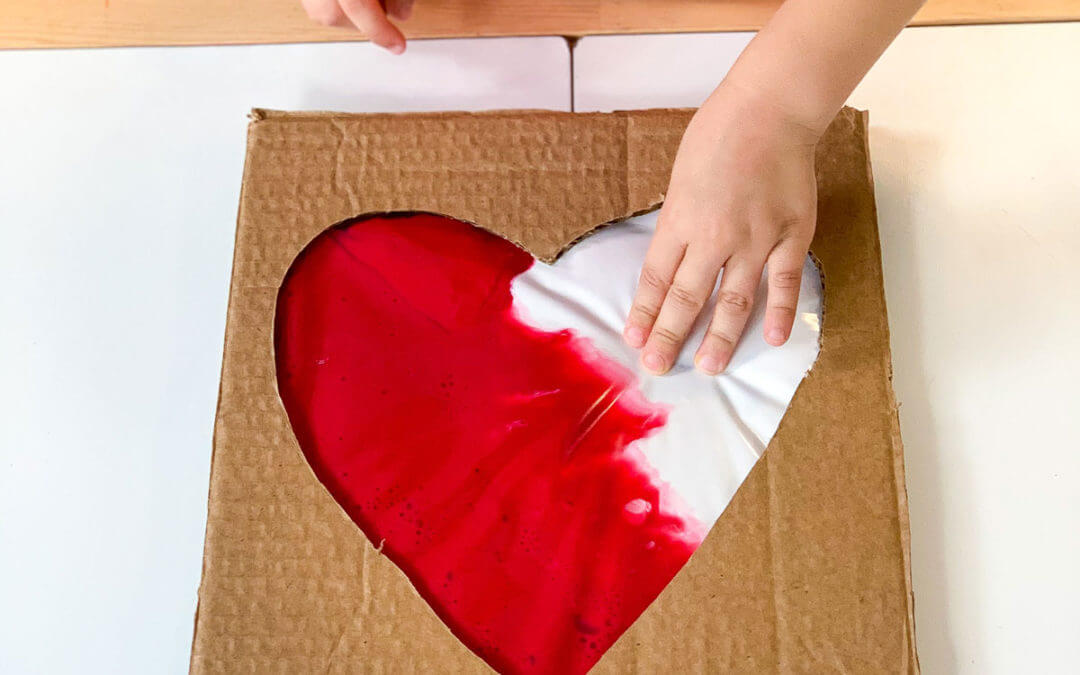
        Red and White Make What Color: Mix the Heart

        Red and White Make What Color: Mix the Heart

        Red and White Make What Color? Mix the Heart

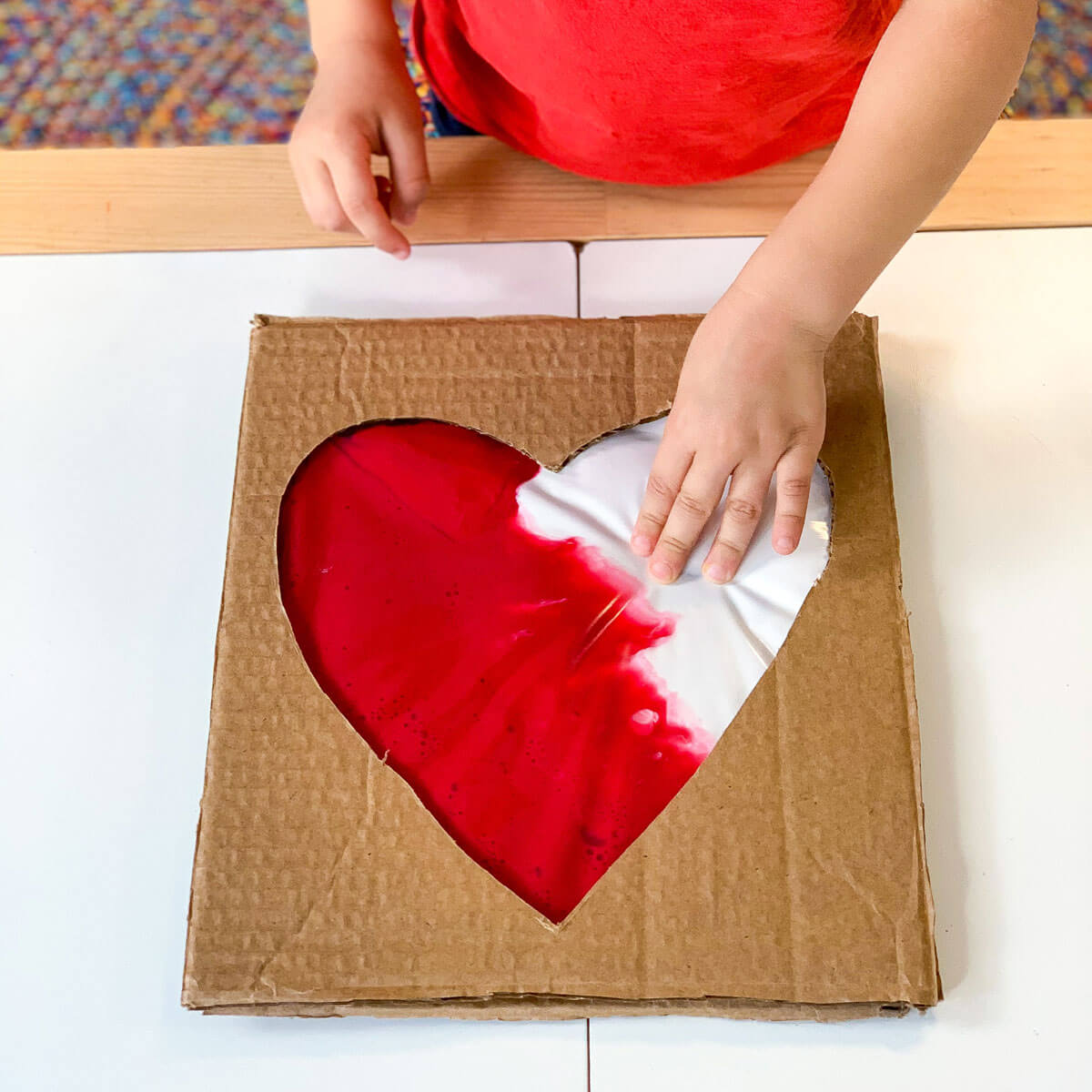
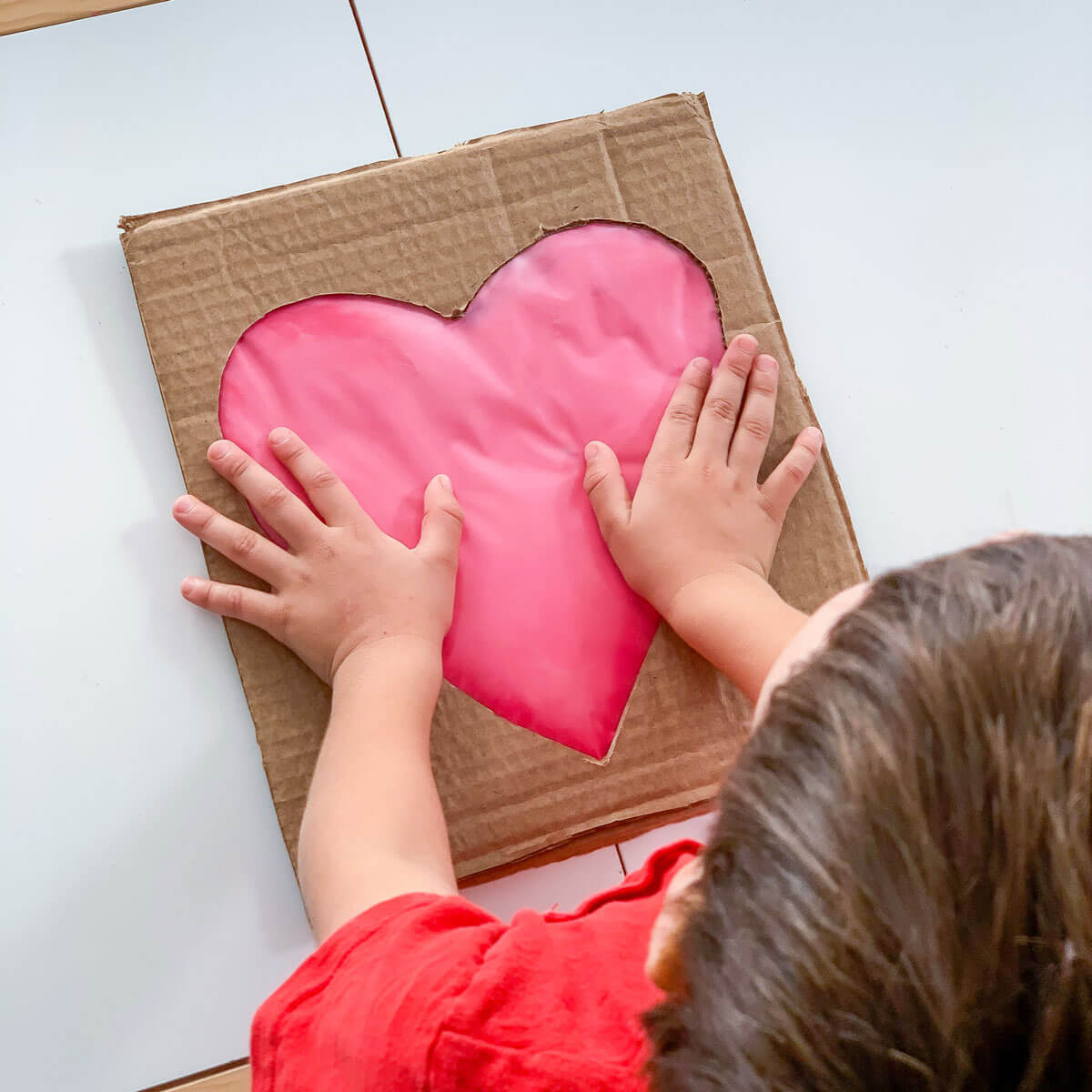
        This mix the heart activity is a perfect way to answer the question: red and white make what color?

        Best part for the grown ups? It is a mess free way to explore color mixing! I’ll show you how easy it is to set up this simple project that teaches children the basics of blending colors!

        Explore, Red and White Make What Color, and More! 

        Plus, for the super color mixing fan, we have an awesome (and FREE) printable that allows kids to explore colors, mixing, shades, and tints! Keep reading to get it!

        This activity is super adaptable. Celebrating Easter? Make a carrot! Is Spring in the air? Combine blue and red to make a purple flower. The options are endless!

        All activities should be supervised by an adult. As an Amazon Associate I earn from qualifying purchases. This post may contain affiliate links.

        Skills:
        Ages: 
        Prep Time:

        Watch the Video to Answer the Question – Red and White Make What Color?

        Your child is going to really enjoy this activity! If your kiddo is asking questions about color mixing, like red and white make what color, then this is something fun to create together!

        This is quick to set up from materials you likely already have at home!  You don’t need any special art skills either – it’s so easy!

        Watch the Video to Answer the Question – Red and White Make What Color?

        Your child is going to really enjoy this activity! If your kiddo is asking questions about color mixing, like red and white make what color, then this is something fun to create together!

        This is quick to set up from materials you likely already have at home!  You don’t need any special art skills either – it’s so easy!

        What Are Shades and Tints?

        In addition to asking the question – red and white make what color? –  this activity is a great opportunity to discuss what shades and tints are.

        First off, let’s make sure your kiddos have a basic understanding of primary and secondary colors. Primary colors are red, yellow, and blue. Secondary colors are created after mixing primary colors together. They are green, orange, and purple.

        Understanding shades and tints takes color mixing to the next level! Shades are when black is added to a color to give it a darker tone. And you can change the tint of a color by adding white to make it a lighter tone.

        By adding white to the color red, you are making the tint lighter to become pink!

        Materials 

        Step-by-Step Instructions 

        Step 1

        On a piece of cardboard, trace the outline of a heart and then use a sharp knife to cut out the shape.

        Step 2

        Remove the white label on the plastic bag all you need to do is rub it off with an alcohol swab or a cotton swab soaked in nail polish.

        Step 3

        Put the red and white paints inside separate parts of the bag to avoid mixing.

        Step 4

        Close the bag while removing the air bubbles.

        Step 5

        Tape the top of the bag to ensure it doesn’t leak.

        Step 6

        Tape the plastic bag down to the table and then tape the cardboard down to the table as well (to avoid it moving around while your child is mixing the colors).

        Step 1

        On a piece of cardboard, trace the outline of a heart and then use a sharp knife to cut out the shape.

        Step 2

        Remove the white label on the plastic bag all you need to do is rub it off with an alcohol swab or a cotton swab soaked in nail polish.

        Step 3

        Put the red and white paints inside separate parts of the bag to avoid mixing.

        Step 4

        Close the bag while removing the air bubbles.

        Step 5

        Tape the top of the bag to ensure it doesn’t leak.

        Step 6

        Tape the plastic bag down to the table and then tape the cardboard down to the table as well (to avoid it moving around while your child is mixing the colors).

        Printable Activity for Exploring Color Mixing

        If your kiddo asking questions like – red and white make what color? You can’t miss our printable Hands on Color Mixing Activities. This printable set has 5 unique activities for exploring color mixing!

        Enjoy coloring and distinguishing each of the colors in the rainbow! Then, learn all about what happens when primary colors mix to form secondary colors. Next, learn about shades (making colors darker) and tints (making colors lighter). And finally, go over all those concepts in a final round up review!

        Printable Activity for Exploring Color Mixing

        If your kiddo asking questions like – red and white make what color? You can’t miss our printable Hands on Color Mixing Activities. This printable set has 5 unique activities for exploring color mixing!

        Enjoy coloring and distinguishing each of the colors in the rainbow! Then, learn all about what happens when primary colors mix to form secondary colors. Next, learn about shades (making colors darker) and tints (making colors lighter). And finally, go over all those concepts in a final round up review!

        Store-Bought Color Mixing Toys

        Here are my top picks for store-bought items that teach color mixing for kids!

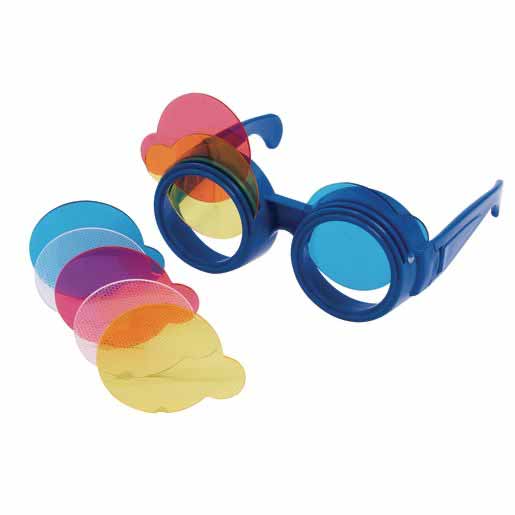
        Color Mixing Glasses

        Layer colored lenses in the plastic glasses to see different shades of colors all around you!

        Steve Spangler Science Color Fizzers

        This set of 100 tablets comes in primary colors. You can mix the colored water to create different colors.

        Splash of Color Kit

        This great kit includes a mini mixing tray, color mixing tablets, and pipettes for creating an amazing splash of colors!

        Watercolor Set

        This set includes paint, brushes, and paper. Watercolors are a classic way to watch colors mix and create new shades.

        What’s Next?

        Best Learning Toys for Kids

        Best Learning Toys for Kids

        Looking for the best learning toys for kids? We’ve got you covered with this list of educational gifts that kids will love and learn from!

        read more

        Make Your Own Valentine’s Day Card with a Secret Love Message

        Make Your Own Valentine’s Day Card with a Secret Love Message

        Make Your Own Valentine’s Day Card with a Secret Love Message

        make your own valentine's card with a secret message with free printable

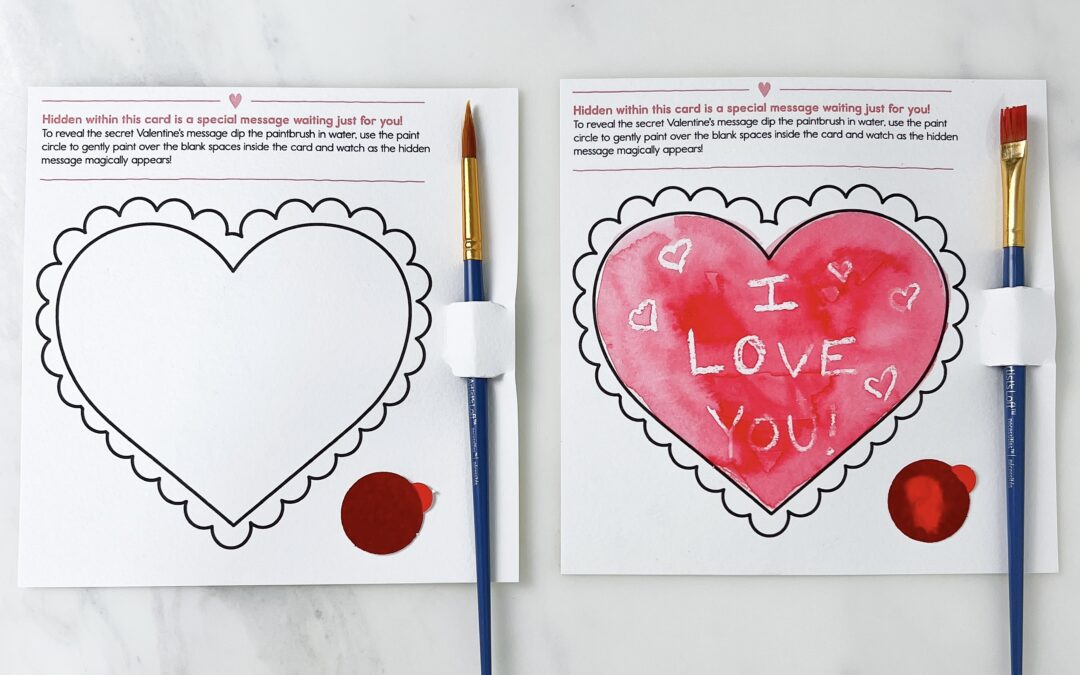
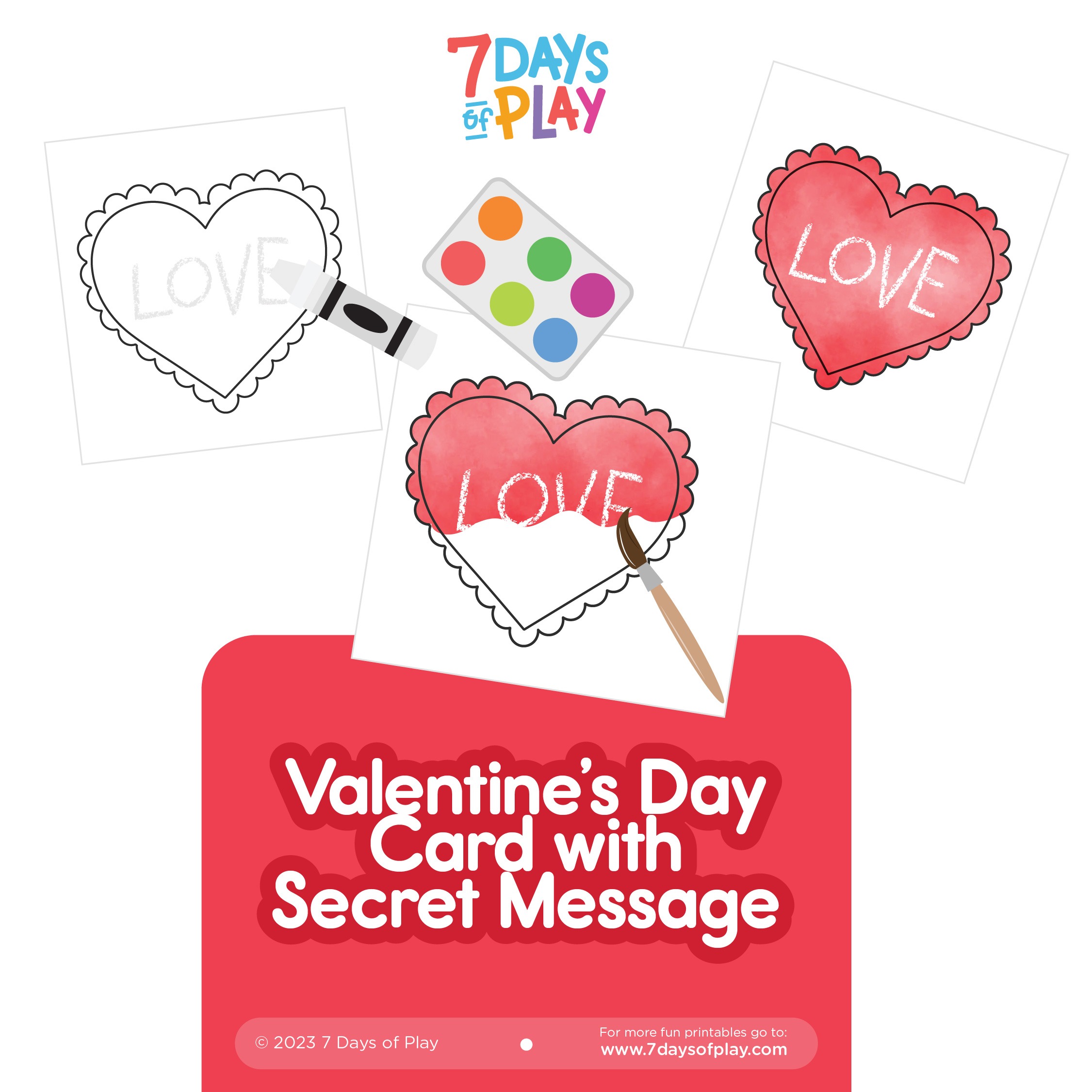
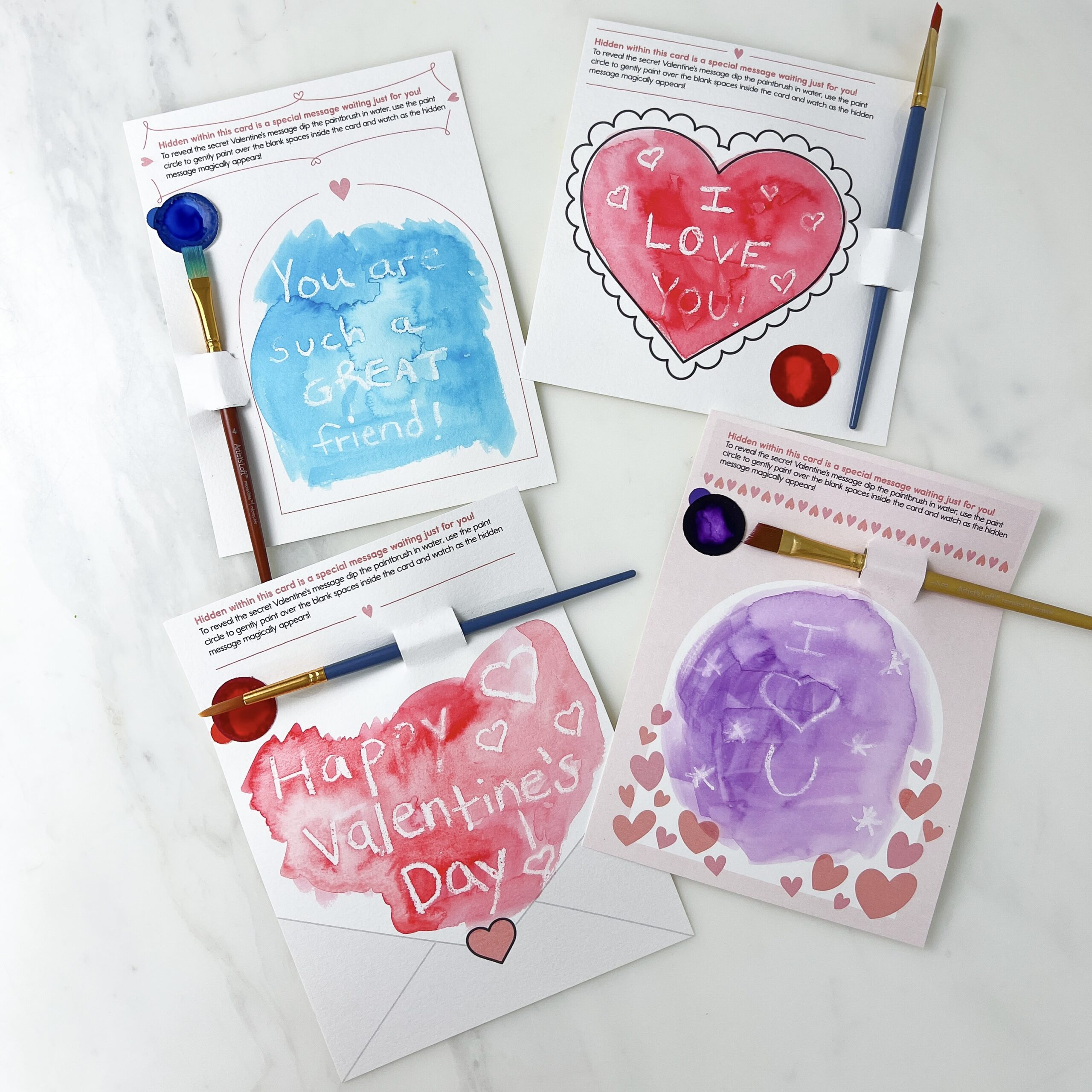
        How cool is it to create and exchange Valentine’s Day cards with these secret message?! Keep reading to get all the details on how to easily make this too along with the FREE printable, which includes 5 card designs.

        Secret Message Valentines Day Cards

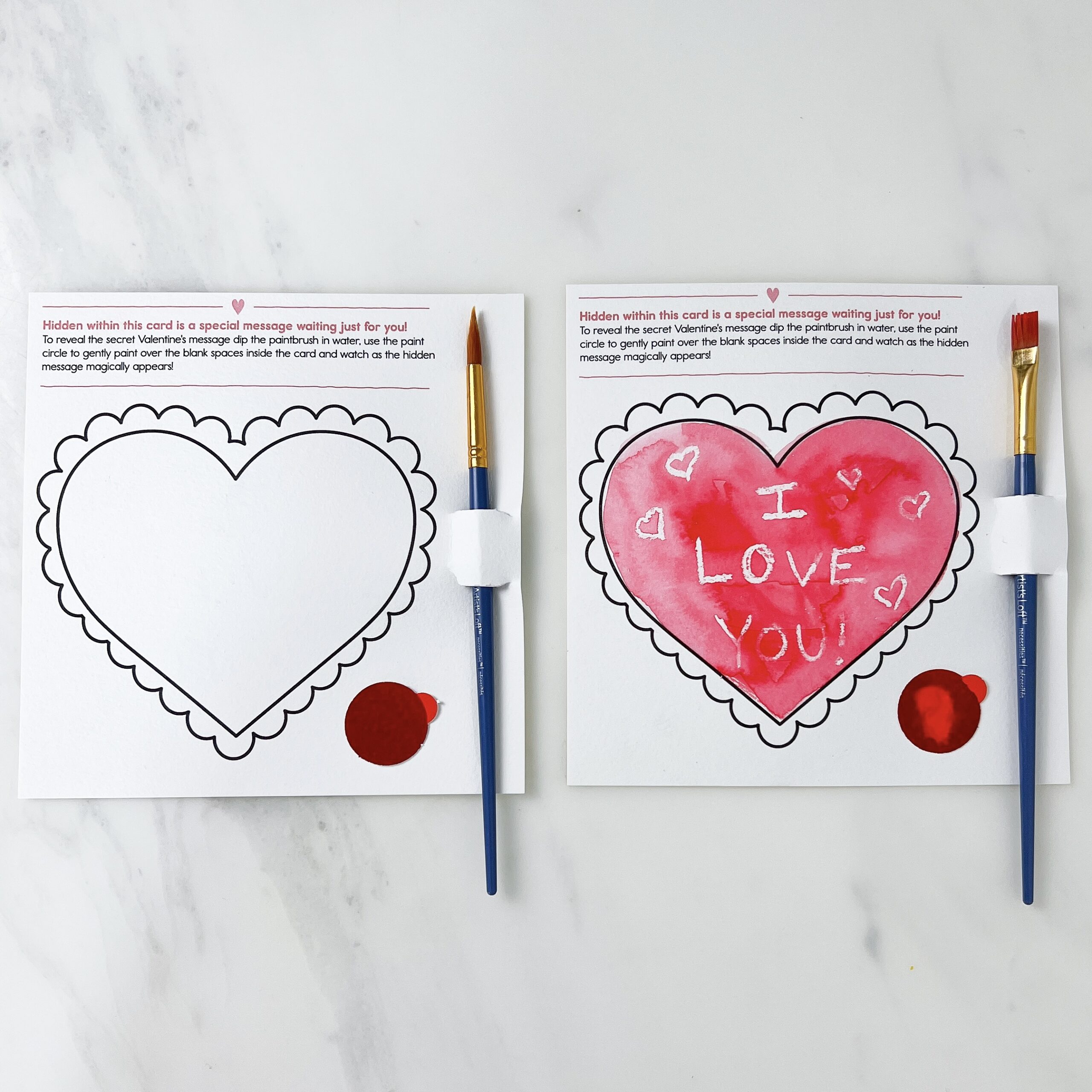
        Discover a magical touch to Valentine’s Day cards with this exciting secret message technique! This fun and easy activity is perfect for kids who want to create their own personalized cards for friends. Using a white crayon on our FREE printable, children can craft hidden messages that add an element of surprise. When the recipient brushes watercolors over the message, the secret words magically appear, creating a memorable Valentine’s Day experience. It’s a playful way for kids to express their creativity and share the joy of giving with their friends in class.

        All activities should be supervised by an adult. As an Amazon Associate, I earn from qualifying purchases. This post may contain affiliate links.

        Skills:
        Ages: 
        Prep Time:

        Make Your Secret Message Valentine’s Day Cards

        Watch this video to see how easy it is to make your own Valentine’s Day card with a secret message! See how we use a white crayon to write hidden messages on our FREE printables.

        We then add a paint circle and a paintbrush for the recipient to reveal the message. It’s a cool and simple process, and watching the message suddenly appear adds a fun and exciting element.

        These secret message printables offer a memorable and interactive way to celebrate friends and loved ones, making Valentine’s Day truly special for both the sender and the recipient.

        Make Your Secret Message Valentine’s Day Cards

        Watch this video to see how easy it is to make your own Valentine’s Day card with a secret message! See how we use a white crayon to write hidden messages on our FREE printables.

        We then add a paint circle and a paintbrush for the recipient to reveal the message. It’s a cool and simple process, and watching the message suddenly appear adds a fun and exciting element.

        These secret message printables offer a memorable and interactive way to celebrate friends and loved ones, making Valentine’s Day truly special for both the sender and the recipient.


        Tips for Making Your Own Secret Message Valentine’s Day Cards

        Watercolor Paper. You’ll need some thick paper to create this art project! If you use regular paper, the water from the watercolors will make your card too soggy!

        Use Our Printable Designs – It’s FREE! Start by selecting your preferred card design from the available options. The variety allows you to personalize the experience for your loved ones

        Apply Pressure with the White Crayon: Use a white crayon to write a secret message on the card. Make sure you apply plenty of pressure to be sure the crayon will resist the watercolors.

        Use Watercolor Circles:  These watercolor circles are a fantastic budget-friendly addition to this card-making process, providing an affordable yet effective way for recipients to unveil the hidden messages with the joy of watercolors.

        For more arts and crafts projects, be sure to visit our comprehensive list

        Valentine’s Day Card with Secret Message - Printable

        Materials

        Step-by-Step Instructions 

        Step 1

        Choose a card design from the free printable and print it out on watercolor paper.

        Step 2

        Use scissors to cut out the card design(s).


        Step 3

        Write a secret message using a white crayon. The white crayon ensures that the message remains hidden until revealed.

        Step 4

        Include a paintbrush and a watercolor circle in the designated area on the card. This adds an interactive and artistic element to the gift.

        Step 1

        Choose a card design from the free printable and print it out on watercolor paper.

        Step 2

        Use scissors to cut out the card design(s).

        Step 3

        Write a secret message using a white crayon. The white crayon ensures that the message remains hidden until revealed.

        Step 4

        Include a paintbrush and a watercolor circle in the designated area on the card. This adds an interactive and artistic element to the gift.

        Why We Love Making (& Giving) Valentine’s Day Cards

        Valentine’s Day is not just a celebration for adults; it holds immense importance for children as well. One cherished tradition that adds joy to this special day is the exchange of Valentine’s Day cards among kids. These cards play such a great role in shaping young minds and fostering essential values. 

        • Expressing emotions: Choosing and giving cards to friends and classmates becomes a tangible expression of affection.
        • Promoting creativity: This creative process enhances their artistic skills and allows them to take pride in their unique creations.
        • Building relationships: Children learn about the importance of relationships and the joy of giving. It’s a subtle lesson in empathy and caring for others.
        • Spreading love and compassion: They teach kids the significance of reaching out to others, making someone’s day brighter, and creating a positive impact through simple acts of kindness.
        make your own valentine's card with a secret message with free printable

          The tradition of Valentine’s Day cards for kids goes beyond the surface-level exchange; it becomes a meaningful experience that contributes to their emotional development and understanding of human connections.

          make your own valentine's card with a secret message with free printable

          Why We Love Making (& Giving) Valentine’s Day Cards

          Valentine’s Day is not just a celebration for adults; it holds immense importance for children as well. One cherished tradition that adds joy to this special day is the exchange of Valentine’s Day cards among kids. These cards play such a great role in shaping young minds and fostering essential values. 

          • Expressing emotions: Choosing and giving cards to friends and classmates becomes a tangible expression of affection.
          • Promoting creativity: This creative process enhances their artistic skills and allows them to take pride in their unique creations.
          • Building relationships: Children learn about the importance of relationships and the joy of giving. It’s a subtle lesson in empathy and caring for others.
          • Spreading love and compassion: They teach kids the significance of reaching out to others, making someone’s day brighter, and creating a positive impact through simple acts of kindness.

          The tradition of Valentine’s Day cards for kids goes beyond the surface-level exchange; it becomes a meaningful experience that contributes to their emotional development and understanding of human connections.

          Other DIY Valentine’s Day Activities

          Looking for more Valentine’s Day fun? Check out these printable resources.

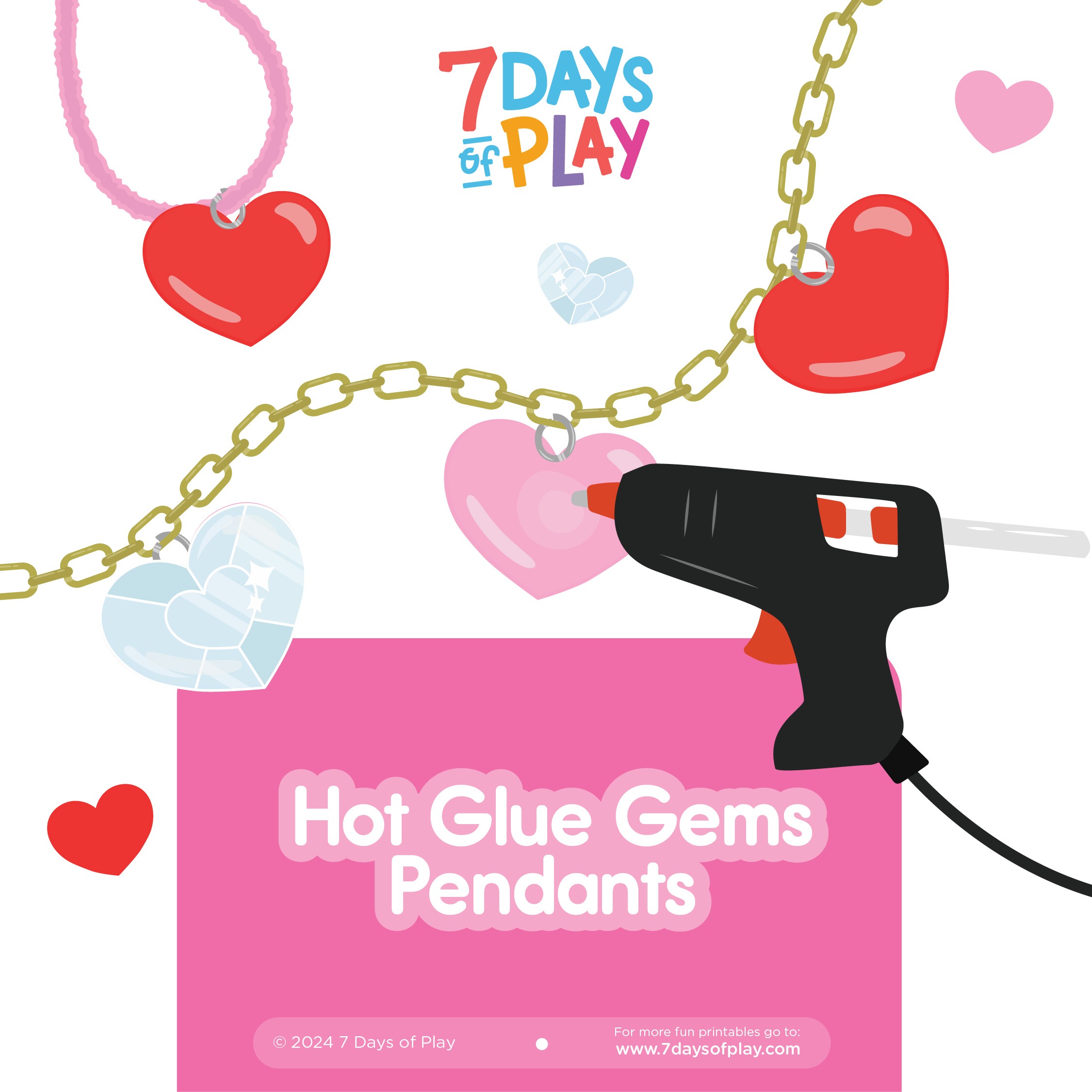
          hot glue pendant printable make your own jewlery with hot glue

          Hot Glue Pendants

          Craft beautiful customized crystal pendants effortlessly to embellish your bracelets, earrings, and necklaces. Designed for individuals aged 6 and above, utilizing a low-heat glue gun ensures safety. An elegant and considerate gift suggestion!

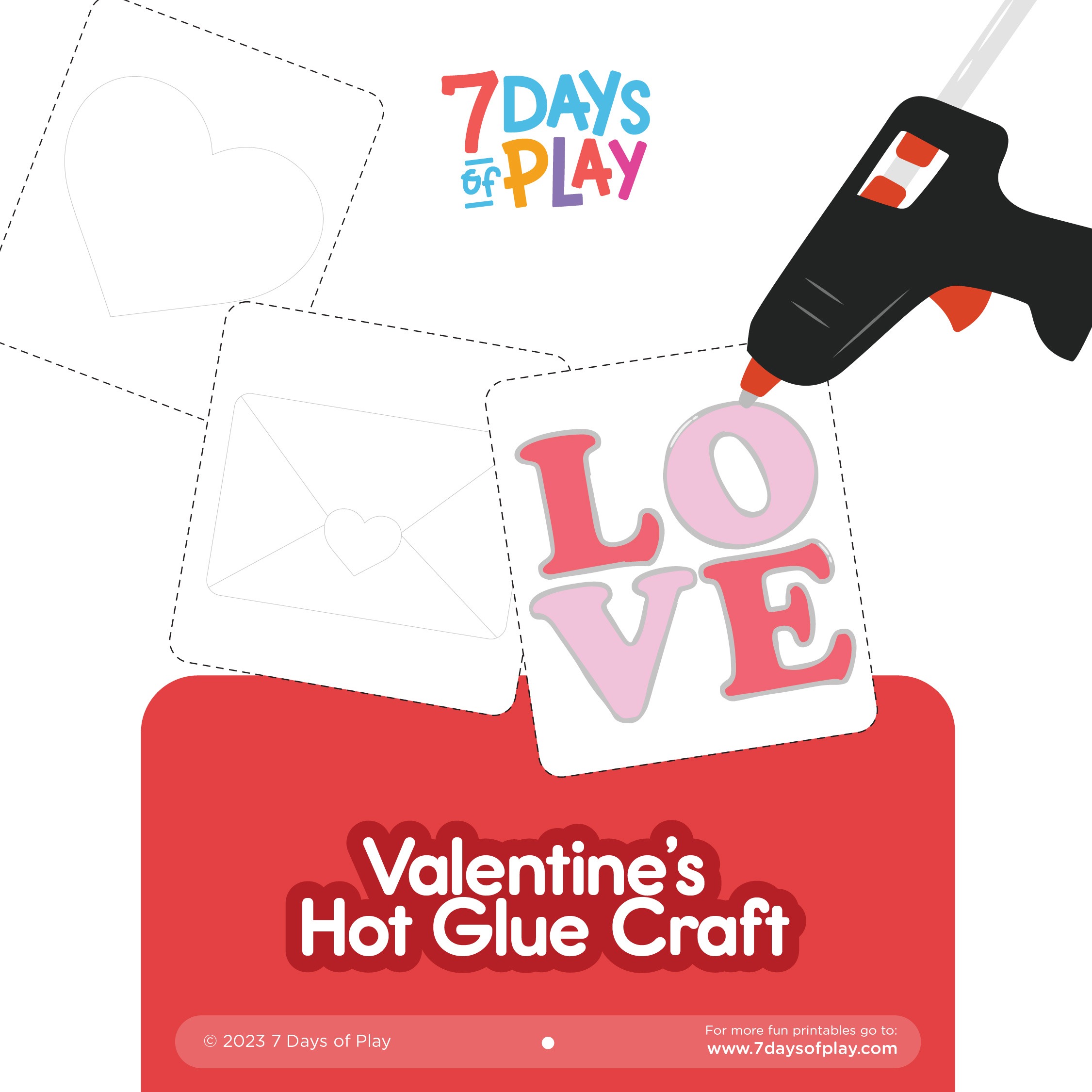
          Valentine’s Hot Glue Craft - Printable

          Valentine’s Craft

          Ignite your child’s artistic spirit with our exclusive Valentine’s Hot Glue Craft – Printable. Simply print the provided illustrations and embark on a crafting adventure. To ensure safety, adult supervision is recommended when using hot glue.

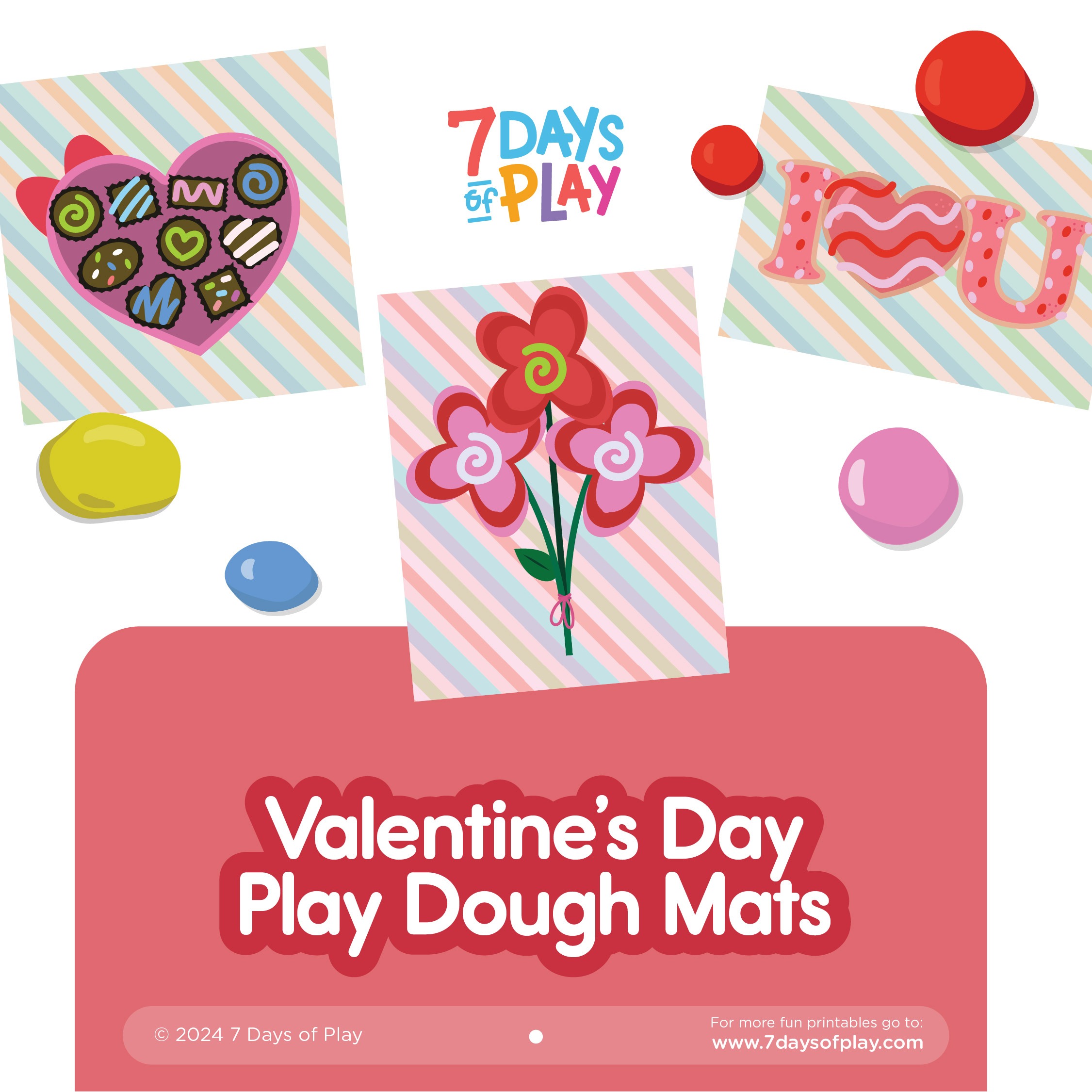
          Valentines Play Dough Mats

          Valentine’s Play Dough Mats

          Introduce a touch of magic to your Valentine’s Day festivities with our delightful Valentine’s Day PlayDough Mats. This printable product is specially crafted to ignite creativity in young hearts, providing an enchanting addition to your celebration.

          valentine's day printable activities

          15+ Valentine’s Day Activities

          Elevate the spirit of Valentine’s Day for your little ones with our printable set of over 15 Valentine’s Day themed activities! Tailored to foster early childhood education skills, these delightful worksheets are designed to be both enjoyable and educational.

          What’s Next?

          Best Learning Toys for Kids

          Best Learning Toys for Kids

          Looking for the best learning toys for kids? We’ve got you covered with this list of educational gifts that kids will love and learn from!

          read more
          DIY Valentine’s Day Card – So Simple and Fun!

          DIY Valentine’s Day Card – So Simple and Fun!

          DIY Valentine’s Day Card – So Simple and Fun!

          DIY Valentine's Day Card candy free 3D Personalized

          Searching for a simple (and fun) DIY Valentine’s Day card for your child to bring to school? Look no further! This personalized card is easy to make and your child will love gifting one to each of their classmates.

          The Cutest DIY Valentine’s Day Cards for Kids

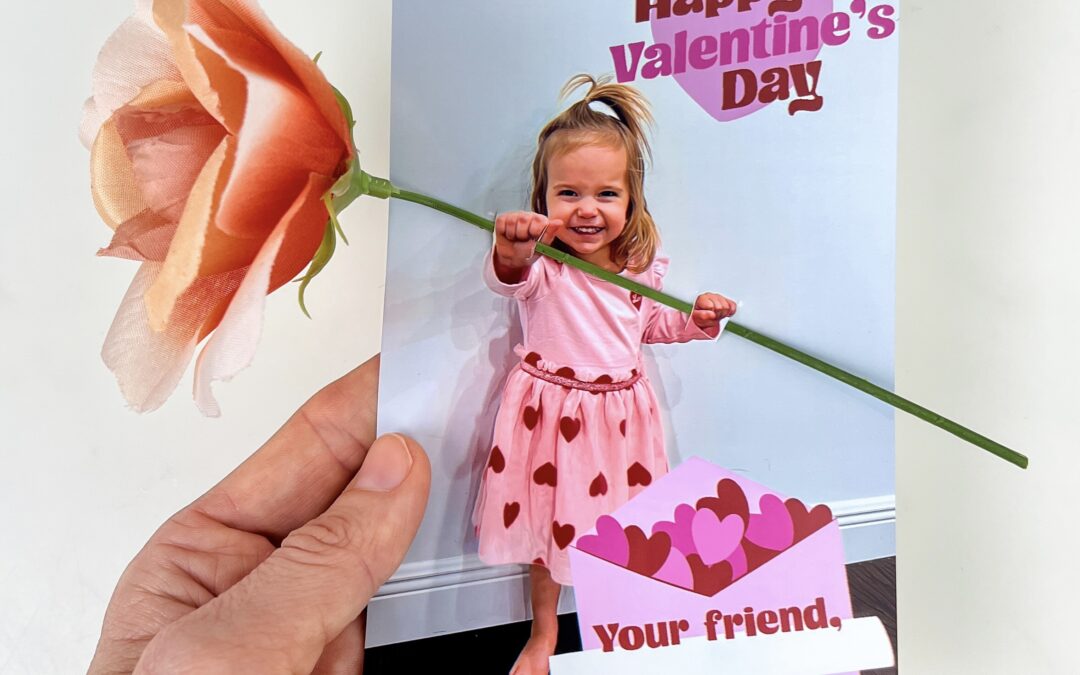
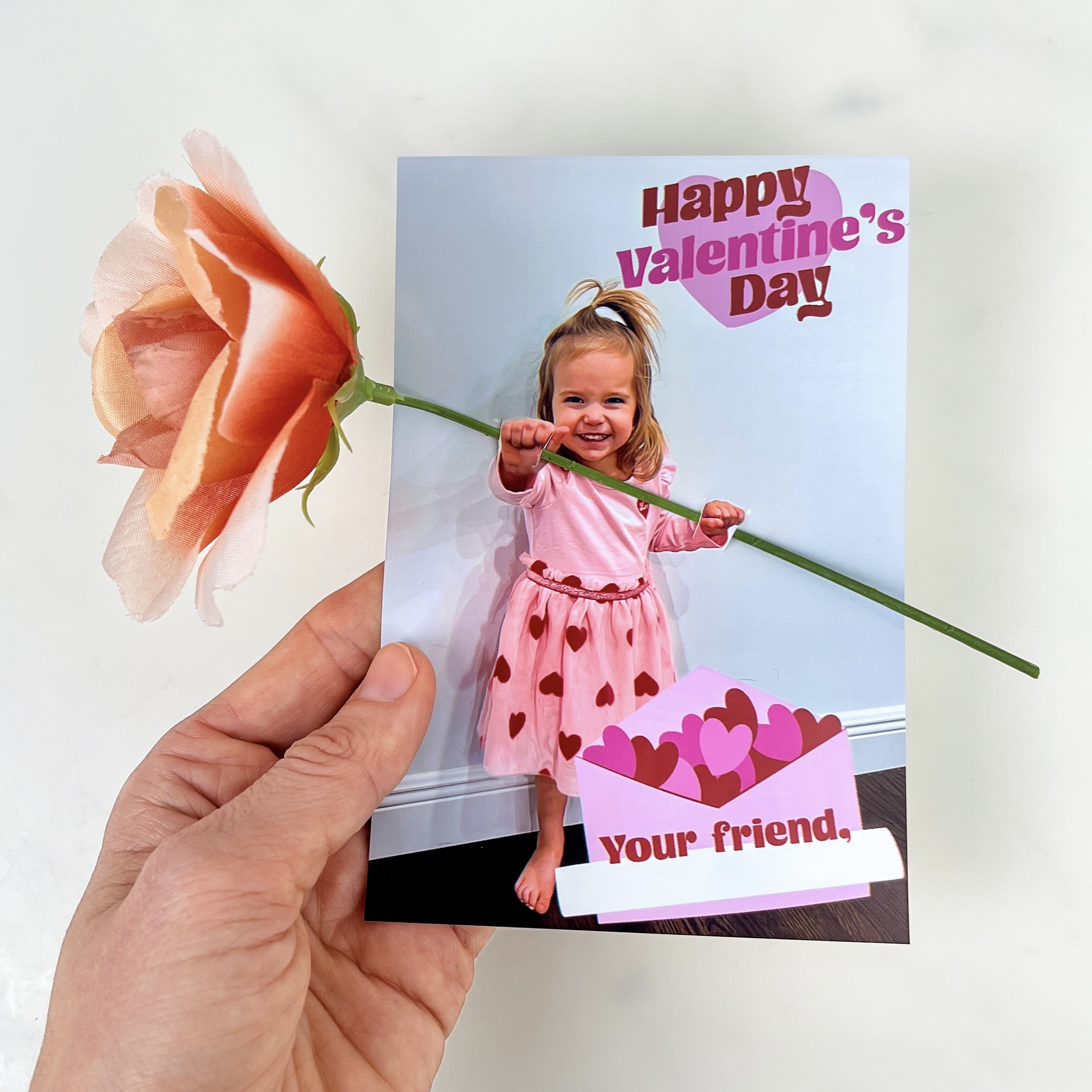
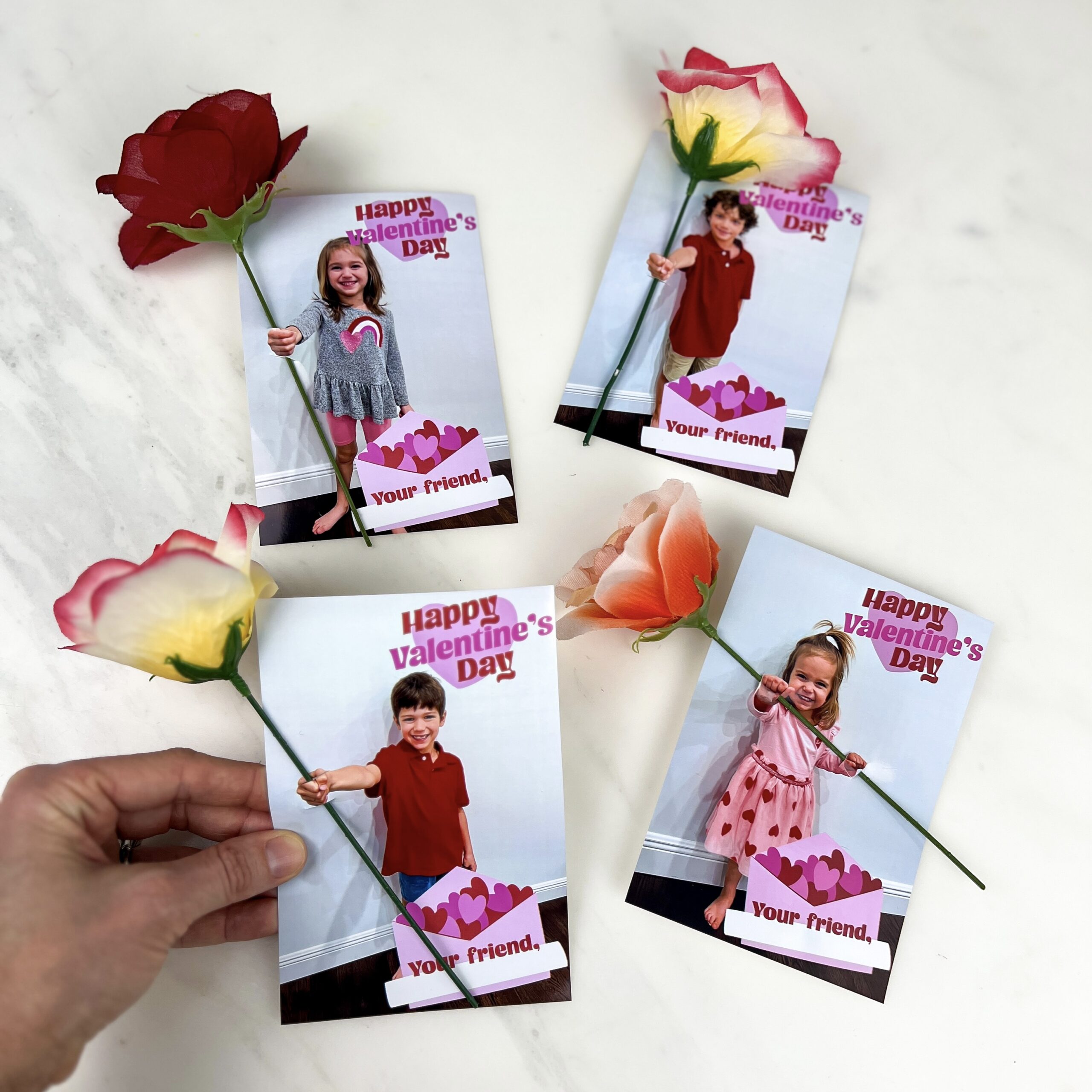
          Valentine’s Day is around the corner, and what better way to celebrate than with a personalized touch for your child’s classmates? This card is designed to make it seem like your child is literally giving the recipient a gift straight out of the card! This year, we’re going to do a DIY Valentine’s Day Card that has a candy-free artificial rose gift (though, if your school allows candy, feel free to swap it for a lollipop if you prefer)!

          This creative craft adds a personal touch to Valentine’s Day cards for classmates. It’s an easy and enjoyable project that not only brings joy to your child but also spreads love and smiles in the classroom. 

          Skills:
          Ages: 
          Prep Time:

          Tips for Making the Perfect DIY Valentine’s Day Card

          Tip 1: Capture the Moment

          Take a picture of your child while instructing them to hold a closed fist towards the camera, simulating the act of holding a flower. Try to choose a background that’s not too busy, and leave ample space around your child for adding text.

          Tips 2: Print Your Photo

          Stores like CVS can usually print photos in just a couple of hours. Check to see if they have any promo codes running (as they often do!) so you can get the prints for cheap! You can also use a printer at home if you have one!

          Tip 3: Adding Text

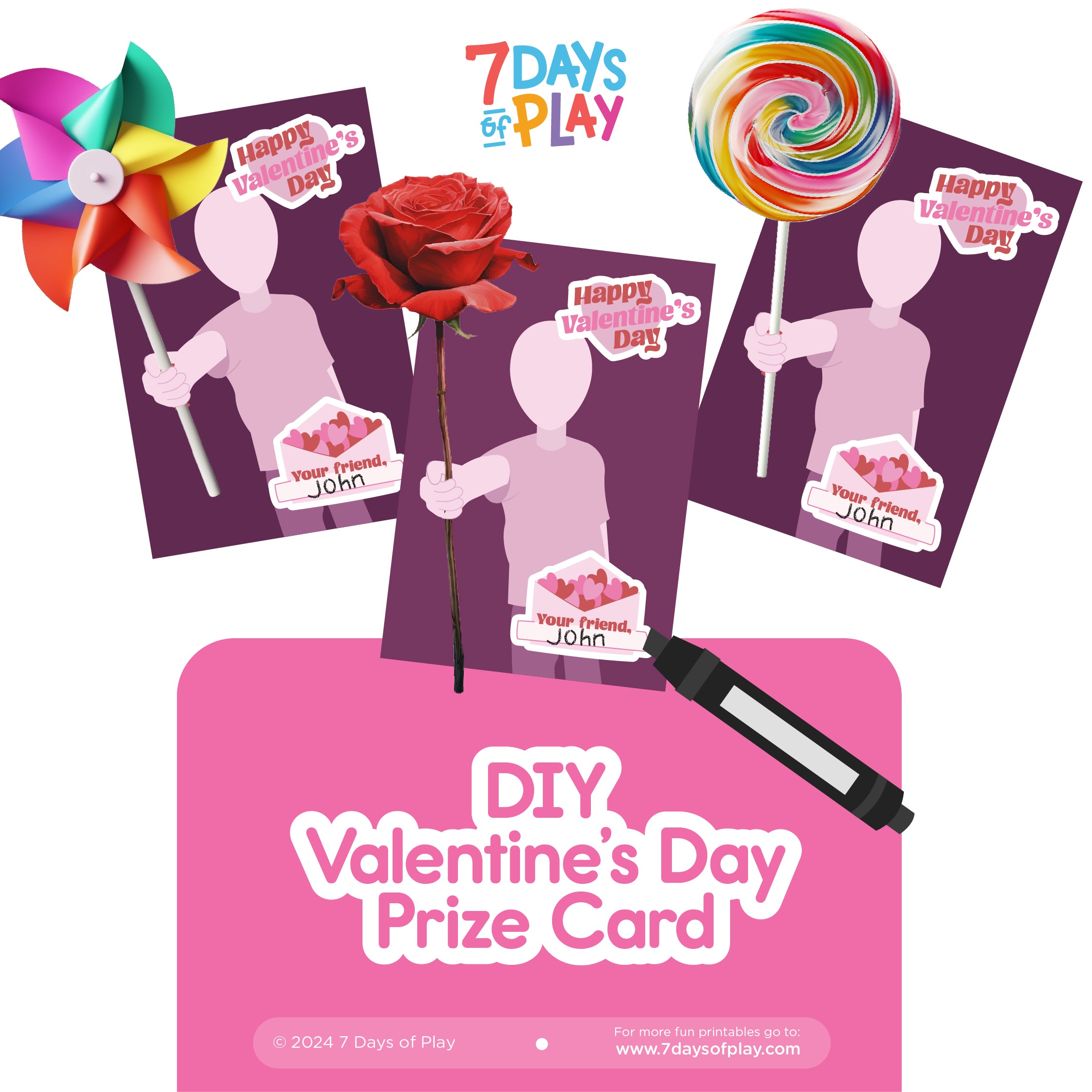
          You can choose to add text before you print your photo or after you print your photo. We created “Happy Valentine’s Day” stickers as well as a signature sticker you can download for free and add to your printed cards if you like! Or if you are tech savvy, you can add your preferred graphics in photo-editing apps before printing. Or even more simple, you can just write your note directly on the printed card!


          Tips for Making the Perfect DIY Valentine’s Day Card

          Tip 1: Capture the Moment

          Take a picture of your child while instructing them to hold a closed fist towards the camera, simulating the act of holding a flower, lollipop, or other prize on a stick!

          Tips 2: Print Your Photo

          Stores like CVS can usually print photos in just a couple of hours. Check to see if they have any promo codes running (as they often do!) so you can get the prints for cheap! You can also use a printer at home if you have one!

          Tip 3: Adding Text

          You can choose to add text before or after you print your photo. We created “Happy Valentine’s Day” stickers as well as a signature sticker you can download for free and add to your printed cards if you like! Or if you are tech savvy, you can add your preferred graphics in photo-editing apps before printing. Or even more simple, you can just write your note directly on the printed card in pen!

          Tip 4: Prize on a Stick!

          When choosing the prize for your Valentine’s Card, make sure it is one that is on a thin stick – both artificial flowers and lollipops work perfectly. We got our artificial flowers from Dollar Tree.

          Free Printable Stickers for Your DIY Valentine’s Day Card

          As mentioned above, you can decorate your card lots of different ways, but if you want to use the graphics we created, you can! Click here to downloadable and print the labels we used for free!

          You can add them to your photo digitally, or you can print them out on sticker paper and stick them to your photos. 

          For another Valentine’s Day card idea, check out our Secret Message Valentine’s Day Card Templates!

          All activities should be supervised by an adult. As an Amazon Associate, I earn from qualifying purchases. This post may contain affiliate links.

          Personalized Valentine's Day Card - Printable

          Materials

          • Craft Knife
          • Stick-Based Prizes (like an artificial rose or lollipop)

          Step-by-Step Instructions 

          Step 1

          Instruct your child to hold a closed fist towards the camera, simulating holding a flower. Use a camera, focusing on your child’s face, and choose a background that’s not too busy.

          Step 2

          Decide whether you want to add text to your photo before or after printing. You can always add our free printable graphics to the card as stickers if you like!

          Step 3

          Print the photos at home or upload the finalized image to your preferred printing service. Choose 4×6 prints and double-check cropping placements.


          Step 4

          With printed photos in hand, use a sharp craft knife to cut two small slots – one at the top and one at the bottom of the closed fist. Choose sturdy cardstock or photo paper for printing to ensure durability.

          Step 5

          Insert your prize (artificial flower stems, lollipops, or other stick-based gift) through the slots, creating the illusion of your child holding the present.

          Your candy-free DIY Flower Valentine’s Day Photo Cards are now ready to be shared with classmates!

          Step 1

          Instruct your child to hold a closed fist towards the camera, simulating holding a flower. Use a camera, focusing on your child’s face, and choose a background that’s not too busy.

          Step 2

          Decide whether you want to add text to your photo before or after printing. You can always add our free printable graphics to the card as stickers if you like!

          Step 3

          Print the photos at home or upload the finalized image to your preferred printing service. Choose 4×6 prints and double-check cropping placements.

          Step 4

          With printed photos in hand, use a sharp craft knife to cut two small slots – one at the top and one at the bottom of the closed fist. Choose sturdy cardstock or photo paper for printing to ensure durability.

          Step 5

          Insert your prize (artificial flower stems, lollipops, or other stick-based gift) through the slots, creating the illusion of your child holding the present.

          Your candy-free DIY Flower Valentine’s Day Photo Cards are now ready to be shared with classmates!

          Benefits of DIY Valentine’s Day Cards for Kids

          Creating DIY Valentine’s Day cards can be a wonderful and enriching experience for kids, offering a range of benefits beyond simply exchanging store-bought cards.

          Personalizing homemade cards encourages creativity and self-expression, allowing children to personalize their messages and designs, fostering a sense of individuality.

          Creating DIY cards instills a sense of thoughtfulness and effort, teaching children the value of putting time and care into expressing affection for others, so I highly recommend you involve the kiddos in every step of the process in creating these cards!

          Ultimately, DIY Valentine’s Day cards provide a unique and meaningful way for children to celebrate friendship and express their emotions while fostering creativity and interpersonal connections. 

          DIY Valentine's Day Card candy free 3D Personalized
          make your own valentine's card with a secret message with free printable

          Benefits of DIY Valentine’s Day Cards for Kids

          Creating DIY Valentine’s Day cards can be a wonderful and enriching experience for kids, offering a range of benefits beyond simply exchanging store-bought cards.

          Personalizing homemade cards encourages creativity and self-expression, allowing children to personalize their messages and designs, fostering a sense of individuality.

          Creating DIY cards instills a sense of thoughtfulness and effort, teaching children the value of putting time and care into expressing affection for others, so I highly recommend you involve the kiddos in every step of the process in creating these cards!

          Ultimately, DIY Valentine’s Day cards provide a unique and meaningful way for children to celebrate friendship and express their emotions while fostering creativity and interpersonal connections. 

          Other DIY Valentine’s Day Activities

          Looking for more Valentine’s Day fun? Check out these printable resources.

          hot glue pendant printable make your own jewlery with hot glue

          Hot Glue Pendants

          Craft beautiful customized crystal pendants effortlessly to embellish your bracelets, earrings, and necklaces. Designed for individuals aged 6 and above, utilizing a low-heat glue gun ensures safety. An elegant and considerate gift suggestion!

          Valentine’s Hot Glue Craft - Printable

          Valentine’s Craft

          Ignite your child’s artistic spirit with our exclusive Valentine’s Hot Glue Craft – Printable. Simply print the provided illustrations and embark on a crafting adventure. To ensure safety, adult supervision is recommended when using hot glue.

          Valentines Play Dough Mats

          Valentine’s Play Dough Mats

          Introduce a touch of magic to your Valentine’s Day festivities with our delightful Valentine’s Day PlayDough Mats. This printable product is specially crafted to ignite creativity in young hearts, providing an enchanting addition to your celebration.

          valentine's day printable activities

          15+ Valentine’s Day Activities

          Elevate the spirit of Valentine’s Day for your little ones with our printable set of over 15 Valentine’s Day themed activities! Tailored to foster early childhood education skills, these delightful worksheets are designed to be both enjoyable and educational.

          What’s Next?

          Best Learning Toys for Kids

          Best Learning Toys for Kids

          Looking for the best learning toys for kids? We’ve got you covered with this list of educational gifts that kids will love and learn from!

          read more
          Handprint Craft for Valentine’s Day

          Handprint Craft for Valentine’s Day

          Handprint Craft for Valentine’s Day

          handprint craft for valentine's day using shrinky dink paper to make a keychain

          Create a heartwarming handprint craft for Valentine’s Day with this DIY Shrinky Dink handprint keychain. This creative activity is perfect for kids of all ages!

          A Heartfelt Miniature Handprint Craft for Valentine’s Day 

          This simple yet meaningful DIY Shrinky Dink keychain is not just an art project but will be a cherished keepsake that will warm the hearts of its lucky recipients.

          Crafting with Shrinky Dink material adds an extra layer of excitement to the traditional handprint keepsake. The unique shrinking process creates a miniature masterpiece that you can place inside an envelope for a cute gifting experience. Keep on reading to find out how you can make this too!

          All activities should be supervised by an adult. As an Amazon Associate, I earn from qualifying purchases. This post may contain affiliate links.


          Skills:
          Ages: 
          Prep Time:

          Watch Me Set Up Our Valentine’s Movie Night!

          There’s nothing better than seeing a movie night come together in real time! Check out this quick video where I set up our cozy Valentine’s movie night space, from comfy blankets and pillows to fun themed snacks.

          Watch Me Set Up Our Valentine’s Movie Night!

          There’s nothing better than seeing a movie night come together in real time! Check out this quick video where I set up our cozy Valentine’s movie night space, from comfy blankets and pillows to fun themed snacks.


          What You Should Know Before Using Shrinky Dink Paper

          What is Shrinky Dink Paper? For this handprint craft for Valentine’s Day, I used Shrinky Dink paper. It is a type of polystyrene plastic that has been designed for craft purposes. When heated, it undergoes a process of shrinking and thickening, allowing for the creation of smaller, more durable versions of the original design.

          Is Shrinky Dink Paper safe? Shrinky Dink paper is generally considered safe for use in crafting and art projects when used according to the manufacturer’s instructions.

          Should I follow safety guidelines when using Shrinky Dink Paper? It’s recommended to use Shrinky Dink paper in a well-ventilated area. The heating process may release some fumes, and good ventilation helps dissipate any potential odors.

          Is there an age limit for using Shrinky Dink Paper? Shrinky Dink projects are often suitable for various age groups, but it’s important to adhere to age recommendations specified by the manufacturer. Some projects may require fine motor skills or involve the use of heat sources, so age-appropriate supervision is advised.


          Valentine’s Day Card with Secret Message - Printable
          Materials
          Step-by-Step Instructions
          Step 1

          For this handprint craft for Valentine’s Day, use acrylic paint to make a handprint on the Shrinky Dink sheet or number 6 plastic. This handprint will form the ‘O’ in the word ‘LOVE.’

          Step 2

          Write the letters ‘LVE’ on the sheet using a permanent marker.

          Step 3

          Place the prepared sheet on a foil-lined tray and put it in a preheated oven at 325°F. Bake for 1-3 minutes, allowing the material to shrink and solidify. Don’t worry if it curls up as it should settle back down. If any curling persists, you can carefully push the handprint flat once removed from the oven.

          Step 4

          If desired, punch a hole in the sheet before baking to transform the keepsake into a charming keychain.

          Step 1

          For this handprint craft for Valentine’s Day, use acrylic paint to make a handprint on the Shrinky Dink sheet or number 6 plastic. This handprint will form the ‘O’ in the word ‘LOVE.’

          Step 2

          Write the letters ‘LVE’ on the sheet using a permanent marker.

          Step 3

          Place the prepared sheet on a foil-lined tray and put it in a preheated oven at 325°F. Bake for 1-3 minutes, allowing the material to shrink and solidify. Don’t worry if it curls up as it should settle back down. If any curling persists, you can carefully push the handprint flat once removed from the oven.

          Step 4

          If desired, punch a hole in the sheet before baking to transform the keepsake into a charming keychain.

          How This Activity Helps Develop Fine Motor Skills

          For older kids, who are able to have more independence in the crafting process, this handprint craft for Valentine’s Day can contribute to the development of fine motor skills in several ways:

          Painting and coloring: Applying acrylic paint and permanent markers onto the Shrinky Dink paper involves precise movements of the hands and fingers. This activity helps refine fine motor skills by encouraging control and coordination in the manipulation of small tools.

          Handprint creation: Making a handprint on the Shrinky Dink sheet requires careful positioning of the hand and controlled pressure to ensure a clear and well-defined print. This process enhances hand-eye coordination and finger dexterity.

          Writing and detailing: Writing the letters “LVE” with a permanent marker on the Shrinky Dink sheet involves controlled movements to create legible and neat characters. This contributes to the development of fine motor skills, particularly in the fingers and wrist.


          handprint craft for valentine's day using shrinky dink paper to make a keychain

          Engaging in these specific steps for this handprint craft for Valentine’s Day promotes the development of fine motor skills, including hand-eye coordination, finger strength, precision, and control. These skills are crucial for various daily tasks, academic activities, and future artistic endeavors. 

          handprint craft for valentine's day using shrinky dink paper to make a keychain

          How This Activity Helps Develop Fine Motor Skills

          For older kids, who are able to have more independence in the crafting process, this handprint craft for Valentine’s Day can contribute to the development of fine motor skills in several ways:

          Painting and coloring: Applying acrylic paint and permanent markers onto the Shrinky Dink paper involves precise movements of the hands and fingers. This activity helps refine fine motor skills by encouraging control and coordination in the manipulation of small tools.

          Handprint creation: Making a handprint on the Shrinky Dink sheet requires careful positioning of the hand and controlled pressure to ensure a clear and well-defined print. This process enhances hand-eye coordination and finger dexterity.

          Writing and detailing: Writing the letters “LVE” with a permanent marker on the Shrinky Dink sheet involves controlled movements to create legible and neat characters. This contributes to the development of fine motor skills, particularly in the fingers and wrist.

          Engaging in these specific steps for this handprint craft for Valentine’s Day promotes the development of fine motor skills, including hand-eye coordination, finger strength, precision, and control. These skills are crucial for various daily tasks, academic activities, and future artistic endeavors. 

          Other DIY Valentine’s Day Activities

          Looking for more Valentine’s Day fun? Check out these printable resources that go beyond making this handprint keepsake!

          hot glue pendant printable make your own jewlery with hot glue

          Hot Glue Pendants

          Craft beautiful customized crystal pendants effortlessly to embellish your bracelets, earrings, and necklaces. Designed for individuals aged 6 and above, utilizing a low-heat glue gun ensures safety. An elegant and considerate gift suggestion!

          Valentine’s Hot Glue Craft - Printable

          Valentine’s Craft

          Ignite your child’s artistic spirit with our exclusive Valentine’s Hot Glue Craft – Printable. Simply print the provided illustrations and embark on a crafting adventure. To ensure safety, adult supervision is recommended when using hot glue.

          Valentines Play Dough Mats

          Valentine’s Play Dough Mats

          Introduce a touch of magic to your Valentine’s Day festivities with our delightful Valentine’s Day PlayDough Mats. This printable product is specially crafted to ignite creativity in young hearts, providing an enchanting addition to your celebration.

          valentine's day printable activities

          15+ Valentine’s Day Activities

          Elevate the spirit of Valentine’s Day for your little ones with our printable set of over 15 Valentine’s Day themed activities! Tailored to foster early childhood education skills, these delightful worksheets are designed to be both enjoyable and educational.

          What’s Next?

          Best Learning Toys for Kids

          Best Learning Toys for Kids

          Looking for the best learning toys for kids? We’ve got you covered with this list of educational gifts that kids will love and learn from!

          read more

          Valentine’s Alphabet and Number Activity with Printable

          Valentine’s Alphabet and Number Activity with Printable

          Valentine’s Alphabet and Number Activity with Printable

          valentines day alphabet and number activity printable feed the heart

          This “Feed the Heart” Valentine’s alphabet and number activity is a fun and interactive way to play and learn. Keep reading to see the step by step instructions on how you can do it too!

          A Heartfelt Way to Recognize Letters and Numbers on Valentine’s Day! 

          This educational activity is one of our favorites during the Valentine’s season. The “Feed the Heart” alphabet and number activity provides a fantastic opportunity for children to explore the world of letter and number recognition in a fun and engaging manner.

          In this Valentine’s alphabet and number activity, you can choose between strips of written letters or number symbols, and then kids can physically interact with matching manipulative symbols to “feed the heart.” This hands-on approach creates a multisensory experience, reinforcing their understanding through touch and visual engagement.

          In this post, we will delve into the details of this educational resource, highlighting its benefits, what you need to do, and how it effectively fosters not only alphabet recognition but also fine motor skills and problem-solving abilities in young learners.

          Skills:
          Ages: 
          Prep Time:

          Watch How to Make This Valentine’s Alphabet and Number Activity!

          Creating this DIY Valentine’s alphabet and number activity is easy to do, especially if you use our printable images

          Start by preparing the necessary materials, ensuring you have our printed activity sheet, a suitable box, glue, scissors, and a craft knife. Engage your child in the creative process as they cut out the heart illustration, alphabet and number strips, and pictures of objects from the printable, fostering a hands-on approach to learning. 

          Incorporating interactive activities not only makes the alphabet and number learning experience fun but also enhances fine motor skills and problem-solving abilities. By infusing creativity into the learning process, you’ll not only be fostering a love for letters but also nurturing valuable skills that extend beyond the realm of academics.

          All activities should be supervised by an adult. As an Amazon Associate, I earn from qualifying purchases. This post may contain affiliate links.

          Watch How to Make This Valentine’s Alphabet and Number Activity!

          Creating this DIY Valentine’s alphabet and number activity is easy to do, especially if you use our printable images

          Start by preparing the necessary materials, ensuring you have our printed activity sheet, a suitable box, glue, scissors, and a craft knife. You can make it yourself or engage your child in the creative process as they cut out the heart illustration, alphabet and number strips, and pictures of objects from the printable, fostering a hands-on approach to learning. 

          Incorporating interactive activities not only makes the alphabet-learning experience fun but also enhances fine motor skills and problem-solving abilities. By infusing creativity into the learning process, you’ll not only be fostering a love for letters but also nurturing valuable skills that extend beyond the realm of academics.

          All activities should be supervised by an adult. As an Amazon Associate, I earn from qualifying purchases. This post may contain affiliate links.

          Tips for Creating This Valentine’s Alphabet and Number Activity!

          Download Our Printable. You can draw your own heart and create your own letter or number strips, or you can make things easier and download our printable images!

          Cut Extra White Strips: Since we will be threading the strips through the box don’t forget to tape plain white strips of paper at the front and end of your alphabet and number strips so that they will properly thread through.

          Tape it Up! If you have some strong double-sided tape, you can tape the box to the wall and make this a vertical activity – one that you kiddo does while standing and moving about which is great for concentration and gross motor skills!

          For more arts and crafts projects, be sure to visit our comprehensive list!

          Valentine’s Day Card with Secret Message - Printable
          Materials
          Step-by-Step Instructions
          Step 1

          Print out our downloadable “Feed the Heart” images or create them yourself! 

          Step 2

          Cut out the heart shape and the alphabet and number strips, be sure to add extra white paper strips on each side of the letters and numbers strips to ensure the paper will thread fully through the box.

          Step 3

          Glue the heart shape to a box and use a craft knife to cut along the dotted line around the heart’s mouth to make a hole all the way through the cardboard. Make sure there is a hole in the back of the box to retrieve the manipulative symbols.


          Step 4

          Cut two vertical lined slits under the heart with 1.5 inch of space between the slits. Also cut a hole on each side of the box.

          Step 5

          Thread the alphabet or number strips through the slits and run the ends of the strips through the holes on each side of the box. Once this is done, you or your child should be able to pull the strip to reveal one letter or number at a time that is visible underneath the heart shape. 

          Step 6

          Provide alphabet and number manipulative symbols for your kiddo to match to the letter or number visible and feed it to the heart. Pull the strip to view the next letter or number and repeat the process. 

          Step 1

          Print out our downloadable “Feed the Heart” images or create them yourself! 

          Step 2

          Cut out the heart shape and the alphabet and number strips, be sure to add extra white paper strips on each side of the letters and numbers strips to ensure the paper will thread fully through the box.

          Step 3

          Glue the heart shape to a box and use a craft knife to cut along the dotted line around the heart’s mouth to make a hole all the way through the cardboard. Make sure there is a hole in the back of the box to retrieve the manipulative symbols.

          Step 4

          Cut two vertical lined slits under the heart with 1.5 inch of space between the slits. Also cut a hole on each side of the box.

          Step 5

          Thread the alphabet or number strips through the slits and run the ends of the strips through the holes on each side of the box. Once this is done, you or your child should be able to pull the strip to reveal one letter or number at a time that is visible underneath the heart shape. 

          Step 6

          Provide alphabet and number manipulative symbols for your kiddo to match to the letter or number visible and feed it to the heart. Pull the strip to view the next letter or number and repeat the process. 

          How Interactive Activities Make Alphabet and Number Learning Easier

          Interactive activities like this Valentine’s alphabet and number activity play a pivotal role in enhancing the learning experience for children by providing a dynamic and engaging approach. 

          Here are several ways in which interactive activities contribute to improved alphabet learning:

          Active Engagement and Participation: Interactive activities encourage active engagement, where children are directly involved in the learning process.

          Memory Retention through Experience: The physical act of selecting letters, matching them, and feeding the heart creates lasting impressions in their memory.

          Fine Motor Skill Development: Many interactive alphabet activities, including cutting and pasting components like in the “Feed the Heart” activity, contribute to the development of fine motor skills.

          Visual and Auditory Stimulation: The combination of engaging visuals and auditory stimuli, such as verbalizing letter names during the activity, reinforces the learning experience. 

            valentines day alphabet and number activity printable feed the heart

            Problem-Solving and Critical Thinking: Many interactive alphabet activities involve problem-solving components, such as matching letters with corresponding objects or images.

            Positive Attitude Toward Learning: When children associate the alphabet with fun and interactive experiences, they are more likely to approach learning with enthusiasm. This positive mindset lays the foundation for a lifelong love of learning.

            valentines day alphabet and number activity printable feed the heart

            How Interactive Activities Make Alphabet and Number Learning Easier

            Interactive activities like this Valentine’s alphabet and number activity play a pivotal role in enhancing the learning experience for children by providing a dynamic and engaging approach. 

            Here are several ways in which interactive activities contribute to improved alphabet learning:

            Active Engagement and Participation: Interactive activities encourage active engagement, where children are directly involved in the learning process.

            Memory Retention through Experience: The physical act of selecting letters, matching them, and feeding the heart creates lasting impressions in their memory.

            Fine Motor Skill Development: Many interactive alphabet activities, including cutting and pasting components like in the “Feed the Heart” activity, contribute to the development of fine motor skills.

            Visual and Auditory Stimulation: The combination of engaging visuals and auditory stimuli, such as verbalizing letter names during the activity, reinforces the learning experience. 

            Problem-Solving and Critical Thinking: Many interactive alphabet activities involve problem-solving components, such as matching letters with corresponding objects or images.

            Positive Attitude Toward Learning: When children associate the alphabet with fun and interactive experiences, they are more likely to approach learning with enthusiasm. This positive mindset lays the foundation for a lifelong love of learning.

              Other DIY Valentine’s Day Activities

              Looking for more Valentine’s Day fun? Check out these printable resources that go beyond doing this Valentine’s alphabet and number activity.

              hot glue pendant printable make your own jewlery with hot glue

              Hot Glue Pendants

              Craft beautiful customized crystal pendants effortlessly to embellish your bracelets, earrings, and necklaces. Designed for individuals aged 6 and above, utilizing a low-heat glue gun ensures safety. An elegant and considerate gift suggestion!

              Valentine’s Hot Glue Craft - Printable

              Valentine’s Craft

              Ignite your child’s artistic spirit with our exclusive Valentine’s Hot Glue Craft – Printable. Simply print the provided illustrations and embark on a crafting adventure. To ensure safety, adult supervision is recommended when using hot glue.

              Valentines Play Dough Mats

              Valentine’s Play Dough Mats

              Introduce a touch of magic to your Valentine’s Day festivities with our delightful Valentine’s Day PlayDough Mats. This printable product is specially crafted to ignite creativity in young hearts, providing an enchanting addition to your celebration.

              valentine's day printable activities

              15+ Valentine’s Day Activities

              Elevate the spirit of Valentine’s Day for your little ones with our printable set of over 15 Valentine’s Day themed activities! Tailored to foster early childhood education skills, these delightful worksheets are designed to be both enjoyable and educational.

              What’s Next?

              Best Learning Toys for Kids

              Best Learning Toys for Kids

              Looking for the best learning toys for kids? We’ve got you covered with this list of educational gifts that kids will love and learn from!

              read more
              Scented Play Dough – How to Make Rose Swirls

              Scented Play Dough – How to Make Rose Swirls

              Scented Play Dough – How to Make Rose Swirls 

              scented play dough rose valentine's day kid activity school gift

              This rose scented play dough recipe smells divine! It is a fun activity to do around Valentine’s Day. Keep on reading to find out how we make it!

              Give A Scented Play Dough Gift!  

              After you make this scented play dough, you may want to give it to all your friends (like we did!). Put the play dough into a small jar and pair it with a heart-shaped cookie cutter and rolling pin and you’ve got the most adorable Valentine’s gift for kids!

              This play dough recipe is sensory-packed! Not only is including a scent amazing, but the swirls are so easy to make and fun to look at. Once kids begin to play with the dough, it also becomes a lesson on color mixing – what color does white and red make when combined?!

              All activities should be supervised by an adult. As an Amazon Associate, I earn from qualifying purchases. This post may contain affiliate links.

              Skills:
              Ages: 
              Prep Time:

              How to Make Swirl Rose Scented Play Dough!

              Watch the video to see how easy it is to make this play dough recipe! You’ll see that my son (age 3 years old at the time) enjoyed doing most of the steps on his own!

              Grown ups, of course, will need to mix in the boiling water. And, depending on a child’s age, it may be preferred for a grown up to create the layers and cut the dough into swirly sections!

              How to Make Swirl Rose Scented Play Dough!

              Watch the video to see how easy it is to make this play dough recipe! You’ll see that my son (age 3 years old at the time) enjoyed doing most of the steps on his own!

              Grown ups, of course, will need to mix in the boiling water. And, depending on a child’s age, it may be preferred for a grown up to create the layers and cut the dough into swirly sections!

              Easy to Make Play Dough – Tips and Tricks!

              Mix while hot, but use caution! 

              I wear gloves and mix the *very hot* play dough by hand to make sure that the dough is kneaded thoroughly, which spreads the heat, dissolving the granules to make a smooth texture. Don’t have your kiddos do this part!

              Why is my batch too sticky?

              Too much water was added! If too sticky add a little more flour.

              Why is my batch too dry?

              Not enough water was added! If too dry add a little more water.

              Do I need to add oil?

              The coconut oil gives the dough a super silky texture. You could also use glycerine. Alternatively, other vegetable oil will work too, but I’ve found that coconut oil makes it super silky!

              What is cream of tartar, and do I need it?

              The cream of tartar is a preservative and it makes the play dough have a longer shelf life. You can omit it, but the dough will not last as long!

              scented play dough rose valentine's day kid activity school gift

              How can I store and how long does it last?

              Play dough can last up to 6 months if stored in a sealed container. We like using 4oz jars as pictured below. But with all things that kid’s touch, there is risk of germs entering once touched, so always be sure to look for mold – seen as black dots. If black dots form, it’s time to throw out!

              Materials

              Step-by-Step Instructions 

              Step 1

              Mix together the flour, salt, and cream of tartar in a bowl.

              Step 2

              Add the rose extract and coconut oil.

              Step 3

              Add food coloring into the 3/4 cup of water.

              Step 4

              Boil the water. (In my microwave, it takes about 2 minutes to reach best temperature.)

              Step 5

              Mix the water into the flour mixture, transferring to a flat surface to knead until smooth and not sticky. Don’t miss my note above about wearing gloves to protect your hands from the heat!


              Step 6

              Repeat above recipe except skip the food coloring to make plain white play dough.

              Step 7

              Roll out 2 layers of white and 2 layers of red.

              Step 8

              Stack the layers on top of each other in red, white, red, white order.

              Step 9

              Use the rolling pin to flatten all the layers together a little more.

              Step 10

              From bottom to top, roll the play dough into a roll to desired thickness.

              Step 11

              Cut into individual portions and enjoy!

              Step 1

              Mix together the flour, salt, and cream of tartar in a bowl.

              Step 2

              Add the rose extract and coconut oil.

              Step 3

              Add food coloring into the 3/4 cup of water.

              Step 4

              Boil the water. (In my microwave, it takes about 2 minutes to reach best temperature.)

              Step 5

              Mix the water into the flour mixture, transferring to a flat surface to knead until smooth and not sticky. Don’t miss my note above about wearing gloves to protect your hands from the heat!

              Step 6

              Repeat above recipe except skip the food coloring to make plain white play dough.

              Step 7

              Roll out 2 layers of white and 2 layers of red.

              Step 8

              Stack the layers on top of each other in red, white, red, white order.

              Step 9

              Use the rolling pin to flatten all the layers together a little more.

              Step 10

              From bottom to top, roll the play dough into a roll to desired thickness.

              Step 11

              Cut into individual portions and enjoy!

              The Importance of Playing with Play Dough

              Playing with play dough in general is such a sensory rich experience. The tactile experience provides wonderful hand strengthening opportunities. Rolling, squeezing, twisting, pulling, and more — all of these actions are great for fine motor skills.

              When you add a scent into play dough, it takes the sensory experience to the next level. This recipe had rose extract, but you could incorporate lots of different types of scents. Lavender, for example, would be a great way option for a calming, soothing recipe!

              For more sensory play activities visit our comprehensive list!

              scented play dough rose valentine's day kid activity school gift
              scented play dough rose valentine's day kid activity school gift

              The Importance of Playing with Play Dough

              Playing with play dough in general is such a sensory rich experience. The tactile experience provides wonderful hand strengthening opportunities. Rolling, squeezing, twisting, pulling, and more — all of these actions are great for fine motor skills.

              When you add a scent into play dough, it takes the sensory experience to the next level. This recipe had rose extract, but you could incorporate lots of different types of scents. Lavender, for example, would be a great way option for a calming, soothing recipe!

              For more sensory play activities visit our comprehensive list!


              More Sensory Bases to Explore

              Here are my top picks for sensory bases you can buy!

              sensory sand play for kids

              Sensory Sand

              Sensory sand is moldable! This bulk pack comes with enough to fill an entire bin for lasting fun! Bonus points for including a storage bin!

              mad mattr sensory dough modeling dough

              Modelling Dough

              This modelling dough compound NEVER dries out! It is a fun texture – it is stretchy like play dough, moldable like kinetic sand, and odorless.

              play dough wild dough sensory

              Premium Play Dough

              This play dough is the cream of the crop! It is ridiculously silky and smooth, lasts for 6 months, and is scented!

              slime kit sensory play for kids

              The Ultimate Slime and Putty Kit

              This kit includes 8 fascinating varieties of slime and putty, including premade putty, magnetic slime, glow in the dark putty, and so much more.

              What’s Next?

              Best Learning Toys for Kids

              Best Learning Toys for Kids

              Looking for the best learning toys for kids? We’ve got you covered with this list of educational gifts that kids will love and learn from!

              read more
              12 Taste Safe Sensory Play Ideas Kids Will Love (and You’ll Love Too!)

              12 Taste Safe Sensory Play Ideas Kids Will Love (and You’ll Love Too!)

              12 Taste Safe Sensory Play Ideas Kids Will Love (and You’ll Love Too!)

              taste safe sensory play

              Explore taste-safe sensory play recipes that are fun, safe, and spark creativity in kids. Perfect for messy play without the worry!

              Taste-Safe Sensory Play Ideas for Fun, Safe Exploration!

              Looking for a creative way to keep your kids entertained that’s both fun and worry-free? Taste-safe sensory play is the perfect answer! Whether it’s squishing, scooping, or pouring, these hands-on activities let kids explore textures and colors in a completely safe way. Plus, they’re easy to set up using ingredients you probably already have at home. Get ready to dive into a world of messy, imaginative fun with ideas your little ones will love!

              As an Amazon Associate, I earn from qualifying purchases. This post may contain affiliate links.

              12 Fun and Creative Taste-Safe Sensory Play Recipes

              Ready to ignite your child’s senses? These taste-safe sensory play recipes are easy to make, engaging, and totally safe for little explorers!

              diy sensory sand play taste safe toddler baby

              TASTE-SAFE SENSORY SAND

              Crumbly and moldable, this taste-safe sand is made with simple pantry ingredients for endless digging fun.

              how to make mud for play taste safe oobleck

              TASTE SAFE MUD

              A gooey, chocolatey mixture that looks messy but is completely edible and perfect for pretend play.

              chocolate play dough

              TASTE SAFE FOAM

              Fluffy and bubbly, this taste-safe foam adds a sensory twist to any playtime activity.

                slime for toddlers

                TASTE SAFE SLIME

                Stretchy and squishy, this taste-safe slime is made out of natural ingredients, perfect for curious little hands and mouths.

                edible play dough pudding mix

                12 TASTE-SAFE PLAY DOUGH RECIPES

                Soft, colorful, and easy to shape, these recipes are so taste-safe, they are actually edible!

                oobleck science experiment with corn starch and water

                COLORFUL OOBLECK

                A magical mix that shifts between solid and liquid, offering endless sensory exploration for kids.

                spaghetti sensory play scissor skills rainbow pasta sensory table

                RAINBOW SENSORY SPAGHETTI

                Vibrant and slippery, this colorful spaghetti is a sensory delight kids can squish, swirl, and even nibble on.

                ocean sensory bin on activity table by 7 days of play. Child playing with marine creatures animals and taste safe jello for the ocean and cherros for the sand. great activity for toddlers

                TASTE-SAFE OCEAN

                Create a sensory beach scene with wiggly blue jello as water and ground cereal as the sandy shore—fun and edible!

                taste safe recipe paint

                TASTE-SAFE PAINT

                Blend plain yogurt with food coloring to create vibrant, taste-safe finger paints.

                taste safe cloud dough recipe

                CLOUD DOUGH 

                Mix 2 cups of pre-heated flour with 1/4 cup of vegetable oil until it forms a soft, moldable texture

                taste safe snow recipe

                TASTE SAFE SNOW

                Mix 3 cups of cornstarch with 1/2 cup of vegetable oil to make soft, fluffy snow.

                  taste safe water beads tapioca

                  TASTE SAFE WATER BEADS

                  Cook tapioca pearls according to the package, rinse with cold water, and place them in a bin for colorful sensory play.

                  figurines

                  Figurine Sets to Elevate Sensory Play!

                  Pairing figurines with sensory play takes the fun to a whole new level by encouraging imaginative storytelling and role-playing. One of our top recommendations is Schleich figures. These high-quality, realistic toys are incredibly durable and come in a wide variety of themes, from farm animals and dinosaurs to safari creatures and mythical beasts. Their lifelike details spark creativity and help kids create entire worlds within their sensory bins, whether it’s a jungle adventure, a farmyard scene, or a magical fairy tale. Schleich figures are built to last, making them a worthwhile investment for countless sensory play sessions.


                  Figurine Sets to Elevate Sensory Play!

                  Pairing figurines with sensory play takes the fun to a whole new level by encouraging imaginative storytelling and role-playing. One of our top recommendations is Schleich figures. These high-quality, realistic toys are incredibly durable and come in a wide variety of themes, from farm animals and dinosaurs to safari creatures and mythical beasts. Their lifelike details spark creativity and help kids create entire worlds within their sensory bins, whether it’s a jungle adventure, a farmyard scene, or a magical fairy tale. Schleich figures are built to last, making them a worthwhile investment for countless sensory play sessions.

                  figurines

                  What’s Next?

                  Best Learning Toys for Kids

                  Best Learning Toys for Kids

                  Looking for the best learning toys for kids? We’ve got you covered with this list of educational gifts that kids will love and learn from!

                  read more

                  Fine Motor Skills for Toddlers – Simple DIY Activity

                  Fine Motor Skills for Toddlers – Simple DIY Activity

                  Fine Motor Skills for Toddlers – Simple DIY Activity

                  Fine Motor Skills for Toddlers - Simple DIY Activity pipe cleaner egg carton budget friendly

                  Discover an easy, budget-friendly DIY activity to enhance fine motor skills for toddlers using an egg carton and pipe cleaners.

                  Boost Fine Motor Skills for Toddlers with This Inexpensive DIY Activity!

                  Finding engaging and educational activities for toddlers can be challenging, especially when you’re looking for something that won’t break the bank. This easy, budget-friendly DIY activity is designed to enhance fine motor skills for toddlers, using just an egg carton and pipe cleaners. Not only is it quick to set up, but it’s also a fantastic way to help your little one strengthen their hand and finger muscles, improve hand-eye coordination, and keep them happily occupied. Read on to learn how to create this fun and effective developmental tool at home.

                  All activities should be supervised by an adult. As an Amazon Associate, I earn from qualifying purchases. This post may contain affiliate links.


                  The Importance of Fine Motor Skills for Toddlers

                  Fine motor skills are crucial for a toddler’s overall development. These skills involve the coordination of small muscles in the hands and fingers, allowing children to perform essential tasks such as writing, buttoning clothes, and using utensils. Here’s why focusing on fine motor skills is so important for your toddler:

                  1. Foundation for Academic Success: Developing fine motor skills early on sets the stage for future academic tasks. Skills like holding a pencil, cutting with scissors, and coloring within lines are foundational activities that prepare toddlers for writing and other school-related tasks.

                  2. Enhances Hand-Eye Coordination: Fine motor activities require a high degree of hand-eye coordination. By practicing tasks that involve precise hand movements, toddlers improve their ability to synchronize what they see with how they move their hands, which is critical for many everyday activities.

                  3. Builds Independence: As toddlers develop fine motor skills, they gain the ability to perform tasks independently. Simple activities like feeding themselves, dressing, and brushing their teeth become more manageable, fostering a sense of self-reliance and confidence.

                  4. Encourages Cognitive Development: Engaging in fine motor activities stimulates cognitive development by promoting problem-solving and critical thinking. When toddlers figure out how to manipulate objects or complete a task, they are using and developing their cognitive skills.

                  5. Promotes Creativity and Imagination: Fine motor activities often involve creative play, such as drawing, building, and crafting. These activities not only enhance motor skills but also encourage creativity and imaginative thinking, providing a well-rounded developmental experience.


                  The Importance of Fine Motor Skills for Toddlers

                  Fine motor skills are crucial for a toddler’s overall development. These skills involve the coordination of small muscles in the hands and fingers, allowing children to perform essential tasks such as writing, buttoning clothes, and using utensils. Here’s why focusing on fine motor skills is so important for your toddler:

                  1. Foundation for Academic Success: Developing fine motor skills early on sets the stage for future academic tasks. Skills like holding a pencil, cutting with scissors, and coloring within lines are foundational activities that prepare toddlers for writing and other school-related tasks.

                  2. Enhances Hand-Eye Coordination: Fine motor activities require a high degree of hand-eye coordination. By practicing tasks that involve precise hand movements, toddlers improve their ability to synchronize what they see with how they move their hands, which is critical for many everyday activities.

                  3. Builds Independence: As toddlers develop fine motor skills, they gain the ability to perform tasks independently. Simple activities like feeding themselves, dressing, and brushing their teeth become more manageable, fostering a sense of self-reliance and confidence.

                  4. Encourages Cognitive Development: Engaging in fine motor activities stimulates cognitive development by promoting problem-solving and critical thinking. When toddlers figure out how to manipulate objects or complete a task, they are using and developing their cognitive skills.

                  5. Promotes Creativity and Imagination: Fine motor activities often involve creative play, such as drawing, building, and crafting. These activities not only enhance motor skills but also encourage creativity and imaginative thinking, providing a well-rounded developmental experience.


                  Fine Motor Skills for Toddlers - Simple DIY Activity pipe cleaner egg carton budget friendly

                  Budget-Friendly and Simple Tips for Parents

                  One of the best parts of this activity is that it’s incredibly budget-friendly, using items you likely already have at home. It takes just a few minutes to set up and can be reused multiple times, showcasing how simple, everyday items can be transformed into educational toys.

                  Always supervise your toddler during the activity to ensure their safety. Encourage and praise your child as they work through the task to keep them motivated. To add variety, try using different colors or shapes of pipe cleaners.

                  Materials

                  Step-by-Step Instructions 

                  Step 1

                  Prepare the Egg Carton: Flip the egg carton upside down. Punch small holes in the back of each egg container – you can use the tip of a pen for this.

                  Step 2

                  Insert the Pipe Cleaners: Cut the pipe cleaners into small pieces. Insert each piece through the holes to create a loop, resembling a stitch.

                  Step 3

                  Set Up the Activity: Place the egg carton on a flat surface. Provide your toddler with the tongs to remove the pipe cleaners one by one.

                  Step 1

                  Prepare the Egg Carton: Flip the egg carton upside down. Punch small holes in the back of each egg container – you can use the tip of a pen for this.

                  Step 2

                  Insert the Pipe Cleaners: Cut the pipe cleaners into small pieces. Insert each piece through the holes to create a loop, resembling a stitch.

                  Step 3

                  Set Up the Activity: Place the egg carton on a flat surface. Provide your toddler with the tongs to remove the pipe cleaners one by one.

                  Tools Toddlers Can Use to Strengthen Fine Motor Skills

                  In addition to tongs which we use in this activity, there are many other tools that can help toddlers strengthen their fine motor skills. Here are some great options:

                  • Spray Bottle: Squeezing the trigger helps build hand and finger strength.
                  • Clothespins: Pinching clothespins strengthens the muscles used for writing.
                  • Tweezers: Using tweezers to pick up small objects enhances precision and control.
                  • Eye Droppers: Squeezing and releasing eye droppers helps improve coordination and dexterity.
                  • Playdough Tools: Rolling pins, cutters, and molds encourage hand manipulation and creativity.
                  • Hole Punch: Pressing a hole punch strengthens hand muscles and promotes coordination.
                  • Scissors: Cutting paper helps develop hand-eye coordination and fine motor control.
                  • Screwdrivers: Using child-safe screwdrivers to turn screws strengthens wrist and finger muscles.
                  • Threading Beads: Stringing beads onto a string or pipe cleaner promotes fine motor precision.
                  • Stickers: Peeling and placing stickers enhances dexterity and hand-eye coordination.
                  spray bottle painting for kids fine motor skills
                  spray bottle painting for kids fine motor skills

                  Tools Toddlers Can Use to Strengthen Fine Motor Skills

                  In addition to tongs which we use in this activity, there are many other tools that can help toddlers strengthen their fine motor skills. Here are some great options:

                  • Spray Bottle: Squeezing the trigger helps build hand and finger strength.
                  • Clothespins: Pinching clothespins strengthens the muscles used for writing.
                  • Tweezers: Using tweezers to pick up small objects enhances precision and control.
                  • Eye Droppers: Squeezing and releasing eye droppers helps improve coordination and dexterity.
                  • Playdough Tools: Rolling pins, cutters, and molds encourage hand manipulation and creativity.
                  • Hole Punch: Pressing a hole punch strengthens hand muscles and promotes coordination.
                  • Scissors: Cutting paper helps develop hand-eye coordination and fine motor control.
                  • Screwdrivers: Using child-safe screwdrivers to turn screws strengthens wrist and finger muscles.
                  • Threading Beads: Stringing beads onto a string or pipe cleaner promotes fine motor precision.
                  • Stickers: Peeling and placing stickers enhances dexterity and hand-eye coordination.

                  More Fine Motor Skills Activities for Toddlers

                  Expanding your toddler’s repertoire of fine motor skill activities can keep them engaged and continually developing their hand and finger strength. Here are additional activities that are both fun and beneficial for your child’s fine motor skill development!

                  fun-for-toddlers-activity-diy-button-color-sorting-fine-motors

                  Color Sort Game with Big Buttons

                  printable fine motor skills activity

                  Poke the Animals!

                  flower activity spring blooming flower experiment fine motor skills

                  Help the Flowers Bloom

                  dinosaur activity printable fine motor skills color recognition counting

                  Peg-osaurus – Clothespin Activity

                  girl playing with life skill activity, a diy zipper board

                  Zipper Board

                  rainbow color match printable puzzle

                  Q-Tip Rainbow Color Matching Activity

                  color recognition game pegs clothespins and dot stickers

                  Clothespin Color Match

                  pre-writing-tracing-activity-cards-lines-curves-preschool-toddlers

                  Pre-Writing Tracing Cards

                  toddler fun activity paper tube recycled hand eye coordination stacker

                  Paper Tube Stacker

                  dot the rainbow color matching activity with dot markers

                  Dot the Rainbow

                  teaching colors to toddlers color match worksheet toddlers preschoolers learn colors printable free

                  Squeeze Colorful Droppers Activity

                  Play Dough Mats: Shapes

                  Play Dough Mat Shapes

                  DIY Toddler Activity - Make Your Own Caterpillar Puzzle for Color Learning

                  Twist Pouch Top Caterpillar

                  hand and eye coordination game for toddlers fine motor skills

                  Feed the Baby Activity

                  spray bottle painting for kids fine motor skills

                  Spray the Paint

                  Rainbow spaghetti sensory play baby girl pulls spaghetti from colander for fine motor development

                  Spaghetti Pull

                  What’s Next?

                  Best Learning Toys for Kids

                  Best Learning Toys for Kids

                  Looking for the best learning toys for kids? We’ve got you covered with this list of educational gifts that kids will love and learn from!

                  read more

                  How to Make a Popsicle Stick Catapult Game

                  How to Make a Popsicle Stick Catapult Game

                  How to Make a Popsicle Stick Catapult Game

                  popsicle stick catapult game

                  This popsicle stick catapult game is so much fun! Not only is it a great STEM learning activity but it’s one that the kids can help to create from start to finish as well. This is a great two-player game that will teach the kids about teamwork and creativity, too. 

                  DIY Physics Fun with a Popsicle Stick Catapult

                  This engaging two-player activity is perfect for kids, combining fun and educational elements. Using easily findable household materials like popsicle sticks, clothespins, and pom poms, children can construct their own catapults and compete to launch the pom poms into the target. Not only is this game super entertaining for kids, but it also offers a hands-on learning experience about basic physics principles such as force, trajectory, and motion. 

                  All activities should be supervised by an adult. As an Amazon Associate, I earn from qualifying purchases. This post may contain affiliate links.

                  Tips for Successful Popsicle Stick Catapult Building

                  Choose the Right Glue: For a sturdy and long-lasting catapult, use a hot glue gun or a strong craft glue. Ensure all parts are securely bonded before moving on to the next step.

                  Precision Matters: Align the popsicle sticks and clothespins carefully to ensure the catapult works effectively. Symmetry and balance are key to a successful launch.

                  Test and Adjust: After building your catapult, test it several times to see how it performs. If the pom pom doesn’t launch well, adjust the angle of the sticks or the position of the clothespins for better results.

                  Customize Your Catapult: Encourage kids to decorate their catapults with markers, stickers, or paint. Personalizing their catapults can make the game even more enjoyable and allow for some creative expression.

                  Tips for Successful Popsicle Stick Catapult Building

                  Choose the Right Glue: For a sturdy and long-lasting catapult, use a hot glue gun or a strong craft glue. Ensure all parts are securely bonded before moving on to the next step.

                  Precision Matters: Align the popsicle sticks and clothespins carefully to ensure the catapult works effectively. Symmetry and balance are key to a successful launch.

                  Test and Adjust: After building your catapult, test it several times to see how it performs. If the pom pom doesn’t launch well, adjust the angle of the sticks or the position of the clothespins for better results.

                  Customize Your Catapult: Encourage kids to decorate their catapults with markers, stickers, or paint. Personalizing their catapults can make the game even more enjoyable and allow for some creative expression.

                  popsicle stick catapult game

                  DIY Physics Fun with a Popsicle Stick Catapult

                   Building and playing with this popsicle stick catapult game offers children a hands-on introduction to key scientific principles. As they construct their catapults, kids learn about engineering and design, understanding how different components work together to create a functional device. During play, they explore basic physics concepts such as force, motion, and trajectory. By experimenting with the launch angle and the amount of force applied, children gain insights into how these variables affect the distance and accuracy of the pom pom’s flight. This engaging activity not only fosters creativity and problem-solving skills but also provides a fun and interactive way to grasp fundamental scientific ideas.

                  Materials

                  Step-by-Step Instructions 

                  Step 1

                  Create the Base: Lay two popsicle sticks lengthwise on the table. Glue a third popsicle stick across the middle of the two sticks to form a stable base.

                  Step 2

                  Attach the Clothespins: Glue one clothespin to each end of the middle popsicle stick, making sure they are securely attached. Reinforce each clothespin by gluing a second clothespin on top of the first ones.

                  Step 3

                  Add the Launch Arms: Glue a popsicle stick to the top of each clothespin, extending outward. On the end of each popsicle stick, glue half of a plastic egg to create a launch cup.

                  Step 4

                  Prepare the Pom Poms: Attach a string to each pom pom, measuring and cutting the string to an appropriate length for launching. Glue the other end of the string to the middle of the popsicle stick base, ensuring the pom pom can be easily placed in the launch cup.

                  Step 5

                  Set Up and Play: Place the pom pom in the plastic egg cup. Aim to land the pom pom into the opposing plastic egg half to score points. Snap the clothespin with your finger to launch the pom pom. Enjoy playing the popsicle stick catapult game!

                  Step 1

                  Create the Base: Lay two popsicle sticks lengthwise on the table. Glue a third popsicle stick across the middle of the two sticks to form a stable base.

                  Step 2

                  Attach the Clothespins: Glue one clothespin to each end of the middle popsicle stick, making sure they are securely attached. Reinforce each clothespin by gluing a second clothespin on top of the first ones.

                  Step 3

                  Add the Launch Arms: Glue a popsicle stick to the top of each clothespin, extending outward. On the end of each popsicle stick, glue half of a plastic egg to create a launch cup.

                  Step 4

                  Prepare the Pom Poms: Attach a string to each pom pom, measuring and cutting the string to an appropriate length for launching. Glue the other end of the string to the middle of the popsicle stick base, ensuring the pom pom can be easily placed in the launch cup.

                  Step 5

                  Set Up and Play: Place the pom pom in the plastic egg cup. Aim to land the pom pom into the opposing plastic egg half to score points. Snap the clothespin with your finger to launch the pom pom. Enjoy playing the popsicle stick catapult game!

                  Game Variations and Learning Extensions

                  Target Practice: Create different targets using cups or small containers at varying distances. Challenge kids to hit specific targets to score points. This variation helps improve their aim and understanding of force and distance.

                  Scientific Exploration: Turn the game into a science experiment. Have kids hypothesize how different variables (such as the length of the string, the angle of the launch arm, or the size of the pom pom) will affect the launch. Let them test their hypotheses and record the results.

                  Team Challenges: Divide players into teams and set up multiple catapults. Teams can compete in various challenges, such as launching the most pom poms into a target within a time limit or achieving the longest distance. This promotes teamwork and healthy competition.

                  popsicle stick catapult game

                  Math Integration: Incorporate math skills by having kids measure the distance of each launch and calculate averages. They can also graph their results to visualize the data and observe patterns.

                  popsicle stick catapult game

                  Game Variations and Learning Extensions

                  Target Practice: Create different targets using cups or small containers at varying distances. Challenge kids to hit specific targets to score points. This variation helps improve their aim and understanding of force and distance.

                  Scientific Exploration: Turn the game into a science experiment. Have kids hypothesize how different variables (such as the length of the string, the angle of the launch arm, or the size of the pom pom) will affect the launch. Let them test their hypotheses and record the results.

                  Team Challenges: Divide players into teams and set up multiple catapults. Teams can compete in various challenges, such as launching the most pom poms into a target within a time limit or achieving the longest distance. This promotes teamwork and healthy competition.

                  Math Integration: Incorporate math skills by having kids measure the distance of each launch and calculate averages. They can also graph their results to visualize the data and observe patterns.

                  Beyond Popsicle Stick Catapult – Top Pick Catapult Toys and Kits

                  If your kiddo loved making their own popsicle stick catapult game, here are my suggestions for catapult toys and kits that make great gifts!

                  catapult game

                  Craft a Catapult & Play

                  Catapult and Aim!

                  Robotic Catapult Kit

                  catapult game

                  Catapulting Sheep Game!

                  What’s Next?

                  Best Learning Toys for Kids

                  Best Learning Toys for Kids

                  Looking for the best learning toys for kids? We’ve got you covered with this list of educational gifts that kids will love and learn from!

                  read more

                  How to Make Swim Through Rings, A Fun Underwater Activity!

                  How to Make Swim Through Rings, A Fun Underwater Activity!

                  How to Make Swim Through Rings, A Fun Underwater Activity!

                  swim through rings. how to make them for underwater fun, games, obstacle courses DIY

                  Are you searching for a budget-friendly way to elevate your pool time this summer? Look no further! DIY swim through rings are the perfect solution to bring more fun and excitement to your swimming sessions.

                  Dive Into Fun: Creating DIY Swim Through Rings on a Budget

                  Using just a dollar store hula hoop and a small piece of pool noodle, you can easily create these engaging underwater obstacle courses. Not only are they cost-effective, but they also enhance your child’s gross motor skills. In this comprehensive guide, we’ll provide step-by-step instructions on how to make swim through rings and delve into the numerous benefits they offer for children’s development and poolside entertainment.

                  All activities should be supervised by an adult. As an Amazon Associate I earn from qualifying purchases. This post may contain affiliate links.

                  Skills:
                  Ages: 
                  Prep Time:

                  The Educational Benefits of Swim Through Rings for Kids

                  Creating and using DIY swim through rings offers a wealth of educational benefits for children. Here’s how these simple, budget-friendly pool toys can contribute to your child’s development:

                  1. Enhancing Gross Motor Skills

                  Swimming through the rings requires children to use their large muscle groups, improving strength, coordination, and balance. This physical activity supports overall motor development, helping kids become more agile and confident in their movements.

                  2. Improving Spatial Awareness

                  Navigating through the rings helps children develop a better understanding of space and how their bodies move within it. This spatial awareness is crucial for everyday tasks and can enhance their performance in other sports and physical activities.

                  3. Boosting Confidence and Independence

                  Successfully swimming through the rings gives children a sense of achievement, boosting their confidence. It encourages them to challenge themselves, fostering a sense of independence and self-reliance.

                  4. Encouraging Problem-Solving Skills

                  Setting up and swimming through an obstacle course of rings encourages kids to think critically and solve problems. They learn to plan their movements and adapt their strategies to navigate through the rings effectively.

                  The Educational Benefits of Swim Through Rings for Kids

                  Creating and using DIY swim through rings offers a wealth of educational benefits for children. Here’s how these simple, budget-friendly pool toys can contribute to your child’s development:

                  1. Enhancing Gross Motor Skills

                  Swimming through the rings requires children to use their large muscle groups, improving strength, coordination, and balance. This physical activity supports overall motor development, helping kids become more agile and confident in their movements.

                  2. Improving Spatial Awareness

                  Navigating through the rings helps children develop a better understanding of space and how their bodies move within it. This spatial awareness is crucial for everyday tasks and can enhance their performance in other sports and physical activities.

                  3. Boosting Confidence and Independence

                  Successfully swimming through the rings gives children a sense of achievement, boosting their confidence. It encourages them to challenge themselves, fostering a sense of independence and self-reliance.

                  4. Encouraging Problem-Solving Skills

                  Setting up and swimming through an obstacle course of rings encourages kids to think critically and solve problems. They learn to plan their movements and adapt their strategies to navigate through the rings effectively.

                  swim through rings. how to make them for underwater fun, games, obstacle courses DIY

                  What age group is best suited for using swim through rings?

                  Swim through rings are a versatile pool toy that can be enjoyed by a wide range of age groups, but they are particularly beneficial for children aged 5 to 12. At this developmental stage, kids are typically strong enough swimmers to navigate through the rings safely and effectively. Younger children, particularly those under 5, may struggle with the coordination and strength required to swim through the rings, so close supervision is essential. For older kids, the rings provide a fun and challenging activity that helps improve their swimming skills and keeps them engaged during pool time. Always ensure that children are comfortable and confident in the water before introducing swim through rings, and adjust the difficulty level of the activities based on their swimming abilities. 

                  Materials

                  • Dollar store hula hoop
                  • 4-inch piece of pool noodle

                  Step-by-Step Instructions 

                  Step 1

                  Cut the Hula Hoop: Carefully cut the hula hoop at one point. This will allow you to fill it with water later.

                  Step 2

                  Fill with Water: Slowly fill the hula hoop with water. This step is crucial as the water will weigh down the hula hoop, keeping it upright underwater.

                  Step 3
                  Seal the Hula Hoop: Use waterproof tape to seal the cut. Ensure the tape is applied tightly to prevent any water from leaking out. Use multiple layers if necessary!
                  Step 4

                  Add the Pool Noodle: Slide the 4-inch piece of pool noodle onto the hula hoop. This will act as a floatation device, keeping the hula hoop upright in the water.

                  Step 5

                  Test the Ring: Place the swim through ring in the pool to ensure it floats and stays upright. Adjust the pool noodle or tape if necessary.

                  Step 1

                  Cut the Hula Hoop: Carefully cut the hula hoop at one point. This will allow you to fill it with water later.

                  Step 2

                  Fill with Water: Slowly fill the hula hoop with water. This step is crucial as the water will weigh down the hula hoop, keeping it upright underwater.

                  Step 3
                  Seal the Hula Hoop: Use waterproof tape to seal the cut. Ensure the tape is applied tightly to prevent any water from leaking out. Use multiple layers if necessary!
                  Step 4

                  Add the Pool Noodle: Slide the 4-inch piece of pool noodle onto the hula hoop. This will act as a floatation device, keeping the hula hoop upright in the water.

                  Step 5

                  Test the Ring: Place the swim through ring in the pool to ensure it floats and stays upright. Adjust the pool noodle or tape if necessary.

                  Fun Games and Activities with Swim Through Rings

                  Once you’ve created your DIY swim through rings, the fun is just beginning! Here are some engaging games and activities that you can enjoy with your kids, making the most out of these versatile pool toys:

                  1. Underwater Obstacle Course

                  Create a challenging underwater obstacle course by placing multiple swim through rings at different depths and distances. Children can race against the clock or each other to complete the course, enhancing their swimming skills and endurance.

                  2. Ring Relay Race

                  Organize a relay race where kids have to swim through a series of rings, either individually or in teams. This game not only promotes physical fitness but also encourages teamwork and friendly competition.

                  3. Treasure Hunt

                  Hide small pool toys or treasures around the pool, with some placed inside or near the swim through rings. Kids can dive and swim through the rings to collect the treasures, combining fun with problem-solving and spatial awareness.

                  4. Ring Toss

                  Transform the swim through rings into a fun and interactive ring toss game. Kids can take turns throwing pool noodles or other floating objects through the rings, improving their aim and coordination.

                  swim through rings. how to make them for underwater fun, games, obstacle courses DIY

                  5. Dolphin Dives

                  Encourage kids to pretend they are dolphins or other sea creatures, swimming through the rings in imaginative ways. This game boosts creativity and allows children to explore different swimming techniques and styles.

                  6. Follow the Leader

                  One child can lead the group through a series of swim through rings, with the others following in their path. This activity fosters leadership skills and encourages kids to pay attention and mimic movements accurately.

                  Incorporating these games and activities into your pool time ensures that your DIY swim through rings provide endless entertainment and developmental benefits for children. Each game can be easily adapted to suit different age groups and swimming abilities, making them perfect for family fun and summer pool parties.

                  swim through rings. how to make them for underwater fun, games, obstacle courses DIY

                  Fun Games and Activities with Swim Through Rings

                  Once you’ve created your DIY swim through rings, the fun is just beginning! Here are some engaging games and activities that you can enjoy with your kids, making the most out of these versatile pool toys:

                  1. Underwater Obstacle Course

                  Create a challenging underwater obstacle course by placing multiple swim through rings at different depths and distances. Children can race against the clock or each other to complete the course, enhancing their swimming skills and endurance.

                  2. Ring Relay Race

                  Organize a relay race where kids have to swim through a series of rings, either individually or in teams. This game not only promotes physical fitness but also encourages teamwork and friendly competition.

                  3. Treasure Hunt

                  Hide small pool toys or treasures around the pool, with some placed inside or near the swim through rings. Kids can dive and swim through the rings to collect the treasures, combining fun with problem-solving and spatial awareness.

                  4. Ring Toss

                  Transform the swim through rings into a fun and interactive ring toss game. Kids can take turns throwing pool noodles or other floating objects through the rings, improving their aim and coordination.

                  5. Dolphin Dives

                  Encourage kids to pretend they are dolphins or other sea creatures, swimming through the rings in imaginative ways. This game boosts creativity and allows children to explore different swimming techniques and styles.

                  6. Follow the Leader

                  One child can lead the group through a series of swim through rings, with the others following in their path. This activity fosters leadership skills and encourages kids to pay attention and mimic movements accurately.

                  Incorporating these games and activities into your pool time ensures that your DIY swim through rings provide endless entertainment and developmental benefits for children. Each game can be easily adapted to suit different age groups and swimming abilities, making them perfect for family fun and summer pool parties.

                  More Fun Ways to Play in Water!

                  Expand your poolside adventures beyond these DIY swim through rings with a variety of exciting products designed to maximize the fun in the water, or visit our guide for The Best Outdoor Toys and Games!

                  best outdoor toys inflatable slide

                  Inflatable Water Slide, Bounce House, Climbing Wall, and Pretend Market Stand Combo 

                  best outdoor toys inflatable water slide for toddlers

                  Inflatable Water Slide for Toddlers – Dinosaur Themed

                  best outdoor toys inflatable water slide for toddlers

                  Inflatable Water Slide for Toddlers – Rainbow Themed

                  outdoor inflatable water slide

                  Inflatable Water Slide with Climbing Wall

                  best outdoor toys slip and slide surf

                  Surf and Slide

                  best outdoor toys slip and slide

                  Slip and Slide

                  best outdoor toys splash pad

                  Budget Friendly Splash Pad Sprinkler

                  inflatable pool slide

                  Sensory Sand Construction Kit

                  fun outdoor toys for kids - water toy

                  The Ultimate Water Play and Pump Toy!

                  reusable water balloons

                  Reusable Water Balloons

                  remote controlled underwater shark

                  Remote Controlled Underwater Shark

                  sensory sand kit outdoor play

                  Waterfall Wall

                  What’s Next?

                  Best Learning Toys for Kids

                  Best Learning Toys for Kids

                  Looking for the best learning toys for kids? We’ve got you covered with this list of educational gifts that kids will love and learn from!

                  read more

                  Activity for Respiratory System: Free Printable Lung Lesson

                  Activity for Respiratory System: Free Printable Lung Lesson

                  Activity for Respiratory System:

                  Free Printable Lung Lesson

                  This free printable activity is a fun way to learn all about how the lungs work!

                  Discover a fun, interactive activity for the respiratory system. Free printable included. Perfect for home or classroom learning!
                  Get the free printable HERE!

                  Engage Kids with a Fun and Educational Activity for Respiratory System

                  Learning about the human body is a captivating journey, especially for young minds. Introducing kids to the respiratory system can be both fun and educational with the right resources. Our free printable activity for respiratory system offers a hands-on, visual experience that simplifies complex concepts. Using just a few common household items, children can explore how their lungs work, sparking their curiosity and fostering a love for science

                  All activities should be supervised by an adult. As an Amazon Associate I earn from qualifying purchases. This post may contain affiliate links.

                  Skills:
                  Ages: 
                  Prep Time:

                  Understanding the Science Behind This Activity

                  This activity is a fantastic way to dive into the science of how our lungs work. By creating a model with straws and plastic bags, kids can see firsthand how air travels through the trachea (the big straw) and splits into the bronchi (the smaller straws), eventually filling up the lungs (the plastic bags). When they blow into the straws, they’ll see the “lungs” inflate, just like when we breathe in. This helps kids understand the role of the respiratory system in getting oxygen into our bodies and removing carbon dioxide. It’s a fun and simple way to show how essential breathing is and how our body works to keep us alive and healthy. Plus, they’ll get a kick out of making the model and seeing it in action!

                  Here are 3 facts you can explain to your child:

                  Air Pathway: When you breathe in, air travels through your trachea (windpipe) and then splits into your bronchi, which are like smaller tubes leading to each lung. This pathway helps air reach every part of your lungs.

                  Lung Inflation: The plastic bags in the activity represent your lungs. Just like how the bags inflate when you blow into the straws, your lungs fill with air when you breathe in, helping you get the oxygen your body needs.

                  Gas Exchange: Inside your lungs, there are tiny air sacs called alveoli where oxygen from the air you breathe in passes into your blood, and carbon dioxide from your blood is breathed out. This process is crucial for keeping your body energized and healthy.

                  Understanding the Science Behind This Activity

                  This activity is a fantastic way to dive into the science of how our lungs work. By creating a model with straws and plastic bags, kids can see firsthand how air travels through the trachea (the big straw) and splits into the bronchi (the smaller straws), eventually filling up the lungs (the plastic bags). When they blow into the straws, they’ll see the “lungs” inflate, just like when we breathe in. This helps kids understand the role of the respiratory system in getting oxygen into our bodies and removing carbon dioxide. It’s a fun and simple way to show how essential breathing is and how our body works to keep us alive and healthy. Plus, they’ll get a kick out of making the model and seeing it in action!

                  Here are 3 facts you can explain to your child:

                  Air Pathway: When you breathe in, air travels through your trachea (windpipe) and then splits into your bronchi, which are like smaller tubes leading to each lung. This pathway helps air reach every part of your lungs.

                  Lung Inflation: The plastic bags in the activity represent your lungs. Just like how the bags inflate when you blow into the straws, your lungs fill with air when you breathe in, helping you get the oxygen your body needs.

                  Gas Exchange: Inside your lungs, there are tiny air sacs called alveoli where oxygen from the air you breathe in passes into your blood, and carbon dioxide from your blood is breathed out. This process is crucial for keeping your body energized and healthy.

                  This free printable activity is a fun way to learn all about how the lungs work!

                  Download and Print this Activity for Respiratory System Learning

                  One of the best parts about this activity is that it’s a free printable you can easily download and print. This saves you the hassle of drawing your own lung diagrams, making it super convenient for busy parents and educators.

                  With just a few clicks, you’ll have a ready-to-use, accurate diagram that perfectly complements the hands-on project. It’s designed to be simple and clear, ensuring that kids can easily follow along and understand the activity. So, you can focus more on the fun and educational aspects without worrying about creating your own materials from scratch!

                  Materials

                  • Tape
                  • Plastic bags (leftover produce bags work perfectly!)
                  • This free printable
                  • Piece of Cardboard
                  • Two straws
                  • Tape
                  • Plastic bags (leftover produce bags work perfectly!)

                  Step-by-Step Instructions 

                  Step 1

                  Download and print the template. Cut out the lungs, lips, and nose and glue it to a piece of cardboard.

                  Step 2

                  Take two plastic bags and inflate them slightly. These will represent the lungs in the activity. Ensure that the bags are clean and free from any holes or tears.

                  Step 3

                  Using tape, secure one end of each straw to the top of each plastic bag. These straws will act as the trachea and bronchi, allowing air to flow in and out of the “lungs”. 

                  Step 4

                  Place the printed lung diagram in front of you. Position the plastic bags with attached straws on top of the diagram, aligning them with the lung illustrations. Secure them with tape. Tape the nose and mouth on the top part of the straws.

                  Step 5

                  Explain to the child how the lungs work using the diagram as a guide. Encourage them to blow into the straws to see how air moves in and out of the plastic bags, mimicking the process of breathing.

                  Step 1

                  Download and print the template. Cut out the lungs, lips, and nose and glue it to a piece of cardboard.

                  Step 2

                  Take two plastic bags and inflate them slightly. These will represent the lungs in the activity. Ensure that the bags are clean and free from any holes or tears.

                  Step 3

                  Using tape, secure one end of each straw to the top of each plastic bag. These straws will act as the trachea and bronchi, allowing air to flow in and out of the “lungs”. 

                  Step 4

                  Place the printed lung diagram in front of you. Position the plastic bags with attached straws on top of the diagram, aligning them with the lung illustrations. Secure them with tape. Tape the nose and mouth on the top part of the straws.

                  Step 5

                  Explain to the child how the lungs work using the diagram as a guide. Encourage them to blow into the straws to see how air moves in and out of the plastic bags, mimicking the process of breathing.

                  Why is it important to learn about the respiratory system?

                  Learning about the respiratory system helps us understand how our bodies function and how essential breathing is for our survival. It also promotes awareness of how to keep our lungs healthy.

                  How do the lungs actually work?

                  The lungs are organs responsible for taking in oxygen from the air we breathe and removing carbon dioxide, a waste product of metabolism. When we inhale, air travels through the trachea and bronchi into the lungs, where oxygen is transferred to the bloodstream and carbon dioxide is expelled when we exhale.

                  What happens if our lungs don’t work properly?

                  If our lungs don’t work properly, it can lead to various respiratory problems such as asthma, chronic obstructive pulmonary disease (COPD), or pneumonia. These conditions can affect our ability to breathe efficiently and may require medical treatment.

                  How can we keep our lungs healthy?

                  To keep our lungs healthy, it’s important to avoid smoking and exposure to secondhand smoke, as well as pollutants and toxins in the air. Regular exercise, maintaining a healthy weight, and practicing good hygiene, such as washing hands frequently, can also help prevent respiratory infections.

                  This free printable activity is a fun way to learn all about how the lungs work!

                  How can we keep our lungs healthy?

                  To keep our lungs healthy, it’s important to avoid smoking and exposure to secondhand smoke, as well as pollutants and toxins in the air. Regular exercise, maintaining a healthy weight, and practicing good hygiene, such as washing hands frequently, can also help prevent respiratory infections.

                  Fun facts about the respiratory system:

                  An adult at rest breathes in and out about 12-20 times per minute? Also, the surface area of the lungs is roughly the size of a tennis court when fully spread out!

                  This free printable activity is a fun way to learn all about how the lungs work!

                  Why is it important to learn about the respiratory system?

                  Learning about the respiratory system helps us understand how our bodies function and how essential breathing is for our survival. It also promotes awareness of how to keep our lungs healthy.

                  How do the lungs actually work?

                  The lungs are organs responsible for taking in oxygen from the air we breathe and removing carbon dioxide, a waste product of metabolism. When we inhale, air travels through the trachea and bronchi into the lungs, where oxygen is transferred to the bloodstream and carbon dioxide is expelled when we exhale.

                  What happens if our lungs don’t work properly?

                  If our lungs don’t work properly, it can lead to various respiratory problems such as asthma, chronic obstructive pulmonary disease (COPD), or pneumonia. These conditions can affect our ability to breathe efficiently and may require medical treatment.

                  How can we keep our lungs healthy?

                  To keep our lungs healthy, it’s important to avoid smoking and exposure to secondhand smoke, as well as pollutants and toxins in the air. Regular exercise, maintaining a healthy weight, and practicing good hygiene, such as washing hands frequently, can also help prevent respiratory infections.

                  Fun facts about the respiratory system:

                  An adult at rest breathes in and out about 12-20 times per minute? Also, the surface area of the lungs is roughly the size of a tennis court when fully spread out!

                  More Ways to Explore Anatomy!

                  If you kiddo loved this activity for learning the respiratory system, check out some more fun ways to learn about the human body and anatomy!

                  systems of the body for kids printable

                  Reveal the Systems of Human Body wit This Interactive Printable

                  best learning toys for the human body

                  Human Body Model

                  anatomy printable for kids learn the human body

                  “Inside My Body” Custom Printable Coloring Book

                  anatomy science organs skeleton

                  Magnetic Anatomy Puzzle

                  What’s Next?

                  Best Learning Toys for Kids

                  Best Learning Toys for Kids

                  Looking for the best learning toys for kids? We’ve got you covered with this list of educational gifts that kids will love and learn from!

                  read more

                  How to Make Mud for Play – Taste Safe Oobleck

                  How to Make Mud for Play – Taste Safe Oobleck

                  How to Make Mud for Play – Taste Safe Oobleck

                  how to make mud for play taste safe oobleck

                  This taste-safe recipe is a fun sensory play activity for young kids. Keep reading to learn more about how to make mud for play using 3 simple ingredients!

                  How to Make Mud That’s Safe For Young Kids!

                  Did you know that real mud is actually a wonderful sensory base for kids? But not everyone is comfortable with their kiddos playing with it! Rest assure, there is an easy way to make a play mud that is safe for kids and will give them all the added benefits of sensory play! All you need to do is mix a few ingredients into a bowl, the kids can even help to make it too – it’s that easy!

                  And if you are looking for some great insect figurines, these are the ones we love: Set of Small Insects and Set of Big Insects

                    All activities should be supervised by an adult. As an Amazon Associate, I earn from qualifying purchases. This post may contain affiliate links.


                    Skills:
                    Ages: 
                    Prep Time:

                    How to Make Mud Version of Oobleck!

                    Have you ever made oobleck? If it’s new to you, read our article Oobleck Experiment – Everything You Need to Know! The consistency of oobleck is the coolest – it is both a liquid and a solid depending on how you are holding it! It is known as a non-Newtonian matter.

                    The only difference between the regular version and the mud version is adding either cocoa powder or brown food coloring. Adding cocoa powder is a fun addition because it adds the sense of smell to this sensory set up!  

                    How to Make Mud Version of Oobleck!

                    Have you ever made oobleck? If it’s new to you, read our article Oobleck Experiment – Everything You Need to Know! The consistency of oobleck is the coolest – it is both a liquid and a solid depending on how you are holding it! It is known as a non-Newtonian matter.

                    The only difference between the regular version and the mud version is adding either cocoa powder or brown food coloring. Adding cocoa powder is a fun addition because it adds the sense of smell to this sensory set up!  

                    how to make mud for play taste safe oobleck

                    Tips on How to Make Mud for Play

                    Taste Safe Does Not Mean Edible!  Taste-safe is not synonymous with edible. It’s the opposite. Taste-Safe is all about providing a sensory base for young kids to safely use and learn these materials are not to be put in the mouth or consumed. If a child does get some in their mouth, a grown up will know that it is safe and not toxic. Muddy oobleck smells particularly delicious if used with cocoa powder, but I can promise you that it doesn’t taste good at all! 

                    Have a Bin of Water Nearby. Oobleck will stick to hands! To extend the play time, have a bucket of water nearby so kids can reset their hands and keep on playing!

                    Add Washable Toys. Touching and exploring the oobleck is exciting in itself, but it’s also fun and great for fine motor skills to stick and pull objects out of the mud, and even wash off! The set up is so adaptable we’ve included cars, farm animals, dinosaurs, and bugs to name a few!

                    Materials

                    Step-by-Step Instructions 

                    Step 1

                    Mix together the corn starch and cocoa powder.

                    Step 2

                    Add the water in slowly. You may find that you need less or more than 1/2 cup of water.

                    The consistency should be a solid when squeezed in your fist, but when you relax your hand it will turn into a liquid. Add more water if too dry, add more corn starch if too liquidy.

                    Step 3

                    Grab some washable toys, tools, and a bucket of water for kiddos to clean off their hands!

                    Step 1

                    Mix together the corn starch and cocoa powder.

                    Step 2

                    Add the water in slowly. You may find that you need less or more than 1/2 cup of water. The consistency you want is hard enough to make the oobleck turn into a solid when squeezed in your fist, but when you relax your hand it will turn into a liquid. Add more water if too dry, add more corn starch if too liquidy.

                    Step 3

                    Grab some washable toys, tools, and a bucket of water for kiddos to clean off their hands!

                    The Educational Benefits of Making and Playing with Oobleck

                    Yes, even creative messy play can be educational for your kids! Making oobleck is a fun science experiment, sensory experience, and allows for great opportunities to strengthen fine motor skills!

                    Did you know that sensory play can cause the brain to make new connections and grow? This is one of the many reasons I love sensory play! Add some cups and spoons and this will also help your child strengthen their fine motor skills.

                    Muddy oobleck is particularly fun because it has such a wonderful smell component allowing 4 out of the 5 senses to be engaged!

                    how to make mud for play taste safe oobleck
                    how to make mud for play taste safe oobleck

                    The Educational Benefits of Making and Playing with Oobleck

                    Yes, even creative messy play can be educational for your kids! Making oobleck is a fun science experiment, sensory experience, and allows for great opportunities to strengthen fine motor skills!

                    Did you know that sensory play can cause the brain to make new connections and grow? This is one of the many reasons I love sensory play! Add some cups and spoons and this will also help your child strengthen their fine motor skills.

                    Muddy oobleck is particularly fun because it has such a wonderful smell component allowing 4 out of the 5 senses to be engaged!

                    Don’t miss our recipe on how you can make oobleck in every color of the rainbow!

                    More Taste Safe Play Recipes to Explore

                    Don’t stop at this mud for play recipe. Explore more ways your toddler can play safely with sensory bases!

                    edible play dough

                    12 Edible Play Dough Recipes

                    diy sensory sand play taste safe toddler baby

                    Taste Safe Sand

                    play dough wild dough sensory

                    Taste Safe Foam

                    slime for toddlers

                    Taste Safe Slime

                    More Sensory Bases to Explore

                    Here are my top picks for different types of sensory bases.

                    sensory sand play for kids

                    Sensory Sand

                    Sensory sand is moldable! This bulk pack comes with enough to fill an entire bin for lasting fun! Bonus points for including a storage bin!

                    mad mattr sensory dough modeling dough

                    Modelling Dough

                    This modelling dough compound NEVER dries out! It is a fun texture – it is stretchy like play dough, moldable like kinetic sand, and odorless.

                    play dough wild dough sensory

                    Premium Play Dough

                    This play dough is the cream of the crop! It is ridiculously silky and smooth, lasts for 6 months, and is scented!

                    slime kit sensory play for kids

                    The Ultimate Slime and Putty Kit

                    This kit includes 8 fascinating varieties of slime and putty, including premade putty, magnetic slime, glow in the dark putty, and so much more.

                    What’s Next?

                    Best Learning Toys for Kids

                    Best Learning Toys for Kids

                    Looking for the best learning toys for kids? We’ve got you covered with this list of educational gifts that kids will love and learn from!

                    read more

                    Popsicle Paint – How to Make This Fun, Frozen Art Tool!

                    Popsicle Paint – How to Make This Fun, Frozen Art Tool!

                    Popsicle Paint – How to Make This Fun, Frozen Art Tool!

                    popsicle paint recipe frozen paint arts and crafts activity

                    Experience the fun of popsicle paint! Chill out and create icy masterpieces. Keep reading to learn how to make your own frozen art!

                    Making Art with a Frozen Twist Using Popsicle Paint

                    Welcome to a super creative activity where art meets ice! Discover the innovative world of frozen paint popsicles—a captivating activity that’s not only perfect for beating the summer heat but can also be enjoyed year-round. These paint popsicles offer a unique way for kids to explore colors, experiment with a new art medium, and unleash their creativity in a fun and engaging manner. So, whether it’s a scorching summer day or a cozy winter afternoon, dive into the realm of frozen paint popsicles and let your imagination soar!

                    All activities should be supervised by an adult. As an Amazon Associate, I earn from qualifying purchases. This post may contain affiliate links.

                    Skills: Sensory Play

                    Ages: 2+

                    Prep Time: 10 minutes 

                    Why Frozen Popsicle Paint is a Must-Try Activity!

                    Painting with popsicles is not just a creative endeavor; it’s a multifaceted learning experience that engages children on multiple levels. As they paint with their popsicles, they’re not just creating art—they’re refining their fine motor skills and hand-eye coordination.

                    The sensory exploration aspect adds another dimension to their artistic journey, as they feel the cool touch of the frozen paint and observe how colors blend and mix together. This tactile experience stimulates their senses and fosters a deeper understanding of texture and temperature.

                    Moreover, painting with popsicles encourages creative expression, empowering children to unleash their imaginations and express themselves through colorful creations. Whether they’re painting whimsical patterns, abstract designs, or realistic landscapes, each brushstroke represents a unique expression of their inner world. 

                    Overall, painting with popsicles is not just about making art; it’s about nurturing a wide range of developmental skills in a fun and engaging way.

                    Why Frozen Popsicle Paint is a Must-Try Activity!

                    Painting with popsicles is not just a creative endeavor; it’s a multifaceted learning experience that engages children on multiple levels. As they paint with their popsicles, they’re not just creating art—they’re refining their fine motor skills and hand-eye coordination.

                    The sensory exploration aspect adds another dimension to their artistic journey, as they feel the cool touch of the frozen paint and observe how colors blend and mix together. This tactile experience stimulates their senses and fosters a deeper understanding of texture and temperature.

                    Moreover, painting with popsicles encourages creative expression, empowering children to unleash their imaginations and express themselves through colorful creations. Whether they’re painting whimsical patterns, abstract designs, or realistic landscapes, each brushstroke represents a unique expression of their inner world. 

                    Overall, painting with popsicles is not just about making art; it’s about nurturing a wide range of developmental skills in a fun and engaging way.

                    popsicle paint recipe frozen paint arts and crafts activity

                    Medicine Dispenser Hack

                    Let’s talk about a nifty trick to jazz up your frozen paint popsicles: the trusty medicine syringe!

                    This little tool is a game-changer, letting you layer paint colors in your popsicle molds like a pro. Say goodbye to messy sides and hello to perfectly layered rainbow goodness—the syringe ensures each color goes exactly where it’s supposed to.

                    Keep in mind that if you go the rainbow route, it will take a little longer to create your popsicle paint. To save time, use one or a two-color pattern.


                    Materials

                    Step-by-Step Instructions 

                    Step 1

                    Pour each color of washable tempera paint into separate containers for easy access.

                    Step 2

                    Using the medicine syringe, draw up one color of paint at a time.

                    Step 3

                    Carefully inject the paint into the popsicle mold, layering each color to create your desired design.

                    Step 4

                    Once the mold is filled, insert a popsicle stick into each compartment.

                    Step 5

                    Place the molds in the freezer and allow them to freeze overnight.

                    Step 6

                    When ready to enjoy, remove the popsicles from the molds and let them thaw slightly before painting. Get creative and paint away on paper or any other suitable surface, using the colorful popsicles as your medium!

                    Step 1

                    Pour each color of washable tempera paint into separate containers for easy access.

                    Step 2

                    Using the medicine syringe, draw up one color of paint at a time.

                    Step 3

                    Carefully inject the paint into the popsicle mold, layering each color to create your desired design.

                    Step 4

                    Once the mold is filled, insert a popsicle stick into each compartment.

                    Step 5

                    Place the molds in the freezer and allow them to freeze overnight.

                    Step 6

                    When ready to enjoy, remove the popsicles from the molds and let them thaw slightly before painting. Get creative and paint away on paper or any other suitable surface, using the colorful popsicles as your medium!


                    Tips for Making the Most of Frozen Popsicle Paint

                    Patience Pays Off: When removing the popsicles from the molds, allow them to thaw slightly before attempting to pull them out. This prevents any mishaps and ensures your frozen creations stay intact.

                    Mix It Up: Don’t be afraid to experiment with different color combinations and patterns. Try swirling the colors together for a marbled effect or layering them in unique ways to create mesmerizing designs.

                    Cleanup Made Easy: To avoid a messy cleanup, place a silicone mat or newspaper underneath your workspace to catch any drips or spills. This makes for a quick and hassle-free cleanup once you’re done creating.

                    popsicle paint recipe frozen paint arts and crafts activity
                    popsicle paint recipe frozen paint arts and crafts activity

                    Tips for Making the Most of Frozen Popsicle Paint

                    Patience Pays Off: When removing the popsicles from the molds, allow them to thaw slightly before attempting to pull them out. This prevents any mishaps and ensures your frozen creations stay intact.

                    Mix It Up: Don’t be afraid to experiment with different color combinations and patterns. Try swirling the colors together for a marbled effect or layering them in unique ways to create mesmerizing designs.

                    Cleanup Made Easy: To avoid a messy cleanup, place a silicone mat or newspaper underneath your workspace to catch any drips or spills. This makes for a quick and hassle-free cleanup once you’re done creating.

                    More DIY Recipes for Play!

                    Expand your DIY repertoire with these exciting recipes for playtime fun! From homemade playdough to sensory sand, get ready to unleash creativity and imagination with these simple yet engaging projects.

                    easy to make play dough recipe homemade no cook

                    Homemade Play Dough

                    diy sensory sand play taste safe toddler baby

                    DIY Sensory Sand

                    homemade bubble solution

                    DIY Bubble Solution

                    kids bath paint recipe

                    DIY Kids Bath Paint

                    What’s Next?

                    Best Learning Toys for Kids

                    Best Learning Toys for Kids

                    Looking for the best learning toys for kids? We’ve got you covered with this list of educational gifts that kids will love and learn from!

                    read more
                    Number Learning Game – Pop and Learn the Numbers!

                    Number Learning Game – Pop and Learn the Numbers!

                    Number Learning Game – Pop and Learn the Numbers!

                    number learning game with balloons for number recognition in preschoolers and toddlers

                    This number learning game is a playful way to work on number recognition while having some popping fun! It’s a great activity for toddlers and preschoolers who are beginning to learn numbers 1 through 10.

                    Balloon Bonanza: A Fun-Filled Number Learning Game for Kids!

                    This game is such a hit with the kiddos! First off, it’s a fantastic hands-on approach to learning number recognition. Instead of staring at flashcards or worksheets, children get to physically interact with the numbers, reinforcing their understanding in a dynamic way.

                    Plus, the element of surprise with each dice roll keeps them on their toes, fostering excitement and engagement. And let’s not forget the joy of popping balloons – it’s a sensory experience that adds an extra layer of fun to the learning process. Talk about turning education into so much FUN!

                    All activities should be supervised by an adult. As an Amazon Associate, I earn from qualifying purchases. This post may contain affiliate links.

                    Skills: Math

                    Ages: 2+

                    Prep Time: 15 minutes 

                    Watch How to Play This Number Learning Game!

                    Watch to see how to play the game. Children roll a foam dice and pop the balloon corresponding to the number rolled, reinforcing number recognition skills in a fun and interactive way.

                    This number learning game goes beyond traditional teaching methods by providing a dynamic and engaging learning experience that benefits children in numerous ways. From enhancing cognitive skills to fostering social interaction and boosting confidence, it’s a win-win for both kids and caregivers alike!

                    Watch How to Play This Number Learning Game!

                    Watch to see how to play the game. Children roll a foam dice and pop the balloon corresponding to the number rolled, reinforcing number recognition skills in a fun and interactive way.

                    This number learning game goes beyond traditional teaching methods by providing a dynamic and engaging learning experience that benefits children in numerous ways. From enhancing cognitive skills to fostering social interaction and boosting confidence, it’s a win-win for both kids and caregivers alike!

                    number learning game with balloons for number recognition in preschoolers and toddlers

                    Tips for Making This Number Learning Game

                    The best part? You don’t need a degree in crafting to set this up! Here are some tips to making the most of this DIY activity!

                    Use Large, Clear Numbers: Ensure that the numbers written on the balloons are large and clear enough for children to easily identify. Bold colors and simple fonts work best for visibility.

                    Provide Adequate Space: Set up the game in a spacious area where children have plenty of room to roll the dice and move around comfortably without bumping into obstacles.

                    Supervise Younger Children: While popping balloons can be a blast, it’s essential to supervise younger children to ensure they handle the balloons safely and avoid any potential choking hazards.

                    Encourage Counting Aloud: Encourage children to count aloud as they pop each balloon, reinforcing numerical sequencing and counting skills in addition to number recognition.

                    Customize Difficulty Level: Adjust the difficulty level of the game by adding more balloons with higher numbers for older children or focusing on single-digit numbers for younger ones.

                    Celebrate Success: Celebrate each successful pop with cheers and applause to boost children’s confidence and keep them motivated throughout the game.


                    Materials

                    Step-by-Step Instructions 

                    Step 1

                    On a piece of cardboard, draw a picture of a kid holding a bunch of strings (do your best, it doesn’t need to look perfect!).

                    Step 2

                    Blow up the balloons and write numbers on them.

                    Step 3

                    Attach the balloons to the cardboard with a strong double sided tape.

                    Step 4

                    To play the game, Have the first player roll the foam dice. Encourage them to count the dots on the dice and identify the number rolled. Once the number is identified, instruct the player to find the balloon with the matching number and pop it. You can use the tip of a pen like we did! Continue taking turns rolling the dice and popping balloons until all the balloons have been popped. Encourage children to count aloud as they pop each balloon to reinforce numerical sequencing.

                    Step 1

                    On a piece of cardboard, draw a picture of a kid holding a bunch of strings (do your best, it doesn’t need to look perfect!).

                    Step 2

                    Blow up the balloons and write numbers on them.

                    Step 3

                    Attach the balloons to the cardboard with a strong double sided tape.

                    Step 4

                    To play the game, Have the first player roll the foam dice. Encourage them to count the dots on the dice and identify the number rolled. Once the number is identified, instruct the player to find the balloon with the matching number and pop it. You can use the tip of a pen like we did! Continue taking turns rolling the dice and popping balloons until all the balloons have been popped. Encourage children to count aloud as they pop each balloon to reinforce numerical sequencing.

                    The Best Printable for 1-10 Number Learning!

                    If you are looking for more ways to teach your kiddo numbers, you have to try this bundle of activities all about numbers one through ten! Tap HERE to check it out!

                    The activities in this bundle are carefully crafted to be easy to read and understand, making them accessible for kids of different ages and skill levels. The bundle includes a wide range of activities, such as tracing and writing numbers, matching ordinal numbers to building floors, counting puzzle pieces, coloring by code, counting instruments and writing corresponding numbers, and circling the correct answers while counting fingers.

                    This printable bundle is designed to make learning numbers a fun and interactive experience for kids!


                    1-10 Numbers Bundle - Printable for Kids
                    1-10 Numbers Bundle - Printable for Kids

                    The Best Printable for 1-10 Number Learning!

                    If you are looking for more ways to teach your kiddo numbers, you have to try this bundle of activities all about numbers one through ten! Tap HERE to check it out!

                    The activities in this bundle are carefully crafted to be easy to read and understand, making them accessible for kids of different ages and skill levels. The bundle includes a wide range of activities, such as tracing and writing numbers, matching ordinal numbers to building floors, counting puzzle pieces, coloring by code, counting instruments and writing corresponding numbers, and circling the correct answers while counting fingers.

                    This printable bundle is designed to make learning numbers a fun and interactive experience for kids!


                    More Fun-Filled Number Activities for Little Learners!

                    While the balloon number game is a surefire hit, why stop there? Let’s dive deeper into the world of numbers with these four fantastic activities that will captivate young minds and make learning numbers a delightful adventure.

                    number recognition for toddlers pom pom glue cardboard

                    Number Recognition Craft

                    Unlock the fun of Counting to 5 with our engaging number recognition activity! Explore numbers 1 through 5 as little ones match hairbands to each finger of a playful cardboard hand, making learning a hands-on adventure.

                    Counting to 5

                    dot the animals printable activity learn counting 1 to 10

                    Dot the Spots on the Animals

                    arts and crafts kit string art

                    Count the Pizza Toppings

                    What’s Next?

                    Best Learning Toys for Kids

                    Best Learning Toys for Kids

                    Looking for the best learning toys for kids? We’ve got you covered with this list of educational gifts that kids will love and learn from!

                    read more
                    How to Make Edible Play Dough with 12 Easy Recipes!

                    How to Make Edible Play Dough with 12 Easy Recipes!

                    How to Make Edible Play Dough with 12 Easy Recipes!

                    edible play dough

                    Discover 12 edible play dough recipes! Perfect for little ones who love putting everything in their mouths!

                    Edible Play Dough Fun for Babies and Toddlers

                    Are you constantly on the lookout for safe and engaging activities to entertain your little ones, who seem to have an insatiable curiosity for putting everything in their mouths? Look no further! We understand the daily struggle of keeping curious hands and mouths occupied without compromising on safety. That’s why we’ve compiled a collection of edible play dough recipes specifically designed for our youngest sensory lovers. These creations not only offer endless sensory stimulation but also provide a worry-free playtime experience for babies and toddlers alike.

                    As an Amazon Associate, I earn from qualifying purchases. This post may contain affiliate links.

                    12 Edible Play Dough Recipes

                    Explore an array of sensory-safe play dough options with our collection of 12 creative edible play dough recipes, perfect for hands-on exploration and imaginative play.

                    edible play dough pudding mix

                    PUDDING PLAY DOUGH RECIPE

                    Mix together until smooth:

                    • 1 cup cornstarch
                    • 1 (3.4 oz) package instant pudding mix
                    • 1/2 cup powdered sugar
                    • 3/4 cup water
                    • 2 tablespoons vegetable oil

                    peanut butter play dough

                    PEANUT BUTTER PLAY DOUGH RECIPE

                    Mix together until smooth:

                    • 1 cup creamy nut or seed butter
                    • 1 cup powdered sugar
                    • 1 cup honey 
                    • 1 cup powdered milk (optional, for a smoother texture)

                    If the dough is too sticky, add more powdered sugar.

                    chocolate play dough

                    CHOCOLATE PLAY DOUGH RECIPE

                    Mix together until smooth:

                    • 1 cup Nutella or chocolate hazelnut spread (heated for 30 seconds)
                    • 2 cups powdered sugar
                    • 1/4 cup cocoa powder
                    • 1 tablespoon vegetable oil
                    marshmallow play dough

                    MARSHMALLOW PLAY DOUGH RECIPE

                    • In a microwave-safe bowl, heat 3 cups marshmallows and 2-3 tablespoons coconut oil (or butter) in 30-second intervals, stirring in between, until melted and smooth.
                    • Mix in 3 cups powdered sugar and food coloring (optional)
                    coconut oil play dough

                    COCONUT OIL PLAY DOUGH RECIPE

                    • In a microwave safe bowl, melt 1 cup coconut oil until it becomes liquid.
                    • Gradually add 2 cups cornstarch.
                    • Add food coloring if you’d like!
                    cake mix play dough

                    CAKE MIX PLAY DOUGH RECIPE

                    • In a mixing bowl, combine the 1 box (15.25 oz) cake mix and 1 cup powdered sugar.
                    • Gradually add 1/4 cup vegetable oil.
                    • Slowly add water as need until the dough forms and is no longer sticky.

                    frosting play dough

                    FROSTING PLAY DOUGH RECIPE

                    Mix together until smooth:

                    • 2 cups powdered sugar
                    • 1/2 cup creamy frosting (any flavor)
                    • 2 tablespoons cornstarch
                    • Food coloring (optional)

                    cream cheese play dough

                    CREAM CHEESE PLAY DOUGH RECIPE

                    Mix together until smooth:

                    • 1 (8 oz) package cream cheese, softened
                    • 1 cup powdered sugar
                    • 2 cups powdered milk

                    condensed milk play dough

                    CONDENSED MILK PLAY DOUGH RECIPE

                    Mix together until smooth:

                    • 1 cup sweetened condensed milk
                    • 2 cups powdered sugar
                    • 1/2 cup cornstarch
                    • Food coloring (optional)

                    yogurt play dough

                    YOGURT PLAY DOUGH RECIPE

                    Mix together until smooth:

                    • 1 cup Greek yogurt (any flavor)
                    • 2 cups cornstarch
                    • Food coloring (optional)

                    apple sauce play dough

                    APPLE SAUCE PLAY DOUGH RECIPE

                    Mix together until smooth:

                    • 1 cup applesauce
                    • 2 cups cornstarch
                    • Cinnamon or pumpkin pie spice (optional, for scent)

                      oatmeal play dough

                      OATMEAL PLAY DOUGH RECIPE

                      In a food processor or blender, pulse 1 cups rolled oats until finely ground to a flour-like consistency. And mix it together with:

                      • 1/2 cup flour
                      • 1/4 cup boiling water
                      • 2 tablespoons honey
                      • Food coloring (optional)

                      8 Ways to Pair with Your Play Dough!

                      Discover essential accessories and tools to elevate your edible play dough adventures with our selection of eight versatile products, including tools, mats, and storage solutions.

                      wooden play dough tool set

                      Play Dough Tool Set

                      play dough extruder

                      Play Dough Extruders

                      play dough roller texture

                      Play Dough Texture Rollers

                      play dough gift princess kit

                      Play Dough Kits

                      Learn the alphabet while playing with play dough with this fun set of printable play dough mats! Each page is all about building a letter out of play dough with an opportunity to practice phonics!

                      Play Dough Mats (Alphabet, Numbers, and Shapes)

                      play dough people accessories parts

                      Play Dough People Builders

                      play dough stamps

                      Play Dough Stamps

                      play dough storage hack ice cube tray with cover

                      Play Dough Storage Hack

                      Understanding the Difference: Taste-Safe vs. Edible Play Dough Recipes

                      When it comes to sensory play, understanding the distinction between taste-safe and edible play dough recipes is essential for providing a safe and engaging experience for children.

                      Taste-safe play dough refers to recipes that are formulated with non-toxic ingredients and are safe for children to explore with their hands and even taste in small quantities, but they are not intended for consumption in large amounts. On the other hand, edible play dough recipes are made from food-grade ingredients and are entirely safe for ingestion.

                      However, it’s crucial to note that even with edible play dough, it’s not advisable to encourage children to eat it. Sensory play, including play dough exploration, serves as an opportunity to teach children about safe sensory experiences and boundaries.

                      By introducing edible materials first, children learn what sensory materials are and not to put them in their mouths. This approach helps foster a healthy understanding of sensory boundaries and prepares children for more complex sensory experiences as they grow.

                      Understanding the Difference: Taste-Safe vs. Edible Play Dough Recipes

                      When it comes to sensory play, understanding the distinction between taste-safe and edible play dough recipes is essential for providing a safe and engaging experience for children.

                      Taste-safe play dough refers to recipes that are formulated with non-toxic ingredients and are safe for children to explore with their hands and even taste in small quantities, but they are not intended for consumption in large amounts. On the other hand, edible play dough recipes are made from food-grade ingredients and are entirely safe for ingestion.

                      However, it’s crucial to note that even with edible play dough, it’s not advisable to encourage children to eat it. Sensory play, including play dough exploration, serves as an opportunity to teach children about safe sensory experiences and boundaries.

                      By introducing edible materials first, children learn what sensory materials are and not to put them in their mouths. This approach helps foster a healthy understanding of sensory boundaries and prepares children for more complex sensory experiences as they grow.

                      What’s Next?

                      Best Learning Toys for Kids

                      Best Learning Toys for Kids

                      Looking for the best learning toys for kids? We’ve got you covered with this list of educational gifts that kids will love and learn from!

                      read more
                      How to Teach Shoelace Tying – Free Printable Activity Included!

                      How to Teach Shoelace Tying – Free Printable Activity Included!

                      How to Teach Shoelace Tying – Free Printable Activity Included!

                      how to teach shoelace tying to kids

                      This is all about how to teach shoelace tying to your kiddo! Our guide is here to equip you with effective methods, practical tips, and an engaging printable for helping your child master this essential practical life skill.

                      Is your child ready to start tying shoes? 

                      Typically, children begin showing interest and the necessary motor skills around the ages of 4 to 6 years old. However, with so many lace-less shoe options dominating the shoe market, even an older child might have not found the need to learn and, in effect, has not learned yet or even showed interest.

                      Look for signs of readiness, such as the ability to follow simple instructions, manipulate small objects with their hands, and show an interest in learning new skills. Additionally, observe if they can tie simple knots with other materials like ribbons or strings. Once you notice these signs, it’s a good indication that your child may be ready to start learning how to tie their shoes. Remember, every child develops at their own pace, so be patient and supportive as they embark on this new skill.

                      Skills:
                      Ages: 
                      Prep Time:

                      Free Printable Resource for Learning How to Tie Shoes!

                      Here are the step-by-step instructions for using your printable resource to help kids practice tying shoes:

                      (1) Download and print the “How to Tie Shoes” printable;

                      (2) Carefully cut out the shoe images along the outer edges.

                      (3) Take a hole punch and punch holes in each of the lace holes indicated on the paper shoe cutouts.

                      (4) Take a pair of old shoelaces and thread them through the lace holes in the paper shoe cutouts. Pro Tip: if your kiddo is having trouble handling the laces, try swapping in different colored pipe cleaners to use instead. The metal of the pipe cleaner keeps the shape of the loops well for early learners!

                      (5) Securely tape each paper shoe to a sturdy board, such as a piece of cardboard or a foam board. 

                      Now, your kiddo is ready to practice tying shoes! They can use the paper shoe cutouts with laces to practice the steps of tying shoelaces independently.  

                      Free Printable Resource for Learning How to Tie Shoes!

                      Here are the step-by-step instructions on how to set up this printable resource to help kids practice tying shoes:

                      (1) Download and print the “How to Tie Shoes” printable;

                      (2) Carefully cut out the shoe images along the outer edges.

                      (3) Take a hole punch and punch holes in each of the lace holes indicated on the paper shoe cutouts.

                      (4) Take a pair of old shoelaces and thread them through the lace holes in the paper shoe cutouts. Pro Tip: if your kiddo is having trouble handling the laces, try swapping in different colored pipe cleaners to use instead. The metal of the pipe cleaner keeps the shape of the loops well for early learners!

                      (5) Securely tape each paper shoe to a sturdy board, such as a piece of cardboard or a foam board. 

                      Now, your kiddo is ready to practice tying shoes! They can use the paper shoe cutouts with laces to practice the steps of tying shoelaces independently.  

                      how to tie shoes

                      How to Teach Shoelace Tying

                      Sit facing your child with the printable shoes or a real shoe in hand and show them the following steps slowly and clearly, emphasizing each movement:

                      1. Cross the laces.
                      2. The back lace goes around the front lace and then pull them tight.
                      3. Form two loops with each lace. You can also refer to the loops as bunny ears. Make sure to grab low, close to the knot to make the loops. Also make sure there is some tie left below the loops.
                      4. Cross one loop over the other. Pinch the cross with one hand to keep it steady.
                      5. Use the other hand to take one loop and pull it under the other loop.
                      6. Pull both loops to tighten the knot.

                      Encourage your child to mimic each step as you guide them through the process. Positive reinforcement and repetition is key to mastery. If your kiddo is struggling with holding the laces and/or getting the laces mixed together, try the pipe cleaner hack I mentioned in the previous section!

                      What is an Alternative Method to Tying Shoes?

                      Above I described the double loop aka Bunny Ear method which includes teaching kids to make two bunny ears with the laces and tie them together. However, you can alternatively show them the one loop or bowknot method:

                      Make a loop with one end of the shoelace, wrap the other end around the loop, and pull a loop through the “hole” in the middle.

                      The Importance of Learning How to Tie Shoes

                      Learning how to tie shoes is a crucial skill for children that goes beyond mere practicality. It fosters independence and self-reliance, empowering children to take charge of their own daily tasks.

                      Tying shoes also promotes fine motor skills development, hand-eye coordination, and spatial awareness. Moreover, mastering this skill builds confidence and a sense of accomplishment in children as they conquer a task that once seemed challenging.

                      Additionally, knowing how to tie shoes properly ensures comfort and safety by preventing tripping hazards and keeping shoes securely fastened during active play and daily activities. 

                      how to teach shoelace tying to kids

                      All activities should be supervised by an adult. As an Amazon Associate, I earn from qualifying purchases. This post may contain affiliate links.

                      how to teach shoelace tying to kids

                      The Importance of Learning How to Tie Shoes

                      Learning how to tie shoes is a crucial skill for children that goes beyond mere practicality. It fosters independence and self-reliance, empowering children to take charge of their own daily tasks.

                      Tying shoes also promotes fine motor skills development, hand-eye coordination, and spatial awareness. Moreover, mastering this skill builds confidence and a sense of accomplishment in children as they conquer a task that once seemed challenging.

                      Additionally, knowing how to tie shoes properly ensures comfort and safety by preventing tripping hazards and keeping shoes securely fastened during active play and daily activities. 

                      All activities should be supervised by an adult. As an Amazon Associate, I earn from qualifying purchases. This post may contain affiliate links.

                      Top Picks for Strengthening Practical Life Skills

                      Here are some great gifts for continuing to strengthen practical life skills!

                      fabric busy book fine motor skills practical life skills

                      Fabric Busy Book

                      This high quality fabric busy book is jam packed with practical life and fine motor skill activities! From dressing, to tying, buckling, and beyond!

                      wooden sensory bin tools that are great for fine motor skills through play

                      Sensory Bowls and Tools

                      Scooping, pouring, and transferring are all important practice life skills! This set of wooden bowls, scoops, and a tong are great for sensory play!

                      practical life skill construction toy screw driver board

                      Screw Driver Board

                      This car shaped screw driver board is a fun way for kids to learn how to screw and thread real life objects while using real life tools!

                      practical life skills busy board book fine motor skills

                      Activity Board

                      This alligator shaped busy board will help young kids learn even more practical life skills. It is lightweight and folds into a book for easy carrying on the go!

                      What’s Next?

                      Best Learning Toys for Kids

                      Best Learning Toys for Kids

                      Looking for the best learning toys for kids? We’ve got you covered with this list of educational gifts that kids will love and learn from!

                      read more

                      Magic Mixies Toy Review – A Close Look at the Magic Genie Lamp

                      Magic Mixies Toy Review – A Close Look at the Magic Genie Lamp

                      Magic Mixies Toy Review – A Close Look at the Magic Genie Lamp

                      magic mixies toy genie lamp toy review

                      We put this Magic Mixies Toy — Magic Genie Lamp to the test and discovered how it is a fun way to spark creativity and imagination in children. With its interactive elements, this magical lamp can grant wishes, cast spells, release mist, and more.

                      Why We Love the Magic Mixies Toy – Magic Genie Lamp 

                      The Magic Genie Lamp is a creative toy that transports children into a world of wonder and make-believe. The mystical design and vibrant colors immediately capture the attention of kids, igniting their imagination. It encourages creative play and storytelling, so your children can enjoy an immersive experience that’s both entertaining and educational.

                      All activities should be supervised by an adult. As an Amazon Associate, I earn from qualifying purchases. This post may contain affiliate links.

                      Skills:
                      Ages: 
                      Prep Time:

                      Discover the Fascination Behind this Magic Mixies toy – the Magic Genie Lamp

                      Curious about the allure of this Magic Mixie Toy? The Magic Genie Lamp is becoming a favorite toy in our home for many reasons, but my kids enjoy the numerous interactive features like the misting, magic ring, and the Genie Mixie.

                      As a parent, I love the durable construction that ensures that this genie lamp is not just a decorative piece but a staple in our toybox for many imaginative adventures and years to come.

                      The most exciting part for the kids? The fact that the lamp creates mist that looks like real smoke! Of course, it’s not hot or dangerous, but it is so thrilling for the little ones!

                      One of the top questions I get is whether this toy is a “one-and-done” type of toy. The answer is absolutely not! Kids are able to reveal their Genie Mixie over and over, or you can even surprise your kiddo by placing a new surprise gift inside the bottle for them to discover.

                      They sell a Magical Mist Refill Pack that provides over 80 mist reveals so they can keep on experiencing the misty smoke!

                      Discover the Fascination Behind this Magic Mixies toy – the Magic Genie Lamp

                      Curious about the allure of this Magic Mixie Toy? The Magic Genie Lamp is becoming a favorite toy in our home for many reasons, but my kids enjoy the numerous interactive features like the misting, magic ring, and the Genie Mixie.

                      As a parent, I love the durable construction that ensures that this genie lamp is not just a decorative piece but a staple in our toybox for many imaginative adventures and years to come.

                      The most exciting part for the kids? The fact that the lamp creates mist that looks like real smoke! Of course, it’s not hot or dangerous, but it is so thrilling for the little ones!

                      One of the top questions I get is whether this toy is a “one-and-done” type of toy. The answer is absolutely not! Kids are able to reveal their Genie Mixie over and over, or you can even surprise your kiddo by placing a new surprise gift inside the bottle for them to discover.

                      They sell a Magical Mist Refill Pack that provides over 80 mist reveals so they can keep on experiencing the misty smoke!

                      magic mixie toy genie bottle gold

                      Benefits of Imaginative Play

                      Imaginative play is a cornerstone of childhood development, offering a myriad of benefits that extend far beyond entertainment. This form of play fosters creativity, enabling children to explore and express their unique ideas, thoughts, and emotions in a safe and unstructured environment. 

                      Through imaginative play, kids develop essential cognitive skills, including problem-solving, critical thinking, and decision-making, as they navigate imaginary scenarios and devise solutions to imaginary challenges.

                      This type of play also cultivates emotional intelligence, allowing children to process and manage their feelings as they encounter different scenarios in their make-believe worlds.

                      The Magic Mixies toy allows kids to enter the world of the supernatural while interacting with the genie bottle and playing with the genie!


                      How to Encourage Your Kids to Participate in Imaginative Play

                      Encouraging imaginative play in your child is not only fun but also contributes to their development. Here are some tips to foster and support imaginative play:

                      1. Provide Open-Ended Toys: Offer toys that don’t have a predetermined use, allowing your child to use them in various ways.
                      2. Create a Playful Environment: Designate a space at home for imaginative play. This could be a corner with a small table, blankets, or cushions where your child can let their imagination run wild.
                      3. Participate in Their Play: Engage with your child during playtime. Take on roles, share ideas, and let the play evolve naturally. This not only strengthens your bond but also encourages their creativity.
                      4. Don’t Over-Structure Activities: Allow unstructured playtime. While organized activities have their place, free play without strict rules allows children to explore their creativity more freely.

                      magic mixie toy genie bottle gold

                      By incorporating these strategies into your child’s daily routine, you can cultivate a love for imaginative play, unlocking the doors to their creativity and enriching their overall development.

                        magic mixie toy genie bottle gold

                        How to Encourage Your Kids to Participate in Imaginative Play

                        Encouraging imaginative play in your child is not only fun but also contributes to their development. Here are some tips to foster and support imaginative play:

                        1. Provide Open-Ended Toys: Offer toys that don’t have a predetermined use, allowing your child to use them in various ways.
                        2. Create a Playful Environment: Designate a space at home for imaginative play. This could be a corner with a small table, blankets, or cushions where your child can let their imagination run wild.
                        3. Participate in Their Play: Engage with your child during playtime. Take on roles, share ideas, and let the play evolve naturally. This not only strengthens your bond but also encourages their creativity.
                        4. Don’t Over-Structure Activities: Allow unstructured playtime. While organized activities have their place, free play without strict rules allows children to explore their creativity more freely.

                        By incorporating these strategies into your child’s daily routine, you can cultivate a love for imaginative play, unlocking the doors to their creativity and enriching their overall development.

                        More Toys that Promote Imaginative Play

                        These toys are sure to get your child’s imagination up and running!

                        pretend play imaginative food cuttable kitchen

                        Wooden Cuttable Food

                        This set includes 26 pieces of magnetic, cuttable wooden food including a cutting board and 2 knives!

                        pretend play doctor's kit great for imaginative play

                        Doctor’s Kit

                        This set has 25 pieces, including a storage tote, stethoscope, blood pressure cuff, hearing tester, syringe, and more!

                        pretend play cleaning set kit for toddlers

                        Cleaning Set

                        Cleaning sets are hugely popular with toddlers! This includes 6 pieces: mop, duster, broom, dust pan and brush, and holder!

                        pretend play sink that has recirculating water

                        Play Sink

                        This pretend play sink recirculates water allowing kids to play with an endless open faucet without wasting water!

                        What’s Next?

                        Best Learning Toys for Kids

                        Best Learning Toys for Kids

                        Looking for the best learning toys for kids? We’ve got you covered with this list of educational gifts that kids will love and learn from!

                        read more
                        Color Mixing for Kids – Hands on Learning

                        Color Mixing for Kids – Hands on Learning

                        Color Mixing for Kids – Hands on Learning!

                        Discover the magic of color mixing for kids using Oobleck. This is a great hands on way to discover primary and secondary colors!

                        Prepare to embark on a colorful journey of both science and hands-on sensory exploration as we delve into the world of color mixing for kids! 

                        Oobleck Color Mixing Station Sensory Play

                        Sensory play has long been recognized as a powerful tool for early childhood development, stimulating young minds while igniting their creativity.

                        In our sensory table adventure, we’re combining the enchantment of colors with the tactile wonder of Oobleck—a fascinating non-Newtonian fluid. This hands-on activity not only introduces budding scientists to the magic of color blending but also engages their senses in a thrilling, messy adventure. Keep reading to discover the incredible benefits of sensory play and the captivating world of primary and secondary colors!

                        All activities should be supervised by an adult. As an Amazon Associate I earn from qualifying purchases. This post may contain affiliate links.

                        Watch This Color Mixing for Kids Activity in Action!

                        No doubt this activity can get pretty messy, but there is a wealth of learning opportunities. While some grown ups may instinctively shy away from mess, it’s important to recognize that this very messiness is an integral part of the learning process.

                        As children dive their hands into the colorful world of Oobleck, they engage their senses fully, sparking curiosity and igniting their creativity. This tactile experience isn’t just about fun; it’s about immersion.

                        The squishy, gooey sensation of Oobleck becomes a canvas for understanding colors on a deeper level. The unpredictability of mixing primary colors to form secondary hues provides a firsthand lesson in color theory, reinforcing concepts while making them memorable.

                        So, fear not the mess—embrace it as the vibrant pathway to a richer understanding of colors and a world of sensory delight.

                        Watch This Color Mixing for Kids Activity in Action!

                        No doubt this activity can get pretty messy, but there is a wealth of learning opportunities. While some grown ups may instinctively shy away from mess, it’s important to recognize that this very messiness is an integral part of the learning process.

                        As children dive their hands into the colorful world of Oobleck, they engage their senses fully, sparking curiosity and igniting their creativity. This tactile experience isn’t just about fun; it’s about immersion.

                        The squishy, gooey sensation of Oobleck becomes a canvas for understanding colors on a deeper level. The unpredictability of mixing primary colors to form secondary hues provides a firsthand lesson in color theory, reinforcing concepts while making them memorable.

                        So, fear not the mess—embrace it as the vibrant pathway to a richer understanding of colors and a world of sensory delight.

                        Discover the magic of color mixing for kids using Oobleck. This is a great hands on way to discover primary and secondary colors!

                        How to Make Oobleck

                        Crafting your very own batch of Oobleck is a simple and magical process that can be as much fun as the sensory play itself. To get started, all you need are two basic ingredients: cornstarch and water. Step-by-step instructions below!

                        Oobleck, the mesmerizing non-Newtonian fluid, is a captivating lesson in science. When pressure is applied to Oobleck, the starch particles in the mixture resist movement, causing it to temporarily solidify. However, as soon as that pressure is released, the starch particles relax, and the substance reverts to a liquid state. This unique property makes Oobleck an exceptional material for demonstrating the principles of viscosity and fluid dynamics.

                        Its gooey, yet fluid nature makes it an ideal canvas for color exploration. Children can experiment with different combinations, observing how red and blue transform into vibrant purple, or how yellow and blue blend into soothing green.

                        Materials

                        Step-by-Step Instructions 

                        Step 1

                        Combine 2 cups cornstarch and 1 cup water, plus food coloring. Begin by taking a mixing bowl and adding cornstarch. Slowly pour water into the cornstarch while stirring until you achieve the desired consistency. Feel free to experiment with the proportions of cornstarch and water to find the perfect texture that captivates your young learners.

                        Step 2

                        In addition to letting the kids feel how this changes from a solid to a liquid and back to a solid, create primary colors (red, blue, and yellow), and task your kids with mixing them to discover secondary colors (orange, green, and purple) and other tints and shades! 

                        Step 1

                        Combine 2 cups cornstarch and 1 cup water, plus food coloring. Begin by taking a mixing bowl and adding cornstarch. Slowly pour water into the cornstarch while stirring until you achieve the desired consistency. Feel free to experiment with the proportions of cornstarch and water to find the perfect texture that captivates your young learners.

                        Step 2

                        In addition to letting the kids feel how this changes from a solid to a liquid and back to a solid, create primary colors (red, blue, and yellow), and task your kids with mixing them to discover secondary colors (orange, green, and purple) and other tints and shades!

                        Cultivating STEM Enthusiasm Through Color Mixing for Kids

                        The color mixing Oobleck activity is a prime example of a STEM (Science, Technology, Engineering, and Mathematics) activity that seamlessly blends science with hands-on exploration. By delving into the unique properties of non-Newtonian fluids, children engage with scientific principles such as viscosity, fluid dynamics, and material science.

                        They experiment, hypothesize, and observe as they learn how Oobleck transforms from a liquid to a solid with the application of pressure and returns to its liquid state when that pressure is released. Moreover, as they mix primary colors to create secondary hues, they gain a foundational understanding of color theory—an essential concept in both art and science. 

                        Discover the magic of color mixing for kids using Oobleck. This is a great hands on way to discover primary and secondary colors!

                        This STEM-based activity not only promotes critical thinking but also nurtures a lifelong curiosity for the STEM disciplines, setting the stage for future exploration and discovery.

                        Discover the magic of color mixing for kids using Oobleck. This is a great hands on way to discover primary and secondary colors!

                        Cultivating STEM Enthusiasm Through Color Mixing for Kids

                        The color mixing Oobleck activity is a prime example of a STEM (Science, Technology, Engineering, and Mathematics) activity that seamlessly blends science with hands-on exploration. By delving into the unique properties of non-Newtonian fluids, children engage with scientific principles such as viscosity, fluid dynamics, and material science.

                        They experiment, hypothesize, and observe as they learn how Oobleck transforms from a liquid to a solid with the application of pressure and returns to its liquid state when that pressure is released. Moreover, as they mix primary colors to create secondary hues, they gain a foundational understanding of color theory—an essential concept in both art and science.

                        This STEM-based activity not only promotes critical thinking but also nurtures a lifelong curiosity for the STEM disciplines, setting the stage for future exploration and discovery.


                        More Sensory Bases to Explore

                        Here are some more sensory bases to explore!

                        slime kit sensory play for kids

                        The Ultimate Slime and Putty Kit

                        This kit includes 8 fascinating varieties of slime and putty, including premade putty, magnetic slime, glow in the dark putty, and so much more.

                        sensory sand play for kids

                        Sensory Sand

                        Sensory sand is moldable! This bulk pack comes with enough to fill an entire bin for lasting fun! Bonus points for including a storage bin!

                        mad mattr sensory dough modeling dough

                        Modelling Dough

                        This modelling dough compound NEVER dries out! It is a fun texture – it is stretchy like play dough, moldable like kinetic sand, and odorless.

                        play dough wild dough sensory

                        Premium Play Dough

                        This play dough is the cream of the crop! It is ridiculously silky and smooth, lasts for 6 months, and is scented!

                        What’s Next?

                        Best Learning Toys for Kids

                        Best Learning Toys for Kids

                        Looking for the best learning toys for kids? We’ve got you covered with this list of educational gifts that kids will love and learn from!

                        read more

                        Rotating Toys in Our Playroom – Month 2

                        Rotating Toys in Our Playroom – Month 2

                        Rotating Toys in Our Playroom – Month 2

                        Here is what rotating toys in our playroom looked like during this October!
                        Do you need some ideas for toy rotations? Every month, I plan on sharing our playroom and how I rotate the toys. Welcome to our second month!

                        Is Rotating Toys Important?

                        Toy rotations are a great way to keep kids engaged with a limited amount of toys to avoid overwhelming a child with too many choices which can often result in clutter, disorganization, and toys not being played with at all.

                        A rotation could be weekly, monthly, every other month. There is no set way to do it, but I personally aim to do it monthly! 

                        Rotating toys is not just about changing up the specific toys they are playing with, it is about displaying them in a simple way so they are in sight. In fact, some times you don’t even need to switch all of the toys out, but instead change the placement of a toy to spark a new interest in it!

                        Watch to See How I Rotated Toys This Month!

                        In this video you’ll see all the toys the kids got to play with and enjoy during the month of October! You will also see how I decorated the walls with my kid’s Halloween-themed artwork from past years as well as other spooky decor on top of the toy shelves!

                        Keep on reading to see a full list and details on each of these toys along with links in case you are interested in rotating toys too!

                        All activities should be supervised by an adult. As an Amazon Associate, I earn from qualifying purchases. This post may contain affiliate links.

                        Watch to See How I Rotated Toys This Month!

                        In this video you’ll see all the toys the kids got to play with and enjoy during the month of October! You will also see how I decorated the walls with my kid’s Halloween-themed artwork from past years as well as other spooky decor on top of the toy shelves!

                        Keep on reading to see a full list and details on each of these toys along with links in case you are interested in rotating toys too!

                        All activities should be supervised by an adult. As an Amazon Associate, I earn from qualifying purchases. This post may contain affiliate links.

                        montessori play shelves rotation

                        About Our Play Room Shelves

                        We love these Montessori-inspired play room shelves. You can get them in 4 different configurations as pictured.

                        They are wooden, handmade, and are the following dimensions:

                        • Width: 28 1/2 inches
                        • Height: 43 1/8 inches
                        • Depth: 13 1/2 inches

                        I love how there are so many sections with varying sizes to accommodate different types of toy shapes and lengths – they make rotating toys so easy to display. The clothing rack is a wonderful accessory for being able to display pretend play outfits! They were very easy to build and are such a beautiful way to display toys!

                        Toy Rotation Items

                        Here are the details for the toys my kids (7, 5, 4, and 10 months) had in their playroom for the month of October!

                        Weather Board Toy

                        Weather Board

                        A visual and interactive tool to help your kiddo understand weather, seasons, days of the week, and temperature!

                        Alphabet learning game cookie

                        Alphabet Cookies

                        This jar full of alphabet shaped cookies is a fun way to learn letters and build simple words!

                        Magnetic Number and Shape Tracing Board

                        Magnetic Tracing Board

                        Use a magnetic wand to learn how to trace and write numbers and shapes!

                        Sorting Bear Activity Learn Numbers and Colors

                        Counting Bears

                        These colorful bear manipulatives are a fun way to learn counting and colors!

                        Anatomy Puzzle for kids

                        Vertical Anatomy Puzzle

                        This is such a fun way to learn about the human body. The pieces are magnetic and it comes with the storage container!

                        large insect figurines

                        Jumbo Insect Figurines

                        These insect figurines are huge! Great for babies and toddlers. Use them with our free printable Montessori-inspired insect matching cards!

                        wooden modular doll house

                        Modular Doll House

                        The set includes a modular house, garage, car, people, as well as wooden bed and stairs.

                        wooden camper van and tent toy

                        Wooden Camper Van and Tent

                        This wooden camper has a lock and keys as well as a tent, sleeping bags and wooden people. Great for fine motor skills and pretend play!

                        Wooden Emotion Doll Toys

                        Wooden Emotions

                        This set of wooden dolls is a great way to learn the names of emotions!

                        life cycle of frog toy

                        Life Cycle of Frogs

                        These figurine are a great way for kids to visualize the life cycle of a frog!

                        world map puzzle

                        World Map Puzzle

                        This beautifully crafted puzzle is a great way for kids to learn about the world’s continents.

                        wooden peg drop toy

                        Wooden Peg Drop

                        This toy. isa great way to strengthen precise fine motor skills and enage in problem solving!

                        tip and turn toy

                        Tip and Turn Toy

                        Made out of stainless Steel this tip and turn toy is great for practicing bilateral coordination with two-handed play.

                        acorn letter recognition and phonics

                        Acorn Letters and Phonics

                        This fun fall themed toy is great for letter recognition and phonics. Each acorn has an uppercase letter on the outisde, a lowercase letter on inside of the acorn top and a figurine to help with phonics.

                        alphabet train puzzle

                        Alphabet Train Puzzle

                        Learn the alphabet and phonics as you build a train. My kids loved how long the puzzle became once completed!

                        pizza maker pretend play

                        Pizza Maker

                        This pizza kit is adorable with its very own pizza crafting station!

                        xylophone pounding toy

                        Music Pounding Toy

                        Multifunctional musical instrument and pounding toy in one!

                        wooden instrument set for kids

                        Musical Instrument Set

                        These wooden musical instrument set includes 11 pieces including pieces for shaking, tapping, beautiful and blowing!

                        wooden train set

                        Rainbow Pebbles

                        Sort them, stack them, and turn them into the pictures feautred in the included activity cards.

                        texture cards for babies

                        Textured Cards

                        This set of textured cards include 18 different everyday objects that babies are getting to know!

                        magnetic wooden cutting and cooking toy wooden food pretend play set

                        Wooden Food

                        This set of wooden food is “sliceable” and reatttaches with magnets.

                        smoothie blender maker toy

                        Blender Set

                        Such a fun pretend play set where kids can blend and make smoothies.

                        mermaid costume

                        Dress up!

                        This mermaid is just one of seven different costumes I hung up on their pretend clothes rack. This is a great opportunity to reuse old Halloween costumes!

                        Permanent Playroom Toys

                        There are also a handful of toys that we permanently keep in the playroom. All of which are open-ended. I often find that my kids will build with these items and integrate the newly rotated items into whatever world they create!

                        connetix magnetic tile

                        Colorful Wooden Blocks

                        These large unit sized blocks are our first product and are so beautifully vibrant! Check back soon to see when they will be available for sale.

                        baby bike

                        Baby Bike

                        This balance bike is a great first bike for baby where they can learn to balance their body while siting and cruising.

                        double rainbow rocker

                        Rainbow Rocker

                        Such a beautiful open ended toy – my kids have used it as a bridge, boat, balancing board, slide, counter, and doll cradle to name a few!

                        wooden balance board

                        Balance Board

                        Multi-use toy that helps develop balance, stimulate vetibular system, and gain body awareness. 

                        connetix magnetic tile

                        Magnetic Tiles

                        We have a huge basket of magnetic tiles and they usually stay in rotation every month since they get played with so often!

                        building bricks lego duplo

                        Building Bricks

                        These building bricks are safe for 18 months and up – a great set for both big kids and little kids to safely play with together.

                        rainbow wooden stacking toy for color recognition

                        Wooden Stacking Rainbow

                        My kids often use these arches as tunnels during open-ended play!

                        mega blocks for babies

                        Baby’s First Building Block!

                        This set comes with 80 big building blocks, ideal for ages one and up.

                        Not Just Rotating Toys – Rotate Books Too!

                        We have a ton of books, but the kids didn’t really start appreciating them until I began to rotate them and place them in a book display that showcased the book cover. Where books were once collecting dust, they are now getting so much more love!

                        Since we celebrate Halloween in October, all of the books in our the display had a spooky theme. You can find our Halloween Book List Here.


                        Halloween book display

                        What’s Next?

                        Best Learning Toys for Kids

                        Best Learning Toys for Kids

                        Looking for the best learning toys for kids? We’ve got you covered with this list of educational gifts that kids will love and learn from!

                        read more

                        Toy Rotation Ideas for Kids – Month 1

                        Toy Rotation Ideas for Kids – Month 1

                        Toy Rotation Ideas for Kids – Month 1

                        toy rotation shelves playroom
                        Do you need some ideas for toy rotations? Every month, I plan on sharing our playroom and how I rotate the toys. Welcome to our first month!

                        Why do a toy rotation?

                        Toy rotations are a great way to keep kids engaged with a limited amount of toys to avoid overwhelming a child with too many choices which can often result in clutter, disorganization, and toys not being played with at all.

                        A rotation could be weekly, monthly, every other month. There is no set way to do it, but I personally aim to do it monthly! 

                        Toy rotations are not just about changing up the specific toys they are playing with, it is about displaying them in a simple way so they are in sight. In fact, some times you don’t even need to switch all of the toys out, but instead change the placement of a toy to spark a new interest in it!

                        Watch to See This Month’s Toy Rotation

                        In this video you’ll see all the toys the kids got to play with and enjoy during the month of September! Keep on reading to see a full list and details on each of these toys along with links in case you want to get them too!

                        All activities should be supervised by an adult. As an Amazon Associate, I earn from qualifying purchases. This post may contain affiliate links.

                        Watch to See This Month’s Toy Rotation

                        In this video you’ll see all the toys the kids got to play with and enjoy during the month of September! Keep on reading to see a full list and details on each of these toys along with links in case you want to get them too!

                        All activities should be supervised by an adult. As an Amazon Associate, I earn from qualifying purchases. This post may contain affiliate links.

                        montessori play shelves rotation

                        About Our Play Room Shelves

                        We love these Montessori-inspired play room shelves. You can get them in 4 different configurations as pictured.

                        They are wooden, handmade, and are the following dimensions:

                        • Width: 28 1/2 inches
                        • Height: 43 1/8 inches
                        • Depth: 13 1/2 inches

                        I love how there are so many sections with varying sizes to accommodate different types of toy shapes and lengths. The clothing rack is a wonderful accessory for being able to display pretend play outfits! They were very easy to build and are such a beautiful way to display toys!

                        Toy Rotation Items

                        Here are the details for the toys my kids (7, 5, 4, and 9 months) had in their playroom for the month of September!

                        connetix magnetic tile

                        Magnetic Tiles

                        We have a huge basket of magnetic tiles and they usually stay in rotation every month since they get played with so often!

                        read build write board

                        Reading and Writing Board

                        I paired this wooden board with letters for my kiddos to explore reading and building words.

                        rainbow wooden stacking toy for color recognition

                        Wooden Stacking Rainbow

                        My kids often use these arches as tunnels during open-ended play!

                        wooden counting box

                        Wooden Counting Box

                        Count the pegs while you place them, then pull the handle to hear them fall.

                        number puzzle

                        Number Puzzle

                        We love this super colorful, wooden board and numbers puzzle.

                        marine creatures

                        Marine Creature Figurines

                        We have a collection of figurines, most of which come from this set. I paired them with our free printable marine creature Montessori matching cards.

                        ice cream toy

                        Ice Cream Counter

                        A favorite in our house! Kids can scoop and serve wooden ice cream cones or a cup!

                        felt flowers in a row

                        Felt Flowers

                        Plant them, pick them, and make a bouquet! 

                        magnetic tracing maze

                        Number Maze

                        This wooden maze has a magnetic pen. Great for fine motor skills, number learning, and color recognition!

                        pop the pig game

                        Pop the Pig Game

                        Great for number recognition. To make the game more challenging, I covered up some numbers with dot stickers and hand wrote higher numbers.

                        babies first books

                        Babies First Books!

                        I love this set which includes colors, animals, things that go, and first words!

                        life cycle of sea turtle

                        Life Cycle of Sea Turtle

                        This set comes with 4 pieces to show how animals change and grow.

                        pattern building toy puzzle

                        Magnetic Patterns and Shapes

                        Contains colorful cards for creating patterns and real life objects!

                        mirror for baby

                        Mirror for Baby

                        My baby loves looking at herself in this mirror. She first started using it for tummy time! 

                        alphabet puzzle

                        Alphabet Puzzle

                        This is a beautifully crafted wooden puzzle for classic letter learning!

                        toy tissue box for baby

                        Toy Tissue Box

                        This wooden toy tissue box has linkable tissues that are also fun for peekaboo and mouthing.

                        sliding top box

                        Sliding Top Box

                        Build strength, hand-eye coordination and problem solving skils with this surprising box.

                        xylophone pounding toy

                        Music Pounding Toy

                        Multifunctional musical instrument and pounding toy in one!

                        stem building toys tubes

                        Tube Building Toys

                        These tube building toys can be turned into different shapes, cars, animals, etc.

                        rainbow pebbles

                        Rainbow Pebbles

                        Sort them, stack them, and turn them into the pictures feautred in the included activity cards.

                        alphabet dinosaur puzzle

                        Wooden Dinosaur Alphabet Puzzle

                        Build a dinosaur while working on alphabet fluency!

                        disney princess make up kit

                        Pretend Make Up Kit

                        This is a princess themed pretend play make up kit.

                        magnetic wooden cutting and cooking toy wooden food pretend play set

                        Wooden Food

                        This set of wooden food is “sliceable” and reattaches with magnets.

                        doctor's kit pretend play

                        Doctor’s Kit

                        This pretend play doctor’s kit is a fun set of wooden pieces including a real stethoscope. 

                        Toy Rotation Puzzle Display Hack!

                        The best way to display puzzles during toy rotations is with a plate stand! The puzzles are much more visible and inviting to play with.

                        If they are big enough, you can also try to prop them up against the back wall, but the wire plate stand is a much more secure option. 

                        You can also display books in it as well!

                        how to display puzzles in the playroom

                        What’s Next?

                        Best Learning Toys for Kids

                        Best Learning Toys for Kids

                        Looking for the best learning toys for kids? We’ve got you covered with this list of educational gifts that kids will love and learn from!

                        read more

                        Sensory Bags for Babies – Helpful Tummy Time Distractions

                        Sensory Bags for Babies – Helpful Tummy Time Distractions

                        Sensory Bags for Babies – Helpful Tummy Time Distractions!

                        These sensory bags for babies are so easy to make and are such a great distraction during tummy time. Here are 4 ways you can make them!

                        These sensory bags for babies are so easy to make and are such a great tool to use during tummy time. Here are 4 ways you can make them! 

                        Benefits of Sensory Bags for Babies

                        Even babies can enjoy sensory play! Not only are these sensory bags for babies a fun distraction during that critical tummy time, but sensory play in general, is so beneficial for baby! This type of sensory play can help build neural connections in the brain as those young hands explore new textures, colors, and sounds.

                        They will also strengthen hand-eye coordination, and generally, are great for baby’s rapidly developing vision.

                        Tummy time will be a success as they will be so curious to see and try to feel what’s inside the bags!

                        All activities should be supervised by an adult. As an Amazon Associate I earn from qualifying purchases. This post may contain affiliate links.


                        Skills:
                        Ages: 
                        Prep Time:

                        Watch How to Make Sensory Bags for Babies

                        In this quick video, you’ll see how easy it is to make sensory bags for babies.

                        The 4 bags I created were all based on items I had in my home, which included a bag filled up with cheap hair gel and googly eyes, one filled with water beads, another one filled with oil, water, and food coloring; and finally, one filled up with leftover wrappers that made a crinkly sound! 

                        For more baby activities, visit our comprehensive list of ideas.

                        Watch How to Make Sensory Bags for Babies

                        In this quick video, you’ll see how easy it is to make sensory bags for babies.

                        The 4 bags I created were all based on items I had in my home, which included a bag filled up with cheap hair gel and googly eyes, one filled with water beads, another one filled with oil, water, and food coloring; and finally, one filled up with leftover wrappers that made a crinkly sound! 

                        For more baby activities, visit our comprehensive list of ideas.

                        These sensory bags for babies are so easy to make and are such a great distraction during tummy time. Here are 4 ways you can make them!

                        Tips for Setting Up This Activity

                        Use What You’ve Got! As mentioned above, these sensory bags for babies were made of items I found around the house (including granola bar wrapper trash!). They do not need to be fancy, so feel free to adapt them based on what is available! Water, oil, shaving cream, water beads, hair gel, rainbow rice, paint – anything that makes a great sensory base will work well in a sensory bag!

                        Seal and Secure with Tape. For using sensory bags during tummy time, you’ll not only want to tape the plastic bags to the floor, but you’ll also want to first seal the zipper edge of the plastic bag with tape to prevent any spillage! Use an easy to remove masking tape for the floor, and something more strong like gorilla tape for sealing bags shut.

                        Make the Bag Label-Free. Both acetone, aka nail polish remover, and rubbing alcohol will remove the white label found on most plastic bags!

                        Materials

                        Step-by-Step Instructions 

                        Step 1

                        Remove the label on plastic bags using nail polish remover.

                        Step 2

                        Fill up your sensory bags with different sensory materials including water beads or crinkly leftover granola wrappers! You can also fill one up with oil, water and food coloring. Or you could fill one up with cheap hair gel and something like googly eyes!


                        Step 3

                        Seal the bags shut with strong tape. This is especially important when using liquids. Plastic bag’s built in zipper are not fool proof and are prone to breaking, so this will help prevent a clean up headache!

                        Step 4

                        Tape the sensory bags to the ground so that baby can enjoy looking at them and touching them during tummy time without the bags sliding around!

                        Step 1

                        Remove the label on plastic bags using nail polish remover.

                        Step 2

                        Fill up your sensory bags with different sensory materials including water beads or crinkly leftover granola wrappers! You can also fill one up with oil, water and food coloring. Or you could fill one up with cheap hair gel and something like googly eyes!

                        Step 3

                        Seal the bags shut with strong tape. This is especially important when using liquids. Plastic bag’s built in zipper are not fool proof and are prone to breaking, so this will help prevent a clean up headache!

                        Step 4

                        Tape the sensory bags to the ground so that baby can enjoy looking at them and touching them during tummy time without the bags sliding around!

                        Get Printable Black and White Patterns for Babies

                        Need more fun things to do with baby? This printable set of black and white cards for babies includes 12 different high contrast images. Plus, tape them together to make them stand up on their own – perfect for tummy time!

                        Make sure that you are allowing your baby to view them at a close distance. Remember, everything gets very blurry after 12-15 inches away from them! 

                        And for even more printable activities, visit our Printable Shop. It is filled with easy to set-up activities that help strengthen early childhood education skills!

                        black and white high contrast stimulation cards for babies newborns free printable
                        black and white high contrast stimulation cards for babies newborns free printable

                        Get Printable Black and White Patterns for Babies

                        Need more fun things to do with baby? This printable set of black and white cards for babies includes 12 different high contrast images. Plus, tape them together to make them stand up on their own – perfect for tummy time!

                        Make sure that you are allowing your baby to view them at a close distance. Remember, everything gets very blurry after 12-15 inches away from them! 

                        And for even more printable activities, visit our Printable Shop. It is filled with easy to set-up activities that help strengthen early childhood education skills!

                        Top Baby Toy Picks

                        Here are a few of our top picks for toys that are great for baby development!

                        black and white baby activities

                        Play Gym

                        This item is the ultimate play gym for babies with multi-sensory areas, 3 rattles, and lots of black and white cards!

                        black and white baby activities

                        Crinkle Activity Book

                        This black and white activity book includes a mirror as well as black and white images that prop up easily.

                        sensory play for babies

                        Tummy Time Splash-Free Mat

                        This mess-free aquatic themed water mat is great for tummy time and strengthening baby’s neck and shoulders! 

                        baby toy ball

                        Baby’s 1st Ball

                        This easy to grasp ball is perfect for young babies just learning how to hold objects and later transfer them from hand to hand.

                        What’s Next?

                        Best Learning Toys for Kids

                        Best Learning Toys for Kids

                        Looking for the best learning toys for kids? We’ve got you covered with this list of educational gifts that kids will love and learn from!

                        read more

                        DIY Baby Toy – How to Make Sensory Wrist Bands

                        DIY Baby Toy – How to Make Sensory Wrist Bands

                        DIY Baby Toy – How to Make Sensory Wrist Rattles

                        diy baby toy how to make black and white wrist rattles

                        This DIY baby toy is so easy to make! Babies will enjoy exploring the high contrast colors and jingly sounds of these homemade rattles that can be placed on their wrists or feet! 

                        Benefits of this DIY Baby Toy

                        Around 2 months, babies begin to discover their hands. This DIY baby toy is a great way for babies to continue to explore those hands and develop their strength through sound and high contrast colors! With bells enclosed inside the felt band, they can hear rattling. Plus, the high contrast colors of the white band with the black jumbo pom poms is great for vision development in babies.

                        The wrist bands attach with velcro making them easy to put on and off by adults, but not easy for babies to take off! So they perfect for bringing on-the-go because they are secure and won’t be easily lost!

                        All activities should be supervised by an adult. As an Amazon Associate I earn from qualifying purchases. This post may contain affiliate links.


                        Skills:
                        Ages: 
                        Prep Time:

                        Watch How to Make This DIY Baby Toy

                        In this quick video, you’ll see how easy this DIY baby toy is to make!

                        We attached them to the wrist, but you could make them for the feet too! I used high contrast colors because they are great for younger babies, but you could also use other more vibrant colors especially for older babies whose vision is more developed.

                        For more baby activities, visit our comprehensive list of ideas

                        Watch How to Make This DIY Baby Toy

                        In this quick video, you’ll see how easy this DIY baby toy is to make!

                        We attached them to the wrist, but you could make them for the feet too! I used high contrast colors because they are great for younger babies, but you could also use other more vibrant colors especially for older babies whose vision is more developed.

                        For more baby activities, visit our comprehensive list of ideas

                        diy baby toy how to make black and white wrist rattles

                        Tips for Setting Up This Activity

                        Extra Large Pom Poms. As babies develop their hand control, they usually bring them straight to their mouths. This is why using extra large pom poms, 1.75 inches and larger, is important to avoid any concerns for choking hazards.

                        Parts Need to Be Secured. The bells inside the velcro straps need to be firmly secured as they are small parts and it would be very dangerous if they were to get loose. Therefore, strong glue must be used or, alternatively, the pieces can be sewed together. Either way, supervision is required at all times.

                        Wake Windows. A wake window is that short time in between feeding and sleeping (or being changed!). Between 0-12 weeks wake windows can be between 60-75 minutes and up to 2 hours by 4 months. During this time, babies will benefit greatly from activities like this that not only stimulate their bodies, but their brains too. Be sure to grab these moments during the wake windows or else baby may get tired and cranky and may not want to play!

                        Materials

                        Step-by-Step Instructions 

                        Step 1

                        Firmly secure bells onto a strip of felt.

                        Step 2

                        Glue another strip of felt on top to enclose the bells.


                        Step 3

                        Glue extra large pom poms onto the felt band.

                        Step 4

                        Use velcro stickers on the ends so that the band can open and close around baby’s wrist.

                        Step 1

                        Firmly secure bells onto a strip of felt.

                        Step 2

                        Glue another strip of felt on top to enclose the bells.

                        Step 3

                        Glue extra large pom poms onto the felt band.

                        Step 4

                        Use velcro stickers on the ends so that the band can open and close around baby’s wrist.

                        Get FREE Printable Black and White Patterns for Babies

                        Need more fun things to do with baby? This free printable set of black and white cards for babies includes 12 different high contrast images. Plus, tape them together to make them stand up on their own – perfect for tummy time!

                        Make sure that you are allowing your baby to view them at a close distance. Remember, everything gets very blurry after 12-15 inches away from them! 

                        And for even more printable activities, visit our Printable Shop. It is filled with easy to set-up activities that help strengthen early childhood education skills!

                        black and white high contrast stimulation cards for babies newborns free printable
                        black and white high contrast stimulation cards for babies newborns free printable

                        Get FREE Printable Black and White Patterns for Babies

                        Need more fun things to do with baby? This free printable set of black and white cards for babies includes 12 different high contrast images. Plus, tape them together to make them stand up on their own – perfect for tummy time!

                        Make sure that you are allowing your baby to view them at a close distance. Remember, everything gets very blurry after 12-15 inches away from them! 

                        And for even more printable activities, visit our Printable Shop. It is filled with easy to set-up activities that help strengthen early childhood education skills!

                        More High Contrast Activities

                        Here are my top picks for more ways babies can play with black and white!

                        black and white baby activities

                        Play Gym

                        This item is the ultimate play gym for babies with multi-sensory areas, 3 rattles, and lots of black and white cards!

                        black and white baby activities

                        Crinkle Activity Book

                        This black and white activity book includes a mirror as well as black and white images that prop up easily.

                        black and white baby activities

                        Take Along Mobile

                        This mobile has black and white colors, calming music, and an adjustable arm that can fit many different environments.

                        black and white baby activities

                        Rattles

                        This set of plush rattles have an animal design, black and white patterns, crinkly paper, and other sounds that are perfect for babies.

                        What’s Next?

                        Best Learning Toys for Kids

                        Best Learning Toys for Kids

                        Looking for the best learning toys for kids? We’ve got you covered with this list of educational gifts that kids will love and learn from!

                        read more

                        Baby Activity at 3 months – Fun with Balloons

                        Baby Activity at 3 months – Fun with Balloons

                        Baby Activity at 3 Months – Fun with Balloons

                        baby activity at 3 months balloon kicking

                        Tying balloons to the hands and feet is a great baby activity at 3 months. Keep on reading to find out all the benefits of this activity for babies!

                        Benefits of This Balloon Activity for Babies

                        During the first three months of a babies life, they sleep quite often, but there are some precious wake windows where babies can start to have fun and begin to strengthen important skills!

                        This is a great baby activity at 3 months because it’s an important time for babies to improve their visual tracking skills, and stay on the back before they begin rolling over from stomach to back.

                        It’s also a great way to keep baby busy, engaged, and strengthening gross motor skills with every kick and punch! As each arm and leg raise and move the balloons around, babies will also be developing an understanding of cause and effect!


                        Skills:
                        Ages: 
                        Prep Time:

                        How to Set Up This Baby Activity at 3 Months

                        This activity is as easy as grabbing some balloons, using helium to blow them up, and tying 2-4 of them with string to baby’s hands and feet.

                        In this video you’ll see how my 3 month old enjoyed kicking, moving her arms, and tracking the balloons as they moved up, down, and side to side.

                        For more baby activities, visit our comprehensive list of ideas

                        All activities should be supervised by an adult. As an Amazon Associate I earn from qualifying purchases. This post may contain affiliate links.

                        How to Set Up This Baby Activity at 3 Months

                        This activity is as easy as grabbing some balloons, using helium to blow them up, and tying 2-4 of them with string to baby’s hands and feet.

                        In this video you’ll see how my 3 month old enjoyed kicking, moving her arms, and tracking the balloons as they moved up, down, and side to side.

                        For more baby activities, visit our comprehensive list of ideas

                        All activities should be supervised by an adult. As an Amazon Associate I earn from qualifying purchases. This post may contain affiliate links.

                        baby activity at 3 months balloon kicking

                        Tips for Setting Up This Activity

                        Ballon Type. While you can use any color balloon, the younger the baby, the more useful black and white balloons are due to their ability to see high contrast images better. Also be sure to grab some helium to keep the balloons up high!

                        Wake Windows. A wake window is that short time in between feeding and sleeping (or being changed!). Between 0-12 weeks wake windows can be between 60-75 minutes and up to 2 hours by 4 months. During this time, babies will benefit greatly from activities like this that not only stimulate their bodies, but their brains too. Be sure to grab these moments during the wake windows or else baby may get tired and cranky and may not want to play!

                        Supervision. It goes without saying that supervision is key! This is not an activity for babies to be left alone doing. Once you finish playing, safely dispose of the strings and balloons in the trash.

                        Get FREE Printable Black and White Patterns for Babies

                        Need more fun things to do with baby? This free printable set of black and white cards for babies includes 12 different high contrast images. Plus, tape them together to make them stand up on their own – perfect for tummy time!

                        Make sure that you are allowing your baby to view them at a close distance. Remember, everything gets very blurry after 12-15 inches away from them! 

                        And for even more printable activities, visit our Printable Shop. It is filled with easy to set-up activities that help strengthen early childhood education skills!

                        black and white high contrast stimulation cards for babies newborns free printable
                        black and white high contrast stimulation cards for babies newborns free printable

                        Get FREE Printable Black and White Patterns for Babies

                        Need more fun things to do with baby? This free printable set of black and white cards for babies includes 12 different high contrast images. Plus, tape them together to make them stand up on their own – perfect for tummy time!

                        Make sure that you are allowing your baby to view them at a close distance. Remember, everything gets very blurry after 12-15 inches away from them! 

                        And for even more printable activities, visit our Printable Shop. It is filled with easy to set-up activities that help strengthen early childhood education skills!

                        More High Contrast Activities

                        Here are my top picks for more ways babies can play with black and white!

                        black and white baby activities

                        Play Gym

                        This item is the ultimate play gym for babies with multi-sensory areas, 3 rattles, and lots of black and white cards!

                        black and white baby activities

                        Crinkle Activity Book

                        This black and white activity book includes a mirror as well as black and white images that prop up easily.

                        black and white baby activities

                        Take Along Mobile

                        This mobile has black and white colors, calming music, and an adjustable arm that can fit many different environments.

                        black and white baby activities

                        Rattles

                        This set of plush rattles have an animal design, black and white patterns, crinkly paper, and other sounds that are perfect for babies.

                        What’s Next?

                        Best Learning Toys for Kids

                        Best Learning Toys for Kids

                        Looking for the best learning toys for kids? We’ve got you covered with this list of educational gifts that kids will love and learn from!

                        read more

                        What to Put in Diaper Caddy? List of 11 Helpful Items!

                        What to Put in Diaper Caddy? List of 11 Helpful Items!

                        What to Put in Diaper Caddy? List of 11 Helpful Items!

                        what to put in diaper caddy essential list ideas

                        Do you need some ideas of what to put in a diaper caddy? Keep on reading to see my list of 11 helpful items to include inside!

                        Wondering what to put in a diaper caddy?

                        Perhaps you are a parent-to-be or a new parent and want to be prepared on what to have in your diaper caddy. Or perhaps you simply are fed up with running all over the house looking for supplies!

                        Well, let me help you out! I’ve put together a handy list to make your life a little more convenient and easy! This list includes +10 things you may want to have in your diaper basket for when doodie calls (plus other baby-care moments with your little one)!

                        All activities should be supervised by an adult. As an Amazon Associate, I earn from qualifying purchases. This post may contain affiliate links.

                        Watch to See What to Put in a Diaper Caddy

                        In this quick video you’ll see all the items I like to include in my diaper caddy!

                        Keep on reading to get the full list below and where to get them!

                        Plus, also check out the adorable moveable diaper caddy and diaper changing basket!


                        Watch to See What to Put in a Diaper Caddy

                        In this quick video you’ll see all the items I like to include in my diaper basket!

                        Keep on reading to get the full list below and where to get them!

                        Plus, also check out the adorable moveable diaper caddy and diaper changing basket!

                        List of What to Put in a Diaper Caddy

                        Here are all the details for the items to include in a diaper caddy and where to get them!

                        what to put in diaper caddy essential list ideas

                        Diapers

                        It goes without saying that diapers are an essential part of a diaper caddy!

                        what to put in diaper caddy essential list ideas

                        Baby Wipes

                        Along with diapers, this is another essential item that goes without saying!

                        what to put in diaper caddy essential list ideas

                        Diaper Rash Cream

                        For everyday use, this brand of aquaphor is our go-to! If a bad diaper rash develops, Triple Paste is a life saver!

                        what to put in diaper caddy essential list ideas

                        Moisturizer

                        This is our top pick for a moisturizer for babies whether they have eczema or not!

                        what to put in diaper caddy essential list ideas

                        Gas Reliever

                        While this is not an essential item, it is a natural and efficeint way to relieve fussy babies. whomay have gas!

                        black and white high contrast stimulation cards for babies newborns free printable

                        Black and White Cards or a Toy

                        Something to entertain baby! For newborns and young babies, grab our free printable black and white cards!

                        Nose Picker

                        But it doesn’t just pick hard to get boogers. It is a great tool for cleaning nails, ears, belly button, and beyond! 

                        Nail Clipper

                        This baby nail clipper also has a magnifier for those who need some extra help seeing those little nails!

                        what to put in diaper caddy essential list ideas

                        Thermometer

                        This no-touch forehead thermometer makes taking temperatures fast and easy!

                        what to put in diaper caddy essential list ideas

                        Hand Sanitzer

                        A reminder for parents to wash up after every diaper cleaning or booger picking!

                        what to put in diaper caddy essential list ideas

                        Pacifier or Other Soother

                        For a baby that is fussy, have a pacifier or other type of soother available!

                        what to put in diaper caddy essential list ideas

                        Diaper Caddy

                        Of course, we need a caddy to organize everything! I personally love this woven, sectioned moveable basket!

                        What’s Next?

                        Best Learning Toys for Kids

                        Best Learning Toys for Kids

                        Looking for the best learning toys for kids? We’ve got you covered with this list of educational gifts that kids will love and learn from!

                        read more

                        Life Skill Activity for Toddlers – DIY Zipper Board

                        Life Skill Activity for Toddlers – DIY Zipper Board

                        Life Skill Activity for Toddlers – DIY Zipper Board

                        girl playing with diy zipper board

                        This DIY zipper board is an easy-to-make life skill activity for toddlers. It’s such a fun way for kids to learn how to zip up and down! Keep on reading to find the simple instructions on how to make one yourself!

                        A Life Skill Activity for Learning How to Zip and Unzip

                        Life skills are exactly what they sound like – skills that we will use throughout the course of our life! There are a lot of life skills that kids can start practicing at an early age – zipping, buttoning, cutting, washing, brushing – to name a few!

                        And this zipper board has the zipping and unzipping category covered! 

                        Learning practical life skills like this at an early age not only allow kids to be independent, but can also provide grown ups relief by allowing their kids the opportunity to learn to dress themselves!

                        Skills:
                        Ages: 
                        Prep Time:

                        Watch this Life Skill Activity in Action!

                        There are loads of sensory boards and books you can buy (and I have some really good recommendations for them below!). But there are also easy life skill activities like this that we can make ourselves!

                        In this video, you’ll see how much fun my 1 year old and 3 year old had practicing the skill of zipping this colorful board over and over again! It is one of those DIY items that made it’s rotation in our play room just as much as a store bought toy!

                        Watch this Life Skill Activity in Action!

                        There are loads of sensory boards and books you can buy (and I have some really good recommendations for them below!). But there are also easy life skill activities like this that we can make ourselves!

                        In this video, you’ll see how much fun my 1 year old and 3 year old had practicing the skill of zipping this colorful board over and over again! It is one of those DIY items that made it’s rotation in our play room just as much as a store bought toy!

                        girl playing with diy zipper board

                        Tips for Creating This DIY Zipper Board

                        Colorful Set of Zippers. It is not necessary at all to have all of these colors, however it is a great opportunity to talk about colors during the activity to build on language development and vocabulary!

                        Glue. When gluing down the zippers make sure you keep the glue as far away as possible to the zipper itself. If it gets inside the zipper, it will be really tricky to zip it up and down without it getting stuck in the dried glue!

                        Cardboard. This is definitely a fun activity to save cardboard for! Cardboard is such a great DIY resource for kids activities since it is durable and basically free (if you get as many packages as we do!).

                        All activities should be supervised by an adult. As an Amazon Associate, I earn from qualifying purchases. This post may contain affiliate links.


                        Materials

                          Step-by-Step Instructions 

                          Step 1

                          Get a piece of cardboard that is square in size and large enough to hold multiple zippers. 

                          Step 2

                          Apply hot glue to the material on the side of the zippers making sure to leave plenty of space from the zippers themselves. 

                          Step 3

                          Let the glue dry completely, and that’s it! 

                          Step 1

                          Get a piece of cardboard that is square in size and large enough to hold multiple zippers. 

                          Step 2

                          Apply hot glue to the material on the side of the zippers making sure to leave plenty of space from the zippers themselves. 

                          Step 3

                          Let the glue dry completely, and that’s it! 

                          More Ways to Strengthen Fine Motor Skills

                          The greatest benefit of creating this zipper board is strengthening the muscles and coordination in the hands in fingers to move the zipper up and down. In other words, strengthening fine motor skills!

                          When your kiddo is ready, cutting activities are another great way to practice this skill! This free printable haircutting activity is so much fun and will allow your kiddos to strengthen their fine motor skills while also learning the practical life skill of cutting!

                          For more fine motor skills activities, visit our comprehensive list!

                          scissor skill printable fun haircut worksheet for preschoolers and toddlers learning how to cut and strengthen fine motor skills
                          scissor skill printable fun haircut worksheet for preschoolers and toddlers learning how to cut and strengthen fine motor skills

                          More Ways to Strengthen Fine Motor Skills

                          The greatest benefit of creating this zipper board is strengthening the muscles and coordination in the hands in fingers to move the zipper up and down. In other words, strengthening fine motor skills!

                          When your kiddo is ready, cutting activities are another great way to practice this skill! This free printable haircutting activity is so much fun and will allow your kiddos to strengthen their fine motor skills while also learning the practical life skill of cutting!

                          For more fine motor skills activities, visit our comprehensive list!

                          Top Picks for Strengthening Practical Life Skills

                          Here are some great gifts for continuing to strengthen practical life skills!

                          fabric busy book fine motor skills practical life skills

                          Fabric Busy Book

                          This high quality fabric busy book is jam packed with practical life and fine motor skill activities! From dressing, to tying, buckling, and beyond!

                          wooden sensory bin tools that are great for fine motor skills through play

                          Sensory Bowls and Tools

                          Scooping, pouring, and transferring are all important practice life skills! This set of wooden bowls, scoops, and a tong are great for sensory play!

                          practical life skill construction toy screw driver board

                          Screw Driver Board

                          This car shaped screw driver board is a fun way for kids to learn how to screw and thread real life objects while using real life tools!

                          practical life skills busy board book fine motor skills

                          Activity Board

                          This alligator shaped busy board will help young kids learn even more practical life skills. It is lightweight and folds into a book for easy carrying on the go!

                          What’s Next?

                          Best Learning Toys for Kids

                          Best Learning Toys for Kids

                          Looking for the best learning toys for kids? We’ve got you covered with this list of educational gifts that kids will love and learn from!

                          read more

                          DIY Toddler Activity – Make a Caterpillar Puzzle with Pouch Tops

                          DIY Toddler Activity – Make a Caterpillar Puzzle with Pouch Tops

                          DIY Toddler Activity – Make a Caterpillar Puzzle with Pouch Tops

                          DIY Toddler Activity - Make Your Own Caterpillar Puzzle for Color Learning

                          Your early learner is going to love this DIY toddler activity. Making your own caterpillar puzzle, is a fun way to use some of those plastic lids from food containers and put them to good use at home! Great for fine motor skills and color learning!

                          A Budget-Friendly DIY Toddler Activity

                          Since I’m a big believer in reusing things around the home, it just makes sense that using these colored lids is perfect! I hate throwing things out that have another use left in them, and this is what this puzzle proves. 

                          It’s a great way to test kids interest too! If you find your kiddo absolutely loves this DIY toddler activity, then it’s a good reason to invest in buying a store-bought puzzle that is more durable and long-lasting! If you find they lose interest quickly, then save the money and bring out your DIY version from time to time instead!

                          All activities should be supervised by an adult. As an Amazon Associate, I earn from qualifying purchases. This post may contain affiliate links.

                          Skills:
                          Ages: 
                          Prep Time:

                          Watch This DIY Toddler Activity in Action!

                          In this video, you’ll see my daughter (less than 2 years old at the time), enjoying this DIY puzzle. She is at a stage when she is still learning her colors. When kids don’t match the color correctly, that’s ok! This is the perfect opportunity to use our words and guide.

                          While kids learn colors with this puzzle, they are also majorly working on their fine motor skills and hand eye coordination by placing the caps into the receiver and twisting it open and close!


                          Watch This DIY Toddler Activity in Action!

                          In this video, you’ll see my daughter (less than 2 years old at the time), enjoying this DIY puzzle. She is at a stage when she is still learning her colors. When kids don’t match the color correctly, that’s ok! This is the perfect opportunity to use our words and guide.

                          While kids learn colors with this puzzle, they are also majorly working on their fine motor skills and hand eye coordination by placing the caps into the receiver and twisting it open and close!


                          dot the rainbow color matching activity with dot markers

                          More Ways to Learn Colors!

                          Grab this free printable Dot-the-Rainbow activity for another fun way to play and learn with colors! You can use dot stickers, dot markers, or simply color in the circles!

                          We have even more free printable activities that are all about learning colors while being hands on. For example, our Rainbow Color Matching Game utilizes cotton swabs, our Discover the Color activity uses cotton rounds and watercolors, and our Color Mixing bundle is filled with ways to learn color mixing that extends beyond the page!

                          For even more printable activities that cover lots of early childhood education skills, check them all out in our Printables section!


                          Materials

                          • Cardboard Box
                          • Pouch tops with the twisty bottoms
                          • Tape

                          Step-by-Step Instructions 

                          Step 1

                          Reuse a small cardboard box and on one end, cut six holes.

                          Step 2

                          Place the screw-end of a pouch top into the holes, taping them down inside the box for added security.


                          Step 3

                          To make the caterpillar come to life, add a googly eye and pipe cleaner antenna to the first cap. As well as legs to the body!

                          Step 1

                          Reuse a small cardboard box and on one end, cut six holes.

                          Step 2

                          Place the screw-end of a pouch top into the holes, taping them down inside the box for added security.

                          Step 3

                          To make the caterpillar come to life, add a googly eye and pipe cleaner antenna to the first cap. As well as legs to the body!

                          The Benefits of This DIY Toddler Activity

                          One of the biggest benefits of this DIY toddler activity is that it will help kids learn and match colors. Grown ups can talk about the colors, giving their names, and having the child repeat them as a way to strengthen language development and build vocabulary.

                          Plus, this activity also gives kids ample opportunity to work on their hand-eye coordination and their fine motor skills. Placing those pouch tops into the twisty-bottom receiver is tricky and requires a ton of concentration for young kids!

                          DIY Toddler Activity - Make Your Own Caterpillar Puzzle for Color Learning
                          DIY Toddler Activity - Make Your Own Caterpillar Puzzle for Color Learning

                          The Benefits of This DIY Toddler Activity

                          One of the biggest benefits of this DIY toddler activity is that it will help kids learn and match colors. Grown ups can talk about the colors, giving their names, and having the child repeat them as a way to strengthen language development and build vocabulary.

                          Plus, this activity also gives kids ample opportunity to work on their hand-eye coordination and their fine motor skills. Placing those pouch tops into the twisty-bottom receiver is tricky and requires a ton of concentration for young kids!

                          More Ways to Match Colors

                          Here are my top picks for toys you can buy that strengthen color recognition skills!

                          color recognition sorting rainbowa

                          Color Sorting Rainbow

                          Transfer pom poms or balls to color sort this rainbow! If you use tongs it is great for fine motor skills too! (Caution: small parts!)

                          rainbow wooden stacking toy for color recognition

                          Wooden Rainbow Stacker

                          This wooden rainbow stacker is  not only great for color sorting, it is also a fantastic open-ended play toy!

                          color sorting magnetic game color recognition

                          Color Sorting Maze

                          This wooden board has a magnetic wand and beads that can be sorted based on color! Great for fine motor skills too!

                          Color sorting game color recognition

                          Color Sort the Objects

                          This game is a great way to learn color recognition while strengthening language development.

                          What’s Next?

                          Best Learning Toys for Kids

                          Best Learning Toys for Kids

                          Looking for the best learning toys for kids? We’ve got you covered with this list of educational gifts that kids will love and learn from!

                          read more

                          Black and White Patterns for Babies – Printable Cards

                          Black and White Patterns for Babies – Printable Cards

                          Black and White Patterns for Babies – Printable Cards

                          black and white high contrast stimulation cards for babies newborns free printable

                          There are a ton of benefits to providing black and white patterns for babies. Keep on reading to find out what they are and to get your printable set of 12 dozen cards here. 

                          Why Black and White Patterns for Babies Are Important!

                          Did you know that for the first months of a baby’s life their vision is super blurry! In fact, they can only see about 12 inches in front of them. Plus it isn’t until around 3 months when they can start to see colors. Before that, all they can see is black, white, and grays.

                          But during the time between birth and 6 months, a baby’s eyesight is developing at super speed! And allowing for your baby to look at black and white, high contrast images and toys provides them a great opportunity to stimulate their vision, strengthen optic nerves, and help their brains and eyes to coordinate.

                          Skills:
                          Ages: 
                          Prep Time:

                          How to Use the Printable Black and White Patterns for Babies

                          This activity can be set up in no time! Since it is a printable, all you have to do is grab the printable from the link below, print it, and tape it together to have it stand alone (if you so choose!). In the video, you will see that I also laminated the cards before taping them to make them more durable and long lasting.

                          My baby at one and a half months old was mesmerized by the patterns and enjoyed looking at them during tummy time, when her diaper was changed, and in the car!

                          How to Use the Printable Black and White Patterns for Babies

                          This activity can be set up in no time! Since it is a printable, all you have to do is grab the printable from the link below, print it, and tape it together to have it stand alone (if you so choose!). In the video, you will see that I also laminated the cards before taping them to make them more durable and long lasting.

                          My baby at one and a half months old was mesmerized by the patterns and enjoyed looking at them during tummy time, when her diaper was changed, and in the car!

                          black and white high contrast stimulation cards for babies newborns free printable

                          Get the Printable Black and White Patterns for Babies

                          This printable set of black and white cards for babies includes 12 different high contrast images. Plus, tape them together to make them stand up on their own.

                          Make sure that you are allowing your baby to view them at a close distance. Remember, everything gets very blurry after 12-15 inches away from them! 

                          And for even more printable activities, visit our Printable Shop. It is filled with easy to set-up activities that help strengthen early childhood education skills!

                          All activities should be supervised by an adult. As an Amazon Associate I earn from qualifying purchases. This post may contain affiliate links.

                          Where to Use the Black and White Cards

                          There are so many great opportunities to use these black and white cards, here are just a few ideas! 

                          Tummy Time. These cards definitely help to hold and lengthen attention span during tummy time!

                          Diaper Changing. Prop some up on the side of your table to make diaper changing a little easier!

                          Car Seat. Safely tape some images to the seat in front of the baby to give them some car ride entertainment!

                          black and white high contrast stimulation cards for babies newborns free printable
                          black and white high contrast stimulation cards for babies newborns free printable

                          Where to Use the Black and White Cards

                          There are so many great opportunities to use these black and white cards, here are just a few ideas! 

                          Tummy Time. These cards definitely help to hold and lengthen attention span during tummy time!

                          Diaper Changing. Prop some up on the side of your table to make diaper changing a little easier!

                          Car Seat. Safely tape some images to the seat in front of the baby to give them some car ride entertainment!

                          More High Contrast Activities

                          Here are my top picks for more ways babies can play with black and white!

                          black and white baby activities

                          Play Gym

                          This item is the ultimate play gym for babies with multi-sensory areas, 3 rattles, and lots of black and white cards!

                          black and white baby activities

                          Crinkle Activity Book

                          This black and white activity book includes a mirror as well as black and white images that prop up easily.

                          black and white baby activities

                          Take Along Mobile

                          This mobile has black and white colors, calming music, and an adjustable arm that can fit many different environments.

                          black and white baby activities

                          Rattles

                          This set of plush rattles have an animal design, black and white patterns, crinkly paper, and other sounds that are perfect for babies.

                          What’s Next?

                          Best Learning Toys for Kids

                          Best Learning Toys for Kids

                          Looking for the best learning toys for kids? We’ve got you covered with this list of educational gifts that kids will love and learn from!

                          read more

                          Matching Letter Game – A DIY Puzzle Made with Recycled Materials

                          Matching Letter Game – A DIY Puzzle Made with Recycled Materials

                          Matching Letter Game – A DIY Puzzle Made with Recycled Materials

                          matching letter game using recycled egg carton bottle cap diy alphabet puzzle

                          This DIY puzzle is an easy-to-make matching letter game! It’s a fun way to use recycled materials for playful learning!

                          A Matching Letter Game You Can Make!

                          This DIY puzzle is made up of items you likely already have, but are either tossing away or recycling! 

                          It so amazing to be able to make a playful learning resource out of these materials. It’s a great way to save money and you may just find that your kiddos prefer playing with the bottle cap “pieces” and egg carton “board” over a fancy puzzle anyway!

                          All activities should be supervised by an adult. As an Amazon Associate, I earn from qualifying purchases. This post may contain affiliate links.

                          Skills:
                          Ages: 
                          Prep Time:

                          Watch to See This Game in Action!

                          In this video, you’ll see my kiddo enjoying this DIY matching letter game. Since he was still working on uppercase letter identification, both the letters on the caps and the letters in the egg carton were both uppercase. However, you could use this same exact set up for uppercase and lowercase matching once your kiddo is ready for it!

                          You could also create a DIY uppercase and lowercase puzzle out of cardboard like we did with our DIY Alphabet Matching Puzzle!

                          Watch to See This Game in Action!

                          In this video, you’ll see my kiddo enjoying this DIY matching letter game. Since he was still working on uppercase letter identification, both the letters on the caps and the letters in the egg carton were uppercase. However, you could use this same exact set up for uppercase and lowercase matching once your kiddo is ready for it!

                          You could also create a DIY uppercase and lowercase puzzle out of cardboard like we did with our DIY Alphabet Matching Puzzle!

                          matching letter game using recycled egg carton bottle cap diy alphabet puzzle

                          Tips for Setting Up This Activity

                          Save your bottle caps! Since you’ll need quite a few for this activity, it may take some time to save these up! I washed them clean and placed them in a sealed container until I had enough for the game!

                          How to Sanitize Egg Cartons. Before you use egg cartons for arts, crafts, and playful learning be sure to sanitize them! Cardboard egg cartons can be sanitized by heating it in an oven set to 170F for 20 minutes.

                          Don’t Have Stickers? If you don’t have stickers, no problem! Just write the letters with a permanent marker on top of the bottle caps!

                          Materials

                          Step-by-Step Instructions 

                          Step 1

                          Stick alphabet letters on top of bottle caps, or simply use a permanent marker to write a letter.

                          Step 2

                          On one of the egg cartons, tape an extra 4 egg containers so that there are enough spaces for each letter in the alphabet. 

                          Step 3

                          Write the letters of the alphabet at the bottom of each of the egg carton holders.

                          Step 4

                          Have kids match the letter on the bottle cap to the letter written in the egg carton.

                          Step 1

                          Stick alphabet letters on top of bottle caps, or simply use a permanent marker to write a letter.

                          Step 2

                          On one of the egg cartons, tape an extra 4 egg containers so that there are enough spaces for each letter in the alphabet.

                          Step 3

                          Write the letters of the alphabet at the bottom of each of the egg carton holders.

                          Step 4

                          Have kids match the letter on the bottle cap to the letter written in the egg carton.

                          More Matching Letter Games!

                          I know that grown ups get busy, and it may be hard to find the time to make DIY learning games like this.

                          That’s why we made a printable version of a letter recognition activity! And it’s totally FREE! This is all about picking the apples from the tree, and then matching them to their lowercase version in the basket.

                          If you are looking for more printable activities related to the alphabet, be sure to check out our Alphabet Tracing Cards, Alphabet Flash Cards, and our Alphabet Matching Puzzle as well.

                          And don’t miss our full comprehensive list of alphabet learning activities!

                          letter recognition alphabet matching worksheet printable
                          letter recognition alphabet matching worksheet printable

                          More Matching Letter Games!

                          I know that grown ups get busy, and it may be hard to find the time to make DIY learning games like this.

                          That’s why we made a printable version of a letter recognition activity! And it’s totally FREE! This is all about picking the apples from the tree, and then matching them to their lowercase version in the basket.

                          If you are looking for more printable activities related to the alphabet, be sure to check out our Alphabet Tracing Cards, Alphabet Flash Cards, and our Alphabet Matching Puzzle as well.

                          And don’t miss our full comprehensive list of alphabet learning activities!

                          More Ways to Match the Alphabet!

                          Here are some top picks for puzzles that are all about matching letters!

                          alphabet matching game puzzle
                          Wooden Uppercase and Lowercase Matching Puzzle

                          This beautifully crafted interlocking wooden puzzle is a great way to explore uppercase and lowercase letters. 

                          alphabet matching game puzzle
                          ABC Picture Puzzles

                          This picture puzzle not only encourages letter recognition, but can be used for word creation, color recognition, memory, and fine motor skills!

                          alphabet matching game puzzlealphabet matching game puzzle popsicle
                          Alphabet Popsicle Match

                          This hands on alphabet recognition game is a fun way to match uppercase and lowercase letters!


                          alphabet matching game puzzle worm
                          Alphabet Worm Puzzle

                          This fun puzzle is shaped like a worm. By including both lowercase and uppercase letters, this is a fun way for kids to be able to match the alphabet!

                          What’s Next?

                          Best Learning Toys for Kids

                          Best Learning Toys for Kids

                          Looking for the best learning toys for kids? We’ve got you covered with this list of educational gifts that kids will love and learn from!

                          read more

                          Fun Winter Activity – Make Your Own Snowman Puzzle

                          Fun Winter Activity – Make Your Own Snowman Puzzle

                          Fun Winter Activity – Make Your Own Snowman Puzzle

                          fun winter activity counting number recognition snow man winter theme

                          Do you want to build a snowman? Make your own snowman puzzle using rocks! It is a budget-friendly and fun winter activity for learning numbers and counting! 

                          Make Your Own Puzzles Out of Rocks!

                          We are all about DIY toys and games, and rocks make excellent puzzle pieces! We had a great time making this fun winter activity, but this technique can be used with so many different themes! 

                          So don’t underestimate the pocket full of rocks your kiddo may have collected on your last walk! They can be repurposed in such fun ways for hands on learning – like this DIY snowman counting puzzle!

                          All activities should be supervised by an adult. As an Amazon Associate I earn from qualifying purchases. This post may contain affiliate links.


                          Skills: Early Math

                          Ages: 2 Years +

                          Prep Time: 20 Minutes

                          Watch This Fun Winter Activity in Action

                          As mentioned above, you can adapt DIY rock puzzles in so many ways. We focused on learning numbers 1-5, but if your kiddo is more advanced than that, adjust accordingly! Or you could even do this with lowercase and uppercase letter matching!

                          In this video, you’ll see how my kiddo counts the dots and matches the rocks to the correct position to build a snowman. I love how tactile the experience is, allowing him to stay engaged longer!

                          Watch This Fun Winter Activity in Action

                          As mentioned above, you can adapt DIY rock puzzles in so many ways. We focused on learning numbers 1-5, but if your kiddo is more advanced than that, adjust accordingly! Or you could even do this with lowercase and uppercase letter matching!

                          In this video, you’ll see how my kiddo counts the dots and matches the rocks to the correct position. I love how tactile the experience is, allowing him to stay engaged longer!


                          fun winter activity counting number recognition snow man winter theme

                          Tips for Making This Snowman Counting Activity 

                          Find some rocks! Add an extra step to this activity, and explore the great outdoors! Collecting rocks is such a fun thing to do with kids. Once you wash them up, you can organize all the different shapes for repurposing them and creating your own DIY puzzle! If you don’t have access to collecting rocks, you can always pick up a bag of decorative rocks from places like Dollar Tree.

                          Paint the RocksIf washing up the rocks isn’t enough to make them look clean, paint them! Adults can quickly apply a layer of spray paint over them, or kids can enjoy painting them with acrylic paint.

                          Decorate with Permanent MarkersUsing permanent markers will ensure that the color is vibrant and that the color stays on the rock and doesn’t rub off the way a washable marker would!

                          Materials 

                          Step-by-Step Instructions 

                          Step 1

                          I grabbed some white rocks from the backyard and used a permanent marker to turn them into a snowman. If you don’t have white rocks, grab any rock and paint them white (spray paint works well!).

                          Step 2

                          I then traced the rocks onto some old cardboard (use a pencil first and then a pen so as to not get black marks on those precious white rocks!)

                          Step 3

                          I wrote numbers on the back of the rocks for reading and recognition, and on the cardboard, I wrote numbers represented by dots for matching.

                          Let the kids help with the collecting of the rocks and the painting and creating the snowman. This keeps them invested and involved in the process. 

                          Step 1

                          I grabbed some white rocks from the backyard and used a permanent marker to turn them into a snowman. If you don’t have white rocks, grab any rock and paint them white (spray paint works well!).

                          Step 2

                          I then traced the rocks onto some old cardboard (use a pencil first and then a pen so as to not get black marks on those precious white rocks!)

                          Step 3

                          I wrote numbers on the back of the rocks for reading and recognition, and on the cardboard, I wrote numbers represented by dots for matching.

                          Let the kids help with the collecting of the rocks and the painting and creating the snowman. This keeps them invested and involved in the process. 

                          learning counting printable worksheet snowman holiday christmas winter theme

                          Free Printable of This Snow Man Counting Puzzle

                          Don’t have time to create this DIY game? No problem! I wanted to make things extra easy for busy grown ups by providing a FREE printable version of this activity!

                          Just print the pages, cut out snowballs and have the kiddos count and match!

                          And if you like this, don’t miss our free Number Parking Lot printable and Count the Pizza Topping printable! Counting numbers for kids can be tricky, but this is a fun way to do it!

                          For more printable activities, visit our Printable Shop. It is filled with easy to set-up activities that help strengthen early childhood education skills!

                          The Educational Benefits of This Fun Winter Activity 

                          Learning and reinforcing number recognition and counting is the primary objective with this activity! 

                          Using the stones as a manipulative and sensory tool, is a great way to keep them active and engaged! 

                          Don’t be scared to branch out and try new things with this fun activity. As mentioned above, you can use rocks for so many fun DIY puzzle themes, like the alphabet and sight words!

                          fun winter activity counting number recognition snow man winter theme
                          fun winter activity counting number recognition snow man winter theme

                          The Educational Benefits of This Fun Winter Activity 

                          Learning and reinforcing number recognition and counting is the primary objective with this activity! 

                          Using the stones as a manipulative and sensory tool, is a great way to keep them active and engaged! 

                          Don’t be scared to branch out and try new things with this fun activity. As mentioned above, you can use rocks for so many fun DIY puzzle themes, like the alphabet and sight words!

                          Store-Bought Early Math Games

                          Here are my top picks for the best early math games you can buy!

                          counting board wooden resources

                          Wooden Number Puzzle 

                          If you want something really simple, this is perfect! It’s a puzzle made of wooden numbers.

                          counting game with cupcake puzzle

                          Pom Pom Counting Cupcakes 

                          This activity uses soft pom poms and wooden cupcakes for early counting. It strengthens fine motor skills too.

                          counting toy for young kids

                          Math Shapes Puzzle 

                          This wooden puzzle lets your toddler match both the number with the correct amount of shapes.

                          counting game early math number recognition

                          Count the Popsicles

                          This count the popsicles game is a fun way to learn numbers! Great for counting and number recognition for numbers 1 to 10.

                          What’s Next?

                          Best Learning Toys for Kids

                          Best Learning Toys for Kids

                          Looking for the best learning toys for kids? We’ve got you covered with this list of educational gifts that kids will love and learn from!

                          read more

                          error: Content is protected !!

                          Pin It on Pinterest

                          Articles

                          Products

                            Articles

                            Products

                              Skip to content